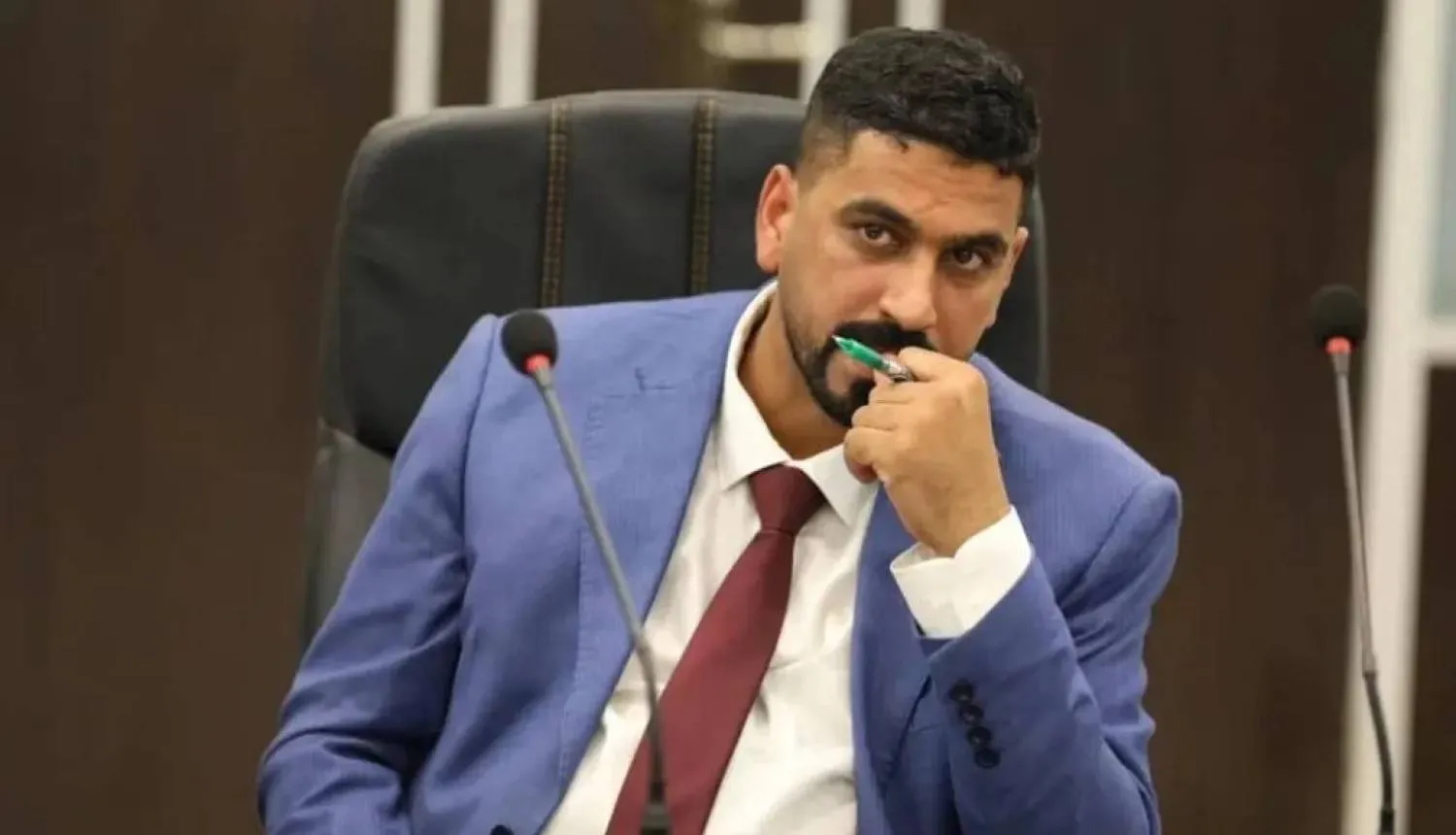

In a first-of-its-kind incident since the launch of election campaigns in Iraq, Safa al-Mashhadani, a Baghdad Provincial Council member and candidate for the Siyada Alliance, was assassinated early Wednesday when a sticky bomb exploded on his car in the Tarmiyah area north of the capital.
The attack, which also injured four of his escorts, comes less than a month before Iraq’s general elections scheduled for November 11. The assassination has raised fears of renewed political violence in a country where the political landscape remains fragile.
Iraq’s security forces announced an urgent investigation, ordered by Prime Minister Mohammed Shia Al Sudani, and formed a joint criminal team, though no preliminary results have been released. Video footage shared on local platforms showed flames engulfing the vehicle, reportedly as the candidate was returning from a meeting in central Baghdad’s Mansour district.
Tarmiyah, a largely Sunni agricultural town in the Baghdad Belt, has seen the deployment of Popular Mobilization Forces since 2017. While their presence was justified as part of the fight against terrorism, local residents say their continued deployment is no longer warranted.
While the area was once a stronghold for extremist groups like al-Qaeda and the ISIS group of Iraq and Syria, many Iraqis see the attack as a politically motivated assassination linked to struggles over influence and economic interests.
Dozens of Tarmiyah residents took to the streets accusing “political actors” of orchestrating the killing. They said their town is now relatively secure and that armed groups no longer operate there with the capacity to carry out such an attack.
Al-Mashhadani was considered a rising figure in the Siyada Alliance, which represents a broad Sunni political base. He was known for his work on agricultural land investment issues in the Baghdad Belt, a sensitive area where political and economic interests of powerful armed groups intersect.
In his last post on Facebook, he wrote about following up on provincial council decisions to halt the allocation of agricultural lands north of Baghdad, insisting that “the land belongs to its people” and vowing to prevent any attempts to seize it. Political sources suggest these positions may have put him at odds with powerful groups controlling real estate and investment projects in the area.
Former parliament speaker Mohammed al-Halbousi called on authorities to “shoulder their responsibilities, pursue the perpetrators, and bring them to justice.” Siyada blamed security agencies in Baghdad for the assassination, describing it as an extension of “a pattern of exclusion and treachery” by rogue armed actors.
Analysts warn that this assassination - the first targeting a candidate in the current electoral cycle - could mark a dangerous escalation in Iraq’s political competition. It comes as the country heads toward elections amid deep divisions, growing criticism of uncontrolled armed groups, and fears of political violence shaping the balance of power.
Security analyst Mukhled Hazem told Asharq Al-Awsat that the killing “may be a message, both domestic and international, signaling that the electoral environment is unstable and that some groups view the ballot box as a threat to their political and financial gains.”