
Two main issues are dominating Lebanon’s political landscape: ensuring the 2026 parliamentary elections take place on schedule, and defining the country’s stance in the post-Gaza war regional order.
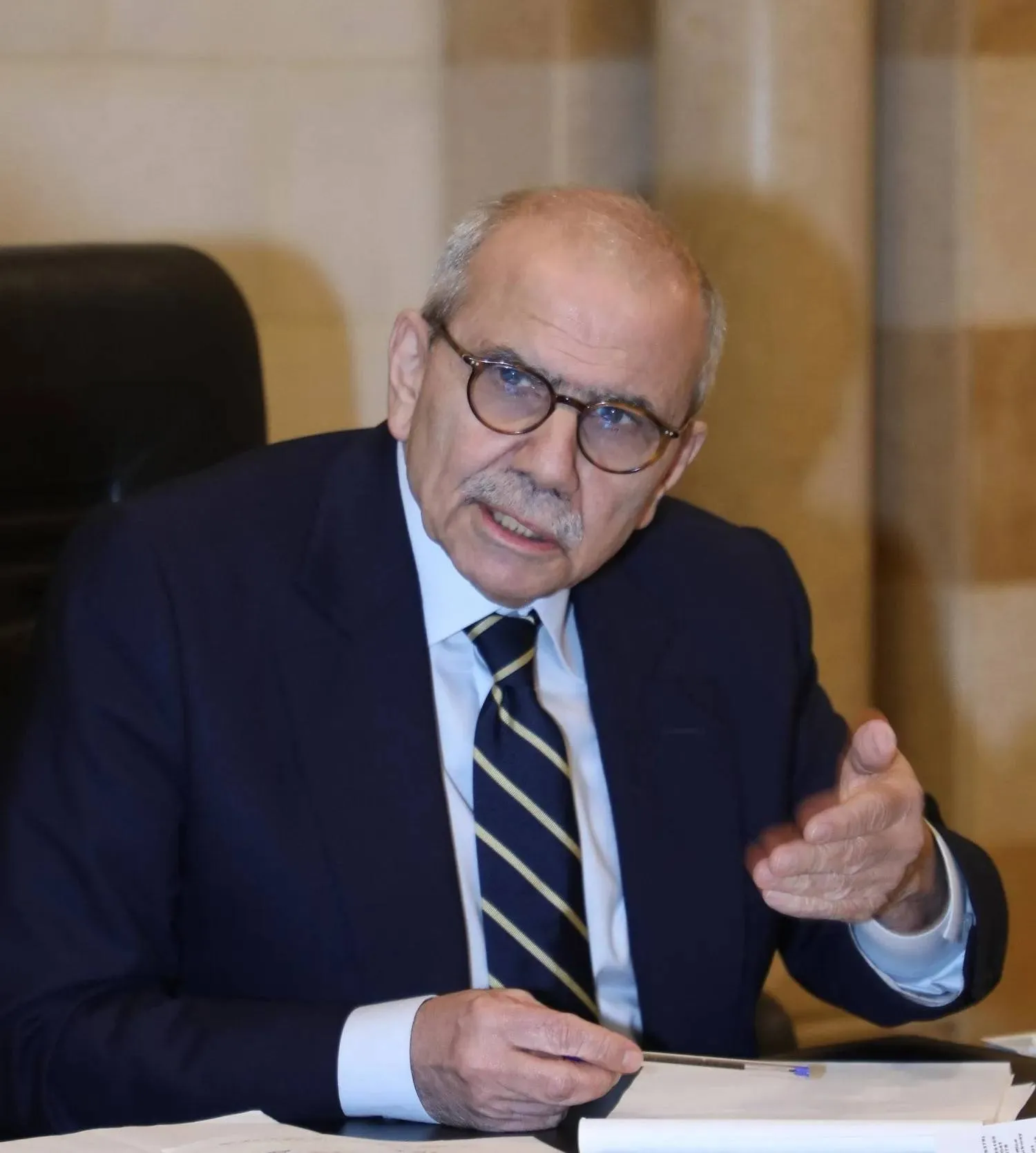
Prime Minister Nawaf Salam affirmed that the government is committed to holding elections on time, telling Asharq Al-Awsat that his cabinet “respects constitutional deadlines to complete the formation of state institutions. There is no room for postponing the parliamentary elections, and we have no intention of proposing a draft law extending parliament’s term.”
“What has been decided on this matter is final. The Interior Ministry is moving forward with the logistical and administrative preparations, and I do not believe there is any obstacle to holding the elections on time,” he clarified.
Salam’s comments came in response to a question about an urgent bill submitted by Foreign Minister Youssef Rajji to the cabinet secretariat, requesting that it be added to the agenda of the government’s next session.
The bill seeks to abolish Articles 112 and 122 of the electoral law, which govern expatriate voting, allowing Lebanese abroad to elect all 128 members of parliament from their home districts while voting from their countries of residence. Salam said he had not yet reviewed the proposal, dismissing reports that Rajji had coordinated with him before submitting it.
The prime minister made his remarks during a tour of the southern city of Sidon, which began at the “Turkish Hospital” and concluded at the port, according to the Prime Minister’s Office.
The second major issue concerns Lebanon’s position following the end of the war in Gaza, which ushered in a new political phase in the region. It also prompted President Gen. Joseph Aoun to propose indirect negotiations with Israel similar to the US- and UN-mediated talks that led to the 2022 maritime border agreement between the two countries.
The two issues are expected to feature prominently in a meeting scheduled for Friday between Aoun and Salam. According to political sources, Aoun’s call for renewed indirect talks aims to keep Lebanon engaged in regional settlements and on the radar of international diplomacy.
The sources noted that meetings of the international monitoring committee overseeing the implementation of the ceasefire agreement between Lebanon and Israel have so far produced no progress, turning instead into a forum that merely counts Israeli violations, while Lebanon has abided by the terms since day one.
According to ministerial sources, Aoun’s proposal has broad Lebanese backing and faces no opposition from the Shiite duo - Hezbollah and the Amal Movement - which had earlier provided political cover for the maritime border negotiations.
The sources told Asharq Al-Awsat that Parliament Speaker Nabih Berri had personally negotiated with US envoy Amos Hochstein at the time, helping establish the framework that guided Lebanon’s negotiating team to the maritime deal.
The sources added that Hezbollah did not object to the previous indirect talks with Israel, noting that “the difference between those maritime negotiations and the current proposal is that the US- and French-sponsored ceasefire agreement remains in effect, eliminating the need for a new one. The existing armistice agreement between the two countries provides a general framework for any new indirect talks under American auspices.”
They said Aoun’s call is timely and intended to keep Lebanon on the international agenda after the Gaza war, “preventing a decline in global attention toward resolving Lebanon’s own conflict. It also puts the United States to the test in compelling Israel to withdraw from the south in accordance with Resolution 1701.”
Meanwhile, the debate continues over which electoral law will govern the 2026 vote. According to ministerial sources, Rajji’s request to include his bill in the cabinet’s next session reflects pressure from the Lebanese Forces, represented by Rajji himself, to show expatriates that the party is pushing to repeal Article 112, which would allow them to vote for all 128 MPs rather than six dedicated diaspora seats.
The sources said the Lebanese Forces are seeking to “clear their name before expatriates if the cabinet refuses to adopt the proposal, thereby shifting responsibility to the government.” They expect a compromise that freezes contentious articles of the law to avoid a split in the cabinet that could spill over into parliament, or vice versa.
Such a compromise, they added, would effectively shelve the plan to allocate six parliamentary seats for expatriate representation, while also denying them the right to vote for all 128 MPs from abroad, meaning those wishing to participate must return to Lebanon to cast their ballots.
The sources urged a swift resolution “to provide clarity for expatriates, many of whom are delaying registration to vote for the six seats, while most prefer to vote for the full parliament.”
Until such a settlement is reached, sources close to the Shiite duo remain confident the elections will proceed as planned. They voiced satisfaction with the improved relations between Salam and Berri, noting that tensions between the two have eased significantly, while Berri’s ties with Aoun are described as “more than excellent.”
Parliament is scheduled to convene next Tuesday for a session dedicated to electing members of the bureau and parliamentary committees. The sources expressed optimism over Aoun’s stance and Salam’s understanding of the Shiite bloc’s position, saying both sides aim to “spare the government and parliament avoidable divisions” and are counting on independent MPs to adopt a similar approach.