
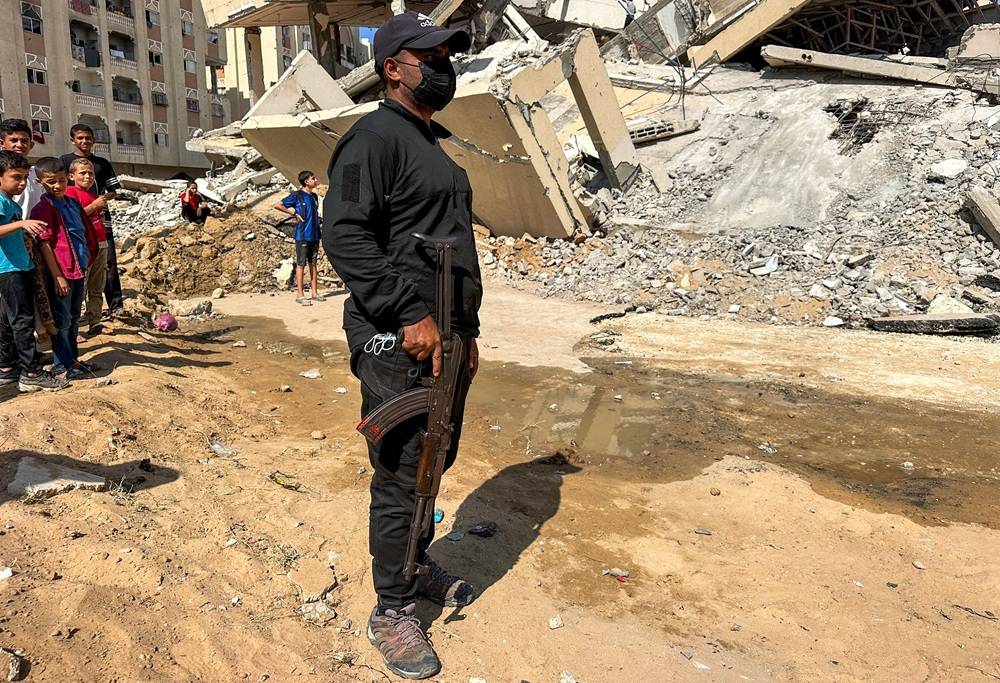
Hamas security forces in Gaza have stepped up efforts to restore internal order across areas vacated by Israeli troops, deploying extensively to assert full control and reestablish stability, according to local officials.
The forces have been regulating market activity, monitoring the prices of essential goods, organizing vendors, and managing traffic in public streets to bring back a semblance of normalcy after months of war.
Government sources in Gaza told Asharq Al-Awsat that the Hamas-run administration has begun redistributing security responsibilities among officers and appointing new governors for the districts after several were killed in Israeli strikes. New leaders have also been named to head various police and security agencies.
The sources said temporary police stations have been set up to deal with thefts, family and clan disputes, and other crimes, as part of wider efforts to reassert order and prevent the lawlessness Israel allegedly sought to foster by supporting armed gangs during the conflict.
While the second phase of the ceasefire deal stipulates that Hamas must relinquish governance and its weapons, the movement “does not want to leave the situation in Gaza in a vacuum,” Hamas sources told Asharq Al-Awsat.
The sources added that Palestinian factions had agreed to form a national committee to administer the enclave and that Hamas had endorsed the committee’s mandate in full. Implementation, they said, depends on the outcome of talks in Egypt over the remaining terms of the ceasefire’s second stage.
“Hamas has no incentive to obstruct the agreement,” the sources said. “The movement is ready to give up power and has no intention of clinging to it, contrary to what many believe.”
Humanitarian aid and soaring prices
The latest security measures coincide with a tangible increase in humanitarian aid deliveries to international agencies, as well as limited commercial goods entering Gaza’s markets.
Asharq Al-Awsat observed the entry of frozen meat, poultry, and some fruits and vegetables, though prices remain far beyond reach for most residents. A kilogram of beef now sells for about 170 shekels ($52), while frozen chicken costs around 130 shekels ($40).
Aisha al-Ramlawi, a displaced resident from Gaza City now sheltering in Deir al-Balah, said she needs at least four kilograms of poultry or three of meat to feed her 12-member family — a meal that would cost no less than $150. Her husband, a Palestinian Authority employee, receives only half his salary and pays a 30 percent commission to money changers to withdraw cash, as banks remain largely inoperative.
“With prices like this, you need a bank behind you just to afford daily food,” she said wryly.
The UN Relief and Works Agency (UNRWA) blamed Israel’s destruction and seizure of Gaza’s farmland for driving food prices to “unprecedented levels.”
“Almost all of Gaza’s farmland is destroyed or inaccessible,” UNRWA said on X, noting that families who once lived off their land now have no income and cannot afford food, even as supplies return to the markets.
The World Food Program (WFP) said it has been delivering an average of 560 tons of food per day since the ceasefire took effect, but this remains far short of Gaza’s needs.
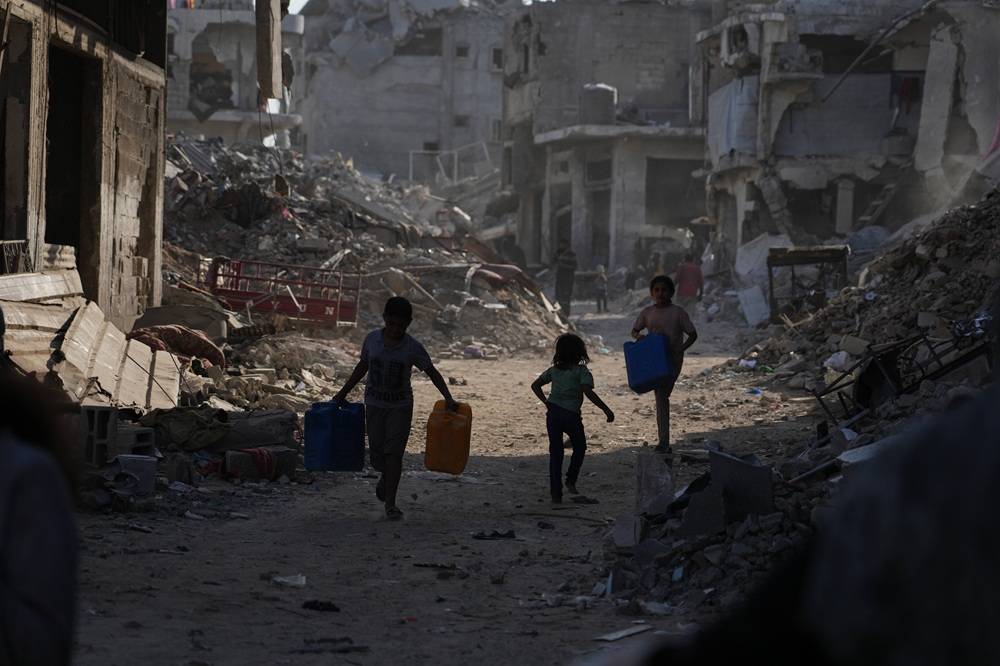
WFP spokesperson Abeer Etefa said: “We’re still below what we need, but we’re getting there ... The ceasefire has opened a narrow window of opportunity, and WFP is moving very quickly and swiftly to scale up food assistance.”
Etefa said the agency operates five distribution centers across Gaza, mostly in the south, and aims to expand to 145 while reopening bakeries to serve residents.
Gaza’s government media office described the incoming aid as “a drop in the ocean,” urging the reopening of all crossings and the entry of at least 600 trucks daily to meet needs.
Gradual return of daily life
Signs of a cautious return to normal life are emerging, though challenges persist. Public transport fares remain higher than before the war but have dropped significantly from wartime levels, helped by new fuel shipments entering Gaza.
A liter of diesel now sells for 35 shekels ($10), down from 100 shekels ($30) during the conflict, though still far above the prewar price of 6 shekels (less than $2).
Cooking gas has also re-entered Gaza in limited quantities under a new rationing system that allocates eight kilograms per family for 60 shekels ($18). Before the war, residents paid 62 shekels for 12 kilograms without waiting for their turn.
During the shortages, families relied on scarce firewood, which cost up to 7 shekels ($2) per kilogram — barely enough to cook one meal, often requiring three kilograms or more.
Prayers and ruins
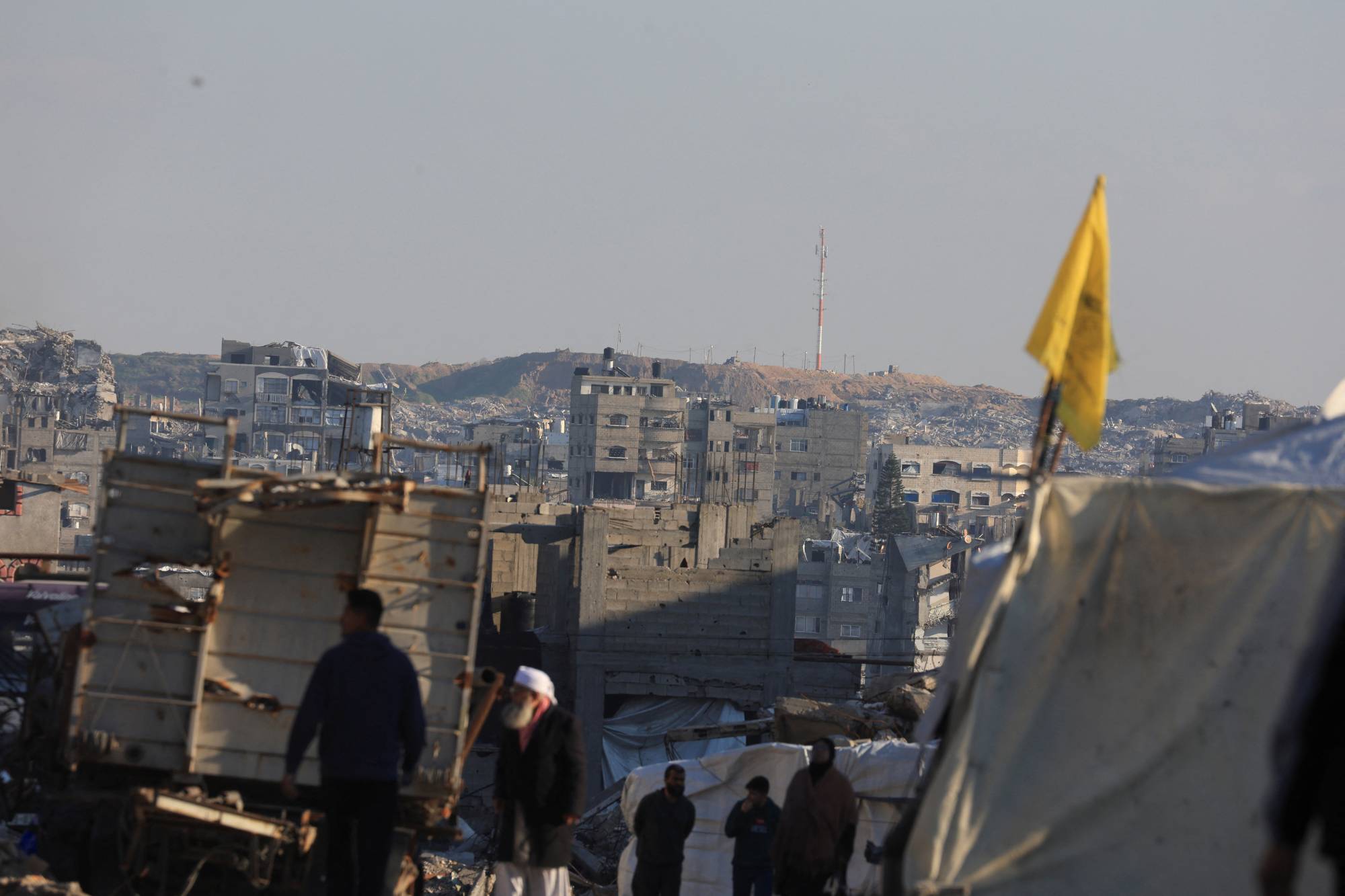
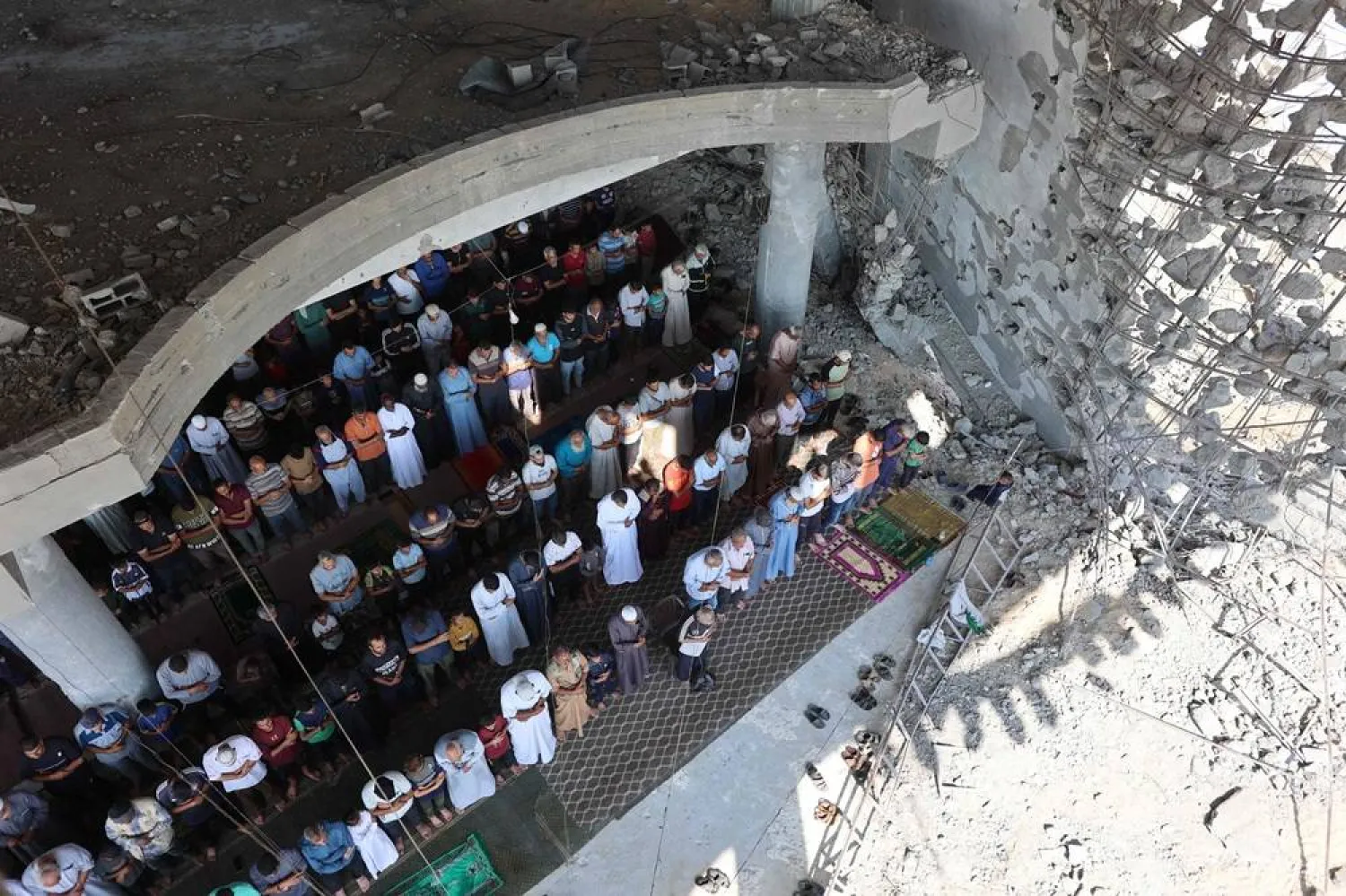
As life slowly resumes, hundreds of thousands of Gazans performed Friday prayers in what remains of the territory’s mosques or in tents erected on the ruins of those destroyed by Israeli strikes, mainly in the north and south.
It was the first time prayers were held publicly and without fear since the war began, after months of restrictions and repeated attacks that even targeted makeshift worship sites.
Images of worshippers gathering in the rubble and open fields evoked a powerful sense of resilience and renewal.
According to the Palestinian Ministry of Awqaf and Religious Affairs, Israeli bombardments destroyed at least 960 mosques in Gaza — either completely or to the point of being unusable — and damaged more than 200 others.