



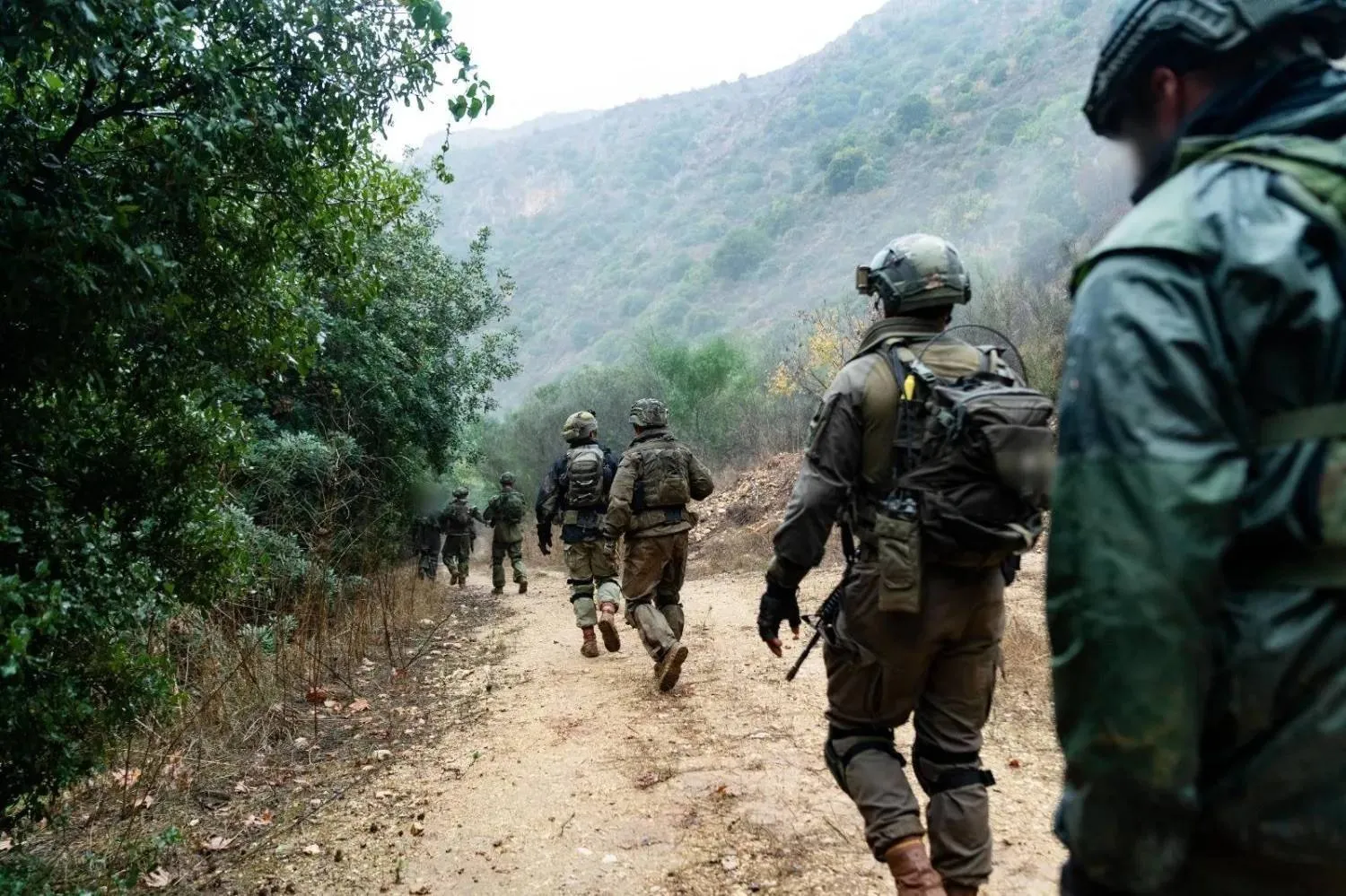

Israel’s army announced on Sunday the launch of a five-day military drill along the Lebanese border to prepare for “different scenarios,” in what officials described as a clear message that the war with Lebanon is not over and the risk of renewed escalation remains.
The drill comes as Israeli strikes on Lebanese territory continue and Hezbollah reiterates its refusal to disarm. The group claims it has rebuilt its military capabilities and accuses Tel Aviv of seeking to drag Lebanon into negotiations and eventual normalization.
Army spokesperson Avichay Adraee said in a statement on X that the exercise, which began Sunday evening and runs until Thursday, is taking place “along the border with Lebanon, in towns, coastal areas, and the home front.”
He explained that the military would train for multi-branch cooperation to address a variety of scenarios, including defending the area and responding to immediate field threats. He also warned that explosions would be heard and that the exercise would include enemy simulation, drones, aerial and naval units, and intensive movement of security forces. The drill, he stressed, had been planned in advance as part of the army’s 2025 training schedule.
Meanwhile, Israeli forces carried out further incursions in southern Lebanon. According to the National News Agency, “a unit of the Israeli army advanced overnight toward the Birkat al-Mahafer area in the town of Aitaroun, placing four concrete blocks with a sign reading: ‘No entry, danger of death,’ in an effort to push farmers away from their land.”
“The War Has Not Ended”
Riad Kahwaji, Director of the Institute for Near East and Gulf Military Analysis, said the drill was “a clear Israeli message that the war with Lebanon has not ended and the possibility of escalation remains.”
In an interview, he explained that continued Israeli strikes, combined with this new exercise, are part of “a pressure strategy meant to remind everyone that what happened was a truce, not the end of the war. The Lebanese front remains open, partly to serve Prime Minister Benjamin Netanyahu’s political goals, and partly to keep pressure on the Lebanese government and Hezbollah over the weapons issue.”
Kahwaji noted that developments in Gaza would play a decisive role in determining how the situation unfolds. “We need to see how the ceasefire in Gaza will be implemented and stabilized. That will affect expectations of escalations on other fronts, including Lebanon. We could see intensified strikes without reaching the level of full-scale war,” he said.
He added that Lebanon’s leadership currently faces “a state of confusion over how to address the weapons of Hezbollah,” which, he argued, “plays into Israel’s hands and gives it justification to continue its military operations.” As long as Hezbollah retains its arsenal, he said, the border will remain tense and the threat of war will persist.
Hezbollah: “We Will Not Submit”
Hezbollah officials continue to reject any disarmament, framing Israel’s ongoing attacks as an attempt to “subjugate” the group. They insist their military strength has been restored.
Hussein Jishi, a Hezbollah MP, said during a ceremony in southern Lebanon that “the continued daily Israeli attacks confirm the enemy’s determination to continue its war on Lebanon, disregarding the ceasefire agreement.” He accused Israel of expanding its operations to include civilian targets such as construction equipment, a concrete mixing plant, a fuel storage tank belonging to the South Lebanon Water Authority, and even civilians on the roads.
For his part, Hezbollah MP Hassan Fadlallah criticized those who blame the party for the destruction, saying reconstruction is the responsibility of the state. “After November 27, there was no support war, yet the enemy continued to destroy civilian infrastructure. Why? Because it wants the south emptied of its people,” he declared.
Fadlallah stressed that the current government budget does not allocate funds for reconstruction but that Hezbollah and its ally Amal have made it a priority, particularly compensating families whose homes were destroyed to allow them to rebuild.
