



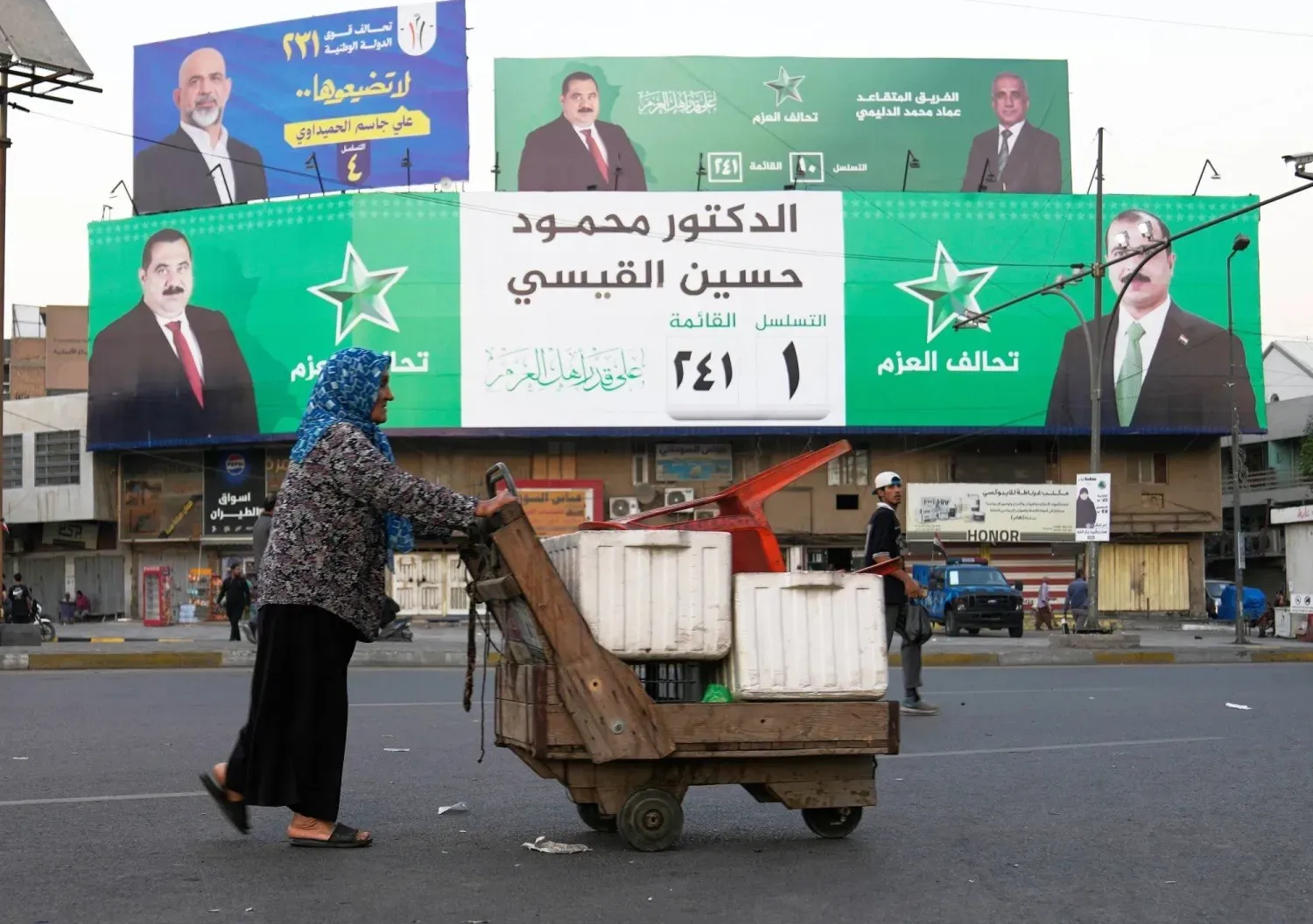

Iraq’s parliamentary election campaign is intensifying as the country heads toward a pivotal vote that many warn will shape its political trajectory, either reinforcing stability or plunging the country back into uncertainty.
The stakes grew higher this week with a new judicial disclosure surrounding the killing of an election candidate in a case tied to political rivalry.
Prime Minister Mohammed Shia Al-Sudani described the upcoming elections as “decisive” for Iraq’s future.
“The results will either lay the foundation for stability and protect what has been achieved, or they will lead to setbacks and the loss of these gains,” he said during a meeting with tribal leaders in Baghdad.
Al-Sudani urged voters to “choose their representatives wisely,” stressing his government’s efforts since taking office to “improve services, provide jobs, secure contracts for workers, and fight corruption.”
At another campaign event, he called for “broad and informed participation,” saying that competition “must be based on programs and projects, not empty slogans.”
He highlighted what he described as declining unemployment and poverty rates as evidence of his government’s performance.
The prime minister faces a critical political test in the November elections, which could determine whether he secures a second term, something rare in Iraqi politics since 2003.
French President Emmanuel Macron announced plans to visit Iraq soon, underscoring France’s support for Baghdad’s sovereignty and stability.
“France has deep affection for Iraq, and I believe the prime minister has set out a great agenda for his country,” Macron said. “At a time of widespread instability in the region, Iraq’s stability and respect for its sovereignty are essential for the stability of the entire Middle East.”
Macron expressed hope to make the trip before the end of the year, a move observers see as a diplomatic show of support ahead of a sensitive electoral moment for Baghdad.
A total of 7,768 candidates, including more than 2,200 women, are competing for 329 seats in parliament. Key political blocs such as the Sadrist movement, led by Moqtada Al-Sadr, and the Nasr Coalition of Haider Al-Abadi have announced they will boycott the vote.
Meanwhile, Iraq’s Supreme Judicial Council announced new findings in the killing of Safaa Al-Mashhadani, a Baghdad Provincial Council member and parliamentary candidate, who was assassinated in Tarmiyah, north of the capital.
The Karkh First Investigation Court said in a statement that two suspects confessed to the crime, and evidence, including surveillance footage, confirmed their role. The investigating judge noted that the murder was “criminal in nature and linked to electoral rivalry among people from the same area,” and that legal procedures are under way.
Separately, the Independent High Electoral Commission fined 540 candidates for campaign violations, mostly for hanging posters and banners in unauthorized areas. Among them were 82 women. The Kurdistan Region accounted for about 12 percent of all recorded violations nationwide.


