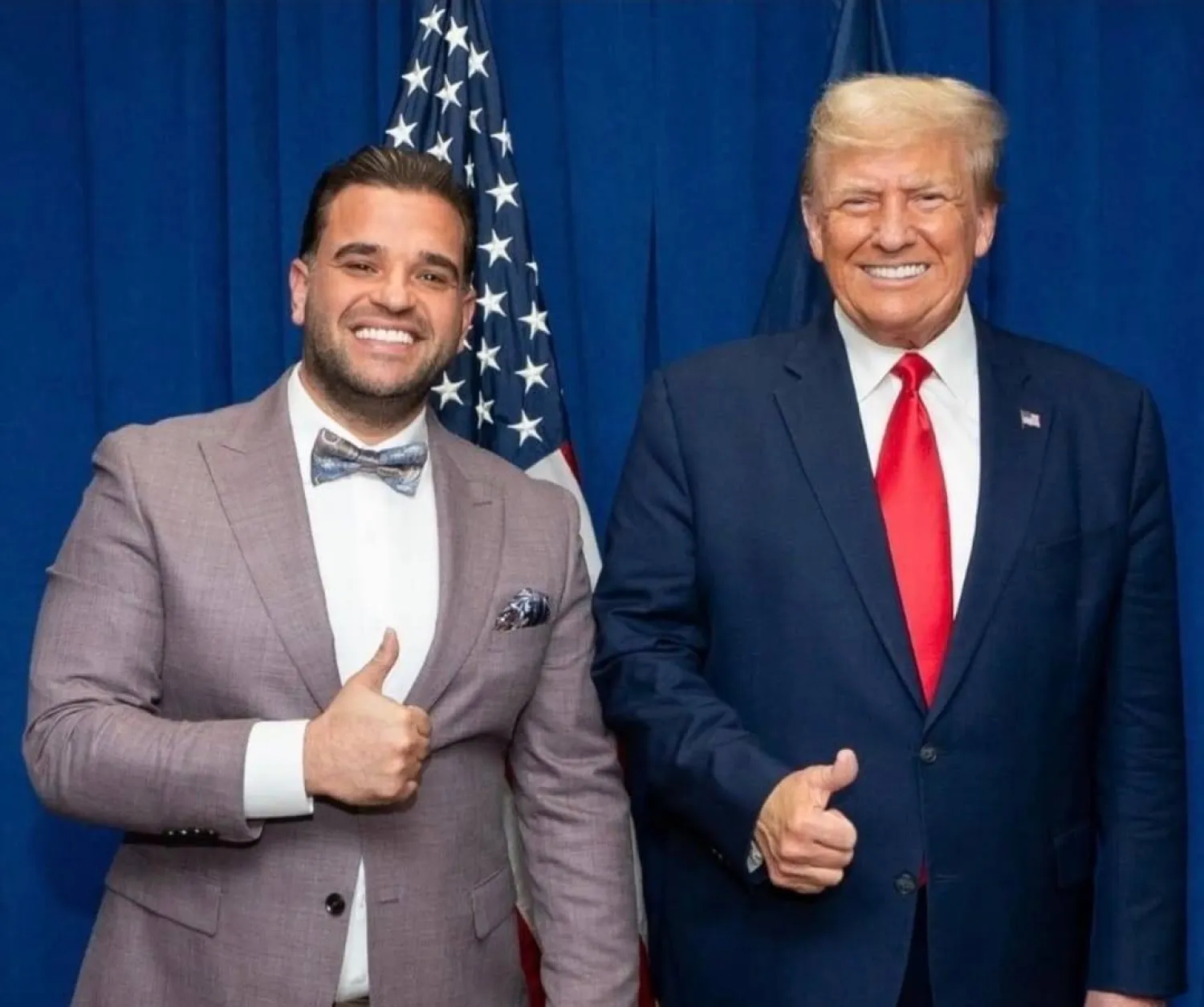
US President Donald Trump with Mark Savaya, newly appointed special envoy to Iraq. (Instagram)
New US presidential envoy to Iraq Mark Savaya stressed on Saturday that his mission aims to restore trust and bolster the strategic partnership between Baghdad and Washington.
In remarks to the Chaldean Press, he said: “I want to make Iraq great again.”
Relations between the US and Iraq are passing through a critical phase, which demands direct and honest communication that serves the peoples of both countries, he went on to say.
He added that the US is not seeking to impose an agenda on Iraq, saying that the Iraqi government is independent and can make its own sovereign decisions.
As envoy to Iraq, he will work with all political, religious and economic parties to ensure a stable and prosperous Iraq can be a real partner to the US, away from regional conflicts, he stated.
Savaya is the third American envoy to Iraq since the 2003 US invasion. Paul Bremer was appointed after the invasion and Brett McGurk during the fight against ISIS in 2014.
Savaya, who was born in Iraq, added that the country boasts massive human and economic capabilities, which should they be invested properly, can allow the country to become a regional hub for development and stability. “I want to make Iraq great again,” he declared.
He will soon visit Baghdad to deliver a clear message that Washington is committed to supporting a strong and unified Iraq and that a new chapter in relations with the US has indeed started.
US President Donald Trump announced Savaya’s appointment on October 19. “Mark’s deep understanding of the Iraq-US relationship and his connections in the region will help advance the interests of the American people,” Trump wrote on his Truth Social platform.
Savaya was a key player in the Michigan campaign who helped secure a record Muslim American vote during Trump’s reelection, he noted.
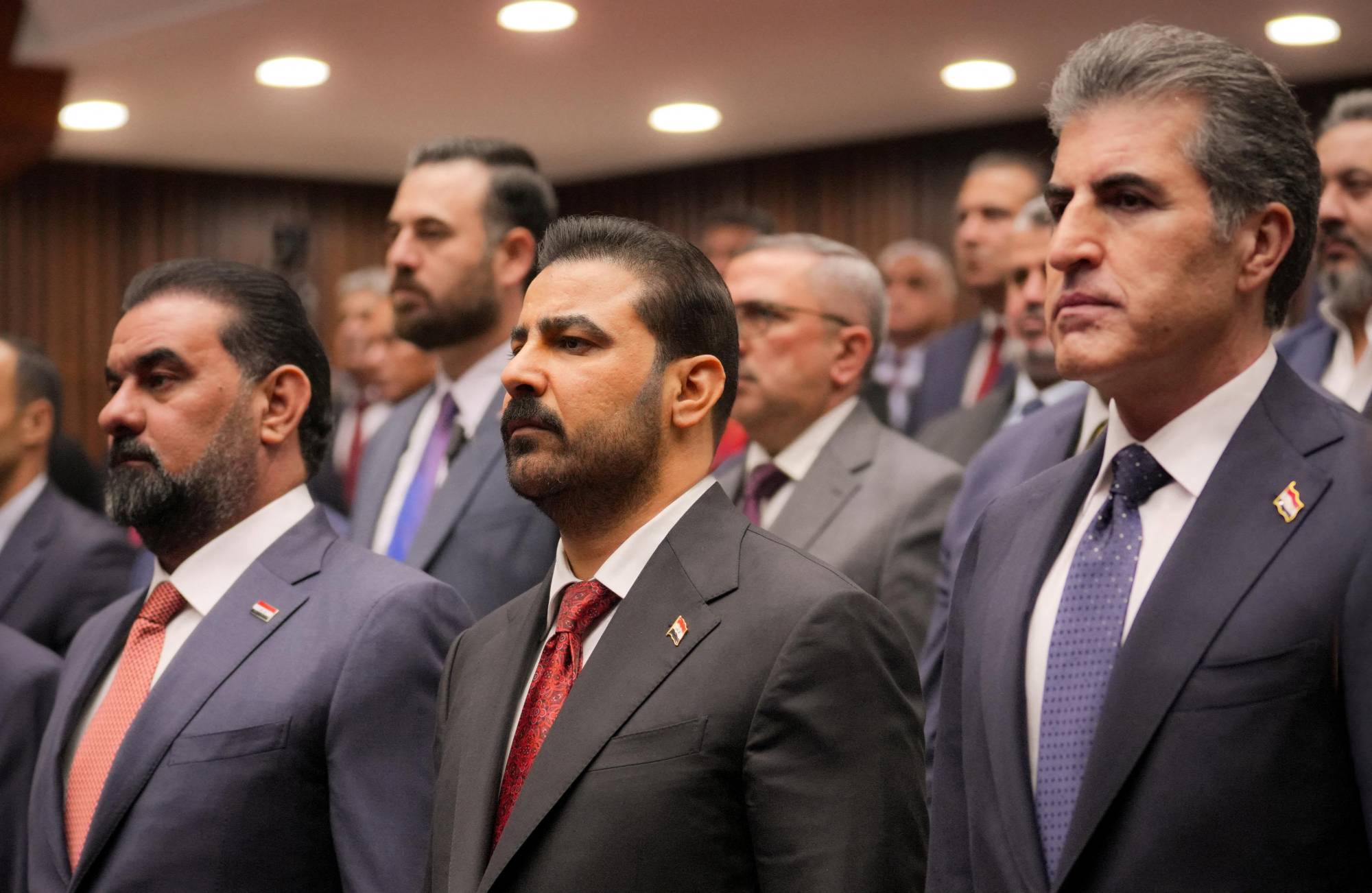
Savaya’s appointment has stirred debate in Iraq as it took place weeks before the country heads to parliamentary elections on November 11. The polls are witnessing a fierce competition among the ruling Iran-backed Shiite Coordination Framework,
Meanwhile, the Foundation for Defense of Democracies warned that Iraq was at a “difficult crossroads” given the state of lawlessness and that “the politics of the gun - and not the ballot box - play too great a role,” citing the spate of political assassinations that have rocked the country.
On October 15, an IED tore through a vehicle in Baghdad’s northern outskirts, killing Safaa al-Mashhadani, a candidate in the parliamentary elections. Three days later, gunmen opened fire on the office of another candidate, Muthanna al-Azzawi, 25 kilometers south of the capital, wounding two bodyguards, it said.
“So far, Iraqi Prime Minister Mohammed Shia al-Sudani has ordered a probe into the assassination, while authorities announced the arrest of five suspects. Past precedent offers little optimism for justice. For years, Baghdad has sought to play a good-cop-bad-cop routine, enabling militias to terrorize Iraq and the region while also claiming to investigate their crimes,” it added.
The November 11 elections are seen as a test of the government's ability to protect the democratic process and put an end to political violence, while observers are waiting the results that will determine where Iraq will be positioned given the changes sweeping the region.
Iran-Aligned Faction Demands Downsizing of ‘World’s Largest Embassy’https://english.aawsat.com/arab-world/5325249-iran-aligned-faction-demands-downsizing-%E2%80%98world%E2%80%99s-largest-embassy%E2%80%99
Iran-Aligned Faction Demands Downsizing of ‘World’s Largest Embassy’
Members of Iraq’s Popular Mobilization Forces parade in Baghdad’s Tahrir Square to mark the withdrawal of US troops from Iraq (DPA)
As Iraq’s government steps up celebrations marking the end of the international coalition’s mission and the US withdrawal, an Iran-aligned armed faction is demanding a smaller US mission in Baghdad and an end to what it calls “Washington’s economic dominance.”
Since last Wednesday, authorities in Baghdad have mobilized resources for official celebrations of what they have designated “National Sovereignty Day.”
Iran and its allies have hailed the departure of the last troops - mainly from an air base in Erbil, in the Kurdistan region - as a “victory,” even as some Iraqis voice concern over geopolitical challenges.
An agreed timetable
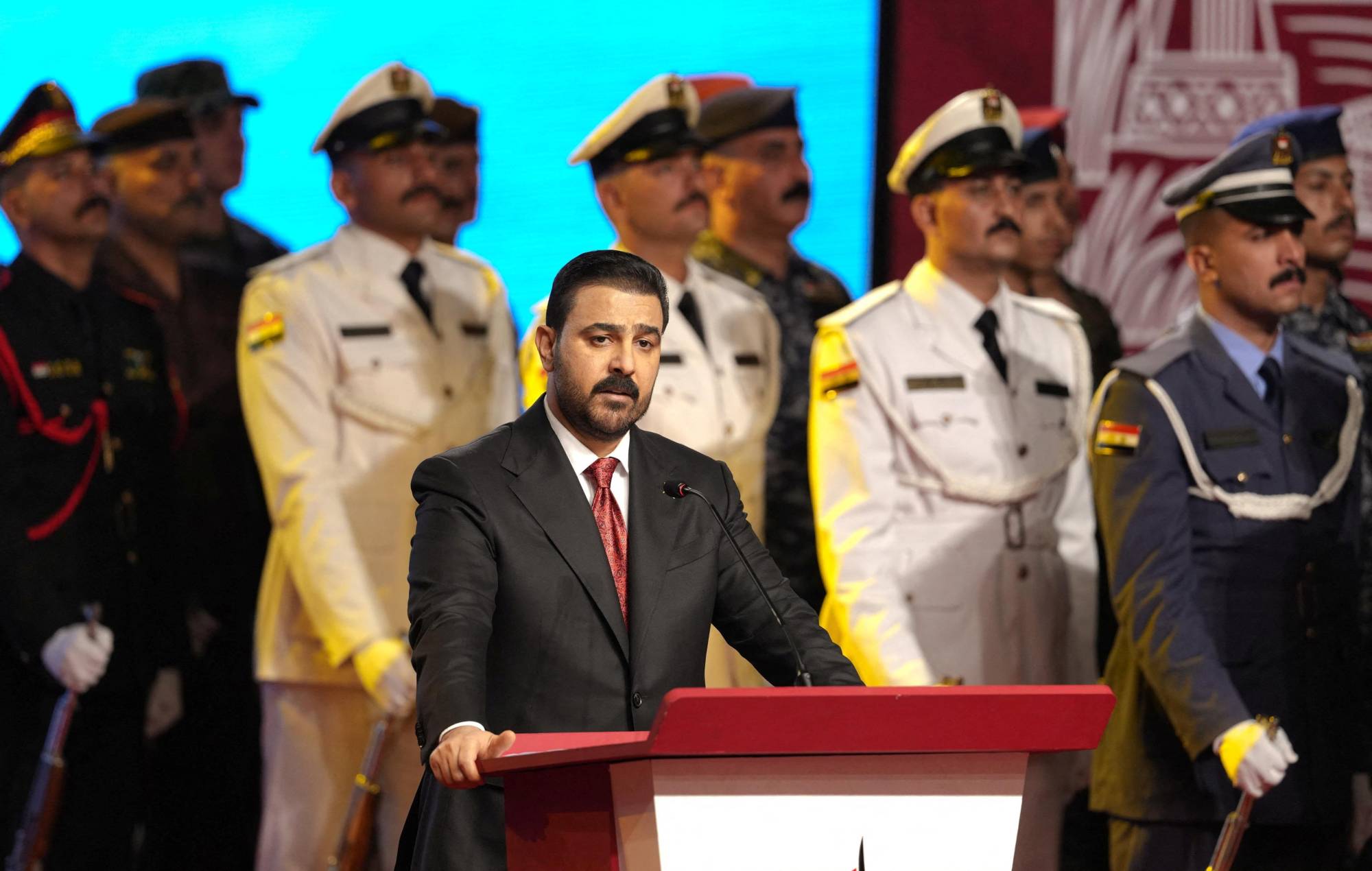
Prime Minister Ali al-Zaidi told a “Sovereignty Day” conference on Friday that Iraq’s foundations of “political, economic and security sovereignty” were taking firm hold.
“Iraqis have passed every difficult test,” he told executive and legislative officials, saying the country had reached a moment when it was renewing its resolve to protect the state and its system of government.
Al-Zaidi said Iraq’s restored sovereignty was reflected in the withdrawal of foreign troops and the complete end of the international coalition’s mission.
He also cited an agreement for Turkish forces and Kurdistan Workers’ Party members to withdraw, an end to the presence of foreign armed groups in Iraq, and the unification of Peshmerga forces to strengthen unified security and military decision-making.
He reaffirmed that Iraq would not be used as a launchpad for attacks on neighboring countries, and pledged to bring weapons under control in line with the constitution and the law, following an agreed timetable to address the factions’ status and integrate them into state institutions.
Iraqi Prime Minister Ali al-Zaidi attends the Sovereignty Day Conference marking the withdrawal of US-led coalition forces from Iraq, in Baghdad, Iraq, October 1, 2026. Iraqi Prime Minister's Media Office/Handout via REUTERS
The government had originally given the factions until Sept. 30 to surrender their weapons, coinciding with the end of the coalition’s mission. The groups had used the coalition’s presence to justify keeping their arms.
The government later dropped that deadline and extended it to June 2027.
Barzani in Baghdad
Al-Zaidi’s speech made no mention of the role of foreign forces. Kurdistan Region President Nechirvan Barzani, however, praised the US-led coalition for helping Iraqis defeat ISIS.
“Sovereignty means that the state has the final say,” Barzani said in a speech delivered in Arabic. Decisions on war and peace must rest exclusively with the state’s legitimate authorities, he added, and the constitution and federal system must be upheld.
During that difficult period, the United States, the coalition and Iraq’s friends had stood by the country and provided help at the Iraqi government’s request, he said.
“Today, as they leave Iraqi territory under the agreement concluded with the federal government, we will not forget that support and assistance,” Barzani said, adding that Iraqis would always regard it with appreciation and respect.
“But true gratitude should evolve into assuming national responsibility in Iraq.”
“The world’s largest embassy”
The Nujaba Movement, led by Iran-aligned Akram al-Kaabi, warned against any continued US military presence, including through security companies or advisers.
“Dealing on an equal footing requires the US Embassy to be like other embassies, rather than a vast security and military compound,” the movement said in a statement on Friday, describing it as the world’s largest embassy.
Nujaba demanded an end to US dominance over Iraq’s economy and resources and to American interference in its political affairs.
It also called for freeing Iraqi skies from US aircraft it described as attacking, and keeping US forces away from Iraq’s borders in Syria, Jordan and Kuwait.
Iraqi Prime Minister Ali al-Zaidi delivers a speech during the Sovereignty Day Conference marking the withdrawal of US-led coalition forces from Iraq, in Baghdad, Iraq, October 1, 2026. Iraqi Prime Minister's Media Office/Handout via REUTERS
After the withdrawal
Experts and activists are questioning what comes next.
Foreign troops stationed in Iraq under an agreement with its government had not undermined sovereignty in the first place, political activist Montadhar Naser said.
“Nevertheless, their departure signals that Iraq no longer needs any outside force,” he told Asharq Al-Awsat.
The authorities must now prove they can exercise full control on the ground, he said, while factions continue to defy the state and the law and push Iraq to the brink of regional military confrontations.
Political science professor Talib Mohammed Karim said Iraq’s political groups agreed on sovereignty in principle, but differed over what it meant and how to achieve it.
“The international community, meanwhile, engages with Iraq according to the extent to which it makes unified decisions through its institutions,” he told Asharq Al-Awsat.
Health Care: A New Struggle for Those Fleeing Houthi Attackshttps://english.aawsat.com/arab-world/5325244-health-care-new-struggle-those-fleeing-houthi-attacks
Health Care: A New Struggle for Those Fleeing Houthi Attacks
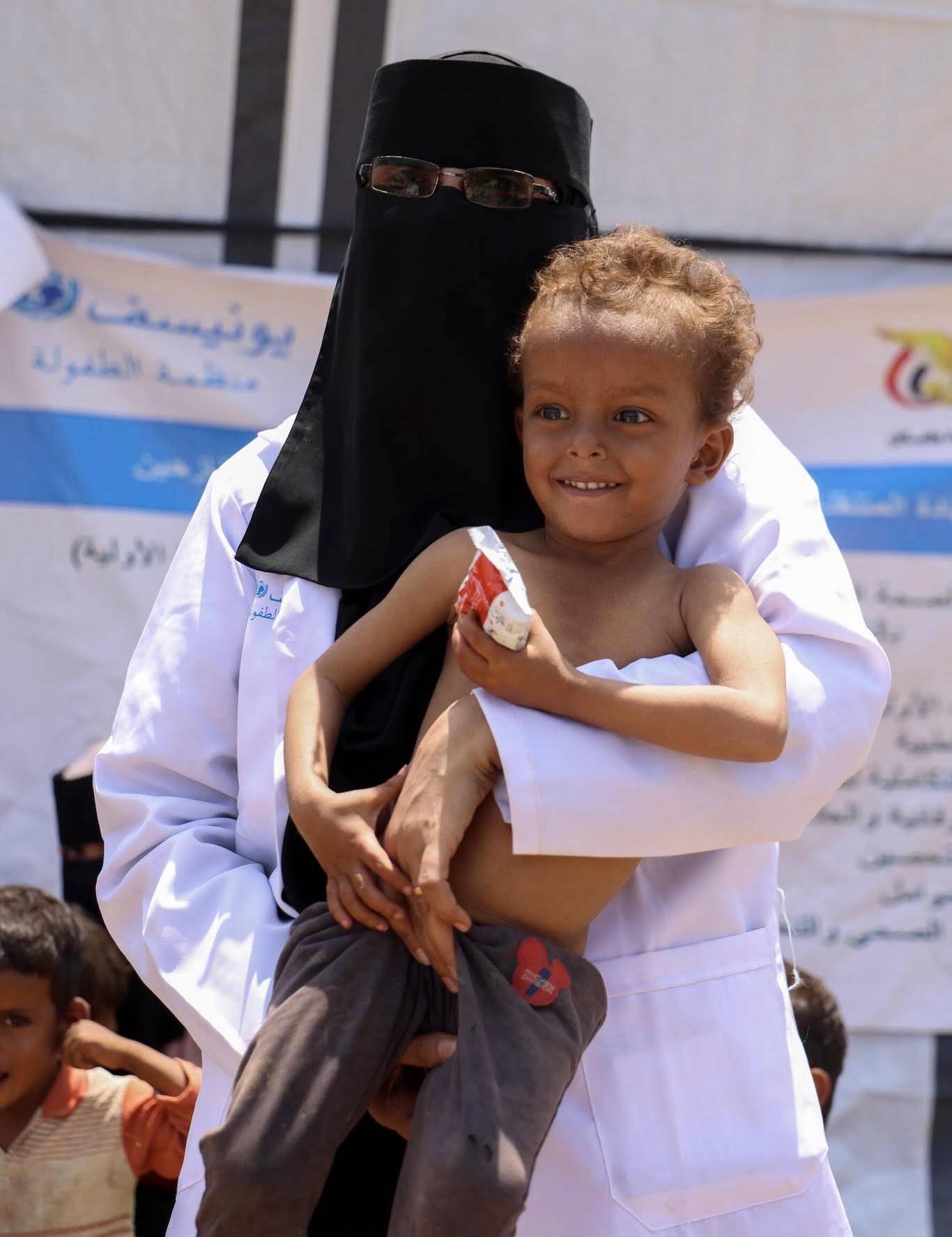
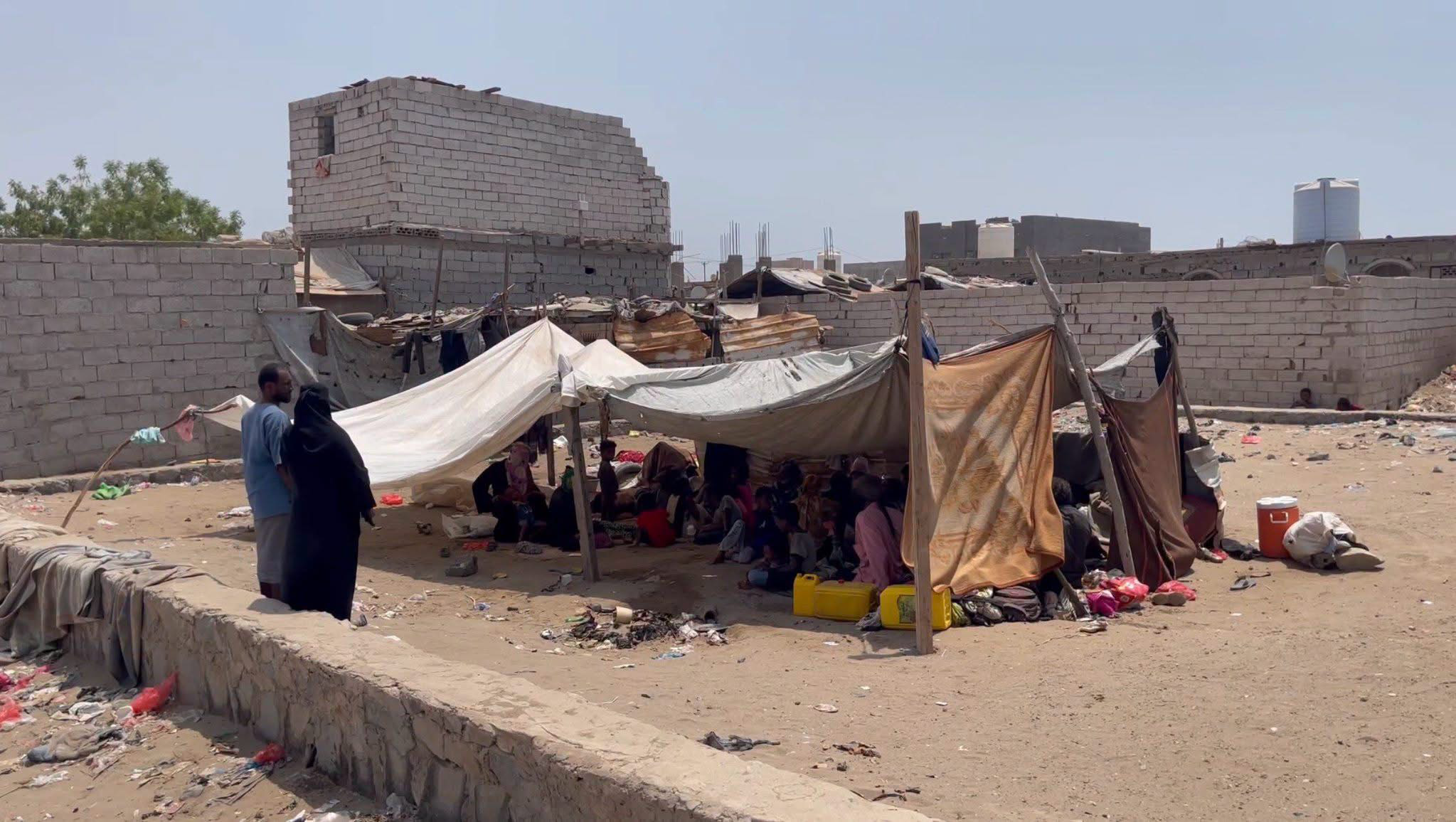
Many displaced people in Yemen need treatment, while health facilities are out of their reach (UN)
Anwar Abdullah had no choice but to flee his home in Yemen’s western Hodeidah province with his wife and six children as Houthi attacks drew close on the night of Sept. 10.
He initially did not know what was happening, but soon realized staying was no longer an option.
“We didn’t know what was happening, then we realized there was fighting. I took my children and my wife and we came to Aden. We left everything behind,” said Abdullah, 29.
The family headed toward Mokha before continuing to Aden, leaving their home, belongings and former life behind.
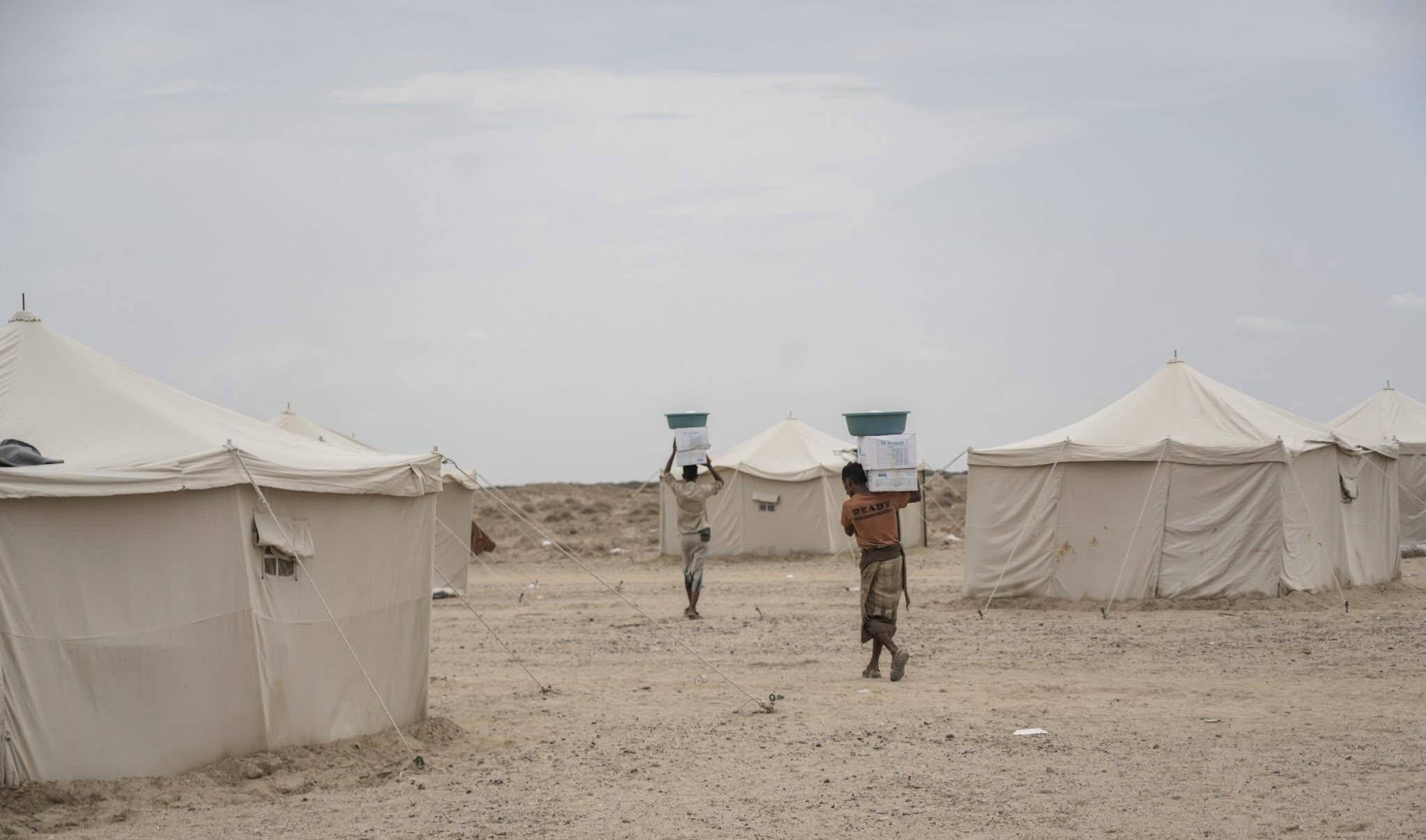
Thousands of displaced people in Yemen due to Houthi attacks lack healthcare (local media)
They now live in a temporary shelter in northern Aden with few basic necessities. Even preparing a simple meal is a daily challenge: lacking basic cooking equipment, they must cook with firewood beside the shelter.
Reaching a safer place has not ended their suffering. For Abdullah’s family and thousands of other displaced people, fleeing brought a new struggle: getting medical care when a family member falls ill.
They are among thousands of families that arrived in Aden during the latest wave of displacement following renewed fighting along Yemen’s western coast.
By the end of September, the Yemeni government had recorded nearly 200,000 people displaced. Four sites in Aden and Lahj were hosting about 6,500 displaced people before the latest wave arrived.
Since then, the population at some sites has doubled.
Many displaced Yemeni families live in temporary shelters awaiting aid (local media)
Their needs go beyond shelter and food. Many need treatment, but health facilities are difficult to reach for families worn down by displacement and poverty.
The displacement sites visited by teams from Doctors Without Borders, known by its French acronym MSF, are four to 10 kilometers from health facilities.
Distances that might seem short under normal circumstances become a major barrier for families struggling to meet basic needs.
Fuel shortages and rising prices put transport costs, along with the cost of medicines, beyond many families’ means.
“We see sick children, pregnant women who cannot access health care, people with wounds and older people who need medical services but struggle to access them,” said Sara Ghanim, MSF mobile health activity manager in Aden.
Patients without care
The health crisis is evident at the sites visited by medical teams. They have treated wounds and injuries, malnutrition, fever and diarrhea, along with untreated communicable and noncommunicable diseases.
They have also identified pregnant women who received no prenatal care, children with severe malnutrition and others who have not completed their vaccinations.
MSF teams are bringing some health services to displaced people rather than waiting for them to reach medical centers.
Mobile medical teams provide modest services to hundreds fleeing Houthi escalation (local media)
In the first week of the mobile health response, the teams examined 427 patients at four sites in Aden’s Dar Saad and Sheikh Othman districts and Lahj’s Tuban district.
Most patients were women and children. About 40% had been newly displaced by the latest escalation in Taiz and along the western coast.
The teams provide medical consultations and rapid tests, including hemoglobin and blood sugar measurements, malaria and dengue screening, and urine tests.
They also offer routine vaccinations, malnutrition screening, pregnancy tests and family planning services.
Patients needing further care are referred to health facilities able to provide the necessary treatment.
A system under pressure
The response comes as Yemen’s health system faces mounting pressures, according to MSF.
“We see enormous pressure on a health system that is already collapsing and has faced numerous challenges for years,” Ghanim said.
As displaced people continue to arrive, MSF is assessing the sites hosting them and says it is ready to expand its response if health needs increase.
Its work extends beyond mobile teams. Since April, MSF has supported primary health care services in Al-Farshah in rural Lahj and Al-Basateen in Aden.
The two facilities serve areas where displaced people live, both in displacement sites and among host communities.
For families like Abdullah’s, reaching safety does not necessarily end the displacement journey.
After leaving their homes and belongings behind, finding medical care, food and other basic necessities becomes another part of a prolonged struggle whose end they cannot foresee.
From Air to Ground, Taiz Front Lines Repel Houthi Advancehttps://english.aawsat.com/arab-world/5325231-air-ground-taiz-front-lines-repel-houthi-advance
From Air to Ground, Taiz Front Lines Repel Houthi Advance
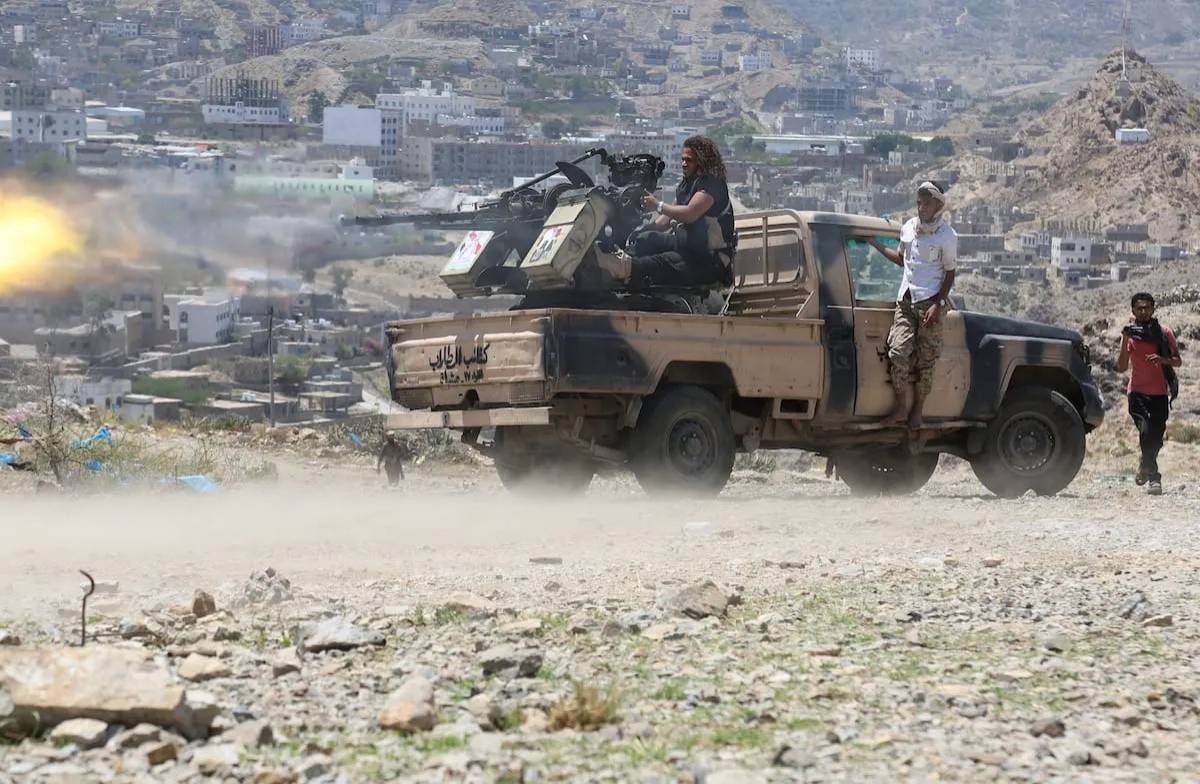
Yemeni army troops fight fierce battles against the Houthis across the Taiz and western Lahj fronts (Military media)
Government forces intensified operations across Yemen’s Taiz province over the past few hours, targeting Houthi movements and reinforcements under heavy air cover and recapturing positions the group had infiltrated as fighting entered a pivotal phase.
Successive Yemeni army statements reported 75 airstrikes on Houthi positions and movements in Taiz over 24 hours.
The strikes came in successive waves targeting concentrations of fighters, vehicles, military equipment, reinforcements, weapons depots, command-and-control centers and supply points, according to statements by armed forces spokesman Col. Majed al-Nuzaili.
The airstrikes extended across a broad stretch of Taiz's front lines, rather than concentrating on a single sector.
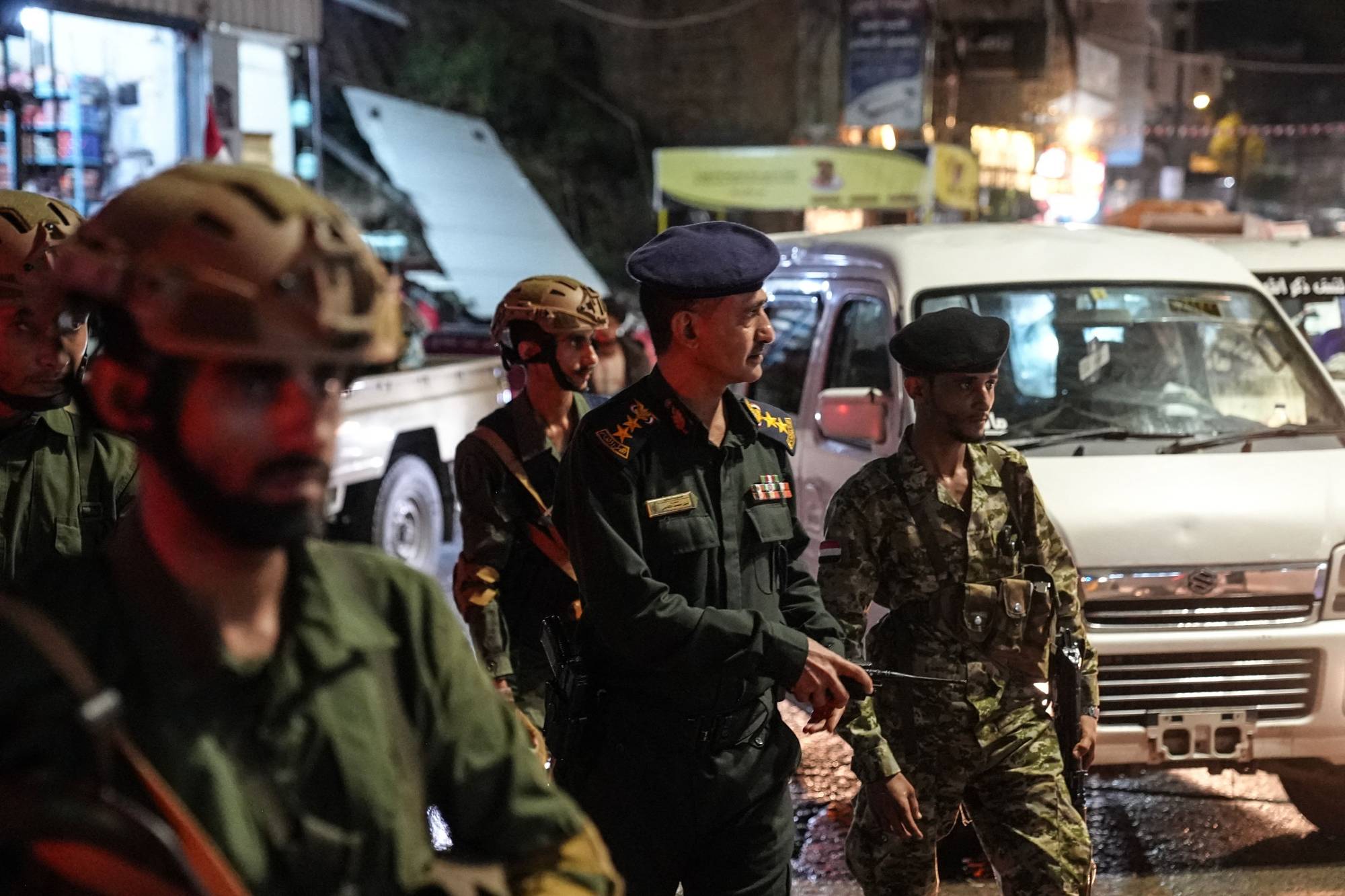
Security forces of the Yemeni government patrol a street and set up checkpoints in Taiz late on September 27, 2026. (Photo by AFP)
Strikes also hit Sanaa, Saada and Hajjah, indicating a widening confrontation and an effort by government forces to disrupt the movement and supply routes the Houthis use in their operations.
The strikes targeted Humair, Bani Bakari, Sami, al-Aqroudh, Sixty Street, al-A'mour and al-Wazi'iyah in Taiz, as well as Midi and Bani Hassan in Hajjah. A second wave targeted al-Rad'ah, al-Aqroudh, Bani Bakari, al-Kadhah, Mount Nu'man, al-Ajram and al-Marzam in Taiz.
The largest wave, comprising 27 airstrikes, targeted a missile depot, command-and-control centers, forward supply and weapons distribution points, concentrations of fighters, vehicles and military equipment.
It hit positions on Sixty Street north of Taiz city; Bani Omar; Humair in Maqbanah; eastern al-Wazi'iyah; al-Ahkoum and al-Athawir in Hayfan; al-Kadhah; Mount Nu'man; al-Kuraifat; Aqabat Munif; al-Tashrifat; al-Aqroudh; Sami; and al-Shaqab in Sabir al-Mawadim.
In another wave, Yemen's armed forces announced 15 airstrikes in Taiz, targeting Ras Dariz, al-A'mour, Jashi Athawir, Ras Hami at al-Khazzan on the al-Ka'awish front, and al-Junaid village in Hayfan. The military said the strikes neutralized dozens of fighters and reinforcements and destroyed equipment and vehicles.
The military statements suggest the strikes went beyond limited air support for front-line troops, forming part of operations targeting the Houthis' movement, supply and command networks across multiple fronts.
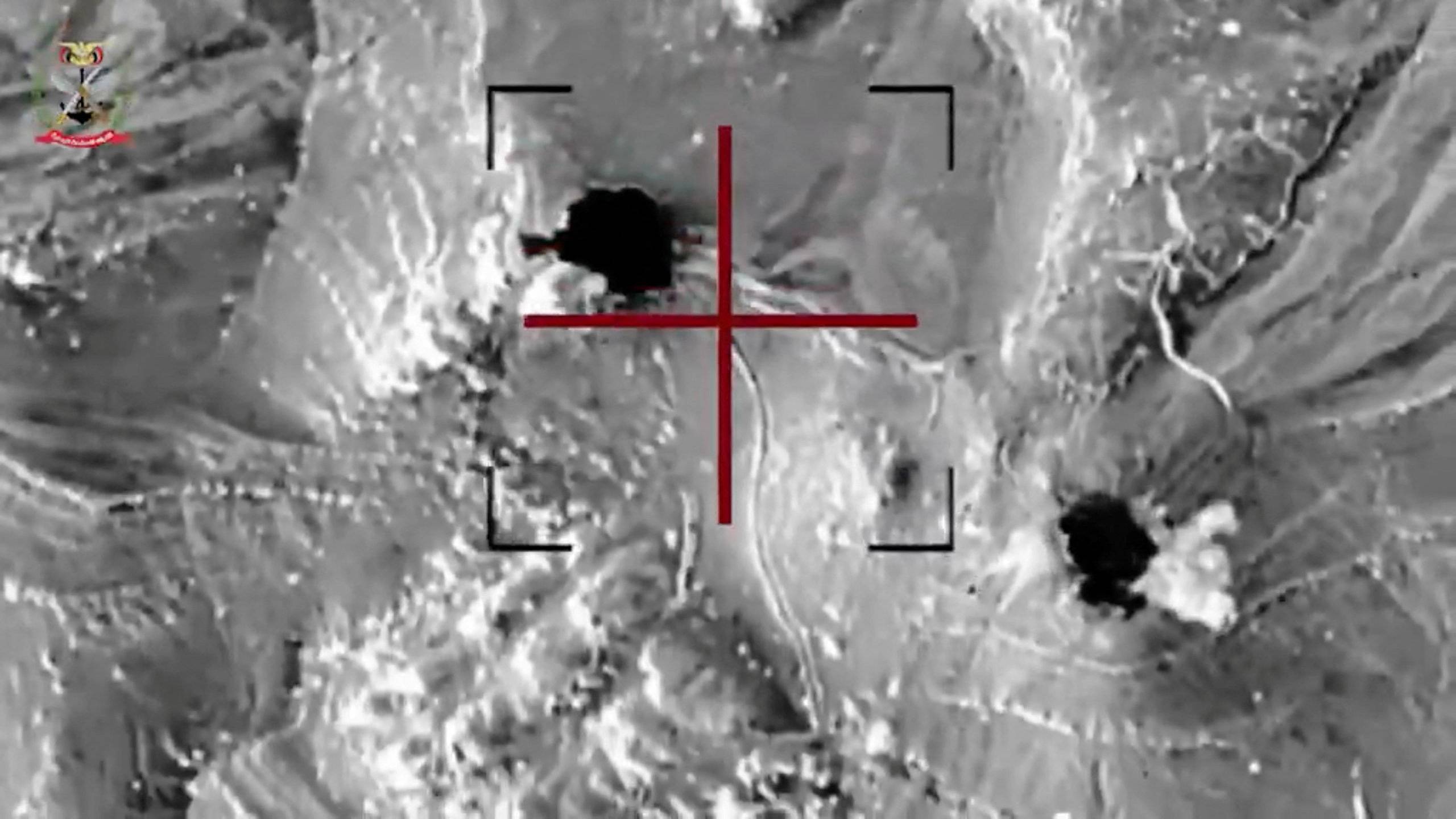
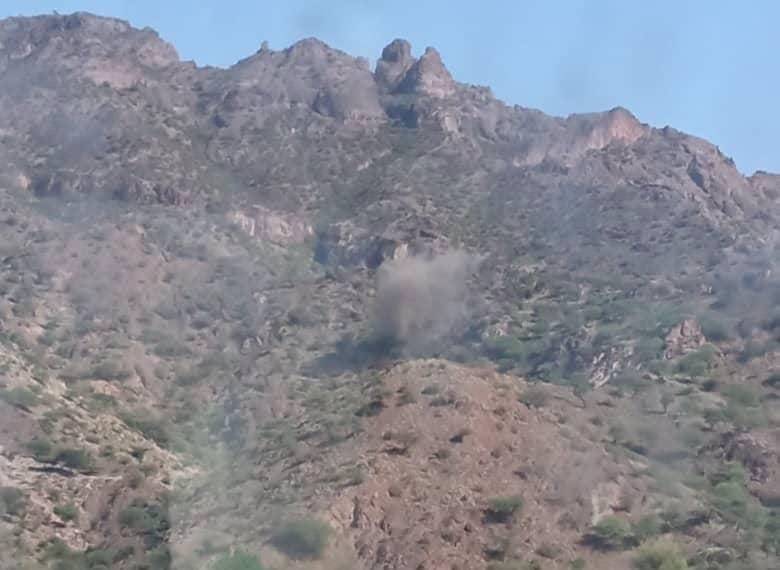
Smoke rises from explosions during what the Yemeni Armed Forces said were strikes targeting Houthi militia personnel, equipment and movements, at a location given as Taiz, Yemen in this still image from video released October 1, 2026. Media Center of the Yemeni Armed Forces/Handout via REUTERS
Attacks repelled
The strikes coincided with fierce clashes involving government forces and the Popular Resistance on several Taiz fronts, particularly Bani Bakari in Jabal Habashi, Humair in Maqbanah and al-Aqroudh southeast of the province, as well as al-Kadhah, Mount Han and the northern and eastern fronts of Taiz city.
Military sources said government forces repelled Houthi attacks and forced the attackers to retreat. On the Sami front southeast of the province, government forces and the Popular Resistance also repelled a Houthi assault before reinforcing their positions, while the Houthis withdrew toward Dimnat Khadir.
Sources said about 20 Houthi fighters were captured on the Sami front, along with Houthi vehicles. In al-Aqroudh, they reported that government fire killed about 30 Houthi fighters and wounded about 50 others.
A separate military tally put Houthi losses at about 100 fighters killed, dozens wounded and others captured following the group's attacks on several fronts in the province. Military vehicles were also disabled and weapons depots destroyed, according to the tally.
Taiz mountains formed a natural barrier against the Houthi advance (Military media)
Field assessments suggested the Houthi plan was to seize parts of rural Taiz and impose a siege on the city, with the group massing dozens of battalions for the operation.
Government forces and the Popular Resistance held their positions before some units began recapturing sites the Houthis had infiltrated in al-Shamayatayn, Jabal Habashi and Sami.
Beyond repelling the attacks, government forces, backed by the Popular Resistance and local residents, announced they had recaptured important areas in the Bani Omar subdistrict of al-Shamayatayn, south of Taiz.
Sources said the forces recaptured Dar al-Rahah and advanced toward Shi'b al-Darahim, while the Houthis suffered losses in personnel and equipment and several of their fighters were captured. Fighting continued at other positions.
Government forces say they have so far thwarted the plan to seize parts of rural Taiz and besiege the city. The fronts remain vulnerable to renewed attacks, particularly as Houthi military movements continue along roads linking different parts of the province.
Restrictions on Houthi movement routes
The developments coincided with continued airstrikes on routes used by the Houthis, extending the fighting beyond direct clashes over positions to attacks on reinforcements, vehicles and sources of supply.
Yemen's armed forces also announced broad precautionary measures to protect civilians, urging residents, drivers and civilian transport operators to avoid roads used by the Houthis to move fighters and military supplies until further notice.
The list included the Sanaa–Dhamar–Ibb–al-Qa'idah–al-Hawban–al-Qasr roundabout route and the al-Hawban–al-Dimnah–al-Rahidah–Hayfan–al-Qubaytah–al-Mafalis route.
It also included roads connecting Sharab, al-Rubai, al-Barh, al-Kadhah, al-Wazi'iyah, Mawza and Mokha, as well as roads through al-Aqroudh, Sami, al-Ayyar and Jabal Habashi.
The warnings indicated the widening scope of military movements. The armed forces stressed that the measures were temporary and precautionary and that protecting civilians and their property was a priority.
In a parallel development, air defenses announced they had intercepted and shot down Houthi suicide drones over Aden, Yemen's temporary capital. The army spokesman said the drones were downed before reaching their targets in civilian areas and neighborhoods.
Strikes were also announced against high-value targets in Sanaa and 11 high-value military targets in Saada, signaling an expansion of operations beyond the Taiz fronts into the Houthi heartland.
The Houthis' attempt to control Taiz cost them hundreds of deaths and injuries in a week (Military media)
Presidential consultations
Alongside the developments on the battlefield, Presidential Leadership Council Chairman Rashad Mohammed al-Alimi held extensive consultations on the situation in Taiz.
He received briefings on the operations from council members Abdulrahman al-Muharrami and Mahmoud al-Subaihi, the defense minister, the chief of the General Staff, the commander of the Fourth Military Region, and military and security officials in the province.
The briefings covered troop readiness, efforts to secure roads and supply lines, responses to attempted infiltrations and breaches, and Houthi losses from the fighting and airstrikes.
Al-Alimi said government forces would continue operations according to established plans.
The Houthis had started the war and the armed forces would end it, he said, according to official media, with the aim of restoring state institutions, recovering the capital Sanaa and ending the coup.
He also urged residents of Houthi-controlled areas to resist mobilization campaigns and prevent their children from being drawn into attacks he described as doomed to fail.
He renewed the state's commitment to what he called the "Safe Return Initiative," saying its doors remained open to those who chose to side with the state and its institutions.
لم تشترك بعد
انشئ حساباً خاصاً بك لتحصل على أخبار مخصصة لك ولتتمتع بخاصية حفظ المقالات وتتلقى نشراتنا البريدية المتنوعة