


Gaza War Becomes Cash Surge for US Weapons Makers

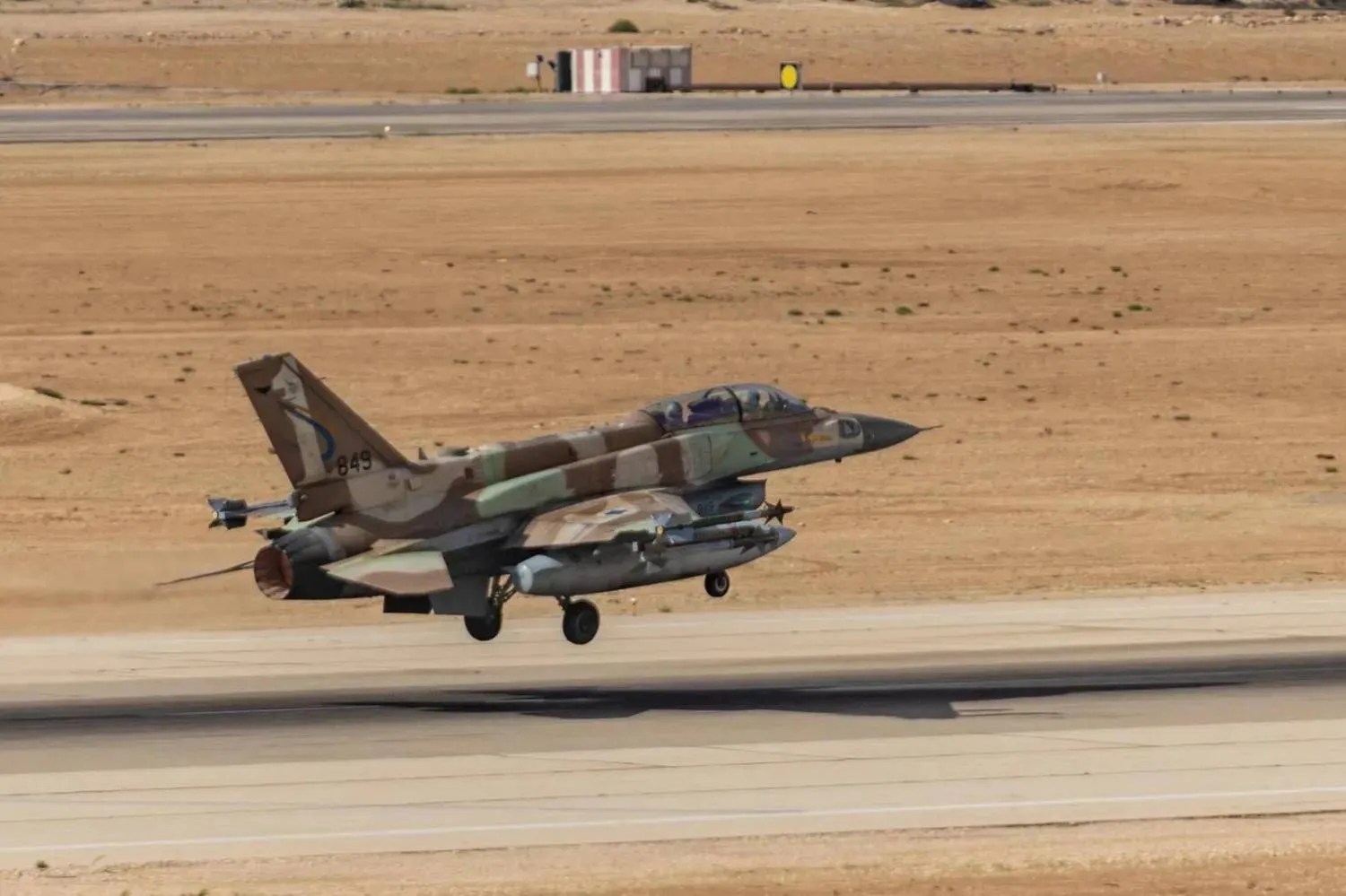
An Israeli F-16 carrying air-to-air missiles and extra fuel tanks takes off from an air base (Israel Defense Forces)
TT

Gaza War Becomes Cash Surge for US Weapons Makers

An Israeli F-16 carrying air-to-air missiles and extra fuel tanks takes off from an air base (Israel Defense Forces)

Israel’s war in Gaza, which erupted in October 2023, has become one of the most profitable conflicts for major US defense contractors.

As Gaza was being devastated and hundreds of thousands of civilians faced death and starvation, weapons factories across several US states were running at full capacity to meet Israel’s expanding military demands, generating more than 32 billion dollars in sales in just two years, according to a Wall Street Journal analysis based on US State Department data.

After the Hamas attack on southern Israel on October 7, 2023, and the large-scale Israeli military campaign that followed, Washington moved quickly to open an unprecedented weapons pipeline that included precision-guided munitions, long-range missiles, fighter jets and field equipment.

While Israel typically receives around 3.3 billion dollars in annual military assistance, that figure doubled in 2024 to 6.8 billion dollars in direct funding, not including non-cash support such as logistics, training and intelligence coordination.

A US State Department spokesperson said the Trump administration remains committed to Israel’s right to defend itself, adding that Washington is currently leading a regional effort to end the war through lasting security arrangements.

But despite talk of a “possible end” to the conflict, Pentagon data show that weapons production lines in US factories have not slowed and that supply contracts run through 2029, meaning arms deliveries to Israel will continue even after the fighting stops.

Who is benefiting most?

Boeing sits at the top of the list of beneficiaries after securing a 18.8 billion dollar deal to sell upgraded F-15 fighter jets to Israel, with delivery expected in four years.

The company also won an additional 7.9 billion dollars in contracts to supply Tel Aviv with guided bombs and associated weapons systems. These deals alone represent a major leap compared with Israel’s previous commitments to Boeing, which totaled less than 10 billion dollars over an entire decade.

Northrop Grumman, Lockheed Martin and General Dynamics secured specialized contracts for fighter jet spare parts, precision missiles and 120-millimeter tank rounds used in Merkava tanks.

Caterpillar benefited from soaring demand for its armored D9 bulldozers, widely deployed by the Israeli military to destroy homes and infrastructure in the enclave.

According to the US Defense Security Cooperation Agency, most of the deals are concentrated in aerial munitions and attack aircraft, while ground systems such as tanks and armored vehicles represent a far smaller share of total sales.

War as an economic opportunity

The conflict has not only been a military campaign, it also served as an economic boost for the US defense sector, which in recent years struggled with supply chain disruptions and labor strikes.

Boeing said in its 2024 annual report that its defense division saw strong demand from governments prioritizing security and defense technology amid rising threats.

Lockheed Martin reported a 13 percent increase in missile division revenues, reaching 12.7 billion dollars in a single year.

Oshkosh, which produces tactical military vehicles, said Israel’s orders saved a production line that was close to shutting down last year. Italy’s Leonardo Group, whose US unit sells military trailers to Israel, said in its latest financial report that the continuation of the conflicts in Ukraine and Israel ensures stable international sales for 2025.

The cost of war and who pays the price

Although the billions flowing through arms deals reflect a boom for the US defense industry, the humanitarian and political dimensions of the conflict have fueled debate in the United States and abroad.

The war has killed more than 68,000 people, including about 18,000 children, according to the Gaza Health Ministry. Israel has not released any official figures on the number of Hamas fighters killed.

As Washington funds a significant share of these sales with US taxpayer money, some Western financial institutions have started taking protest measures.

Three Norwegian funds withdrew investments from companies such as Caterpillar, Oshkosh and Palantir over the use of their products in Gaza. The Dutch pension fund sold its 448 million dollar stake in Caterpillar for the same reasons.

In Europe, Germany announced in August 2025 a halt to all arms export licenses to Israel for use in Gaza. US technology companies also faced internal pressure, prompting Microsoft to restrict the Israeli Defense Ministry’s access to some of its cloud services.

Artificial intelligence on the battlefield

Alongside conventional weapons, the war created a wider arena for cooperation on artificial intelligence and digital surveillance. Palantir, owned by conservative billionaire Peter Thiel, entered a partnership with the Israeli Defense Ministry in early 2024. After criticism that its tools were being used in airstrikes, CEO Alex Karp responded by saying that most of those killed “were terrorists,” in his words.

Israel also signed pre-war agreements with Google, Amazon and Microsoft for advanced cloud computing services, and all three companies have faced growing employee protests calling for an end to military cooperation.

In an unusual twist, some of the same US firms supplying Israel with weapons also participate in humanitarian relief programs for Gaza.

The US State Department allocated 30 million dollars to the Gaza Humanitarian Foundation, overseen by former Trump adviser Johnnie Moore, to coordinate aid distribution in the enclave.

The foundation hired American security contractors to protect its operations amid chaos and allegations of poor organization.



Hamas Postpones Election of Political Bureau Chief Indefinitely

(From left) Nizar Awadallah, Khalil al-Hayya and Mohammad Ismail Darwish during a meeting with Iran’s Supreme Leader Ali Khamenei last February 2025. (Khamenei's website/AFP)
TT

Hamas Postpones Election of Political Bureau Chief Indefinitely

(From left) Nizar Awadallah, Khalil al-Hayya and Mohammad Ismail Darwish during a meeting with Iran’s Supreme Leader Ali Khamenei last February 2025. (Khamenei's website/AFP)

Senior sources within Hamas said the movement has decided to postpone the election of the head of its political bureau, which had been scheduled to take place within the first ten days of January.

The sources told Asharq Al-Awsat that the decision to delay the vote was taken “until further notice,” noting that no new date has been set, although elections “could be held at any moment.”

One source attributed the postponement to “security and political conditions,” as well as Hamas’ current preoccupation with negotiations aimed at moving to the second phase of the ceasefire, amid intensified mediation efforts involving regional brokers and the United States.

Other sources pointed to additional factors, including internal disagreements over organizational arrangements within the Gaza Strip, which have deepened in recent days and are now the subject of efforts to resolve them.

Hamas is facing what sources described as its most severe crisis since its founding in 1987. Israeli strikes launched after the Oct. 7, 2023 attack have targeted various levels and wings of the movement, triggering significant organizational and financial challenges.

Sources said the accelerating momentum surrounding a possible transition to the second phase of the ceasefire has become the main concern for Hamas’s leadership. While electing a new head of the political bureau is seen as a key step in reorganizing the movement’s internal affairs, the process may take longer than initially expected, they added.

Only days ago, sources had told Asharq Al-Awsat that the elections were expected to be held within the first ten days of the new year, with the aim of reinforcing internal stability and reassuring the outside world that the movement remains cohesive.

Those sources said at the time that electing a political bureau chief would not end the role of the current leadership council formed after the assassinations of Ismail Haniyeh and Yahya al-Sinwar. The council would instead continue as an advisory body overseeing Hamas’ internal and external affairs.

Asked whether internal divisions exist over who should lead Hamas, one source said only that “the electoral process is conducted according to established rules and regulations, and there are no disputes over the individual who will lead the movement.”

However, there have been suggestions that Khaled Meshaal, head of Hamas’s political bureau abroad, and Khalil al-Hayya, head of the political bureau in Gaza, are the top contenders for the post.

Some sources said there is strong support within Hamas’ external leadership and in the West Bank for Meshaal to assume the role, while a majority in Gaza favors al-Hayya.

The sources did not rule out the emergence of a third, currently unidentified figure. “Nothing can be predicted at this stage,” one source said. “What is happening should not be seen as rivalry driven by internal disputes over leadership, but rather as a healthy competitive process.”


Syrian Army on Alert after SDF Armed Groups Detected East of Aleppo

People walk down a street as a car drives by following a ceasefire which ended days of fighting between Syrian security forces and Kurdish fighters in the Kurdish-majority Sheikh Maqsoud neighborhood, of the northern city of Aleppo on January 11, 2026. (AFP)
TT

Syrian Army on Alert after SDF Armed Groups Detected East of Aleppo

People walk down a street as a car drives by following a ceasefire which ended days of fighting between Syrian security forces and Kurdish fighters in the Kurdish-majority Sheikh Maqsoud neighborhood, of the northern city of Aleppo on January 11, 2026. (AFP)

The Syrian army went on alert on Sunday after detecting armed groups aligned with the Syrian Democratic Forces (SDF) east of Aleppo city.

In statements to the SANA state news agency, the Operations Command said that the nature and objectives of these military reinforcements and troop concentrations brought by the SDF to eastern Aleppo have not yet been identified.

The Command added that Syrian army forces have been placed on full alert, deployment lines east of Aleppo have been reinforced, and all necessary measures have been taken to be ready for all possible scenarios.

First responders on Sunday entered a contested neighborhood in the northern city of Aleppo after days of deadly clashes between government forces and Kurdish-led forces. Syrian state media said the military was deployed in large numbers.

The clashes broke out Tuesday in the predominantly Kurdish neighborhoods of Sheikh Maqsoud, Achrafieh and Bani Zaid after the government and the SDF, the main Kurdish-led force in the country, failed to make progress on how to merge the SDF into the national army. Security forces captured Achrafieh and Bani Zaid.

The fighting between the two sides was the most intense since the fall of then-President Bashar Assad to opposition groups in December 2024. At least 23 people were killed in five days of clashes and more than 140,000 were displaced amid shelling and drone strikes.

The Kurdish fighters have now evacuated from the Sheikh Maqsoud neighborhood to northeastern Syria, which is under the control of the SDF.

However, they said in a statement they will continue to fight now that the wounded and civilians have been evacuated, in what they called a “partial ceasefire.”


Hadhramaut Governor to Asharq Al-Awsat: Saudi Stance Was Decisive, Situation Is Calm

Governor of Yemen's Hadhramaut governorate Salem al-Khanbashi. (Asharq Al-Awsat)
TT

Hadhramaut Governor to Asharq Al-Awsat: Saudi Stance Was Decisive, Situation Is Calm

Governor of Yemen's Hadhramaut governorate Salem al-Khanbashi. (Asharq Al-Awsat)

Governor of Yemen's Hadhramaut Salem al-Khanbashi stressed that the situation in the governorate was returning to normal in wake of the recent developments and withdrawal of the Southern Transitional Council (STC) forces.

In remarks to Asharq Al-Awsat from his office in Mukalla, he said: "The general situation is calm and stable. Work is underway to resume operations at various public administrations."

"Security measures have also been intensified, especially over the possession of weapons," he added.

He revealed that several suspects involved in looting and the possession of heavy weapons have been arrested.

"Life is gradually returning back to normal and the situation will improve," he stressed.

On Saudi Arabia's role, Khanbashi credited the Kingdom with helping move forward the issue of the STC withdrawal from Hadhramaut in record time.

Coordination with the Kingdom continues, he added.

He also noted that a meeting was held with senior Hadhramaut officials with leaders of the "Hadhramaut elite brigades" to discuss returning the forces to their former military positions.

Coordination with Saudi Arabia is at a "very high level", he revealed. Hadhramaut has received pledges from senior Saudi officials that major projects will be implemented in the governorate to develop infrastructure.

On restructuring the local authority, Khanbashi stressed: "Measures have been taken against officials who had openly expressed their support to the STC or who had taken contentious political positions."

Commenting on the conference Riyadh will be hosting on the southern issue, he said the Hadhramaut leadership has met with several members of the Hadhramaut National Council to discuss the issue.

The details of the talks and mechanism to choose representatives have not taken shape yet, he told Asharq Al-Awsat.

Expanded meetings with various political and social figures will be held in the governorate in the coming days with the aim of coming up with a unified vision that represents Hadhramaut at the conference, he added.

He noted the historic differences that exist between Hadhramaut and other southern governorates that should be taken into consideration and discussed.

On the issue of the Hadhramaut airports, he said the Riyan Airport is ready and expected to resume operations in the next two days.