


Lebanon: Fadel Shaker’s Tuesday Trial Seen as Test of Legal Cases

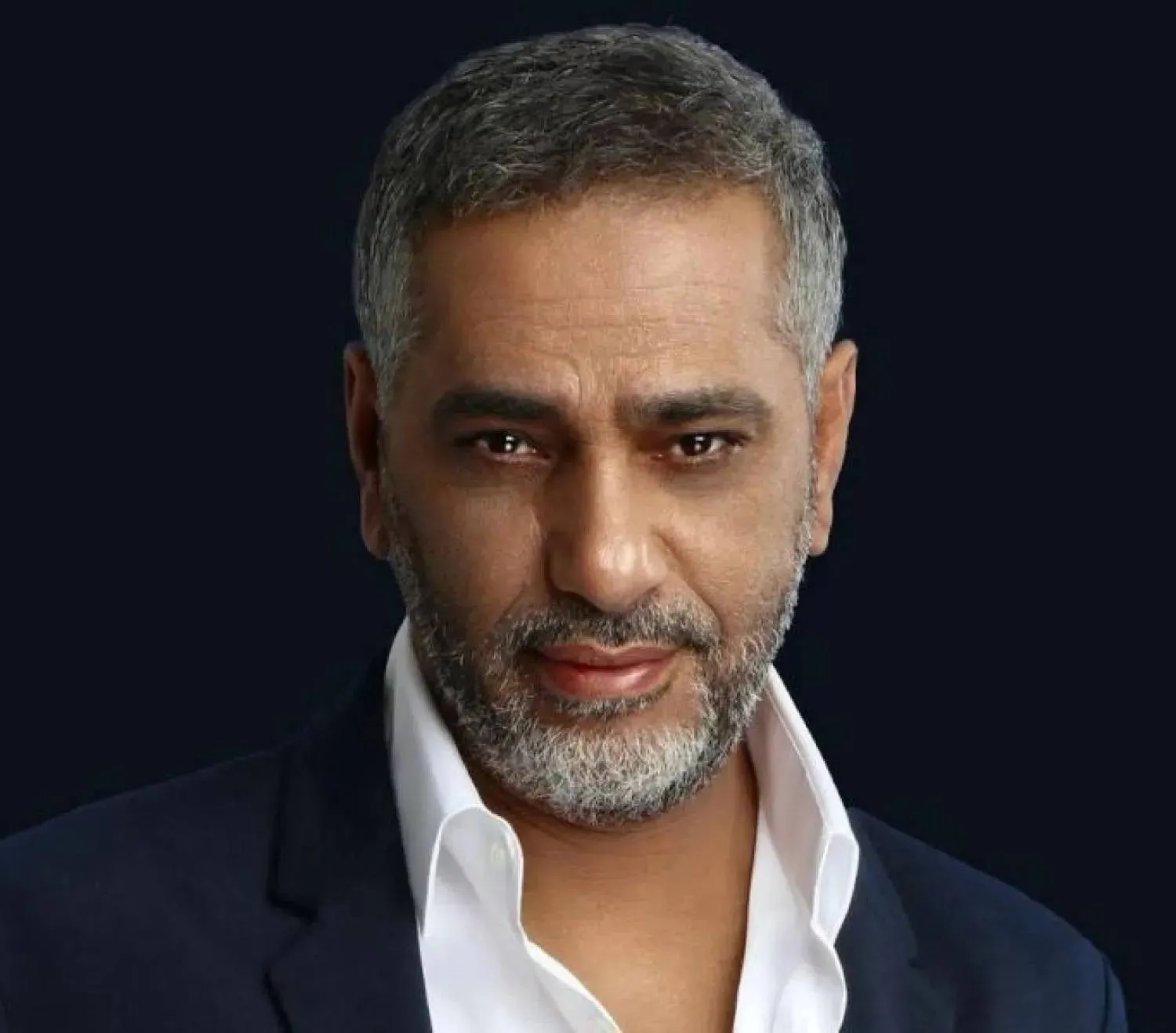
Lebanese singer Fadel Shaker - Instagram
TT

Lebanon: Fadel Shaker’s Tuesday Trial Seen as Test of Legal Cases

Lebanese singer Fadel Shaker - Instagram

Lebanese singer Fadel Shaker is set to appear before the military court next Tuesday to face trial in four separate security cases, “belonging to an armed group, financing the group, possessing unlicensed weapons, and undermining state authority and prestige,” sources familiar with the matter told Asharq Al-Awsat.

The sources said the head of the military court, Brig. Gen. Wassim Fayyad, “allocated Tuesday for questioning Shaker, without placing any other cases on the agenda, given the lengthy time his interrogation is expected to take.”

Security measures will be tight, the sources added, with the Lebanese army deployed around and inside the military court.

The trial will be attended by Shaker, his defense team, and a representative of the military public prosecutor. It is not yet clear whether the court will allow media coverage, with attendance possibly limited to journalists accredited to the military court.

The session is seen as a practical test for Shaker and his legal team in preparing for the trial and challenging the charges.

The sources noted that “during the first session, the court presidency will question Shaker and confront him with the evidence underlying previous absentia rulings. The military public prosecutor will also pose questions, reinforcing the seriousness of the case built against Shaker since 2013, following the Abra clashes between the Lebanese army and supporters of Sheikh Ahmed Al-Assir.”

Shaker voluntarily surrendered to Lebanese army intelligence at the entrance of Ain al-Hilweh camp on October 4, after spending more than 12 years there. At the time, he described the surrender as a judicial settlement to close his cases, though delays in scheduling the military court trial have fueled doubts.

Meanwhile, Shaker’s defense lawyers have prepared thoroughly for the session. A source close to the defense told Asharq Al-Awsat that the team “insists on proceeding with the trial without interruption or delay.”

The source said, “There is no legal justification for postponement. Shaker is the sole defendant, and with his lawyers and the military public prosecutor present, the case is complete and questioning must begin. Any delay would be unjustified.”

The source added that after Shaker’s interrogation, the court is expected to summon numerous witnesses, including Ahmed Al-Asir and others involved in the Abra events, particularly those with close knowledge of Shaker and his relationship with Al-Asir at the time.

Second Trial Scheduled

Shaker is also due to face a second trial in mid-December before the Beirut Criminal Court, presided over by Judge Bilal Dannaoui. The case, filed by Hilal Hammoud, a leader of the “Saraya al-Muqawama” group in Sidon, accuses Shaker, Al-Assir, and others of inciting his attempted killing.

The court president has already conducted a preliminary questioning of Shaker in preparation for the mid-December session.

The first military court session is expected to offer insights into the direction of the case, based on Shaker’s defense of his innocence and the position of the military public prosecutor.

It will also serve as a test of the Lebanese military judiciary’s ability to handle sensitive cases impartially, amid lingering questions over the harsh absentia sentences previously issued against Shaker.



Israel Clears Final Hurdle to Start Settlement Construction That Would Cut West Bank in Two

Construction cranes tower above a construction site in Givat HaMatos, an Israeli settlement suburb of Israeli-annexed east Jerusalem on January 2, 2026. (AFP)
TT

Israel Clears Final Hurdle to Start Settlement Construction That Would Cut West Bank in Two

Construction cranes tower above a construction site in Givat HaMatos, an Israeli settlement suburb of Israeli-annexed east Jerusalem on January 2, 2026. (AFP)

Israel has cleared the final hurdle before starting construction on a controversial settlement project near Jerusalem that would effectively cut the West Bank into two, according to a government tender. 

The tender, seeking bids from developers, would clear the way to begin construction of the E1 project. 

The anti-settlement monitoring group Peace Now first reported the tender. Yoni Mizrahi, who runs the group’s settlement watch division, said initial work could begin within the month. 

Settlement development in E1, an open tract of land east of Jerusalem, has been under consideration for more than two decades, but was frozen due to US pressure during previous administrations. 

The international community overwhelmingly considers Israeli settlement construction in the West Bank to be illegal and an obstacle to peace. 

The E1 project is especially contentious because it runs from the outskirts of Jerusalem deep into the occupied West Bank. Critics say it would prevent the establishment of a contiguous Palestinian state in the territory. 

Israeli Finance Minister Bezalel Smotrich, a far-right politician who oversees settlement policy, has long pushed for the plan to become a reality. 

“The Palestinian state is being erased from the table not with slogans but with actions,” he said in August, when Israel gave final approval to the plan. “Every settlement, every neighborhood, every housing unit is another nail in the coffin of this dangerous idea.” 

The tender, publicly accessible on the website for Israel’s Land Authority, calls for proposals to develop 3,401 housing units. Peace Now says the publication of the tender “reflects an accelerated effort to advance construction in E1.” 


Three Killed in Aleppo Attacks, Syrian Government, SDF Trade Blame

Syrian forces are seen during a military parade in Aleppo marking a year since the ouster of the Assad regime in December 2025. (Syrian Defense Ministry)
TT

Three Killed in Aleppo Attacks, Syrian Government, SDF Trade Blame

Syrian forces are seen during a military parade in Aleppo marking a year since the ouster of the Assad regime in December 2025. (Syrian Defense Ministry)

At least three people were killed and several others wounded in Syria's northern city of Aleppo, state news agency SANA said on Tuesday, citing Aleppo's health director, after deadly attacks for which Syrian government forces and the Kurdish-led Syrian Democratic Forces traded blame.

Syria's defense ministry said in a statement that the SDF had continued its "escalation" by targeting army positions and residential areas in Aleppo. The SDF denied its responsibility, saying that the ‌casualties were caused by "indiscriminate" ‌artillery and missile shelling by ‌factions ⁠aligned with ‌the Damascus government.

The violence came days after a meeting between senior officials from the SDF and the Damascus government on implementing a deal agreed nearly 10 months ago that aimed to fully integrate the semi-autonomous Kurdish region into the central Syrian government.

The agreement was ⁠meant to be implemented by the end of 2025, but ‌the two sides have made ‍little progress, each accusing ‍the other of stalling or acting in bad ‍faith.

The SDF is reluctant to give up autonomy it won as the main US ally during the war, which left it with control of ISIS prisons and rich oil resources.

Integrating the SDF into Syria's army would mend Syria's deepest remaining fracture, ⁠but failing to do so risks an armed clash that could derail the country's emergence from 14 years of war and potentially draw in Türkiye, which has threatened an incursion against Kurdish fighters it views as terrorists.

As progress falters, several rounds of fighting have broken out. On December 22, Syrian government forces and SDF agreed to de-escalate in the northern city of Aleppo, after a wave ‌of attacks that left at least two civilians dead and several wounded.


African Union Calls for Immediate Revocation of Somaliland’s Recognition by Israel

Somalis burn the Israel flag and an image depicting Israeli Prime Minister Benjamin Netanyahu during a demonstration, after Israel became the first country to formally recognize the self-declared Republic of Somaliland, at the Mogadishu Stadium in Warta Nabada district of Mogadishu, Somalia December 30, 2025. (Reuters)
TT

African Union Calls for Immediate Revocation of Somaliland’s Recognition by Israel

Somalis burn the Israel flag and an image depicting Israeli Prime Minister Benjamin Netanyahu during a demonstration, after Israel became the first country to formally recognize the self-declared Republic of Somaliland, at the Mogadishu Stadium in Warta Nabada district of Mogadishu, Somalia December 30, 2025. (Reuters)

The African Union's Political Affairs Peace and Security council called on Tuesday for the "immediate revocation" of Israel's recognition ‌of Somaliland.

Israeli ‌Foreign ‌Minister ⁠Gideon Sara ‌visited Somaliland on Tuesday on a trip that was denounced by Somalia, 10 ⁠days after Israel ‌formally recognized the ‍self-declared ‍republic as ‍an independent and sovereign state.

"The (AU) Council strongly condemns, in the strongest terms, the unilateral recognition of ⁠the so-called 'Republic of Somaliland' by Israel," it said in a post on X after a ministerial meeting.
