
Lebanon Drawn into Israeli–Iranian Tug of War over Hezbollah’s Weapons

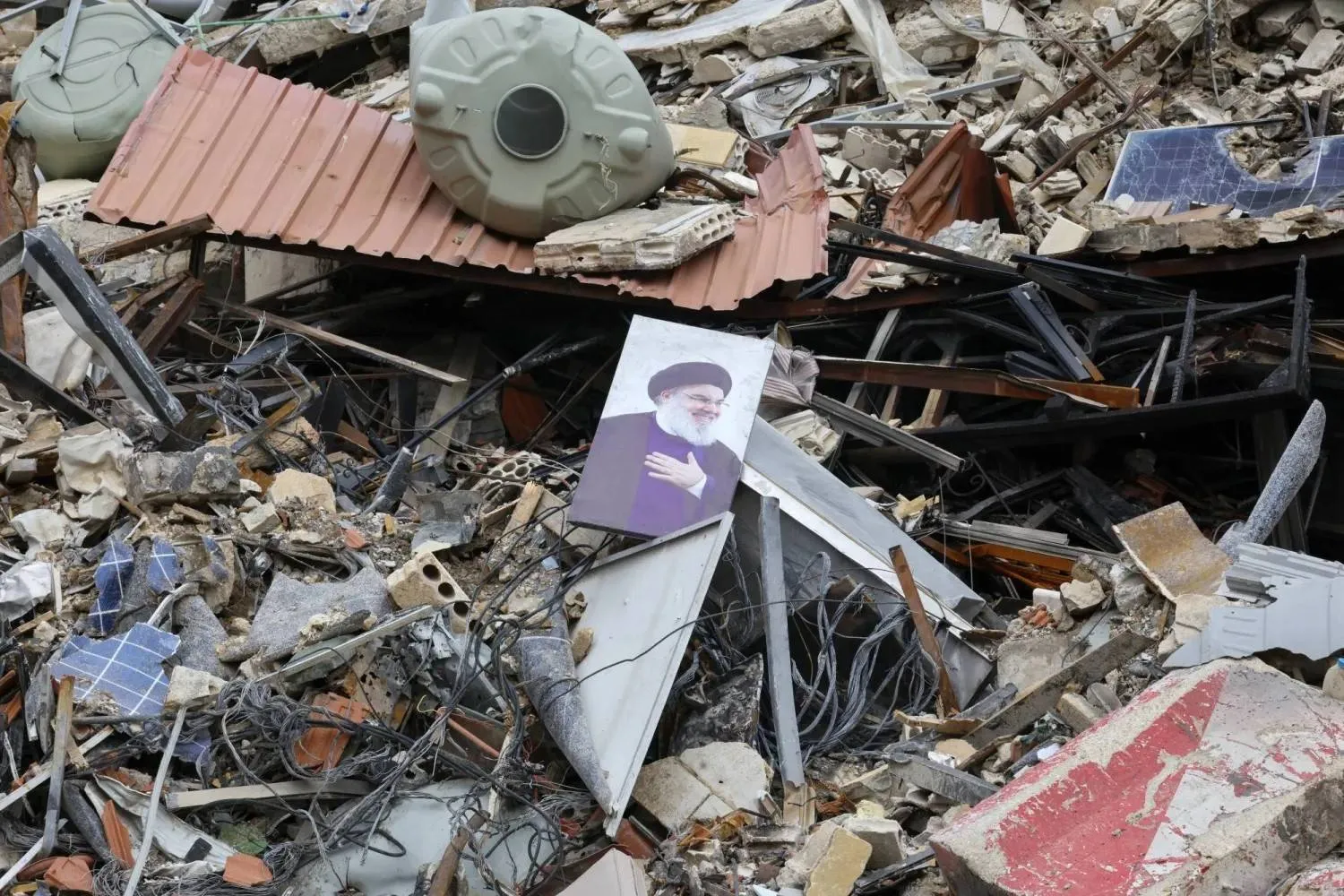
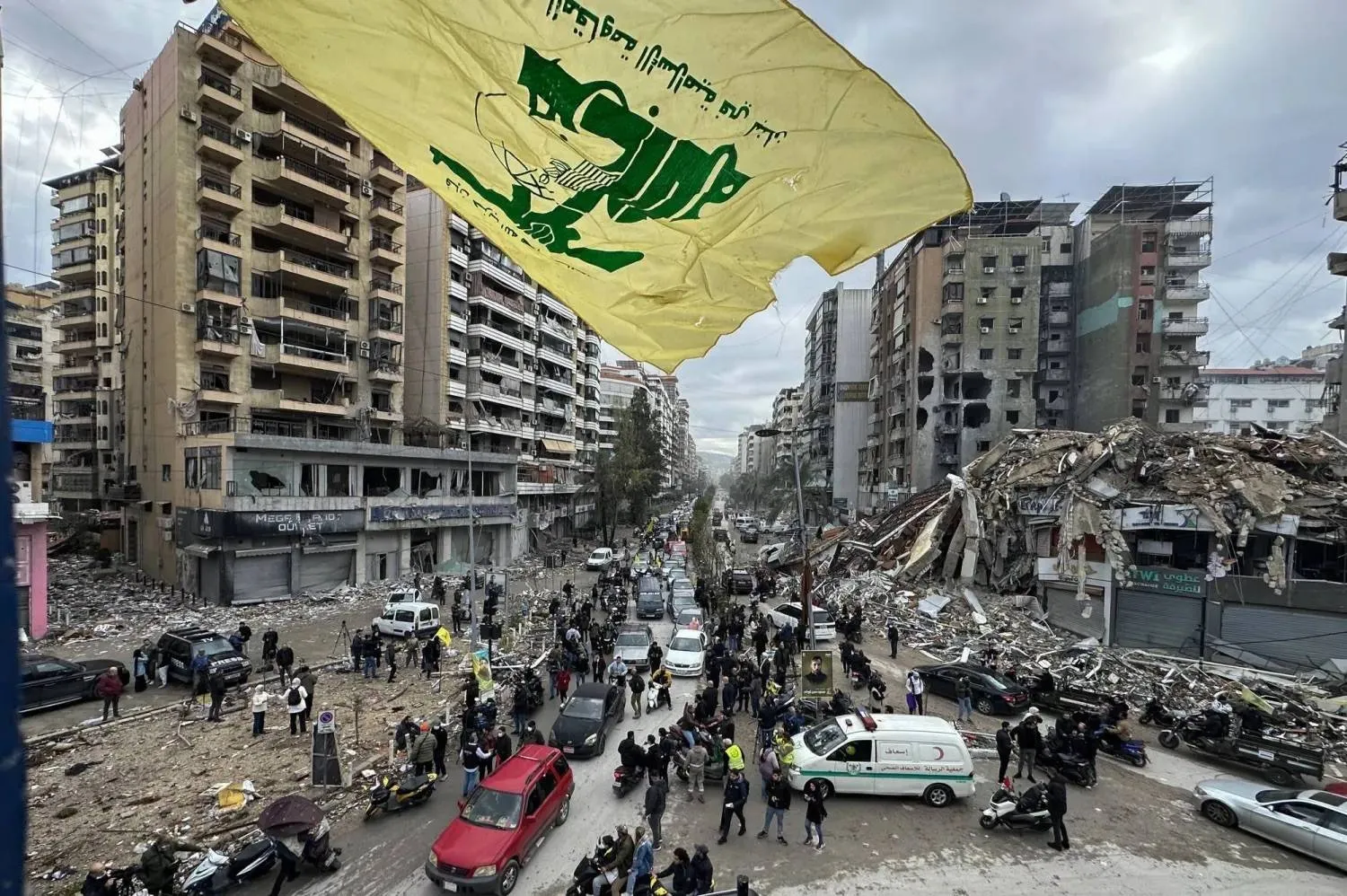
Lebanese people return to Beirut’s southern suburb on 27 November 2024 following the implementation of the ceasefire agreement (Archive – EPA). 
TT

Lebanon Drawn into Israeli–Iranian Tug of War over Hezbollah’s Weapons

Lebanese people return to Beirut’s southern suburb on 27 November 2024 following the implementation of the ceasefire agreement (Archive – EPA). 

Lebanon on Wednesday found itself pulled deeper into the emerging confrontation between Israel and Iran over the future of Hezbollah.

Tehran declared that Hezbollah’s presence had become “indispensable for Lebanon,” while Israel warned Beirut that stability would not return without guarantees for Israel’s security. The diplomatic tension unfolded as Egypt intensified mediation efforts to prevent escalation.

Israeli Threats Over Hezbollah

Speaking before the Israeli Knesset, Defense Minister Israel Katz vowed that Israel would not tolerate threats along its northern border.

"We will not allow any threats against the inhabitants of the north, and maximum enforcement will continue and even intensify," Katz said. He warned that there “will be no calm in Beirut, no order and no stability in Lebanon until Israel’s security is guaranteed.

His comments came just days after an Israeli airstrike in Beirut’s southern suburbs killed Haitham al-Tabtabai, a senior Hezbollah military commander, along with several of the group’s members.

Katz reiterated that Israel remains determined to dismantle Hezbollah’s weapons capacity. He also suggested reopening the maritime border agreement with Lebanon, calling it “flawed” and saying Israel would reconsider it.

Tehran Reaffirms Backing for Hezbollah

Responding to the Israeli stance, Ali Akbar Velayati, senior adviser to Iran’s Supreme Leader, insisted that Hezbollah had become essential to Lebanon’s survival.

“The continuing crimes of the Zionist entity against Lebanon show that Hezbollah has become more vital than daily bread for the Lebanese people,” Velayati said in remarks published by Iran’s Tasnim news agency. He accused Israel of repeatedly violating the ceasefire and international law, arguing that disarming Hezbollah would be “catastrophic” for Lebanon.

Velayati stressed that Iran “has supported and will continue to support Hezbollah and the resistance front,” asserting that the group has repeatedly protected the Lebanese people from Israeli aggression.

Lebanese Push Back Against Iranian Remarks

Velayati’s comments ignited criticism across Lebanon’s political spectrum. Samir Geagea, leader of the Lebanese Forces party, fired back: “If you and the Supreme Leader concerned yourselves with the plight of the Iranian people and your prisons, it would be better for all of us. Lebanon is an independent state with its own constitution and elected authorities. You have no right to interfere in our affairs.”

Lebanon’s Foreign Minister Youssef Rajji also responded forcefully, addressing his Iranian counterpart Abbas Araghchi. He said he had hoped to believe Iran did not meddle in Lebanese affairs “until your Supreme Leader’s adviser came out to tell us what is essential for Lebanon and warn us against removing Hezbollah’s weapons.”

Rajji asserted that what matters more than “water and bread” for Lebanese citizens is “our sovereignty, freedom and independent decision-making, away from ideological slogans and cross-border regional agendas that ruined our country.”

Egypt Steps in to Defuse Tension

Amid the political clash, Egyptian Foreign Minister Badr Abdelatty arrived in Beirut carrying a message of support for a national initiative announced by Lebanese President Joseph Aoun on Independence Day.

Abdelatty stressed that Cairo is making “intensive efforts to spare Lebanon any aggression.”

After meeting Aoun, Abdelatty said Egyptian President Abdel Fattah al-Sisi had instructed him to mobilize Egypt’s diplomatic relationships to support de-escalation and the implementation of ceasefire agreements.

He endorsed Aoun’s proposal for the Lebanese Army to assume control of all positions in the south and voiced support for the government’s goal of limiting weapons to state authority.

“We deploy our regional ties to encourage a diplomatic solution,” Abdelatty said, warning that “the entire region is on the brink of full escalation, which serves no one.”

He later met Parliament Speaker Nabih Berri, praising his “wisdom” and confirming his support for the initiative. Abdelatty said Egypt maintains a “consistent position” that all weapons in Lebanon should fall under the state’s control, while warning Israel to halt its violations and allow the Lebanese Army to operate freely.

In a meeting with Prime Minister Nawaf Salam, Abdelatty reaffirmed Egypt’s determination to help protect Lebanon and strengthen the Lebanese Army.

Salam welcomed Egypt’s assistance, emphasizing that the army is already implementing the government’s decision to keep weapons exclusively under state authority, while Israel “continues to violate the agreement daily and occupy several points in the south.”


Libya Says UK to Analyze Black Box from Crash That Killed General

Military personnel carry portraits of the Libyan chief of staff, General Mohamed al-Haddad (2-R), and his four advisers, who were killed in a plane crash in Türkiye, during an official repatriation ceremony at the Ministry of Defense headquarters in Tripoli, Libya, 27 December 2025. (EPA)
TT

Libya Says UK to Analyze Black Box from Crash That Killed General

Military personnel carry portraits of the Libyan chief of staff, General Mohamed al-Haddad (2-R), and his four advisers, who were killed in a plane crash in Türkiye, during an official repatriation ceremony at the Ministry of Defense headquarters in Tripoli, Libya, 27 December 2025. (EPA)

Libya said on Thursday that Britain had agreed to analyze the black box from a plane crash in Türkiye on December 23 that killed a Libyan military delegation, including the head of its army.

General Mohammed al-Haddad and four aides died after a visit to Ankara, with Turkish officials saying an electrical failure caused their Falcon 50 jet to crash shortly after takeoff.

Three crew members, two of them French, were also killed.

The aircraft's black box flight recorder was found on farmland near the crash site.

"We coordinated directly with Britain for the analysis" of the black box, Mohamed al-Chahoubi, transport minister in the Government of National Unity (GNU), said at a press conference in Tripoli.

Haddad was very popular in Libya despite deep divisions between west and east.

Haddad was chief of staff for the Tripoli-based GNU.

Chahoubi told AFP a request for the analysis was "made to Germany, which demanded France's assistance" to examine the aircraft's flight recorders.

"However, the Chicago Convention stipulates that the country analyzing the black box must be neutral," he said.

"Since France is a manufacturer of the aircraft and the crew was French, it is not qualified to participate. The United Kingdom, on the other hand, was accepted by Libya and Turkey."

After meeting the British ambassador to Tripoli on Tuesday, Foreign Minister Taher al-Baour said a joint request had been submitted by Libya and Türkiye to Britain "to obtain technical and legal support for the analysis of the black box".

Chahoubi told Thursday's press briefing that Britain "announced its agreement, in coordination with the Libyan Ministry of Transport and the Turkish authorities".

He said it was not yet possible to say how long it would take to retrieve the flight data, as this depended on the state of the black box.

"The findings will be made public once they are known," Chahoubi said, warning against "false information" and urging the public not to pay attention to rumors.


STC Says Handing over Positions to National Shield Forces in Yemen's Hadhramaut, Mahra

National Shield forces in Hadhramaut. (National Shield forces)
TT

STC Says Handing over Positions to National Shield Forces in Yemen's Hadhramaut, Mahra

National Shield forces in Hadhramaut. (National Shield forces)

Southern Transitional Council (STC) forces in Yemen began on Thursday handing over military positions to the government’s National Shield forces in the Hadhramaut and al-Mahra provinces in eastern Yemen.

Local sources in Hadhramaut confirmed to Asharq Al-Awsat that the handover kicked off after meetings were held between the two sides.

Speaking on condition of anonymity, the sources said the National Shield commanders met with STC leaderships to discuss future arrangements. The sourced did not elaborate, but they confirmed that Emirati armored vehicles, which had entered Balhaf port in Shabwah were seen departing on a UAE vessel, in line with a Yemeni government request.

The National Shield is overseen by Presidential Leadership Council (PLC) Chairman Dr. Rashad al-Alimi.

A Yemeni official described Thursday’s developments as “positive” step towards uniting ranks and legitimacy against a common enemy – the Houthi groups.

The official, also speaking on condition of anonymity, underscored to Asharq Al-Awsat the importance of “partnership between components of the legitimacy and of dialogue to resolve any future differences.”

Meanwhile, on the ground, Yemeni military sources revealed that some STC forces had refused to quit their positions, prompting the forces to dispatch an official to Hadhramaut’s Seiyun city to negotiate the situation.


One Dead as Israeli Forces Open Fire on West Bank Stone-Throwers

Israeli troops during a military operation in the Palestinian village of Qabatiya, near the West Bank city of Jenin, 27 December 2025. (EPA)
TT

One Dead as Israeli Forces Open Fire on West Bank Stone-Throwers

Israeli troops during a military operation in the Palestinian village of Qabatiya, near the West Bank city of Jenin, 27 December 2025. (EPA)

The Israeli military said its forces killed a Palestinian in the occupied West Bank in the early hours on Thursday as they opened fire on people who were throwing stones at soldiers.

Two other people were hit on a main ‌road near the ‌village of Luban ‌al-Sharqiya ⁠in Nablus, ‌the military statement added. It described the people as militants and said the stone-throwing was part of an ambush.

Palestinian authorities in the West Bank said ⁠a 26-year-old man they named as ‌Khattab Al Sarhan was ‍killed and ‍another person wounded.

Israeli forces had ‍closed the main entrance to the village of Luban al-Sharqiya, in Nablus, and blocked several secondary roads on Wednesday, the Palestinian Authority's official news agency WAFA reported.

More ⁠than a thousand Palestinians were killed in the West Bank between October 2023 and October 2025, mostly in operations by security forces and some by settler violence, the UN has said.

Over the same period, 57 Israelis were killed ‌in Palestinian attacks.