
Israeli Forces Kill at Least 13 People in Southern Syria Raid, Officials and Residents Say

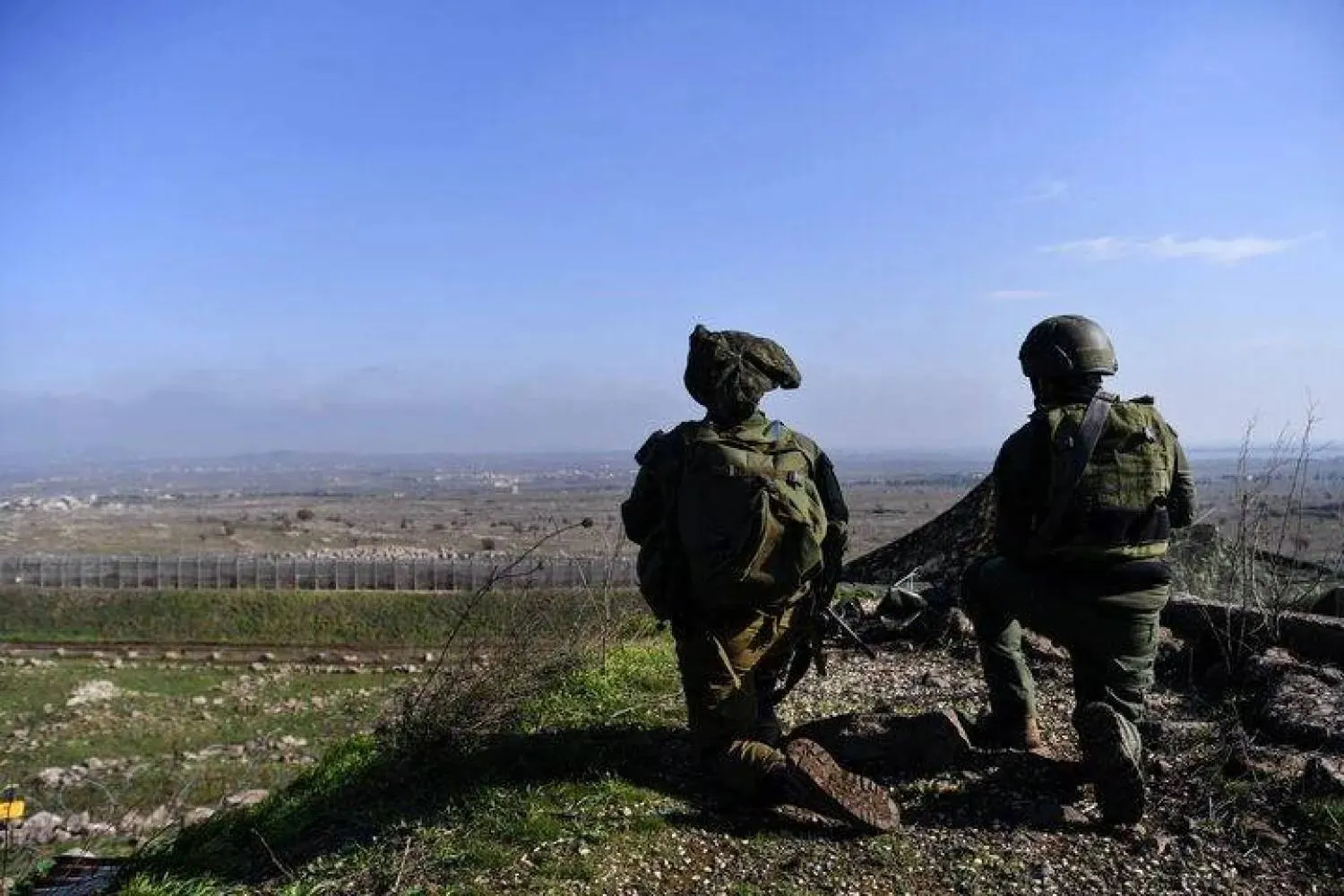
Two Israeli soldiers in the Golan Heights. (Archive-Reuters)
TT

Israeli Forces Kill at Least 13 People in Southern Syria Raid, Officials and Residents Say

Two Israeli soldiers in the Golan Heights. (Archive-Reuters)

Israeli forces raided a Syrian village and opened fire when they were confronted by residents on Friday, killing at least 13 people, Syrian officials said, in the deadliest Israeli attack since its troops seized a swath of southern Syria a year ago. 

Syria’s Foreign Ministry called the attack a “horrific massacre” and said women and children were among those killed. 

The Syrian state news agency SANA said Israeli forces entered the village of Beit Jin aiming to seize local men and opened heavy fire after being confronted by residents. Dozens of families fled the area. 

Israel said Friday it conducted an operation to apprehend suspects from the Jamaa Islamiya group in Beit Jin who were planning IED and rocket attacks into Israel. It said other militants opened fire at the troops, injuring six, and that troops returned fire, including bringing in air support. It said the operation had concluded, all of the suspects were apprehended and a number of militants were killed. 

A local official in the village, Walid Okasha, told The Associated Press that those killed were civilians. Among the dead were a man, his wife, his two children and his brother as well as another man who had gotten married the day before. 

Firas Daher, a Beit Jin resident, told the AP that troops moved in around 3 a.m. and were met by “slight resistance, with light weapons.” Troops responded with drones and helicopters and fire from heavy machine guns. "Whenever anyone would move inside the village or any car would move, it would get hit. When we tried to take injured people to the hospital, they would hit the car carrying them,” he said. 

Since the fall of former Syrian President Bashar Assad in December 2024, Israeli forces have held a slice of southern Syria that was previously a UN-patrolled buffer zone under a 1974 disengagement agreement. Troops have regularly carried out operations in villages and towns inside and outside the zone, including raids snatching people it says are suspected militants. Israel has also launched hundreds of airstrikes on Syrian military sites and pushed for a demilitarized zone south of Damascus. 

Israeli raids have several times been met by armed local residents. In April, troops raided the town of Nawa, and when confronted by residents, the military carried out airstrikes in the town, killing nine people. A month earlier, Israeli forces killed six people in the village of Koayiah in similar clashes during a raid. 

In a previous raid on Beit Jin in June, Israeli forces seized several people who they said were Hamas members — a characterization disputed by residents — and killed a man whose family said had a history of schizophrenia. 

Israel says it seized the 400-square-kilometer (155-square-mile) demilitarized buffer zone in southern Syria in a preemptive move to prevent militants from moving into the area after opposition groups toppled Assad. It says the move is temporary, but critics accuse Israel of taking advantage of Syria's turmoil for a land grab. Israel still occupies the Golan Heights that it captured from Syria during the 1967 Mideast war and later annexed — a move not recognized by most of the international community. 

Syrian officials have condemned the Israeli incursions as a violation of Syria’s sovereignty. On Friday the government called for the international community to take “urgent action” to halt Israeli incursions. 

Israel has viewed Syria's new government, headed by Ahmed al-Sharaa, with suspicion. The two countries, which do not have diplomatic relations, have been negotiating a potential security agreement to de-escalate. 

The deaths in Syria followed a series of strikes by Israel’s air force in parts of southern Lebanon on Thursday. Israel says its ongoing strikes are aimed at preventing Hezbollah from rebuilding after a devastating war last year ended with a ceasefire. 

The United Nations on Tuesday said Israel had killed at least 127 civilians, including children, in its strikes on Lebanon since the ceasefire a year ago. Things escalated earlier this week with an Israeli strike in Lebanon’s capital, Beirut, killing a senior Hezbollah official whom Israel described as the group's chief of staff. 


Israeli Fire Kills Two in Gaza as Truce Deal Moves to Next Phase

Mourners react during the funeral of Palestinians who, according to medics, were killed by Israeli gunfire on Thursday, at Nasser Hospital in Khan Younis, in the southern Gaza Strip. REUTERS/Ramadan Abed
TT

Israeli Fire Kills Two in Gaza as Truce Deal Moves to Next Phase

Mourners react during the funeral of Palestinians who, according to medics, were killed by Israeli gunfire on Thursday, at Nasser Hospital in Khan Younis, in the southern Gaza Strip. REUTERS/Ramadan Abed

Israeli fire killed at least two Palestinians in Gaza on Thursday, health officials said, in the latest violence rattling a fragile ceasefire as Hamas and Israel looked to implement the second phase of the US-brokered Gaza peace plan.

Medics said two men were killed by Israeli forces in eastern Khan Younis, in an area adjacent to where the army operates. The Israeli military told Reuters it wasn't aware of any casualties as a result of Israeli fire on Thursday.

The Gaza health ministry said Israeli airstrikes, tank shelling and gunfire have killed at least 490 people since the truce took effect in October after two years of war that widely demolished the Palestinian enclave.

Israel said four soldiers have been killed by Palestinian militants in the small coastal territory over the same period.

The two sides have traded blame over the truce violations.

By advancing to phase two, the US and mediator partners Egypt and Qatar must confront the more contentious issue of Hamas disarmament, which the group has long rejected. The plan also calls for deploying an international peacekeeping force.


Lebanese Security Arrests Network Smuggling Drugs from Türkiye to Saudi Arabia

 A billboard on the road to Beirut International Airport promoting tourism in Lebanon. (AP) 
 A billboard on the road to Beirut International Airport promoting tourism in Lebanon. (AP) 
TT

Lebanese Security Arrests Network Smuggling Drugs from Türkiye to Saudi Arabia

 A billboard on the road to Beirut International Airport promoting tourism in Lebanon. (AP) 
 A billboard on the road to Beirut International Airport promoting tourism in Lebanon. (AP) 

Lebanese General Security has dismantled an organized network involved in smuggling drugs from Türkiye to Saudi Arabia, as authorities reiterated that Lebanon “will not be a platform or transit route for drug trafficking to sisterly or friendly countries.”

In a statement, the Media Affairs Office of Lebanon's General Security said that, as part of close monitoring of passenger movements at border crossings, officers at Beirut’s Rafic Hariri International Airport arrested four Turkish nationals, three men and one woman, while they were attempting to enter Lebanon on a flight arriving from Istanbul.

According to the statement, suspicions were raised by the suspects’ frequent travel patterns. Acting on instructions from the competent judiciary, the detainees were subjected to security interrogations that revealed they had established an organized network to smuggle narcotics from Türkiye to the Kingdom, in coordination with external parties and in exchange for financial payments.

Investigations also showed that they had carried out several previous operations using professional methods.

The statement added that investigations produced evidence confirming their direct involvement in smuggling activities. The suspects and seized materials were referred to the competent authorities under the supervision of the Mount Lebanon Public Prosecutor’s Office.

Interior and Municipalities Minister Ahmad Al-Hajjar praised “the significant efforts made by the security services, particularly the Directorate General of General Security, in combating drug-trafficking networks,” commending the “high-quality operation carried out at Beirut’s Rafic Hariri International Airport that led to the arrest of an organized network involved in smuggling narcotics.”

He stressed that Lebanon “will never be a platform or transit route for drug trafficking to sisterly or friendly countries, especially the Kingdom of Saudi Arabia,” and will not allow its territory to be used to undermine the security of Arab and international societies.


Political, Military Activity in Lebanon to Address Weapons, Ceasefire Mechanism Crisis

Lebanese army soldiers look toward the Israeli military position of Hanita (left) and the Labbouneh position, part of the five hills occupied by Israeli forces since last year (right), from a Lebanese military post in the village of Alma al-Shaab in southern Lebanon, Nov. 28, 2025. (AP) 
TT

Political, Military Activity in Lebanon to Address Weapons, Ceasefire Mechanism Crisis

Lebanese army soldiers look toward the Israeli military position of Hanita (left) and the Labbouneh position, part of the five hills occupied by Israeli forces since last year (right), from a Lebanese military post in the village of Alma al-Shaab in southern Lebanon, Nov. 28, 2025. (AP) 

Lebanon is preparing political and military conditions to ensure the success of an upcoming visit by Army Commander Gen. Rodolphe Haykal to the United States, consolidate stability at home, and pave the way for a Paris conference in March to support the Lebanese Armed Forces.

The effort involves coordinated steps, beginning with setting a date for the army to present its vision to the government for implementing the second phase of the “exclusive state control of weapons” plan, alongside intensified international contacts to reactivate the work of the ceasefire monitoring mechanism.

Lebanese sources told Asharq Al-Awsat that the success of the Paris conference depends on US backing, while Washington is awaiting the army’s proposed approach for launching the second phase of the weapons plan.

Political and military initiatives aim to unlock multiple obstacles simultaneously, strengthen stability, and enable the army to carry out its government-mandated tasks.

Army Plan Presented to Cabinet

The Cabinet is scheduled to meet Friday afternoon at Baabda Palace under President Joseph Aoun. A key agenda item is the army’s plan for deployment and operations north of the Litani River, which Haykal is expected to present in detail.

The Central News Agency (Al-Markaziah) reported that the briefing will cover the operational framework, implementation stages, assigned missions, and logistical and security requirements, considering recent developments in the south and Lebanon’s state commitments.

Official sources said the plan will define geographic scope, types of weapons, implementation tools, and timelines, and will be reviewed pending approval by relevant parties, an implicit reference to US and Israeli consent.

They noted that exclusive state control of weapons is a government commitment, and that Hezbollah, as part of the government, is expected to adhere to the plan.

During the first phase south of the Litani, the army worked to prevent the transfer of weapons between governorates. Proposals to “contain weapons” north of the Litani — an initiative put forward by Egypt and previously approved by the United States — are also under discussion.

The “Mechanism” Impasse

The resumption of meetings of the ceasefire “mechanism” is seen as the most significant obstacle.

On the military level, a Lebanese army delegation traveled to the United States on Wednesday ahead of Haykal’s planned visit on Feb. 5. Senior officers are expected to meet Gen. Joseph Clairfield, head of the mechanism committee, with sources confirming that no changes have been made to the committee overseeing the ceasefire.

Politically, the Lebanese presidency announced that Aoun’s security and military adviser, retired Brig. Gen. Antoine Mansour, met US Col. David Leon Klingensmith, deputy head of the mechanism committee, in the presence of Defense Attaché Col. Jason Belknap at the US Embassy in Beirut. Discussions focused on the committee’s work, cooperation with the Lebanese side, and preparations for the next meeting.

The meeting also explored whether Israel had responded to Lebanese demands regarding the ceasefire, withdrawal, and prisoner releases. Ministerial sources stressed that the mechanism remains the sole framework for security, military, and political negotiations to implement the agreement.

Next Meeting and Growing Tensions

The next mechanism meeting is scheduled for Feb. 25. While the agenda has not been finalized, official estimates suggest it will focus on security issues rather than political ones, amid continued Israeli violations despite Lebanon’s fulfillment of its commitments.

Lebanese authorities maintain that Lebanon has extended state authority south of the Litani, removed weapons, refrained from firing toward Israel, and advanced phased implementation of exclusive state control of arms — steps taken unilaterally, while Israel has not halted attacks, withdrawn from occupied positions, or released detainees.

Sources stressed the need for international pressure on Israel to honor its obligations and demonstrate good faith in the ceasefire process.