


Syria Tightens Security Ahead of First Liberation Anniversary

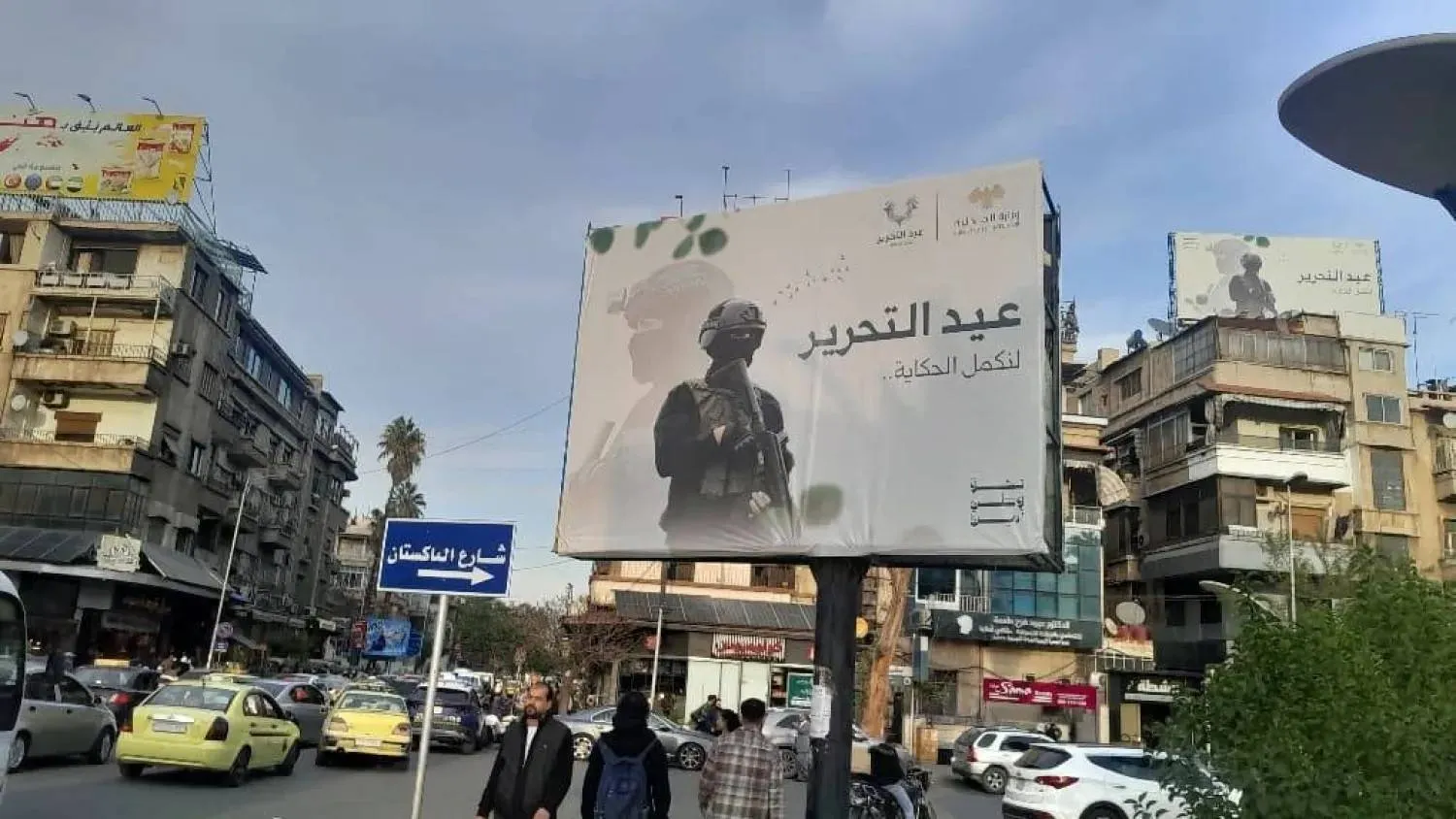
Banners marking the liberation and the fall of Assad’s regime in Damascus streets (Asharq Al-Awsat)
TT

Syria Tightens Security Ahead of First Liberation Anniversary

Banners marking the liberation and the fall of Assad’s regime in Damascus streets (Asharq Al-Awsat)

A charged and fast-moving atmosphere is taking hold across Syria in the days leading up to the first anniversary of the liberation of Damascus from Bashar al-Assad’s rule on December 8, a moment that coincides with Christmas and New Year festivities.

Announcements marking the liberation fill the streets, urging Syrians to unite in rebuilding the country beside Christmas decorations.

The atmosphere comes amid tight security, with a heavy deployment of Interior Ministry units and patrols to guard against possible attacks on public gatherings, alongside intensified operations targeting arms and drug traffickers in the provinces and border regions.

In addition to central celebrations called for by official and popular bodies in major city squares, which include activities from December 5 to 8 under the slogan “Let us complete the story”, the Ministry of Religious Endowments invited all mosques to hold dawn prayers next Monday, December 8, with “victory chants” to begin half an hour before the call to prayer.

Sources said all government agencies are on high alert, especially the Interior Ministry, adding that there are concerns that extremist groups, including ISIS or others, could attempt attacks on crowds.

The sources said the Interior Ministry faces a major test one year after the fall of the regime, noting that it has sought to make significant improvements to internal security performance and to safeguard “victory” celebrations despite the challenges ahead.

The sources said external and internal parties are still attempting to disrupt the transitional phase. They also noted increased movement of returning expatriates, visitors, and Arab and foreign journalists, which has raised security alert levels.

Within less than 24 hours, Syrian authorities announced the dismantling of two drug trafficking networks in Damascus and Aleppo, the thwarting of an arms shipment destined for Hezbollah in Lebanon, and the launch of a campaign to pursue arms and drug traffickers in Deir al Zor.

The Internal Security Directorate in Yabroud in the Qalamoun area in rural Damascus said it foiled an attempt to smuggle a large quantity of war mines to Lebanon, seizing the entire shipment, arresting four suspects and killing a fifth during clashes with patrol units.

Khaled Abbas Taktouk, the head of Yabroud security, said the operation followed precise intelligence work and continuous surveillance that identified the suspects and tracked them to the smuggling point in the al Jabbah area north of rural Damascus near the Lebanese border.

He said specialized units carried out a tightly planned raid that resulted in the seizure of 1,250 war mines equipped with detonators that were prepared for transfer to Hezbollah in Lebanon.

Security assessments in border regions that were once under Iranian and Hezbollah influence indicate that weapons caches remain hidden in undisclosed locations and that some of these arms have been taken by local residents who are now selling them secretly.

Smuggling operations are uncovered periodically. Some of the seized weapons were looted from former regime military bases during the chaos that followed the fall of the regime, while others belong to Iranian and Hezbollah militias and are being retrieved through smugglers.

In Aleppo, the Anti Narcotics Branch said on Wednesday it had dismantled a drug trafficking and distribution network, arresting the ringleader and four members.

The state news agency SANA quoted a police source as saying officers seized about 31,000 Captagon pills, around 500 grams of crystal meth and quantities of the same substance in liquid form.

Hours earlier, the Anti Narcotics Branch in Damascus announced it had dismantled another network operating in the capital, arresting its ringleader and nine members, and seizing large quantities of drugs including nearly 500,000 Captagon pills, 1,000 grams of methamphetamine, 12 kilograms of hashish and 3,000 grams of heroin, in addition to various weapons.

In eastern rural Deir al Zor, internal security forces on Wednesday carried out an operation targeting arms traffickers in the village of al-Kishma, which is part of the town of Subaykhan near the Iraqi border, according to the local al Asharah Media Office.

Two people were also arrested after throwing a hand grenade at the courthouse building in the city of al-Mayadeen.


Lebanese Army Chief to Make Pivotal Visit to Washington Next Month

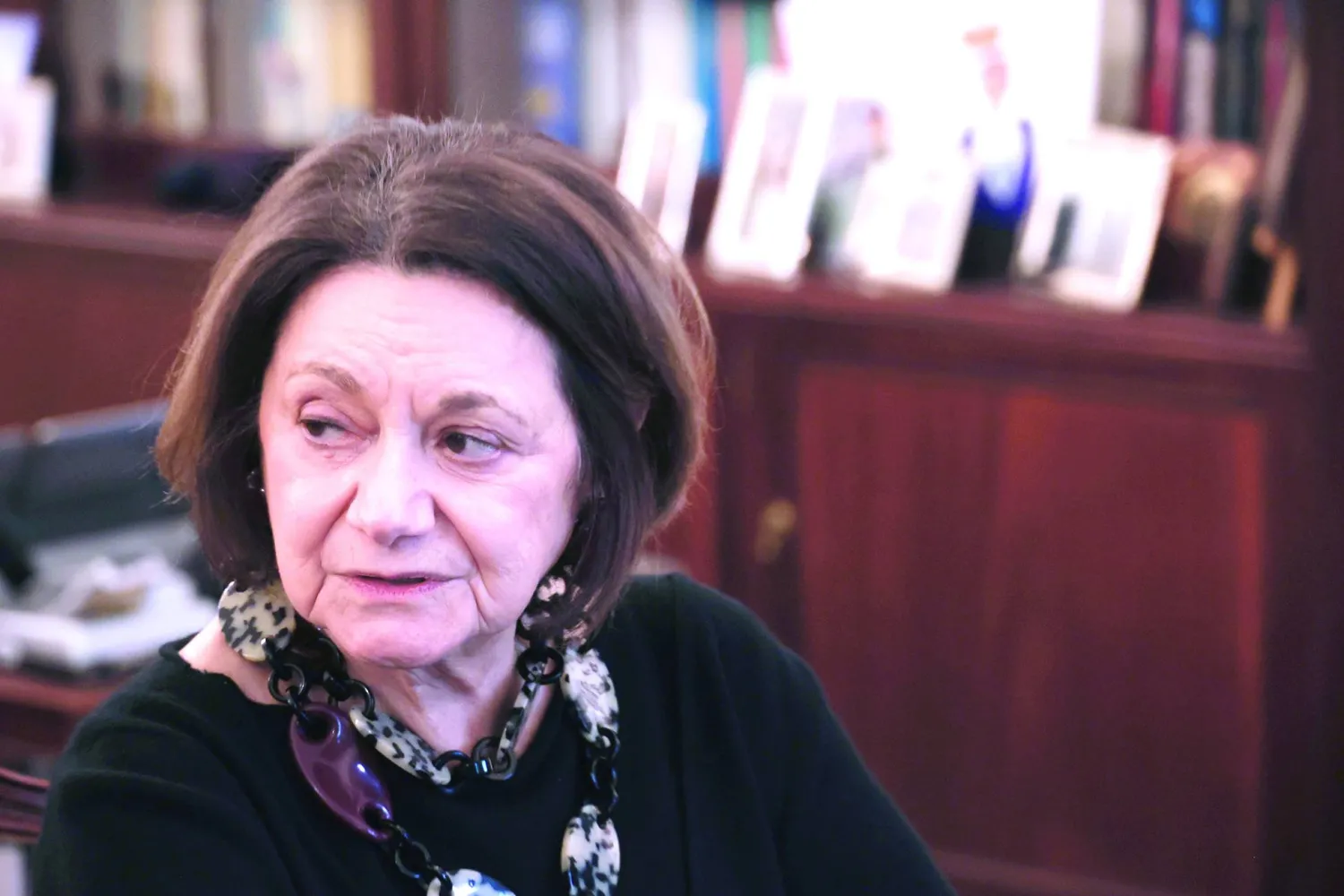
Lebanese army chief General Rodolphe Haykal. Photo: Army command
TT

Lebanese Army Chief to Make Pivotal Visit to Washington Next Month

Lebanese army chief General Rodolphe Haykal. Photo: Army command

Lebanese army chief General Rodolphe Haykal is gearing up for an official visit to Washington in early February, after the US cancelled meetings with him in November.

The visit comes at a sensitive time, preceding the Paris conference to supporting the Lebanese army in March.

Ministerial sources told Asharq Al-Awsat that Haykal’s visit to Washington has been set for between February 3 and 5, saying the army’s needs, cooperation between the US and Lebanese militaries, and continued American support for the Lebanese army will be high on the agenda of the talks.

Military sources said that the visit’s postponement in November has not frozen contacts between the two sides. On the contrary, intense contacts have since been made to reschedule the visit, resulting in setting a new date next month.

The army’s plan to confiscate all unauthorized arms and extend state authority over all Lebanese territory will most likely top the agenda of the visit. This plan has drawn broad international attention.

A statement issued by the army command on January 8 regarding the achievement of the objectives of the first phase of the weapons-control plan will constitute a key component of Haykal’s briefing to US officials.

The army said in that statement that it had achieved the initial goal to clear non-state weaponry from the southern area near the Israeli border by the end of 2025.

It said it secured areas south of the Litani River, excluding positions still held by Israeli forces, though there was more work to be done clearing unexploded ordnance and tunnels.

Haykal’s briefing will most likely refer to the challenges hindering the full implementation of the plan, foremost among them ongoing Israeli attacks and the occupation of a number of sites inside Lebanese territory, in addition to the establishment of buffer zones that restrict freedom of movement, as well as the daily violations of the ceasefire agreement of November 27, 2024.

The army chief will also stress continued close cooperation with the United Nations Interim Force in Lebanon (UNIFIL) and with the ceasefire monitoring committee known as the mechanism, which held its last meeting on January 7 at the military level in the absence of civilians.

Ministerial sources told Asharq Al-Awsat that the mechanism will not hold meetings this month. “We are awaiting the return of the US general who is abroad, as well as the appointment of a civilian representative to replace US envoy Morgan Ortagus, who has been relieved of her duties,” they said.

Meanwhile, Lebanon continues its preparations for the Paris conference to support the army, scheduled for March 5.

Lebanese President Joseph Aoun told a recent security meeting that the army and security forces should prepare accurate reports on their needs and brief the conferees to secure the required assistance for their institutions.


Al-Khanbashi: Hadramout Has Been Liberated from Al-Zubaidi, UAE's Hegemony

Hadramout Governor and a member of the Yemeni Presidential Leadership Council, Salem al-Khanbashi gives a media briefing in the port city of Mukalla in Hadramout, Yemen, January 19, 2026. (Reuters)
TT

Al-Khanbashi: Hadramout Has Been Liberated from Al-Zubaidi, UAE's Hegemony

Hadramout Governor and a member of the Yemeni Presidential Leadership Council, Salem al-Khanbashi gives a media briefing in the port city of Mukalla in Hadramout, Yemen, January 19, 2026. (Reuters)

Presidential Leadership Council (PLC) member and Governor of Yemen's eastern Hadramout province Salem al-Khanbashi accused on Monday the United Arab Emirates of exploiting its participation in the coalition to support legitimacy in Yemen to pursue its own agenda.

Speaking at a press conference in Mukalla city, he said the UAE's actions in Hadramout were a shock to the people and local authorities.

The authorities had hoped that the UAE would act as a supporter to the Yemeni people as part of the coalition, but its actions on the ground went against those expectations, he remarked.

Hadramout has suffered from the hegemony of armed factions affiliated with Aidarous al-Zubaidi, leader of the Southern Transitional Council, with direct support from the UAE, added all-Khanbashi.

Hadramout has been liberated from al-Zubaidi and the UAE's hegemony, he stressed.

He accused groups loyal to al-Zubaidi of looting public institutions, terrorizing the people and committing wide violations against them, leading to instability in Hadramout.

He vowed that the authorities will take "all legal measures" against the UAE and al-Zubaidi's armed groups.

Justice will prevail, he declared, pledging to support the victims of the violations and hold to account the perpetrators.

Moreover, al-Khanbashi revealed that the UAE was running "several large secret prisons" in Hadramout. Explosives were also stored in the al-Riyan airbase that were going to be used to in assassinations and attacks in the province.

He said that Hadramout has closed a "dangerous and bitter chapter" in its history through direct support from Saudi Arabia.

This backing has helped restore stability, boost the state's authority and end a period of chaos and violations, he continued.


Syria Says Sharaa, Trump Discuss Kurdish Rights as Forces Deploy in Country’s North, East

Syrian government forces brandish their weapons as they take possession of the SDF military base as they enter the city of Raqqa on January 19, 2026. (AFP)
TT

Syria Says Sharaa, Trump Discuss Kurdish Rights as Forces Deploy in Country’s North, East

Syrian government forces brandish their weapons as they take possession of the SDF military base as they enter the city of Raqqa on January 19, 2026. (AFP)

Syrian President Ahmed al-Sharaa and US President Donald Trump discussed guaranteeing Kurdish rights in a phone call on Monday, Syria's presidency said, a day after Damascus reached a deal with Kurdish forces including a truce.

Sharaa met Mazloum Abdi, head of the Kurdish-led Syrian Democratic Forces, to discuss the agreement, which includes integrating the Kurds' administration into the state, but a Kurdish source with knowledge of the talks told AFP they were not positive.

Analysts said the deal -- following rapid government gains in Kurdish-controlled territory after driving Kurdish fighters out of Aleppo city earlier this month -- marked a blow for the minority's long-held ambitions of preserving the de facto autonomy they had exercised in swathes of north and northeast Syria for over a decade.

In the phone call, Sharaa and Trump, "emphasized the need to guarantee the Kurdish people's rights and protection within the framework of the Syrian state", the Syrian presidency said.

They "affirmed the importance of preserving the unity and independence of Syrian territory" and discussed "cooperation on combating" the ISIS extremist group, it added.

Requesting anonymity, the Kurdish source with knowledge of Monday's talks between Sharaa and Abdi said differences concerned "the mechanism for implementing the terms of the agreement".

Despite the ceasefire, brief clashes erupted on Monday evening in Raqqa city, with an AFP correspondent hearing heavy bombardment.

The SDF said government forces shelled the Al-Aqtan prison "which holds ISIS members and leaders, in an attempt to storm it".

Raqqa was once the extremist group's de facto capital in Syria.

A defense ministry source later told AFP that the clashes had halted, without elaborating.

- 'Stability' -

Sunday's agreement included the Kurdish administration's immediate handover of Arab-majority Deir Ezzor and Raqqa provinces to the government, which will also take responsibility for ISIS prisoners and their families held in Kurdish-run jails and camps.

A defense ministry map published on Monday showed the government controlled all of Deir Ezzor and Raqqa provinces, while the eastern parts of Hasakeh province were still under Kurdish control.

In Deir Ezzor province, an AFP correspondent saw military vehicles heading east of the Euphrates, while cars and pedestrians waited at a bridge leading to the eastern bank.

Driver Mohammed Khalil, 50, told AFP that "we hope things will be better than before. There was... no freedom" under the SDF.

Teacher Safia Keddo, 49, said that "we're not asking for a miracle, we just want stability and a normal life".

Authorities announced a curfew in Hasakeh province's Shadadi after the army said the SDF released ISIS detainees from the town's prison, while the Kurds said they lost control of the facility after an attack by Damascus.

The sides had earlier traded blame for attacks that the military said killed three soldiers.

The SDF had seized swathes of Deir Ezzor and Raqqa provinces as they expelled ISIS during Syria's civil war, supported by an international coalition led by Washington.

- 'Protecting civilian lives' -

Raqqa resident Khaled al-Afnan, 34, said "we support Kurdish civil rights... but we don't support them having a military role".

Turkish President Recep Tayyip Erdogan, a close ally of Damascus who is hostile to the SDF, hailed Syria's army for its "careful" offensive despite what he called "provocations".

EU foreign policy chief Kaja Kallas instead said "all military activities must cease immediately".

The SDF on Sunday withdrew from areas under its control including the Al-Omar oil field, the country's largest, and the Tanak field.

Local fighters from tribes in the Arab-majority Deir Ezzor province sided with Damascus and seized the areas before the arrival of government forces.

The SDF's Abdi said Sunday he agreed to the deal to avoid civil war and end a conflict "imposed" on the Kurds.

Mutlu Civiroglu, a Washington-based analyst and expert on the Kurds, said the government's advance had raised "serious doubts about the durability" of the ceasefire and a March agreement between the government and the Kurds.

Sharaa had on Friday issued a decree granting the Kurds official recognition, but the Kurds said it fell short of their expectations.

In Qamishli, the main Kurdish city in the country's northeast, activist Hevi Ahmed, 40, said Sunday's deal was "a disappointment after years of hope that the Syrian constitution might contain a better future for the Kurds".
