

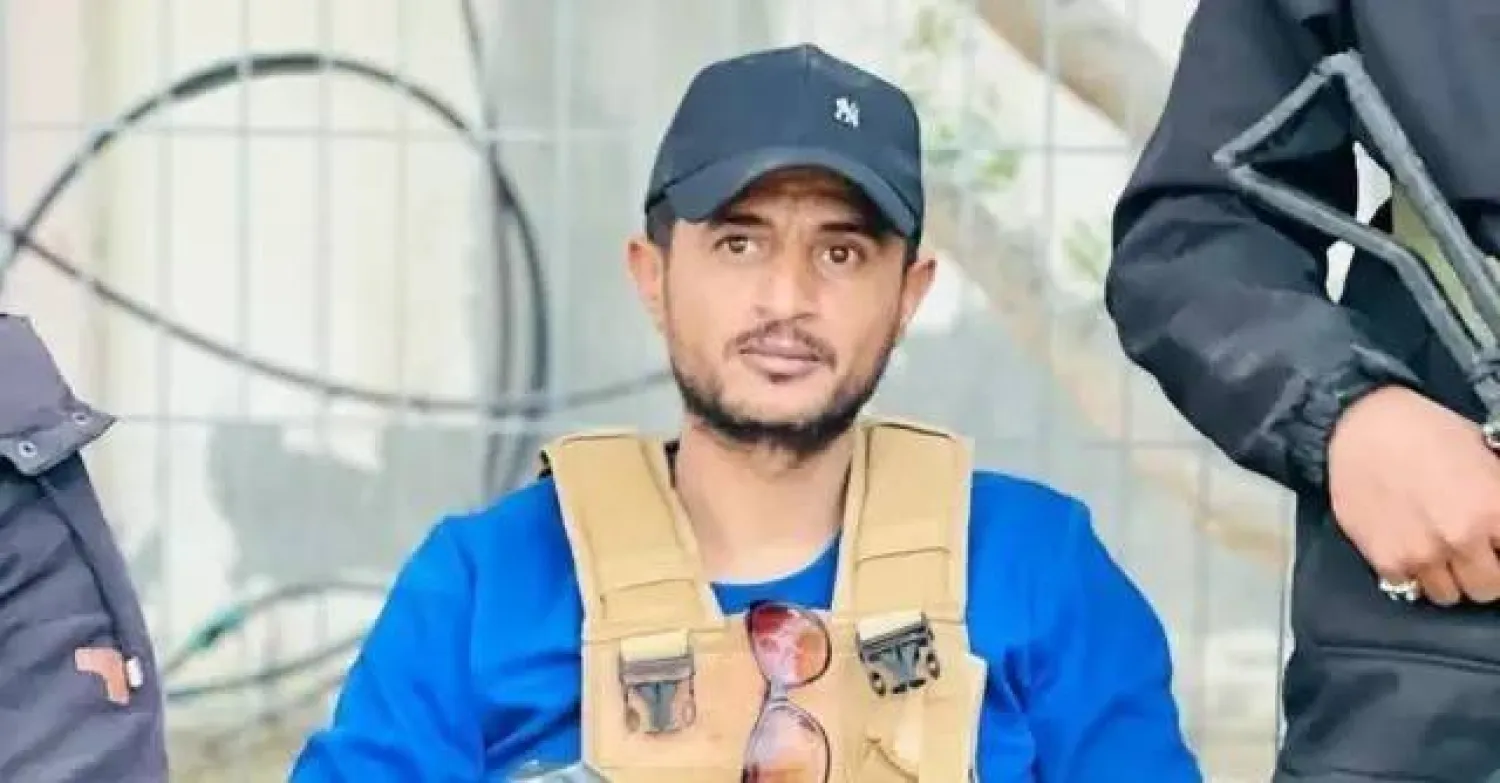

Sources to Asharq Al-Awsat: Tribal Clashes Behind Killing of Yasser Abu Shabab

Yasser Abu Shabab (Social Media)
TT

Sources to Asharq Al-Awsat: Tribal Clashes Behind Killing of Yasser Abu Shabab

Yasser Abu Shabab (Social Media)

Sources in Gaza said the killing of Yasser Abu Shabab, the leader of an armed militia opposed to Hamas, unfolded against the backdrop of a tribal confrontation, with two members of his own Tarabin clan implicated in the attack.

The sources told Asharq Al-Awsat that the two assailants, from the Debari and Abu Suneima families, both part of the wider Bedouin Tarabin tribe, had taken part in the shooting that left Abu Shabab fatally wounded.

According to the sources, the incident occurred on Thursday and ended swiftly when Abu Shabab’s escorts shot dead the men who had targeted him.

Abu Shabab, a controversial figure who emerged during Israel’s war on Gaza and became prominent during efforts to deliver aid to the blockaded enclave, was killed after months in the public eye.

Israel’s Army Radio said on Thursday, citing security officials, that Abu Shabab, one of the most prominent tribal leaders opposed to Hamas in Gaza, died of his wounds at Soroka Medical Center in Beersheba in southern Israel, where he had been transferred after being injured earlier.

Abu Shabab’s armed group is based in Rafah in southern Gaza. In previous remarks he insisted that his group’s only link was with the Palestinian Authority, rejecting accusations that he collaborated with Israel.

He had called for renaming his militia, known as the Popular Forces in Gaza, as a counterterrorism group.

Army Radio said Abu Shabab had declared his cooperation with Israel and formed the first armed group to confront Hamas in southern Gaza. It added that he had been targeted by gunmen who opened fire on him.

A few months earlier, with the resumption of humanitarian aid deliveries to Gaza, Abu Shabab resurfaced after nearly three months of absence from the field and from his Facebook page.

Abu Shabab has frequently stirred controversy. Some Gaza residents linked his name to the theft of humanitarian aid in past periods, while others defended him and praised what they considered efforts to secure and protect aid shipments.

In May last year, he reactivated his Facebook page and announced he had resumed securing the delivery of aid to residential areas, raising questions about his sudden reappearance and the purpose behind the announcement, especially given his past association among many with aid theft.

Several sources told Asharq Al-Awsat that Abu Shabab and the armed group that appeared with him in photos on his page were primarily present in areas between eastern Rafah and southeastern Khan Younis.

These areas fall under Israeli control and are inhabited only by a few dozen members of the Tarabin tribe, to which Abu Shabab and his associates belong.

Humanitarian aid began to enter Gaza last week after Israel yielded to international pressure and lifted the blockade it had imposed on aid entry on March 2 last year. A global hunger monitoring body said the blockade had pushed half a million people in the enclave to the brink of famine.

No one knows the exact size of the armed force he formed. Estimates range from dozens to a few hundred, based on images and short videos on TikTok and other social media platforms that show the group with weapons and four-wheel drive vehicles.

Asharq Al-Awsat was unable to reach Abu Shabab directly to clarify his role in the handling of aid, as all his phone numbers were switched off.

Some sources familiar with him said he was a simple young man who had been detained by Hamas police on charges of drug possession and trafficking, but escaped with other inmates after the war broke out and the bombardment intensified. The sources said he had never been affiliated with any Palestinian faction and that there was no known record of him spying for Israel. They added that carrying weapons was common among most members of the Tarabin tribe.

After some residents accused him of stealing aid, Hamas security forces raided sites he visited with his armed men in November 2024, killing at least twenty people and wounding dozens.

After reports claimed he had been killed when an anti-armor projectile struck the vehicle he used to flee, it later emerged that his brother had been inside and was the one killed.

According to some sources, Abu Shabab fled to areas very close to Israeli military positions east of Rafah.

After a period of absence, Abu Shabab reappeared in recent days as aid deliveries resumed. Videos circulated showing men said to be from his group securing aid convoys, escorting foreign delegations and accompanying Red Cross workers. The footage shows people from the Tarabin tribe speaking with visiting delegations.

Each time aid entered the enclave, Abu Shabab posted messages on his Facebook page about protecting it and transporting it to the edges of areas outside his control, which he referred to as “the other side”, meaning the de facto Hamas government.

In one recent post he wrote, “When we distributed aid with dignity they defamed us, when we stood to protect it they accused us, and here we are today appearing before the people, we the sons of this nation.”

The message was signed “Yasser Abu Shabab, Popular Forces”.

Field sources told Asharq Al-Awsat that the stolen aid had not gone to Hamas. The sources said the shipments entered residential areas without protection, which contributed to theft.

When a group from the Hamas Home Front security force went to secure the aid in Deir al-Balah in central Gaza, an Israeli strike killed six of its members, allowing an armed gang to seize the supplies.

Hours later, Hamas fighters fired a projectile at the armed men responsible for the theft, killing six of them, the field sources said.

Some sources said Abu Shabab could barely write and was unlikely to be managing his Facebook page himself. This raised questions about who might be backing him, especially since he operated in areas considered extremely dangerous for Gaza residents due to the presence of Israeli forces.

In several posts, Abu Shabab referred to a media team that managed his page and handled his work professionally. In one post he not only highlighted aid protection but also called for unity and urged people to reject Hamas, which he accused of distorting the image of popular figures.

In some of his posts he referred to his group as the Popular Action Forces. On some TikTok videos, labels such as Counterterrorism Forces appeared.

Some Gaza residents, even jokingly, began calling him “Mr. President”, while others referred to him as “the state”, especially after his armed men were seen wearing military fatigues with Palestinian flags and saluting every convoy carrying visiting delegations.

Local sources said he recently helped evacuate families trapped by Israeli forces in the Amour area southeast of Khan Younis, enabling them to reach areas west of the city.

Hamas repeatedly accuses Israel of fostering lawlessness in Gaza and enabling aid theft by armed gangs.

Israeli officials have openly encouraged Gaza residents to break away from Hamas and rise up against it, which has already occurred in some areas.



In a First, Armed Gang in Gaza Forces Displacement of Residents

 A Palestinian woman receives donated food at a community kitchen in Deir al-Balah, central Gaza Strip, Thursday, Dec. 25, 2025. (AP)
A Palestinian woman receives donated food at a community kitchen in Deir al-Balah, central Gaza Strip, Thursday, Dec. 25, 2025. (AP)
TT

In a First, Armed Gang in Gaza Forces Displacement of Residents

 A Palestinian woman receives donated food at a community kitchen in Deir al-Balah, central Gaza Strip, Thursday, Dec. 25, 2025. (AP)
A Palestinian woman receives donated food at a community kitchen in Deir al-Balah, central Gaza Strip, Thursday, Dec. 25, 2025. (AP)

In an unprecedented development, an armed gang active in Gaza City forced inhabitants of residential bloc to evacuate their homes under threat of arms.

Field sources told Asharq Al-Awsat that identified the gang as the “Rami Halas Group”. At dawn on Thursday, its members opened fire in the air in the Hayy al-Tuffah neighborhood in eastern Gaza City. The area is located near Israel’s so-called yellow line that separates Hamas- and Israel-held parts of Gaza.

The gang members came back hours later at noon and demanded that the residents evacuate, giving them until sunset to comply and threatening to shoot anyone who doesn’t.

The sources said the gunmen did not directly approach any of the residents for fear of being attacked. They used loudspeakers to demand that they evacuate to areas a few hundred meters away, claiming these were Israeli orders.

Israeli forces are deployed some 150 meters from the area where the residents were located.

The residents, who had only just returned to their homes after the ceasefire, indeed started to evacuate towards western parts of Gaza City.

The sources said over 240 residents were forced to quit what remains of their damaged homes.

They revealed that Israeli forces had on Tuesday and Wednesday night dropped yellow barrels, devoid of explosives, in those regions. They did not ask residents to evacuate.

The sources said the gang made the evacuation order ahead of Israel’s plan to occupy the area, which had been previously declared as safe.

They accused Israeli forces of resorting to such tactics in recent weeks to further expand the yellow line border and occupy more areas in Gaza.


Syria Says Kills Senior ISIS Leader, Arrests Operative Near Damascus

A photo of a Public Security operation in Aleppo against an ISIS cell (File – Facebook)
TT

Syria Says Kills Senior ISIS Leader, Arrests Operative Near Damascus

A photo of a Public Security operation in Aleppo against an ISIS cell (File – Facebook)

Syrian authorities on Thursday said forces killed a senior leader in the ISIS group and arrested another operative in fresh operations near capital Damascus in coordination with the US-led coalition.

Syrian security and intelligence forces, working in coordination with the international coalition, conducted what the interior ministry described as a "precise security operation" in the Damascus countryside, AFP reported.

"The operation resulted in neutralising the terrorist Mohammad Shahada, known as 'Abu Omar Shaddad', who is considered one of the prominent ISIS leaders in Syria," it added.

"This operation comes as confirmation of the effectiveness of joint coordination between the national security agencies and international partners."

Later Thursday, the interior ministry said security forces "in joint coordination with international coalition forces" arrested "the leader of a terrorist cell affiliated with the ISIS organization" elsewhere near Damascus, seizing weapons and ammunition.

Late Wednesday, authorities said they captured Taha al-Zoubi, also known as Abu Omar Tabiya, an ISIS leader in the Damascus region, along with several of his men, also in a joint operation with the US-led coalition.

The interior ministry also said on Thursday that security forces had arrested three members of an ISIS-affiliated cell in Aleppo province.

A December 13 attack killed two US soldiers and an American civilian. Washington blamed the attack on a lone ISIS gunman in Syria's Palmyra.

In retaliation, US forces conducted strikes targeting scores of ISIS targets in Syria.

The strikes killed five members of the militant group, according to the Syrian Observatory for Human Rights.

In November, during a visit by interim President Ahmed al-Sharaa to Washington, Syria officially joined the US-led coalition against ISIS.


Israeli Settler Attack Injures Palestinian Baby, Five Arrested

Israeli settlers attacked farmers and volunteers harvesting olives on a Palestinian farm in Burin, near Nablus, on November 8, 2025. © Observers
TT

Israeli Settler Attack Injures Palestinian Baby, Five Arrested

Israeli settlers attacked farmers and volunteers harvesting olives on a Palestinian farm in Burin, near Nablus, on November 8, 2025. © Observers

Israeli security forces announced on Thursday the arrest of five Israeli settlers over their alleged involvement in an attack on a Palestinian home that injured a baby girl in the occupied West Bank.

The eight-month-old infant suffered "moderate injuries to the face and head" in the late Wednesday attack, according to the official Palestinian news agency Wafa.

It blamed the attack on "a group of armed settlers", accusing them of "throwing stones at homes and property" in the town of Sair, north of Hebron, AFP reported.

A statement from the Israeli police said that five suspects had been arrested for their "alleged involvement in serious, violent incidents in the village of Sair".

Israeli security forces had received reports of "stones being thrown by Israeli civilians toward a Palestinian home", adding a Palestinian girl was injured.

"The preliminary investigation determined the involvement of several suspects who came from a nearby outpost," the statement said, referring to Israeli settlements not officially recognized by Israeli authorities.

All Israeli settlements in the West Bank are considered illegal by the international community.

Some are also illegal under Israeli law, though many of those are later given official recognition.

Almost none of the perpetrators of previous attacks by settlers have been held to account by the Israeli authorities.

A Telegram group linked to the "Hilltop Youth", a movement of hardline settlers who advocate direct action against Palestinians, posted a video showing property damage in Sair.

More than 500,000 Israelis currently live in settlements in the West Bank, occupied since 1967, as do around three million Palestinians.

Violence involving settlers has risen in recent years, according to the United Nations, and October was the worst month since it began recording such incidents in 2006, with 264 attacks that caused casualties or property damage.

The violence in the West Bank, a territory occupied by Israel since 1967, has surged since Hamas' October 7, 2023 attack, which triggered the Gaza war.

Since the start of the war, Israeli troops and settlers have killed more than 1,000 Palestinians in the West Bank, including many militants as well as dozens of civilians, according to an AFP tally based on figures from the Palestinian health ministry.

According to official Israeli figures, at least 44 Israelis, both soldiers and civilians, have been killed in Palestinian attacks or Israeli military operations in the same period.