



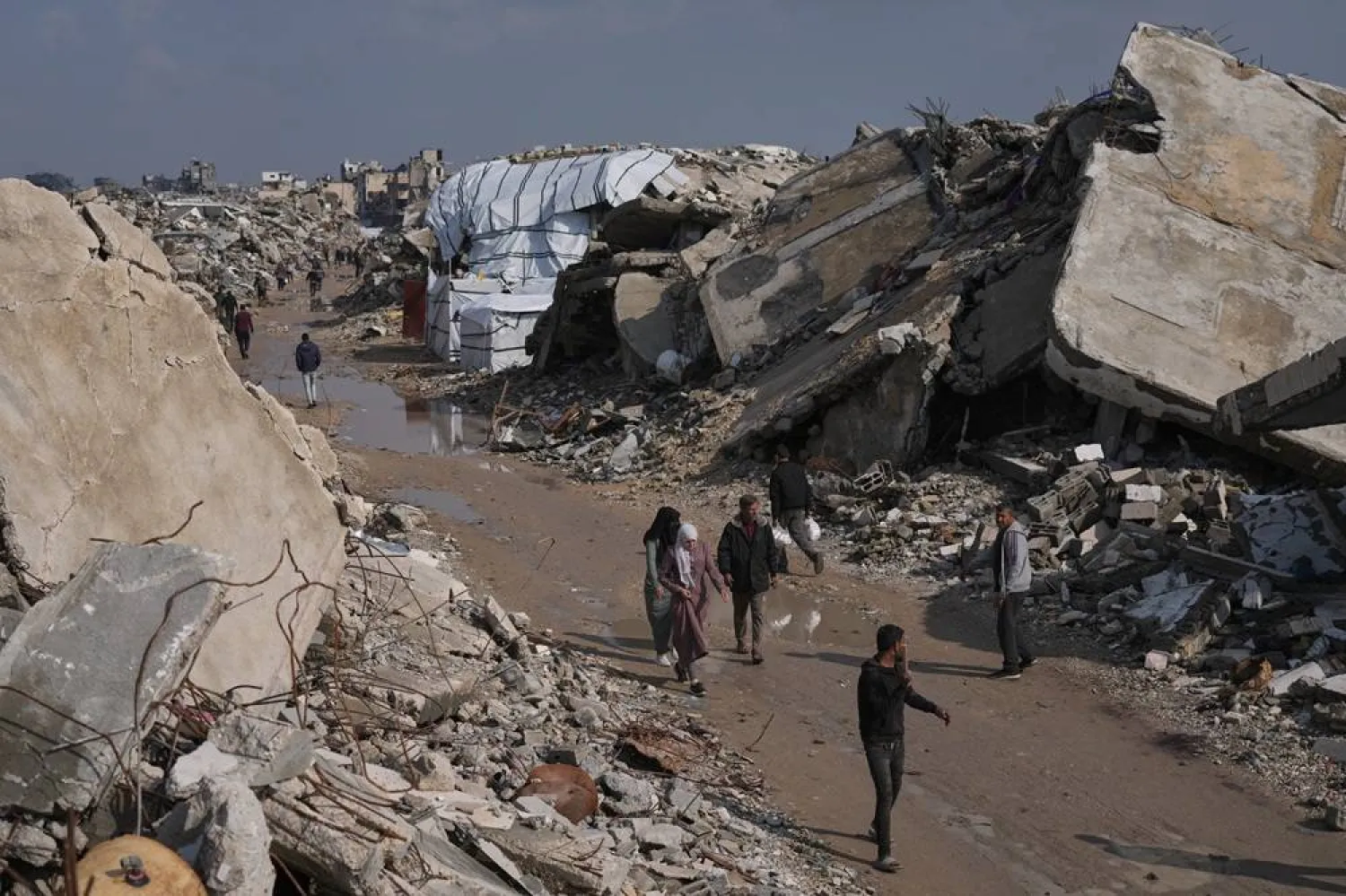

The second phase of the Gaza ceasefire agreement is expected to begin in January, likely in the first or second week, according to Bishara Bahbah, head of the Arab Americans for Peace Committee and a mediator closely aligned with the US administration on the Gaza file.
Bahbah told Asharq Al-Awsat on Wednesday that preparations for managing Gaza are already complete, with the names of the prospective committee finalized and Palestinian Health Minister Majed Abu Ramadan emerging as the most likely candidate to lead the body.
Bahbah, who remains close to White House deliberations on Gaza, said Washington supports the presence of Turkish forces as part of an international stabilization force, viewing them as the most capable of maintaining stability in the enclave.
He said the anticipated meeting between US President Donald Trump and Israeli Prime Minister Benjamin Netanyahu later this month will be decisive for the second phase, noting that the United States will press for its launch next month and for a decision on Türkiye’s participation in the stabilization force.
Defining the mission
Bahbah disclosed details of a meeting held on Tuesday in the Qatari capital Doha on the formation of an international stabilization force for Gaza.
He said one of the main objectives was for Washington to clearly identify which countries are prepared to participate and to determine the nature of each country’s contribution, whether through troops, training, or technical and logistical support.
He said the second objective of the meeting was to clarify how the forces would coordinate with one another and establish a command structure, noting that one proposal under discussion is for a US general to lead the international force.
Discussions also covered deployment locations and whether the force would be stationed outside the so-called yellow line separating Israeli-controlled areas from Hamas-held zones, within that line, or inside densely populated areas, as well as which parties would provide funding, he added.
Rejection of Israel’s approach
On deployment plans, Bahbah said discussions are ongoing but that the model sought by Israel was rejected by an overwhelming majority of participating countries, indicating broad agreement on monitoring rather than combat roles.
On the nature of the mission, he stated that most participating states are unwilling to play any role related to disarmament, instead seeking to act as a buffer between Israeli forces and populated areas in order to protect civilians.
The ultimate objective of the force’s presence is Israel’s gradual withdrawal from the Gaza Strip, he stressed.
“These forces will not act on Israel’s behalf, particularly on disarmament,” Bahbah said, adding that Hamas leaders had expressed to him a willingness to negotiate on the issue.
“Using force will not work,” he warned, noting that Israel had failed to disarm Hamas by force over the past two years and that no international party would succeed in doing so militarily.
Türkiye’s participation pivotal
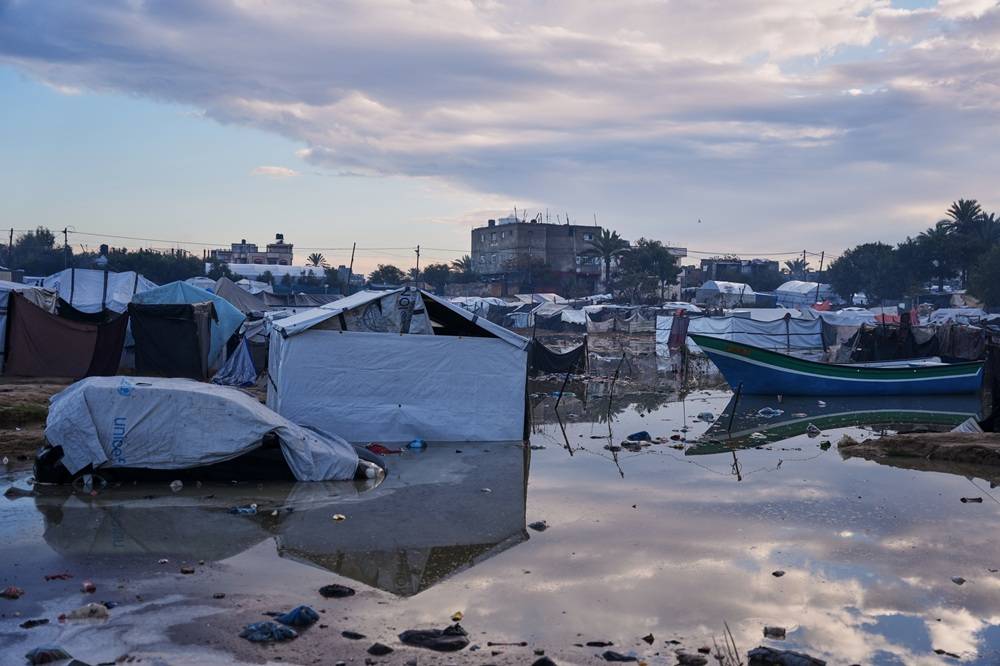
On Türkiye’s role, Bahbah described Ankara’s participation as pivotal, saying Türkiye is the closest country to Hamas and the most capable of engaging with the group over its weapons, something other states struggle to do.
He said the presence of Turkish forces in Gaza would be essential and would lead to greater stability, adding that Washington supports their involvement.
Bahbah said Trump is expected to pressure Netanyahu during their upcoming meeting in the United States later this month to accept Turkish participation.
He added that Israel is likely to seek conditions, possibly pushing for a compromise in which Türkiye’s role would be technical rather than armed, but stressed that pressure from the US administration would be decisive.
Second phase commitments
On the so-called Peace Council, Bahbah noted that Trump has spoken of many world leaders wanting to join it, stressing that membership would not be free and would entail commitments, including funding, providing security forces, or other obligations.
Asked about potential members, he said names he has seen for the executive council include US envoys Steve Witkoff and Trump’s son-in-law Jared Kushner, former British prime minister Tony Blair, former US ambassador Richard Grenell, and former Bulgarian diplomat Nickolay Mladenov.
On Gaza’s administration, Bahbah revealed that a list of 42 candidates for a technocratic committee has been approved by Hamas, Fatah, and Egypt, adding that Health Minister Abu Ramadan is likely to chair the committee.
Despite talk of obstacles to moving to the second phase, Bahbah said he expects it to be launched in the first or second week of January, specifically after the Trump-Netanyahu summit resolves outstanding issues.
He denied knowledge of any arrangements for Egyptian President Abdel Fattah al-Sisi to attend the summit.
Trump will not allow the agreement to fail, he remarked, describing this as “100 percent certain” and adding that Hamas remains committed to the ceasefire despite continued Israeli violations.
Bahbah said the movement understands that Israel is seeking any pretext to resume what he described as acts of annihilation in Gaza and is therefore showing greater restraint to deny it that opportunity.


