
An Iraqi official said security cooperation with the United States is intensifying in the fight against terrorism, following a rare joint helicopter raid by Iraqi special forces inside Syrian territory.
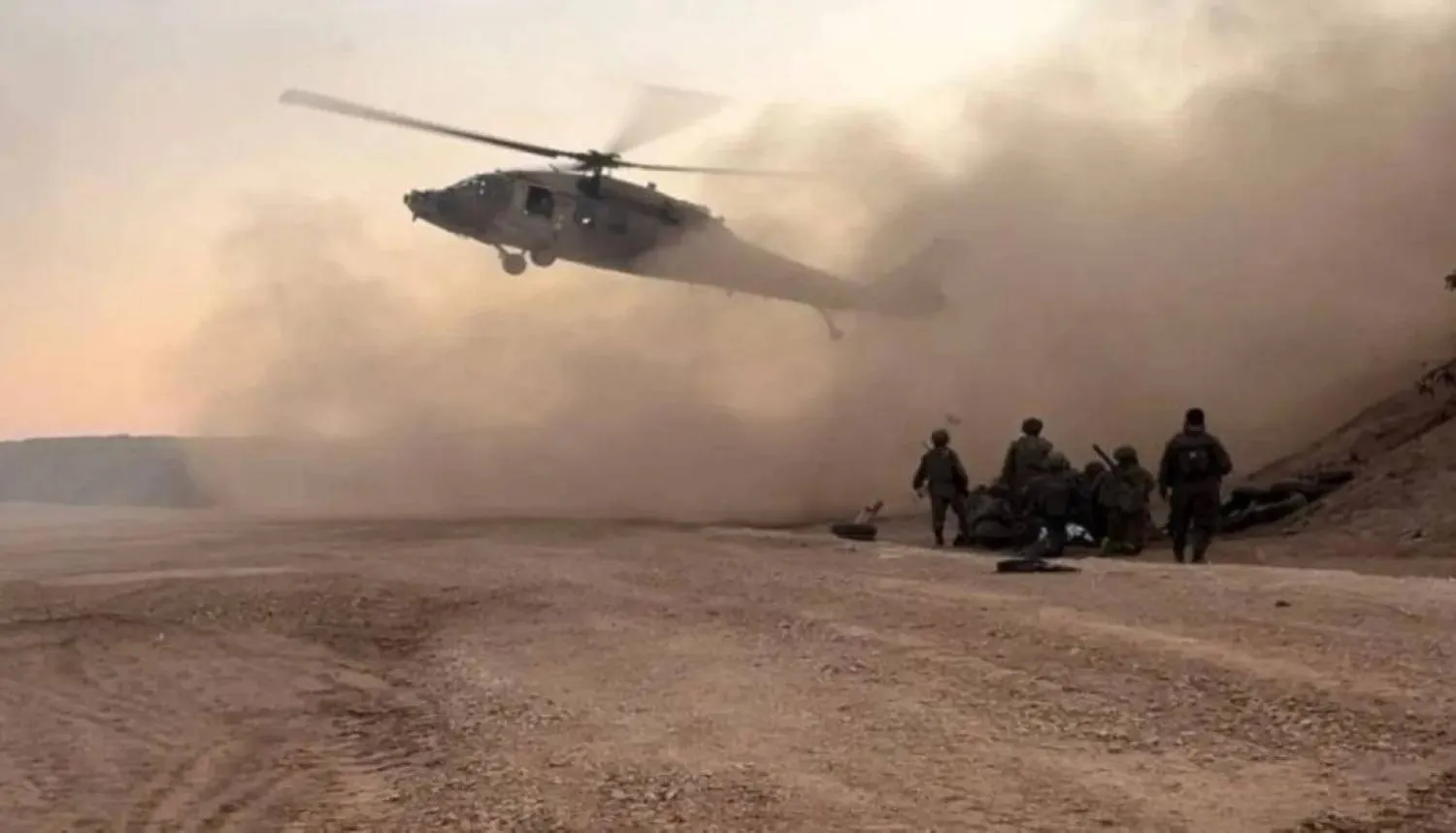
An Iraqi intelligence unit, coordinating with Syrian security forces and the US-led international coalition, arrested two high value targets wanted by the Iraqi judiciary in a helicopter raid in northeastern Syria, according to a statement from the Security Media Cell.
A new phase
Hussein Allawi, adviser to the Iraqi prime minister, told Asharq Al-Awsat that Iraq is entering a new phase of strategic commitment to the Strategic Framework Agreement with the United States, which is moving toward broader political, economic, security and military dimensions, as well as technology transfer and infrastructure development.
He said recent operations in Syria and elsewhere reflect efforts to build a stronger partnership.
Allawi added that developing the relationship includes cooperation on building the capacities of the armed forces, sustaining counterterrorism efforts, enhancing cooperation to track and dry up financial assets, combating online propaganda by terrorist organizations including al-Qaeda and ISIS, and addressing the issue of al Hol camp.
He said both sides are serious about raising the level of security and intelligence cooperation in counterterrorism, in light of the completion of the first phase of ending the international coalition’s presence in Iraq under an agreement reached in September 2024, as well as targeting terrorist cells in Syria through cooperation between Iraq, the coalition and its member states.
The military operation came a day after the US Congress voted to repeal the authorization for the use of military force against Iraq. Iraq’s foreign ministry described the decision as historic and said it reinforces respect for sovereignty, while a government adviser said relations between the two countries have shifted from conflict to partnership.
State monopoly on arms
Politically, Ammar al-Hakim, leader of the National Wisdom Movement (Hikma) Movement, stressed that weapons should be held exclusively by the state, calling for an expedited formation of the Iraqi government.
In a speech on Friday, al-Hakim said weapons must be in the hands of the state in line with the constitution and the calls of the religious authority, so that the law stands above all by the will of Iraqis and their national political forces, not through external dictates.
In this context, Fahd al-Jabouri, a senior figure in the Hikma Movement, said the United States had raised concerns related to armed factions and individuals subject to sanctions or terrorism lists, and had conveyed these concerns clearly.
He said the Coordination Framework understood these messages and balanced them against the domestic reality, agreeing that some sovereign ministries would be assigned to figures not affiliated with any armed groups.
Al-Jabouri said dialogue is the best option and that the framework is always seeking to balance its external relations with internal requirements, correct misinformation reaching abroad, and strengthen the role of the state as the most powerful authority.
Kataib al-Imam Ali, a Shiite armed faction that recently won several seats in the new parliament, called for confining weapons to the state and strengthening the Popular Mobilization Forces.
In a statement, its secretary general Shibl al-Zaydi said ratifying the election results and the strong showing by factions aligned with the PMF placed these forces before an important national test.
He said the test lies in improving economic, security and service conditions, consolidating the authority and sovereignty of the state, and strictly confining weapons to the state in line with the constitution and the law, while reinforcing the Popular Mobilization Forces.
Diplomats and political observers say US pressure, particularly calls to limit weapons to the state, could complicate efforts to reach a settlement within the Coordination Framework over the next government lineup, as some forces remain committed to a political role for armed factions and their influence over the choice of prime minister.