Iraq Top Judge Says Armed Factions to Cooperate on Weapons

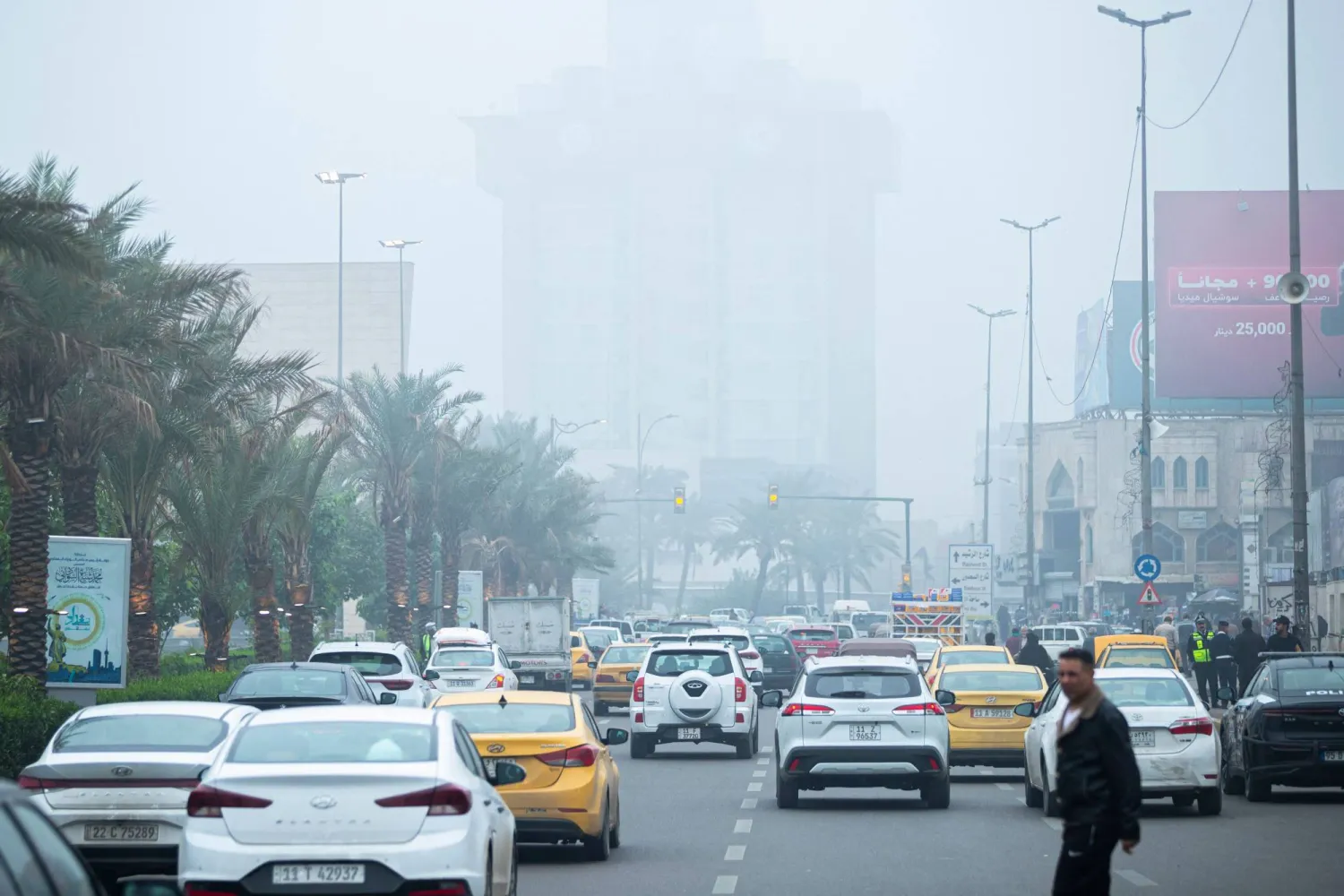
Cars drive through central Baghdad as a thick fog blankets the Iraqi capital on December 11, 2025. (AFP)
TT

Iraq Top Judge Says Armed Factions to Cooperate on Weapons

Cars drive through central Baghdad as a thick fog blankets the Iraqi capital on December 11, 2025. (AFP)

The head of Iraq's highest judicial body said Saturday that the leaders of armed factions have agreed to cooperate on the sensitive issue of the state's monopoly on weapons.

However, the powerful Kataib Hezbollah group said that it would only discuss giving up its arms when foreign troops leave the country.

"The resistance is a right, and its weapons will remain in the hands of its fighters," the group said in a statement.

The leaders of three other pro-Iran factions designated by Washington as terrorist groups said that it is time to restrict weapons to state control, although they too have stopped short of committing to disarm -- a long-standing US demand.

Faiq Zidan, the head of Iraq's Supreme Judicial Council, in a statement thanked "faction leaders for heeding his advice to coordinate together to enforcing the rule of law, restrict weapons to state control, and transition to political action after the national need for military action has ceased".

After Iraq's general elections in November, the United States demanded that the new government exclude six groups it designates as terrorists and instead move to dismantle them, Iraqi officials and diplomats told AFP.

But some of the groups have increased their presence in the new parliament and are members of the Coordination Framework, a ruling alliance of Shiite parties with varying ties to Iran that holds the majority.

The blacklisted groups are part of the pro-Iran Popular Mobilization Forces, a former paramilitary alliance that has integrated into the armed forces. But they have also developed a reputation for sometimes acting on their own.

They are also part of the Tehran-backed so-called "Axis of Resistance" and have called for the withdrawal of US troops -- deployed in Iraq as part of an anti-ISIS coalition -- and launched attacks against them.

These groups include the powerful Asaib Ahl al-Haq faction, which won 27 seats in the elections.

Earlier this week, the group's leader, Qais al-Khazali, a key figure in the Coordination Framework, said "we believe" in "the slogan to restrict weapons to the state", and "we are now part of the state".

Two other groups, Harakat Ansar Allah al-Awfiya and Kataeb Imam Ali, said on Friday that it is time to "limit weapons to the state".


MSF: Houthi Escalation Leaves Thousands of Yemenis Without Shelter

A relief worker walks among the tents at a temporary shelter for displaced people north of Aden (AFP)
TT

MSF: Houthi Escalation Leaves Thousands of Yemenis Without Shelter

A relief worker walks among the tents at a temporary shelter for displaced people north of Aden (AFP)

The ordeal is far from over for the thousands of Yemenis who have fled the Houthi escalation in western Taiz and southern Hodeidah.

Reaching safer areas did not mark the end of their struggle, as many families found themselves without shelter after traveling long distances on foot under intense heat, only to face hunger, disease, and a shortage of clean water amid growing risks of malnutrition and cholera.

Médecins Sans Frontières (MSF) has warned of deteriorating health and living conditions among displaced people in the governorates of Lahj and Aden, noting that those fleeing the escalation are experiencing high rates of severe acute malnutrition, cholera, acute watery diarrhea, measles, and other infectious diseases. At the same time, their ability to secure food, clean water, and medical care continues to decline.

According to MSF, the latest wave of escalation has displaced families from areas along Yemen’s western coast that have come under Houthi control, leaving them once again facing harsh conditions after abandoning their homes, possessions, and livelihoods in search of safety.

Conditions documented by mobile medical teams reveal the extent of the displaced population’s suffering. Many have traveled long distances across desert terrain in extreme heat, with no guarantee of access to food, water, or shelter from the harsh weather.

“Displaced people who cannot find shelter in host communities, and formal or informal camps have been seen by our teams on the road or sleeping under the shade of trees,” MSF said.

Those who have settled around Lahj governorate “are in critical need of medical and humanitarian support, including water and sanitation services in the informal places where they settle, such as schools and mosques. The risk of waterborne diseases, like cholera, is increasing rapidly in the current conditions.”

The consequences of displacement extend far beyond the loss of homes and the hardships of the journey. Women and children face growing health risks amid worsening food insecurity, the loss of income and livelihoods, and the struggle to meet basic needs, making daily survival a constant challenge for families forced to flee.

“In the many camps across Lahj and Aden governorates, 70 percent of the patients treated by MSF mobile clinics are women and children. People present with skin infections, fever, diarrhea, and communicable diseases,” MSF said.

“The long walks have caused foot injuries and ear and eye infections,” it added.

The risks are even greater for children suffering from malnutrition, as their chances of obtaining adequate nutrition and regular healthcare continue to decline due to poverty, displacement, and limited access to medical services. MSF teams have identified cases of severe acute malnutrition among children requiring specialized medical intervention.

Food insecurity and declining sources of income, coupled with a rise in cholera cases, are further exacerbating the health challenges faced by displaced people. Many are struggling to access medical facilities or obtain the referrals needed for essential treatment.

“In response to the needs of displaced people, we sent mobile clinics across Aden and Lahj governorates, with 775 total consultations since 15 September. Twenty children were diagnosed with severe acute malnutrition,” said MSF.

For families that have traveled long distances in search of safety, the struggle does not end once they leave conflict zones behind. Instead, a new battle begins: securing food, drinking water, and shelter to protect their children from heat and disease.

As needs continue to grow, the urgency of providing shelter, food, healthcare, and clean water for displaced people becomes increasingly evident. These are families who have been forced to abandon their homes and start over under extremely harsh conditions.


Lebanon Welcomes Trump's Move to Lift 41-year US Flight Ban

FILED - 17 January 2025, Lebanon, Baabda: FILE PHOTO - Lebanese President Joseph Aoun speaks during a press conference at Baabda Palace. Photo: Marwan Naamani/dpa
TT

Lebanon Welcomes Trump's Move to Lift 41-year US Flight Ban

FILED - 17 January 2025, Lebanon, Baabda: FILE PHOTO - Lebanese President Joseph Aoun speaks during a press conference at Baabda Palace. Photo: Marwan Naamani/dpa

Lebanese President Joseph Aoun said on Saturday that President Donald Trump's decision to revoke flight restrictions between Lebanon and the US that were imposed four decades ago was an indication of American confidence in steps taken by Lebanon to address civil aviation safety.

Direct flights between the US and Lebanon were suspended in 1985 by the Reagan administration following the hijacking of TWA Flight 847.

Trump made the surprise announcement that he would allow American carriers to resume direct flights to Lebanon during a visit by Aoun to Washington in July.

While he ordered the lifting of the restrictions nearly two weeks ago, the decision was publicly announced on Saturday.


Palestinians Await Announcement of Election Postponement

An Israeli soldier gestures toward a Palestinian while standing guard during the demolition of a Palestinian building near Hebron in the Israeli-occupied West Bank. (File photo/Reuters)
TT

Palestinians Await Announcement of Election Postponement

An Israeli soldier gestures toward a Palestinian while standing guard during the demolition of a Palestinian building near Hebron in the Israeli-occupied West Bank. (File photo/Reuters)

Palestinians are awaiting an official announcement by President Mahmoud Abbas postponing elections scheduled for Nov. 28, after his Fatah movement agreed on the delay with Palestinian factions, a move that came as little surprise.

An informed Palestinian source told Asharq Al-Awsat that a postponement had been expected from the moment Abbas issued the election decree.

“The decree came in response to external requests and pressure to renew political mandates and carry out reforms. No one here was ready for that, neither Fatah, Hamas nor the other factions were ready for elections,” the source said.

“Although everyone publicly supported holding these elections, everyone pushed to postpone them ... So far, no major faction has formed its electoral list and submitted it to the election commission.”

The source said the Palestine Liberation Organization’s Executive Committee, which meets on Saturday, was expected to recommend that Abbas postpone the elections to give national dialogue a chance, citing complex political and security conditions unsuitable for a vote at present.

It was unclear whether Abbas would set a new date or announce that the elections would take place in the final quarter of next year, as many sources expect.

Palestinian Vice President Hussein al-Sheikh has already informed France that the polls would be postponed for several months because of deteriorating conditions in the Palestinian territories, according to a letter seen by Reuters.

"The assessment concluded that the anticipated political, security and economic conditions, on which the scheduling of the legislative elections for 28 November 2026 was based, have not materialized," said the letter, which was addressed to French Foreign Minister Jean-Noel Barrot and dated October 8.

It added that "holding them under the current circumstances faces fundamental obstacles affecting their inclusiveness, freedom of participation and the integrity of the electoral process."

Palestinians have not held presidential elections since 2005 or legislative elections since 2006.

Those votes took place before Hamas seized control of the Gaza Strip and expelled forces loyal to Abbas, who had announced that legislative elections would take place in November as part of sweeping Palestinian Authority reforms he launched after Oct. 7, 2023.

These included reconstituting the Central Elections Commission, creating the posts of deputy chairman of the PLO Executive Committee and vice president of the State of Palestine, and forming a committee to draft an interim constitution for the transition from the PA to statehood.

The reforms also included appointing new heads of nearly all the security services, retiring hundreds of officers with the rank of brigadier general by presidential decree, and local elections in the West Bank and Gaza, followed by elections for Fatah’s leadership.

Despite these reforms, Palestinians remained skeptical that presidential and legislative elections would take place.

Sheikh’s letter confirmed that the elections would be postponed.

The letter said Palestinian officials had expected conditions to improve through the implementation of US President Donald Trump's peace initiative and a UN Security Council resolution, including the deployment of international forces and Palestinian police in Gaza, the disarmament of Hamas and the withdrawal of Israeli troops.

It said the Palestinians had ⁠also anticipated US efforts to prevent further annexation of Palestinian territory in the West Bank and East Jerusalem, curb settler violence and secure the release of nearly $7 billion in Palestinian funds withheld by Israel.

"However, these steps, understandings and promises have not materialized. Rather, conditions have worsened throughout the Palestinian territory," the letter said, outlining in detail security issues in Gaza and the West Bank.

Based on their assessment, Palestinian officials recommended to Abbas "that the date of the legislative elections be adjusted by several months, and that dialogue continue to prepare the internal conditions", the letter said.

It added that Abbas had been advised to issue a decree adjusting the date for holding elections to the first half of September 2027.

Fatah divisions and factional concerns

Beyond the reasons cited by Sheikh, other sources told Asharq Al-Awsat that divisions within Fatah were a major factor behind the move to postpone the elections.

The sources said there was no clear agreement with senior Fatah leader Marwan Barghouti, who had launched an initiative ahead of the elections to “unite Fatah, with all its blocs and currents.” There were concerns that he might push to form a separate electoral list.

Barghouti intends to run for president rather than the legislature, but his support for a list competing with Fatah’s official slate could reshape the contest.

Fatah also faced a challenge from the reformist faction led by former movement official Mohammed Dahlan, who had agreed with Hamas to form a joint electoral list that would include other factions. It was unclear whether he might later join Barghouti if the latter formed his own list.

Some disgruntled Fatah officials had also already begun forming their own lists.

Fatah wants to contest the elections on a single list, which will require more time and internal consultations.

An earlier attempt to reconcile with Dahlan’s faction also failed, despite regional efforts to resolve the dispute by bringing it back into Fatah or having it form a new Palestinian political party.

Hamas, meanwhile, had yet to make a final decision and needed a broad, strong alliance after pledging not to contest the elections under its own name or through its known leaders and members.

Hamas and Islamic Jihad also supported postponing the elections. Before the other factions, the Popular Front for the Liberation of Palestine had called for a delay to give national dialogue a chance.

“Everyone was pushing for a postponement. This is not just about the Palestinian Authority and Fatah,” the source said.

Palestinians cannot decide on elections alone; Israel also has a decisive say.

The Israeli government refused to allow the Palestinian Central Elections Commission to enter Gaza and Jerusalem to oversee election preparations.

An official Palestinian source told the official WAFA news agency on Tuesday that Israel’s refusal to allow the commission into Gaza and Jerusalem had created a direct obstacle to holding elections across all Palestinian territories.