


How Israel’s Hilltop Settlers Coordinate Attacks to Expel Palestinians

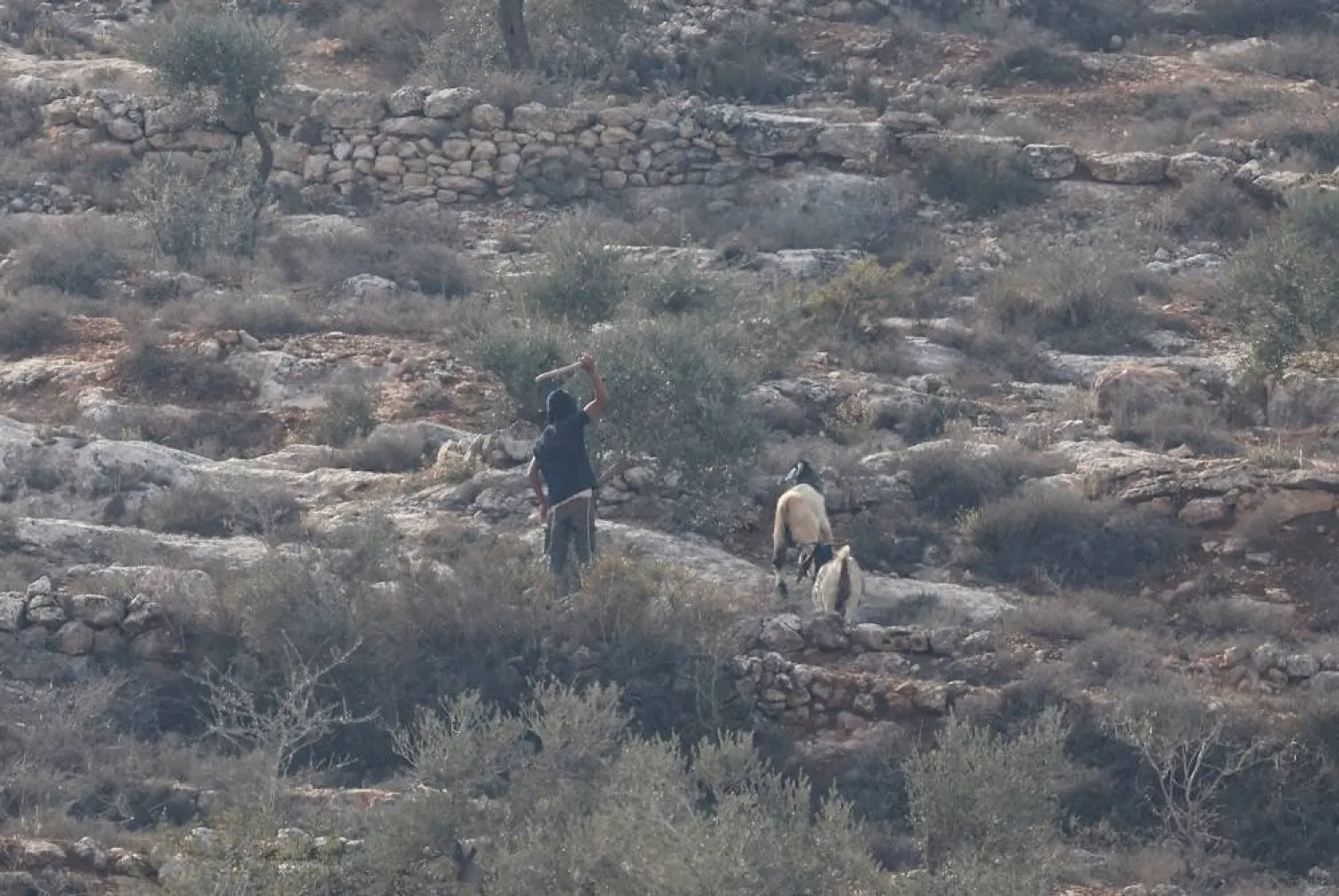
An Israeli settler strikes an olive tree near the Palestinian village of Beita, following a rise in violent settler attacks in the Israeli-occupied West Bank November 12, 2025. (Reuters)
TT

How Israel’s Hilltop Settlers Coordinate Attacks to Expel Palestinians

An Israeli settler strikes an olive tree near the Palestinian village of Beita, following a rise in violent settler attacks in the Israeli-occupied West Bank November 12, 2025. (Reuters)

The Jewish settler outpost of Or Meir is small. A handful of prefabricated white shelters, it sits at the end of a short dirt track on a hill leading up from Road 60, a major route that dissects the Israeli-occupied West Bank.

Over time, similar modest dwellings have turned into sprawling Israeli housing developments, part of a plan that members of Israel's cabinet acknowledge they have implemented to prevent the birth of a Palestinian state.

The process can be violent. A Bedouin family told Reuters attackers who descended ​from Or Meir hurling Molotov cocktails drove them off Palestinian-owned land nearby last year. They fear they won't ever be able to return.

Messages posted on Or Meir's channel on the Telegram social media platform celebrate chasing out Bedouin herders and show the new settlers’ determination to secure lasting control over what they call “strategic” territory.

This year ​was one of the most violent on record for Israeli civilian attacks against Palestinians in the West Bank, according to United Nations data that shows more than 750 injuries and the rapid spread of outposts throughout land Palestinians hope will form the heart of a future state.

Israeli NGO Peace Now has recorded 80 outposts built in 2025, the most since the organization started its records in 1991. On December 21, Israel's cabinet approved 19 more settlements, including former outposts. Finance Minister Bezalel Smotrich said the goal was to block Palestinian statehood.
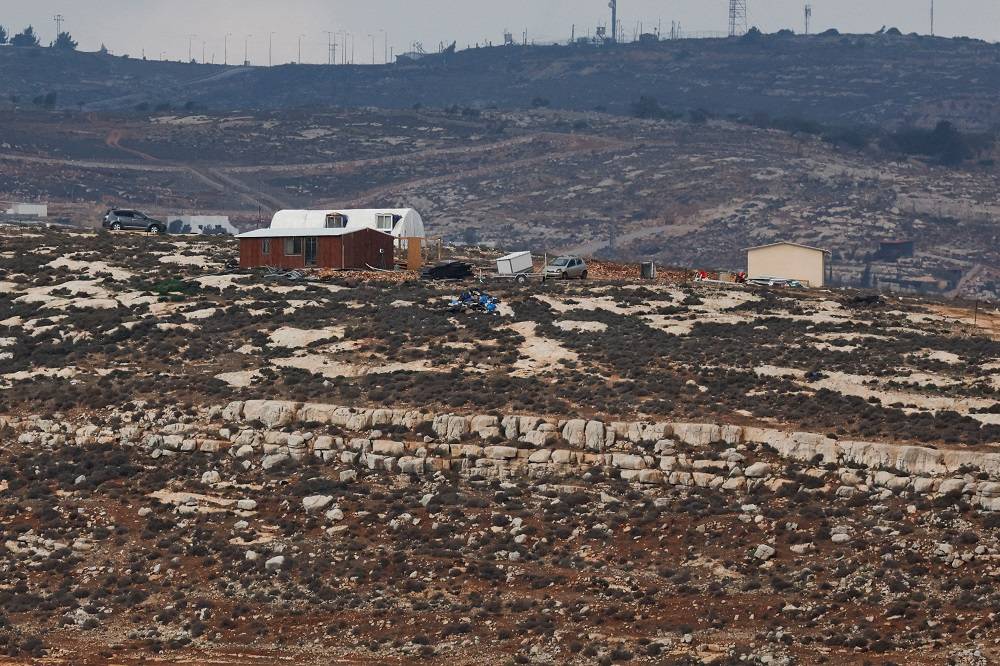
A new Israeli settler outpost near Deir Dibwan, in the Israeli-occupied West Bank December 13, 2025. (Reuters)

For decades, groups of settlers have built outposts on West Bank land without official authorization from the Israeli state. Israeli authorities in the West Bank sometimes demolish such camps but they often reappear, and in many cases end up being accepted by Israel as formal settlements. Smotrich has pushed efforts to formalize more outposts.

Most of the world considers all Israel's settlement activity in the West Bank illegal under international law relating to military occupations. Israel disputes this view.

"Since establishing our presence on the land, we have driven away nine illegal Bedouin outposts, and returned 6,000 dunams to Jewish hands," the account representing Or Meir's settlers said in a post in September, using the dunam measurement equal to about 1,000 square meters, ‌or a quarter of ‌an acre.

Reuters could not independently confirm all the attacks on the Bedouins or determine who posted on behalf of Or Meir, which was established about two years ‌ago. The ⁠settlers there ​declined to speak to ‌the news agency.

In response to Reuters questions about intensifying settler violence in the West Bank, an Israeli official blamed a "fringe minority" and said Palestinian attacks against Israelis were under-reported by the media. The Palestinian Authority did not respond to requests for comment.

Messages on the Or Meir Telegram channel, which is public, suggest a well-organized plan to take land, a finding supported by Reuters examination of a dozen other Telegram and WhatsApp groups representing similar groups, three interviews with settlers and pro-settler groups and on-the-ground reporting around Or Meir and a new settlement.

"The evidence shows that this is a systematic pattern of violence,” said Milena Ansari, a researcher based in Jerusalem for Human Rights Watch whose work includes research on settlements in the West Bank. The Bedouin Musabah family said they were attacked at night in June from the direction of Or Meir. Charred remains of their home and a barn were still visible to a Reuters team in December.

"We were living here, sitting in God's safety," said Bedouin shepherd Shahada Musabah, 39, now sheltering in the nearby Palestinian village of Deir Dibwan. "They started to set fire and they destroyed everything. They didn't leave us anything at all."

In response to questions about the incident, Israel's military told Reuters dozens of Israeli civilians set fire to property in Deir Dibwan on the night in question. It said all suspects had left by the time security forces arrived. An official in ⁠the Deir Dibwan council told Reuters up to 60 settlers were involved, throwing stones and burning the Musabah house and other property, along with cars. Several villagers were injured by stones.

In a telephone call, Or Meir settler Elkanah Nachmani told Reuters reporters not to advance up the track to the outpost from Road 60 and not to make contact ‌again.

Nachmani responded to a Reuters request for comment but did not address the issues raised by the questions. In the Telegram channel, Or Meir settlers accused ‍Palestinians of poisoning their sheep in November 2024, an accusation the Musabah family denies.

Israeli monitoring group Yesh Din said of the ‍hundreds of cases of settler violence it documented since October 7, 2023, only 2% resulted in indictments.

Reuters could not confirm the group's findings. Israel's police and military did not respond to requests for comment.
More than a thousand Palestinians were killed ‍in the West Bank between October 7, 2023 and October 17, 2025, mostly in operations by security forces and some by settler violence, according to the UN. In the same period, 57 Israelis were killed in Palestinian attacks.
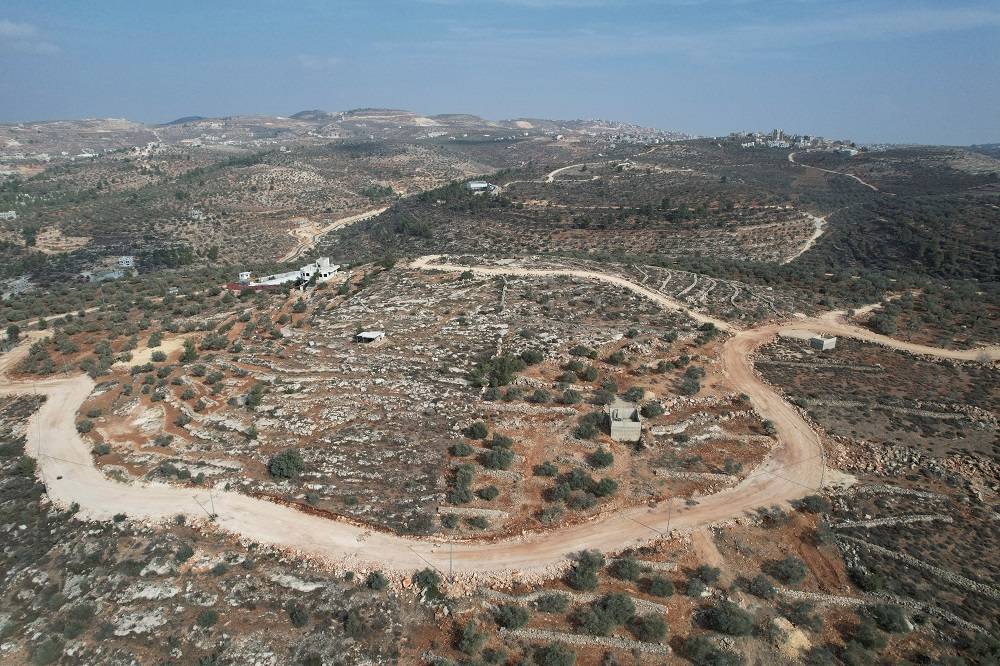
A drone view of part of the Palestinian village of Beita in the Israeli-occupied West Bank November 12, 2025. (Reuters)

TURNING OUTPOSTS INTO SETTLEMENTS

The Or Meir group has been open about its goals.

In November 2024, the Or Meir account posted that it aimed to settle "a strategic ridge near the settlement of Ofra" seeking to create "a continuous Jewish settlement presence."

Dror Etkes, an Israeli peace activist, said other outposts served the same purpose, fracturing the West Bank and "limiting the possibility of Palestinians to be in these places."

Despite the government's actions to recognize dozens of previously irregular outposts, Israel’s military told Reuters in a statement Or Meir "is illegal and has been evacuated several times by the security forces." It did not provide specifics about why it considered the outpost illegal or ​why it was "evacuated" - the military's word to describe closure or demolition of outposts in the West Bank.

After the most recent evacuation in March, Or Meir re-emerged with the help of over 100,000 shekels ($30,000) raised by donations, according to the settlement's website. Reuters couldn't independently confirm the donations.

The former outposts Israel has formalized as settlements over the years include ones previously evacuated by the army. Ofra, also on Road 60 just ⁠north of Or Meir, started as an outpost and is now a major housing development.

"Why do we continue?" asked a post by the Or Meir Telegram account in March after the evacuation. The post then answered its own question. "All breakthroughs in settlements were accomplished this way. At first, the state refused to accommodate any activity on the ground and fought it fiercely, but due to the persistence of the citizens, it eventually had to accept it."

In December, Smotrich said 51,370 housing units had been approved for West Bank settlements since he became minister in late 2022, part of what the UN describes as the fastest expansion of settlements since its monitoring began in 2017. Smotrich's office did not respond to a request for comment.

On September 30, the Oir Meir Telegram account published a map showing the location of the outpost. The map highlighted a large area with a blue boundary stretching to the edge of Deir Dibwan. The group said the marked area was under control of their outpost.

At least four attacks on Palestinians have been reported within the blue boundary, according to the Deir Dibwan council, which said Palestinians could no longer access the area, including about 250 dunams belonging to the council itself.

The map also shows eight black markers, mostly within the blue boundary, listed as “abandoned Arab invasion outpost,” indicating places from which Bedouins had allegedly been ejected.
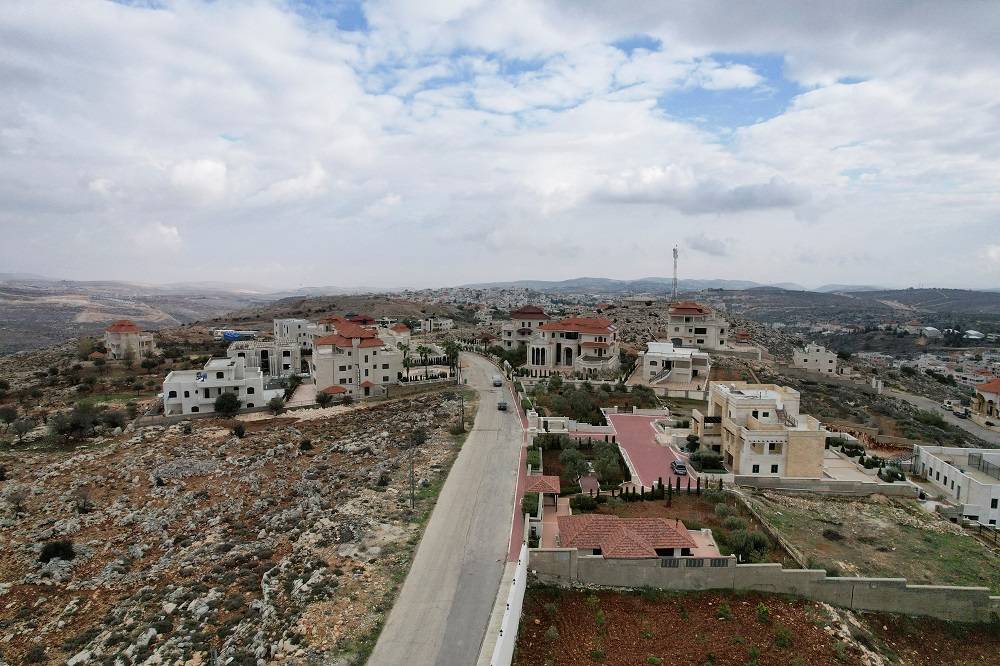
A drone view of the Palestinian village of Deir Dibwan, in the Israeli-occupied West Bank December 13, 2025. (Reuters)

ROAD 505 TO JORDAN VALLEY

Road 60 is flanked by settlements. It is intersected by Road 505, running west-east toward the Jordan Valley and also lined with settlements, including Evyatar near the Palestinian town of Beita.

Evyatar began as a tented outpost in 2019. It was evacuated in 2021 but secured Israeli government recognition in 2024. Malkiel Barhai, Evyatar’s mayor, credited Smotrich for the approval.

Speaking in Evyatar with a pistol tucked into his trousers that he said was for protection, Barhai said the settlement was vital to keep Road 505 open “because we have Arab villages, hostile Arab villages, around.”

A member of the Beita municipality told Reuters settlers from surrounding outposts or settlements, including Evyatar, killed 14 people in the area around Beita between 2021 and 2024. Reuters could not verify the deaths or who was responsible.

On November 8, Reuters witnessed an attack by settlers wielding sticks and ‌clubs and hurling large rocks as Palestinians harvested olives close to Beita. Two Reuters employees - a journalist and a security adviser - were among those injured.

Barhai denied settlers were behind attacks, and blamed Palestinians for violence.

Samer Younes Ali Bani Shamsah, a farmer who lives near Evyatar and whose leg was broken in a settler attack, said he would not leave the land no matter the cost.

"This is my place, my home. Where would I go?" he said. A hill over, another outpost stood, above a hill of olive trees.



Lebanese Judiciary Summons Hezbollah Supporters Following Insults to Aoun

Hezbollah supporters carry a Hezbollah flag as they flash the victory sign during a rally in a southern suburb of Beirut, Lebanon, 21 January 2026. (EPA)
TT

Lebanese Judiciary Summons Hezbollah Supporters Following Insults to Aoun

Hezbollah supporters carry a Hezbollah flag as they flash the victory sign during a rally in a southern suburb of Beirut, Lebanon, 21 January 2026. (EPA)

The Lebanese judiciary issued on Thursday summons of Hezbollah supporters who had slandered President Joseph Aoun in wake of his criticism of the Iran-backed party.

Aoun has made repeated statements in recent weeks over the need to impose state monopoly over weapons, effectively disarming Hezbollah.

The government had last year taken a landmark decision to impose state monopoly over arms. Hezbollah has refused to lay down its weapons, putting it at odds with the state, and most recently Aoun.

Lebanon is keen on preventing itself from being dragged into "suicidal adventures, whose price we paid dearly for in the past," he said on Tuesday, which was seen as an indirect reference to Hezbollah.

A judicial source told Asharq Al-Awsat that the judiciary summoned on Thursday a Lebanese journalist who is close to Hezbollah over a video he posted online. The journalist ignored the summons, saying that as a journalist he does not have to appear before the judicial police, but rather the "Press Court".

The source added that another summons will be made over insults levelled against the president.

Lebanon's Public Prosecution allows the judiciary to act without prompting in three cases: the first over attacks against the character of the president, the second, attacks against the army and third, attacks against the judiciary.

Attacks and slander against any other parties are addressed when a complaint is filed. The source said the presidency did not file a complaint to the judiciary over the campaign against Aoun.

Hezbollah supporters had been vocally criticizing Aoun on social media over his recent stances. The posts did not shy away from using offensive language against the president.

Lebanese law allows summons when insults are made against the president in order to protect constitutional institutions. Any country, during strained political times, is concerned with protecting its constitutional figures and entities while still respecting freedom of expression and the press.

The recent summons are not aimed at undermining freedom of expression, but drawing a line between how much criticism can be levelled and between insulting the president's character and infringing on a constitutional figure, explained the source. Political criticism is acceptable, but a line is drawn when personal insults are made.

Lawyer Farouk al-Moghrabi told Asharq Al-Awsat that the Lebanese judiciary clearly details the measures that should be taken when it comes to the president.

The president has the right to file a complaint or the Public Prosecution can act without being prompted when he comes under attack, he added.


Sudan Hospital Welcomes First Patients after War Forced It Shut

Women walk outside Bahri Teaching Hospital after it resumed services in the Sudanese capital Khartoum on January 18, 2026. (Photo by Ebrahim Hamid / AFP)
TT

Sudan Hospital Welcomes First Patients after War Forced It Shut

Women walk outside Bahri Teaching Hospital after it resumed services in the Sudanese capital Khartoum on January 18, 2026. (Photo by Ebrahim Hamid / AFP)

At a freshly renovated hospital in Khartoum the medical team are beaming: nearly three years after it was wrecked and looted in the early days of Sudan's war, the facility has welcomed its first patients.

The Bahri Teaching Hospital in the capital's north was stormed by the paramilitary Rapid Support Forces in April 2023, soon after fighting broke out between the RSF and Sudan's army.

Bahri remained a war zone until an army counteroffensive pushed through Khartoum last year, recapturing the area from the RSF in March.

A man waits outside the entrance to the emergency room while others walk through Bahri Teaching Hospital after resuming services in Khartoum, January 18, 2026 (AFP)

"We never thought the hospital would reopen," said Dr Ali Mohamed Ali, delighted to be back in his old surgical ward.

"It was completely destroyed, there was nothing left," he told AFP. "We had to start from scratch."

Ali fled north from Khartoum in the early days of the war, working in a makeshift medical camp with "no gloves, no instruments and no disinfectant".

According to the World Health Organization, the conflict has forced the shutdown of more than two-thirds of Sudan's health facilities and caused a world record number of deaths from attacks on healthcare infrastructure.

Tens of thousands of people have been killed across Sudan since the war began, while 11 million have been left displaced, triggering the world's largest hunger crisis.

But with the RSF now driven out of Khartoum, Sudan's army-backed government is gradually returning and the devastated city is starting to rebuild.

Around 40 of Khartoum's 120 hospitals, shut during the war, have resumed operations, according to the Sudan Doctors' Network, a local medical group.

People enter Bahri Teaching Hospital after resuming services in the Sudanese capital, January 18, 2026 (AFP)

- 'In ruins' -

The Bahri Teaching Hospital, which before the conflict treated around 800 patients a day in its emergency department, was repeatedly attacked and looted.

"All the equipment was stolen," said director Galal Mostafa, adding that about 70 percent of its buildings were damaged and the power system was destroyed.

"We were fortunate to receive two transformers just days ago," said Salah al-Haj, the hospital's chief executive.

During the first five days of fighting, Al-Haj -- an affable man with a sharp grey moustache -- was trapped inside one wing of the hospital.

"We couldn't leave because of the heavy gunfire," he told AFP, saying that anyone "who stepped outside risked being detained and beaten" by the RSF.

Patients were rushed to safety in dangerous transfers to hospitals away from the fighting across the Nile.

"Vehicles had to take very complicated routes to evacuate patients safely, avoiding shells and bullets," Al-Haj said.

On April 15, 2023, as the first shots rang out in the capital, RSF fighters seized Ali on his way into surgery.

They held him for two weeks at Soba, an RSF-run detention center in southern Khartoum whose former inmates have shared testimony of torture and inhumane conditions.

"When I was released, the country was in ruins," he said.

Hospitals were "destroyed, streets devastated and homes looted. There was nothing left."

Almost three years on, taxis now drop patients at the hospital's entrance, while new ambulances sit parked in a courtyard that until recently was strewn with rubble and overgrown weeds.

Inside, refurbished corridors smell of fresh paint.

The renovations and new equipment were funded by the Sudanese American Physicians Association and Islamic Relief USA at a cost of more than $2 million, according to the association.

Services have resumed in newly fitted emergency, surgical, obstetrics and gynecology rooms.

Doctors, nurses and administrators hustle through the halls, the administrators fretting over covering salaries and running costs.

"Now it's much better than before the war," said Hassan Alsahir, a 25-year-old intern in the emergency department.

"It wasn't this clean before, and we were short on beds -- sometimes patients had to sleep on the floor."

On its first day reopened, the hospital received a patient from the Kordofan region -- the war's current major battleground -- for urgent surgery.

"The operation went well," said Ali.


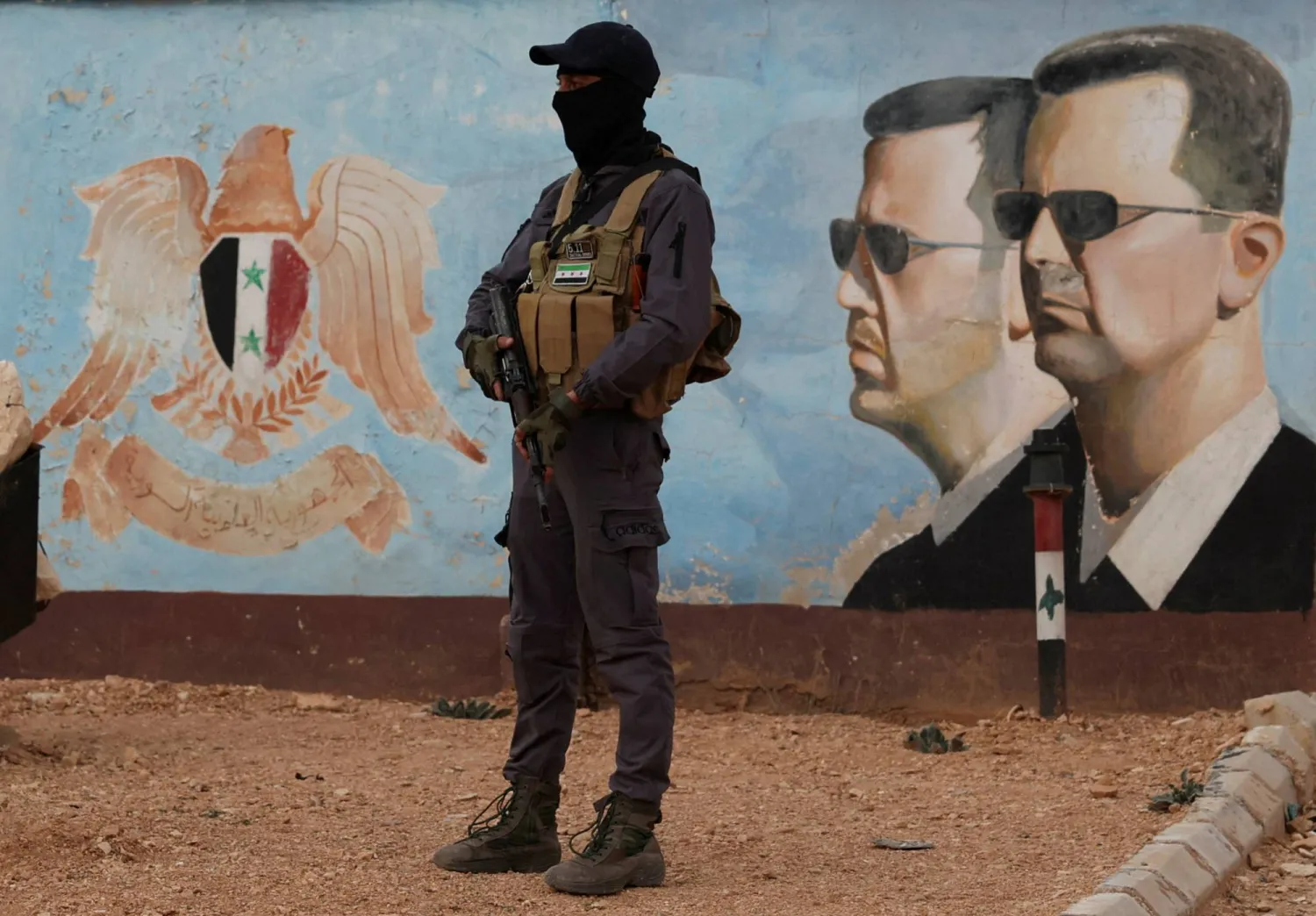
Kurdish SDF Fighters Leave North Syria Prison under Govt Deal

Families of detainees waiting in Al-Aqtan prison on the outskirts of the city of Raqqa in northeastern Syria outside the prison in an attempt to get news about their relatives on Wednesday (AFP)
TT

Kurdish SDF Fighters Leave North Syria Prison under Govt Deal

Families of detainees waiting in Al-Aqtan prison on the outskirts of the city of Raqqa in northeastern Syria outside the prison in an attempt to get news about their relatives on Wednesday (AFP)

Syria said early Friday that government forces had begun transferring Kurdish fighters from a prison in the north where they had been holding ISIS detainees, as part of a weekend agreement.

An AFP correspondent in Raqa saw buses and cars heading away from the Al-Aqtan prison on the city's outskirts overnight, escorted by government vehicles, after roads to the facility were cut on Thursday.

Syrian state television reported that the transfer of SDF members has begun "after five days of negotiations with the Syrian state".

They will go to the Kurdish-held city of Ain al-Arab, also known as Kobane, in Aleppo province on the northern border with Türkiye "according to the security arrangements agreed upon by both parties", it reported.

Under military pressure from Damascus, which is seeking to extend its control across the country, the SDF has relinquished swathes of territory in recent days and withdrawn to parts of Syria's Hasakeh province in the far northeast.

On Sunday, Syrian President Ahmed al-Sharaa announced a deal with SDF chief Mazloum Abdi that had included a ceasefire and the integration of the Kurds' administration into the state, which will take responsibility for ISIS prisoners.

State news agency SANA quoted the army as saying the Al-Aqtan transfer was "the first step in implementing the January 18 agreement under which the interior ministry will take over administration of the prison".

A government source told the broadcaster that around 800 fighters would exit the facility under "an internationally sponsored agreement aimed at de-escalation".

ISIS detainees will be managed "according to Syrian law", the source added.

Thousands of suspected extremists and their families, including foreigners, have been held in Kurdish-run prisons and camps in Syria since ISIS’s defeat in 2019 at the hands of the SDF, backed by a US-led coalition.

The source said the step came "in response to international mediation aimed at preventing a military escalation... and ensuring a peaceful transfer" of authority at key sites.

On Monday, the Syrian Observatory for Human Rights reported clashes between government forces and SDF fighters at Al-Aqtan.

On Wednesday, the United States said it had launched an operation that could see 7,000 ISIS extremist detainees moved from Syria to Iraq, with 150 transferred so far.