


Israel Confirms Ban on 37 NGOs in Gaza

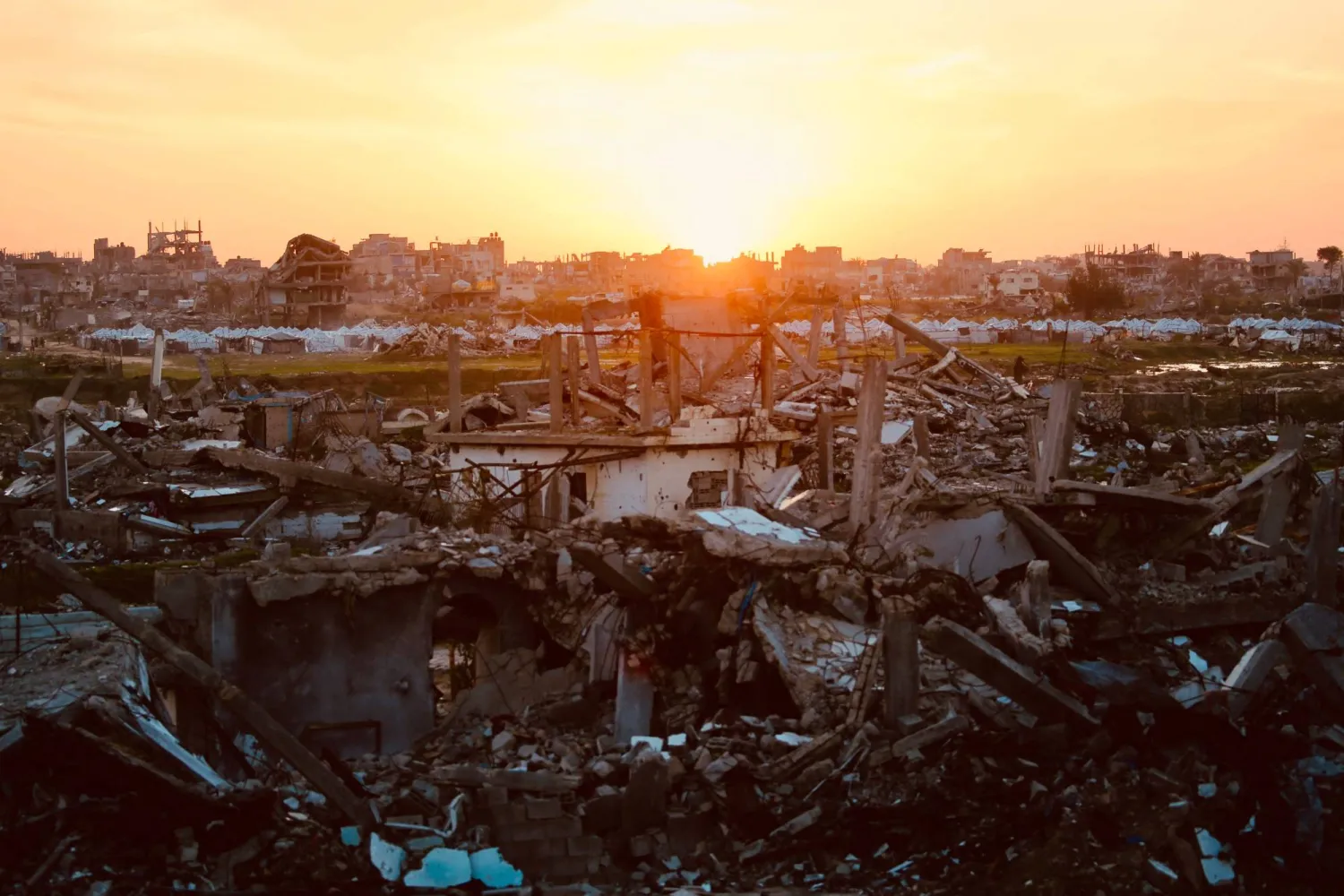
The sun sets behind the ruins of destroyed buildings in the Nuseirat refugee camp in the central Gaza Strip on December 31, 2025. (AFP)
TT

Israel Confirms Ban on 37 NGOs in Gaza

The sun sets behind the ruins of destroyed buildings in the Nuseirat refugee camp in the central Gaza Strip on December 31, 2025. (AFP)

Israel on Thursday said 37 humanitarian agencies supplying aid in Gaza had not met a deadline to meet "security and transparency standards", and would be banned from the territory, despite an international outcry. 

The international NGOs, which had been ordered to disclose detailed information on their Palestinian staff, will now be required to cease operations by March 1. 

The United Nations has warned that this will exacerbate the humanitarian crisis in the war-ravaged Palestinian territory. 

"Organizations that have failed to meet required security and transparency standards will have their licenses suspended," Israel's Ministry of Diaspora Affairs and Combating Antisemitism said in a statement. 

Several NGOS have said the requirements contravene international humanitarian law or endanger their independence. 

Israel says the new regulation aims to prevent bodies it accuses of supporting terrorism from operating in the Palestinian territories. 

Prominent humanitarian organizations hit by the ban include Doctors Without Borders (MSF), the Norwegian Refugee Council (NRC), World Vision International and Oxfam, according to a ministry list. 

In MSF's case, Israel accused it of having two employees who were members of Palestinian groups Islamic Jihad and Hamas. 

MSF said this week the request to share a list of its staff "may be in violation of Israel's obligations under international humanitarian law" and said it "would never knowingly employ people engaging in military activity". 

- 'Critical requirement' - 

NRC spokesperson Shaina Low told AFP its local staff are "exhausted" and international staff "bring them an extra layer of help and security. Their presence is a protection." 

Submitting the names of local staff is "not negotiable", she said. "We offered alternatives, they refused," she said, of the Israeli regulators. 

The ministry said Thursday: "The primary failure identified was the refusal to provide complete and verifiable information regarding their employees, a critical requirement designed to prevent the infiltration of terrorist operatives into humanitarian structures." 

In March, Israel gave NGOs 10 months to comply with the new rules, which demand the "full disclosure of personnel, funding sources, and operational structures". 

The deadline expired on Wednesday. 

The 37 NGOs "were formally notified that their licenses would be revoked as of January 1, 2026, and that they must complete the cessation of their activities by March 1, 2026," the ministry said Thursday. 

A ministry spokesperson told AFP that following the revocation of their licenses, aid groups could no longer bring assistance into Gaza from Thursday. 

However, they could have their licenses reinstated if they submitted the required documents before March 1. 

Minister of Diaspora Affairs and Combating Antisemitism Amichai Chikli said "the message is clear: humanitarian assistance is welcome -- the exploitation of humanitarian frameworks for terrorism is not". 

- 'Weaponization of bureaucracy' - 

On Thursday, 18 Israel-based left-wing NGOs denounced the decision to ban their international peers, saying "the new registration framework violates core humanitarian principles of independence and neutrality". 

"This weaponization of bureaucracy institutionalizes barriers to aid and forces vital organizations to suspend operations," they said. 

UN Palestinian refugee agency chief Philippe Lazzarini had said the move sets a "dangerous precedent". 

"Failing to push back against attempts to control the work of aid organizations will further undermine the basic humanitarian principles of neutrality, independence, impartiality and humanity underpinning aid work across the world," he said on X. 

On Tuesday, the foreign ministers of 10 countries, including France and Britain, urged Israel to "guarantee access" to aid in the Gaza Strip, where they said the humanitarian situation remains "catastrophic". 

A fragile ceasefire has been in place since October, following a deadly war waged by Israel in response to Hamas's unprecedented October 7, 2023 attack on Israel. 

Nearly 80 percent of buildings in Gaza have been destroyed or damaged by the war, according to UN data. 

About 1.5 million of Gaza's more than two million residents have lost their homes, said Amjad Al-Shawa, director of the Palestinian NGO Network in Gaza. 


Iran War Raises Concerns Over Impact on Suez Canal Traffic

A ship transits the Suez Canal last month (Suez Canal Authority). 
TT

Iran War Raises Concerns Over Impact on Suez Canal Traffic

A ship transits the Suez Canal last month (Suez Canal Authority). 

The Iran war has sparked growing concern in Egypt over its potential impact on navigation through the Suez Canal, one of the country’s most important sources of national income. Experts say the conflict has already begun affecting traffic through the strategic waterway as security risks for ships increase.

Recent reports indicate that several major global shipping companies—including Denmark’s Maersk, France’s CMA CGM, and Germany’s Hapag-Lloyd—have suspended the transit of some vessels through the canal.

The head of the Suez Canal Authority, Admiral Osama Rabie, expressed hope that regional stability would return soon, warning that escalating tensions could have serious repercussions for maritime transport and global supply chains.

In a statement issued Thursday, Rabie said the authority has moved to upgrade its maritime and navigational services and introduce new activities designed to meet customer needs in both normal and emergency circumstances. These include ship maintenance and repair services, maritime rescue operations and marine ambulance services, alongside continued modernization of the authority’s fleet of marine units.

Early impact on canal traffic

International transport expert Osama Aqil said the war’s effect on the canal had been evident since the first days of the conflict.

“Current indicators show that canal traffic has declined by about 50 percent since the war began,” Aqil told Asharq Al-Awsat. He attributed the drop to rising security risks and higher insurance premiums imposed on vessels passing through the region.

Aqil warned that the impact could deepen if the conflict drags on. Even after hostilities end, he said, it may take considerable time for shipping traffic to return to normal.

“International shipping groups that divert their vessels to the Cape of Good Hope route will likely sign contracts for the alternative passage,” he said. “Ending those arrangements and redirecting ships back through the canal will take time.”

Before the latest tensions, the Suez Canal had been showing signs of recovery following an earlier setback caused by Houthi attacks on commercial vessels in the Red Sea linked to the war in Gaza.

In January, the Suez Canal Authority said navigation statistics showed a “noticeable improvement” during the first half of the 2025–2026 fiscal year. Rabie said at the time that indicators pointed to improving revenues as some shipping lines resumed using the canal after conditions stabilized in the Red Sea.

Wider threat to global trade

Egyptian President Abdel Fattah el-Sisi has also warned about the impact of regional tensions on shipping in the Red Sea. During a meeting in Cairo earlier this month with Ajay Banga, president of the World Bank Group, Sisi said Egypt had lost roughly $10 billion in Suez Canal revenues due to the Gaza war, according to the Egyptian presidency.

Aqil said the Iran war could affect not only the canal but global trade more broadly, which he said has already shown signs of slowing.

“If the conflict continues, transport costs will rise, which will push up prices for many goods and commodities,” he stated.

Suez Canal revenues dropped sharply in 2024, falling 61 percent to $3.9 billion, compared with about $10.2 billion in 2023.

Security risk management expert Major General Ihab Youssef noted that the continuation of the war poses a threat to global navigation, not only to the Suez Canal.

Egypt secures ships along the canal and up to the limits of its territorial waters, he remarked. However, vessels traveling to and from the waterway must still pass through areas affected by military operations in the Gulf region and the Bab el-Mandeb Strait, prompting many shipping companies to reroute vessels around the Cape of Good Hope.

“Any closure of the Strait of Hormuz would further increase the risks of transit, particularly if the war is prolonged,” Youssef said.


Australia Orders All 'Non-essential' Officials to Leave Lebanon

A plume of smoke billows following reported Israeli strikes in the southern suburbs of Beirut, after an escalation between Hezbollah and Israel, amid the US-Israeli conflict with Iran, Lebanon, March 13, 2026. (Reuters)
TT

Australia Orders All 'Non-essential' Officials to Leave Lebanon

A plume of smoke billows following reported Israeli strikes in the southern suburbs of Beirut, after an escalation between Hezbollah and Israel, amid the US-Israeli conflict with Iran, Lebanon, March 13, 2026. (Reuters)

Australia has ordered all non-essential officials in Lebanon to leave, Canberra's foreign minister said Friday, after issuing the same command to diplomats in Israel and the United Arab Emirates.

In a post on X, top diplomat Penny Wong said they had been ordered to depart due to the "deteriorating security situation", AFP said.

"Essential Australian officials will remain in-country to support Australians who need it," she added.

The warning came hours after Canberra issued the same order to officials in Israel and the United Arab Emirates.

Canberra has said there are about 115,000 Australian nationals across the Middle East, of whom about 2,600 have returned home.

"We urge Australians in the Middle East to leave if you can and if it's safe to do so," Wong said.

"Don't wait until it's too late. It may be the last chance for some time."

The United States and Israel launched strikes on Iran on February 28 that killed its supreme leader, Ali Khamenei, and triggered a war in the Middle East.

Iran has responded with drone and missile strikes targeting Israel as well as Gulf states like the UAE, Bahrain and Qatar.

Officials said 14 people had been killed in Israel since the start of the Iran war.

Inside Iran, its health ministry said this week that more than 1,200 people have been killed.

Hundreds more people have died in Lebanon.

Australia backed the US-Israeli strikes as necessary to prevent Tehran from acquiring nuclear weapons.

And Canberra said this week it would deploy a long-range military reconnaissance plane to the Gulf to protect civilians.


Israel Destroys Zrariyeh Bridge in South Lebanon, Carries Out Deadly Strikes

13 March 2026, Lebanon, Beirut: A view of a building damaged by an Israeli air strike on Beirut. Photo: Sally Hayden/SOPA Images via ZUMA Press Wire/dpa
TT

Israel Destroys Zrariyeh Bridge in South Lebanon, Carries Out Deadly Strikes

13 March 2026, Lebanon, Beirut: A view of a building damaged by an Israeli air strike on Beirut. Photo: Sally Hayden/SOPA Images via ZUMA Press Wire/dpa

The Israeli military has destroyed a key bridge on the Litani River in south Lebanon as it carried out deadly strikes across the country.

The military’s Arabic spokesman posted on X that the bridge destroyed in the village of Zrariyeh was used by Hezbollah fighters to move between the areas south and north of the river.

The military added that Hezbollah forces near the bridge fired rockets into Israel during the current Israel-Hezbollah war.

It appeared to be the first time in ⁠the ⁠current campaign against Hezbollah that the Israeli military acknowledged it had targeted civilian infrastructure.

Meanwhile, an Israeli strike early Friday hit a car in Jnah, a coastal neighborhood in southwestern Beirut, and killed one person, the Lebanese health ministry said.

Separately, an Israeli strike hit an apartment in the Nabaa neighborhood, leaving it engulfed in flames, local media reported.

Nabaa lies on Beirut’s northern outskirts within the densely populated Burj Hammoud district. No casualties were immediately reported.

It was the first time such an area has been struck in this conflict or during the 2024 war between Hezbollah and Israel.

Following the strikes, the Israeli army said it had targeted a Hezbollah member in Beirut. Both neighborhoods are far from the southern suburbs of Beirut, which the Israeli military has declared unsafe and issued evacuation notices for.

Also Friday, an Israeli strike in eastern Lebanon that was targeting an al-Jamaa al-Islamiya official killed two people.

Lebanon’s state-run National News Agency said the early strike on an apartment in the eastern village of Bar Elias wounded Youssef Dahouk, a local official with al-Jamaa al-Islamiya and two others.

The agency said Dahouk’s two sons were killed in the strike.

Over the past two years, Israel has targeted officials with al-Jamaa al-Islamiya.

Authorities in Lebanon say 800,000 have been forced from their homes. More than 600 have been killed.

Hezbollah said early Friday that it had fired several rocket salvos toward northern Israel and Israeli troops in southern Lebanon.
