
Led by Al-Khanbashi, National Shield Forces Deploy in Yemen’s Hadhramaut to Retake Camps

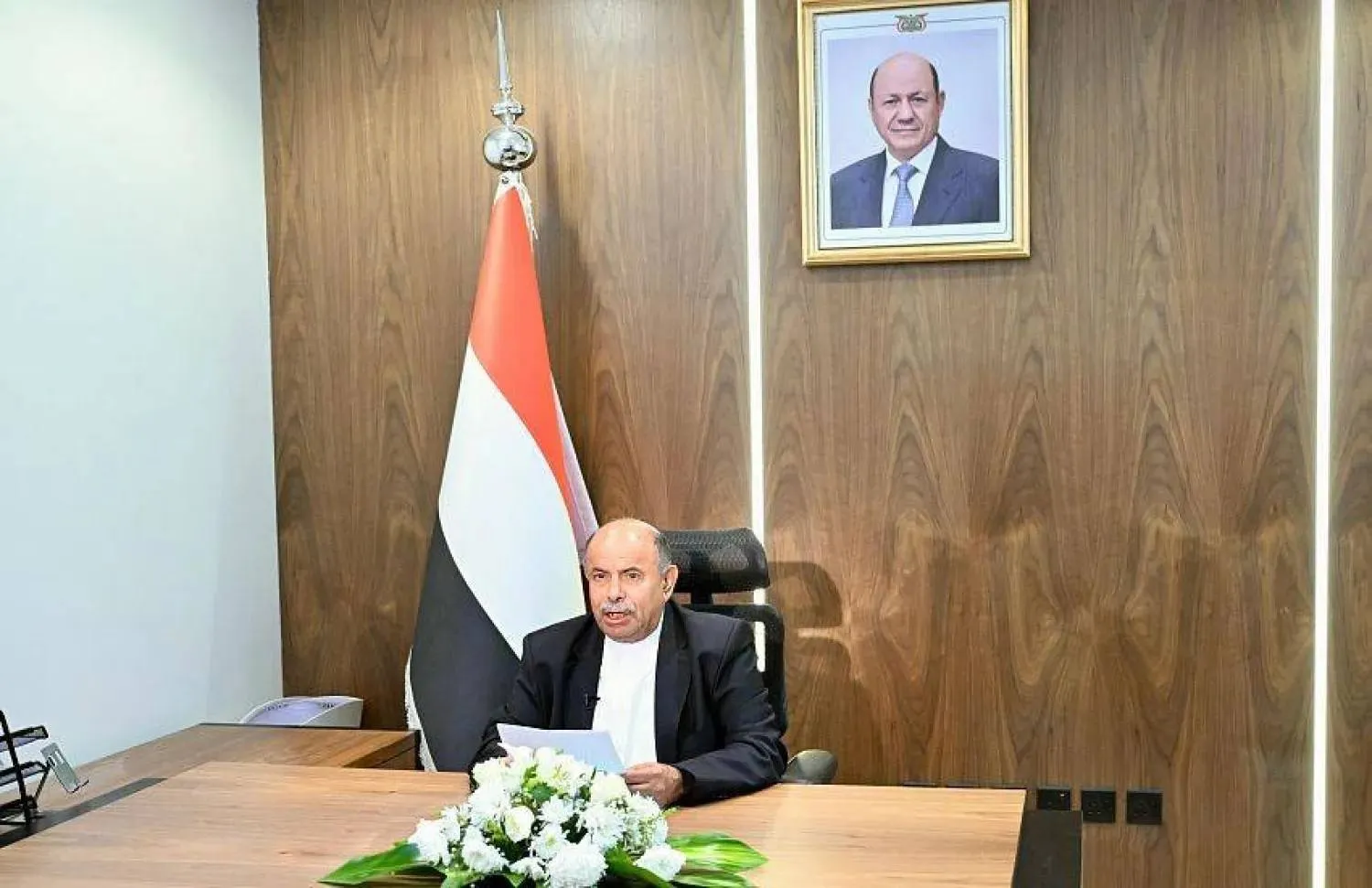
Hadhramaut Governor Salem al-Khanbashi (Saba News Agency)
TT

Led by Al-Khanbashi, National Shield Forces Deploy in Yemen’s Hadhramaut to Retake Camps

Hadhramaut Governor Salem al-Khanbashi (Saba News Agency)

Eastern Yemen’s Hadhramaut province entered a critical phase on Friday as government-backed National Shield forces began deploying against an insurgency by the Southern Transitional Council (STC), seeking to regain control of military camps and restore the state’s grip over security and military institutions under the leadership of Governor Salem al-Khanbashi.

Field sources said National Shield forces advanced toward the al-Khasha area in Wadi Seiyun, where units affiliated with the STC are stationed.

The forces encountered ambushes and armed clashes during their advance, prompting direct intervention by aircraft from the Arab Coalition backing Yemen’s internationally recognized government.

The sources said National Shield forces succeeded in the early hours in seizing the headquarters of the 37th Strategic Brigade Camp in al-Khasha, while continuing their advance to tighten control over Seiyun, the largest city in Wadi Hadhramaut and home to the First Military Region command, ahead of moving toward other valley cities still under Transitional Council influence.

As ground operations unfolded, Arab Coalition spokesperson Brig. Gen. Turki al-Maliki stated that Saudi Arabia’s Royal Naval Forces had completed their deployment in the Arabian Sea, a move aimed at conducting inspection operations and combating smuggling.

The developments followed a decision by Yemen’s Presidential Leadership Council Chairman, Rashad al-Alimi, to appoint al-Khanbashi as the overall commander of the National Shield forces in the province, granting him full military, security, and administrative authority to restore security and order.

The decision stated that the mandate would end once its causes cease or upon the issuance of a subsequent presidential decision revoking the authorization. The last clause confirmed the decision would take effect from the date of issuance and publication in the official gazette and military bulletins.

The decision is widely seen as a decisive sovereign step reflecting al-Alimi’s approach to unifying military and security command in Hadhramaut and reinforcing state authority in one of Yemen’s most strategically and economically important provinces.

Observers said the decision provides legal and political cover for the “handover of camps” operation, placing it within a clear institutional framework and away from factional conflict, a point the governor emphasized in his address.

Saudi ambassador blames al-Zubaidi

Leaders of the Southern Transitional Council rejected handing over the camps or avoiding confrontation, with several figures calling for general mobilization. Field assessments indicate their forces’ capabilities have declined and may collapse, potentially forcing their withdrawal from Hadhramaut and al-Mahra by force.

In a clear Saudi stance, Saudi Ambassador to Yemen Mohammed Al-Jaber held the Transitional Council and its leader, Aidrous al-Zubaidi, directly responsible for the escalation, stating that the exploitation of the southern cause for personal gain had harmed it and stripped it of many of its political achievements.

In a series of posts on X, Al-Jaber stated that Saudi Arabia has supported and continues to support the southern cause as a just issue with historical and social dimensions, emphasizing that a genuine solution can only be achieved through political dialogue that meets the aspirations of all southern governorates.

He said al-Zubaidi had taken dangerous unilateral decisions, most notably leading a military attack on Hadhramaut and al-Mahra, resulting in security breakdowns, the intimidation of civilians, and the killing and wounding of Hadhramaut residents.

Al-Jaber stated that the Kingdom had exerted intensive efforts in recent weeks to persuade the STC to end the escalation and hand over the camps to National Shield forces, but faced continued rejection and intransigence.

This included refusing to issue clearance for a Saudi aircraft carrying an official delegation on Jan. 1, 2026, and shutting down air traffic at Aden airport, which he described as irresponsible behavior that harms Yemenis and undermines de-escalation efforts.

A peaceful operation

Al-Khanbashi confirmed the launch of the “camp handover” operation, stating that it is a peaceful and organized process targeting only military sites, without harming any political or social component, and without affecting civilians or their interests.

He stressed that the operation was not a declaration of war or a push for escalation, but a preventive measure aimed at neutralizing weapons and stopping chaos, thereby preventing the use of camps to threaten Hadhramaut’s security and protecting the province from dangerous scenarios.

Al-Khanbashi said Hadhramaut is going through a sensitive phase that requires courageous and responsible decisions.

He noted that local authorities, backed by the state and Saudi Arabia, had made significant efforts to open dialogue channels, but faced deliberate obstruction and systematic preparations to create chaos that could spiral out of control.

He stated that the operation is limited in scope, clear in its objectives, and guided by constitutional and national responsibilities to protect citizens’ lives and preserve civil peace.

Calls for calm and accountability

The governor called on Hadhramaut’s tribal leaders, elders, and social figures to play their national role during this critical phase and help shield society from being drawn into chaos or polarization, stating that Hadhramaut has always been and will remain a land of peace, wisdom, and statehood.

Al-Khanbashi held the United Arab Emirates responsible for what he described as chaos and looting targeting weapons and ammunition facilities at Riyan airport, due to their failure to hand the site over to local authorities upon withdrawal.

He rejected any attempt by forces or entities from outside the province to exploit the developments.

Al-Khanbashi stated that protecting Hadhramaut is a collective responsibility, warning that anyone attempting to undermine security or engage in looting will be held legally and judicially accountable.

He stressed that the state will remain aligned with citizens, peace, and the future.


Sudan’s Military Says It Breaks RSF’s Siege of a Key Town

A member of security walks in front of a destroyed building as efforts to restore the city's infrastructure resumes after nearly three years of devastation caused by war, in the Sudanese capital Khartoum on January 17, 2025. (AFP)
TT

Sudan’s Military Says It Breaks RSF’s Siege of a Key Town

A member of security walks in front of a destroyed building as efforts to restore the city's infrastructure resumes after nearly three years of devastation caused by war, in the Sudanese capital Khartoum on January 17, 2025. (AFP)

Sudan’s military said Monday it has broken a siege imposed by the paramilitary Rapid Support Forces on a key town in the central Kordofan region during the country's civil war.

In a statement, the military said it had opened a route leading to Dilling town in South Kordofan province, which the RSF for months has attempted to control. Holding the town means control over major supply lines.

“Our forces inflicted heavy losses on the enemy, both personal and equipment,” the statement said.

There was no immediate comment from the RSF, which has been at war with the military for nearly three years.

Sudan plunged into chaos in April 2023 when a power struggle between the military and the RSF exploded into open fighting in the capital, Khartoum, and elsewhere. The war has killed more than 40,000 people, according to UN figures, but aid groups say the true number could be many times higher.

The fighting has created the world’s largest humanitarian crisis, with over 14 million people forced to flee their homes. Parts of the country have been pushed into famine.

Dilling has reportedly experienced severe hunger, but the world's leading authority on food security, the Integrated Food Security Phase Classification, didn’t declare famine there in its November report because of a lack of data.

After being forced out of Khartoum in 2025, the paramilitary group has focused on Kordofan and the city of el-Fasher, which was the military’s last stronghold in the sprawling Darfur region until the RSF seized it in October.


Syria, Jordan Sign Gas Supply Deal to Bolster Syrian Power Grid

Syrian soldiers raise the Syrian national flag in front of the Syrian Defense Ministry building, which was heavily damaged by Israeli airstrikes last Wednesday, in Damascus, Syria, Saturday, July 19, 2025. (AP)
TT

Syria, Jordan Sign Gas Supply Deal to Bolster Syrian Power Grid

Syrian soldiers raise the Syrian national flag in front of the Syrian Defense Ministry building, which was heavily damaged by Israeli airstrikes last Wednesday, in Damascus, Syria, Saturday, July 19, 2025. (AP)

Syria and Jordan signed an agreement on Monday to supply natural gas to Syria via Jordanian territory, ​aiming to bolster Syria's fragile electricity grid, officials said.

The deal between the Syrian Petroleum Company and Jordan's National Electric Power Company, which was signed at Syria's Ministry of Energy in Damascus, provides for the delivery of about 4 million ‌cubic metres ‌of gas per ‌day — ⁠roughly ​140 million ‌cubic feet, Reuters reported.

The agreement builds on a broader energy arrangement signed last year to supply gas to Syria through Jordan, which is being financed by Qatar, part of regional efforts to ease Syria's acute power ⁠shortages after years of war and infrastructure damage, Syrian ‌and Jordanian officials have ‍said.

Jordan's energy minister, ‍Saleh al-Kharabsheh was quoted by Syrian state ‍media on Monday as saying deliveries began on January 1, with current volumes ranging between 30 million and 90 million cubic feet ​per day.

The deal would help Syria diversify its energy supply sources, the ⁠country's energy minister Mohamed al-Bashir said.

Supplies are being delivered via the Energos Force regasification vessel, leased from Egypt and docked at Jordan's Red Sea port of Aqaba until the end of March.

Jordan's National Electric Power Company has started procedures to lease a new floating storage and regasification unit to replace the existing vessel, ‌ensuring a continuous gas supply beyond March, Kharabsheh added.


UN Says Over 3 Million Sudanese Displaced by War Return Home

A Sudanese men who fled the conflict in Sudan's Darfur region, and was previously internally displaced in Sudan, walks past makeshift shelters near the border between Sudan and Chad, while taking refuge in Borota, Chad, May 13, 2023. © Zohra Bensemra, Reuters
TT

UN Says Over 3 Million Sudanese Displaced by War Return Home

A Sudanese men who fled the conflict in Sudan's Darfur region, and was previously internally displaced in Sudan, walks past makeshift shelters near the border between Sudan and Chad, while taking refuge in Borota, Chad, May 13, 2023. © Zohra Bensemra, Reuters

More than three million Sudanese people displaced by nearly three years of war have returned home, the United Nations migration agency said on Monday, even as heavy fighting continues to tear through parts of the country.

Since April 2023, Sudan has been locked in a devastating war pitting the regular army against the Rapid Support Forces (RSF).

The conflict has killed tens of thousands of people and created what the UN describes as the world's largest displacement and hunger crisis. At its peak, the war had displaced around 14 million people both internally and across borders.

In a report released on Monday, the International Organization for Migration (IOM) said an estimated 3.3 million displaced Sudanese had made their way back home by November of last year, AFP reported.

The rise in returns follows a sweeping offensive launched by the Sudanese army in late 2024 to retake central regions seized earlier in the conflict by the RSF.

The campaign culminated in the recapture of Khartoum in March 2025, prompting many displaced families to try to go back.

According to the IOM, more than three-quarters of those returning came from internal displacement sites, while 17 percent travelled back from abroad.

Khartoum saw the largest number of returns -- around 1.4 million people -- followed by the central state of Al-Jazira, where roughly 1.1 million have gone back.

Earlier this month, the army-backed government announced plans to return to the capital after nearly three years of operating from the Red Sea city of Port Sudan in the country's east.

Reconstruction work in Khartoum has been underway since the army retook the city.

Although Khartoum and several army-held cities in central and eastern Sudan have seen a relative lull in fighting, the RSF has continued to launch occasional drone strikes, particularly targeting infrastructure.

Elsewhere, violence remains intense.

In the country's south, RSF forces have pushed deeper into the Kordofan region after seizing the army's final stronghold in Darfur last October.

Reports of mass killings, rape, abductions and looting emerged after El-Fasher's RSF takeover, and the International Criminal Court launched a formal investigation into "war crimes" by both sides.