


Israeli Leaks Test Prospects for Gaza Deal’s Second Phase

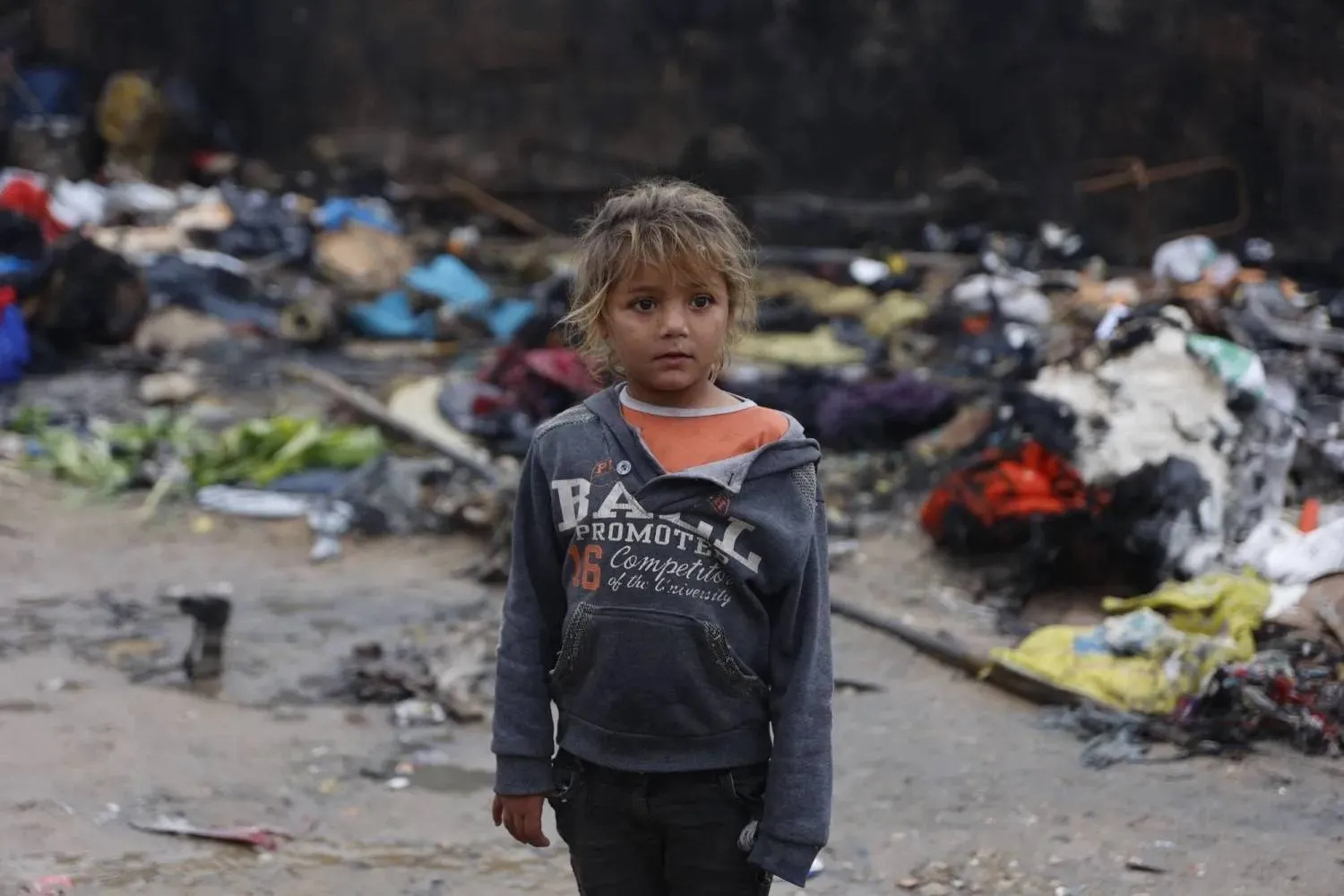
A young girl stands in front of tents that burned after candles were lit for lighting at a displacement camp in Gaza City on Friday (AFP)
TT

Israeli Leaks Test Prospects for Gaza Deal’s Second Phase

A young girl stands in front of tents that burned after candles were lit for lighting at a displacement camp in Gaza City on Friday (AFP)

A stream of Israeli leaks has highlighted moves toward alternative scenarios in Gaza if the disarmament of Hamas is not carried out soon.

The options being floated range from freezing reconstruction across the enclave and limiting rebuilding to areas under Israeli control to the prospect of renewed military operations.

Experts who spoke to Asharq Al-Awsat described the leaks about alternative plans to confront Hamas as pressure tactics and contingency plans, saying they reflect expectations that the main plan to disarm the resistance will not be implemented immediately.

They said such measures further complicate the path of the second phase, making it, even if launched, a lengthy process due to Israeli obstacles.

Israel’s Yedioth Ahronoth newspaper reported on Friday, citing sources, that the army is preparing alternative plans to carry out a new military operation in Gaza to dismantle Hamas infrastructure if an international force fails in its mission.

This followed earlier Israeli talk of starting partial reconstruction in the southern city of Rafah before Hamas is disarmed, according to Israel’s Channel 12. That proposal contradicts efforts by Arab states to pursue a comprehensive reconstruction of Gaza.

The leaks came after a meeting last week between US President Donald Trump and Israeli Prime Minister Benjamin Netanyahu.

Israel Hayom reported at the time that the two had agreed on Jan. 15 as the date to begin the second phase of Trump’s Gaza plan, with a two-month deadline to dismantle Hamas’ weapons, amid presidential threats against the Palestinian movement if it fails to comply.

Mokhtar Ghobashy, Secretary General of the Al-Farabi Center for Strategic Studies, stated that the second phase of the Gaza agreement is inherently complex and that Israel does not want to enter it except on terms that serve its interests.

He said this became clear after the Trump-Netanyahu meeting, noting that there appears to be an agreed path allowing the launch of the second phase, but at a slow pace. Any acceleration, he said, would depend on the interests achieved by both sides, not just the Palestinians.

Barakat Al-Farra, a former Palestinian ambassador to Egypt, said that the repeated Israeli leaks since last week’s Trump-Netanyahu meeting indicate attempts and contingency plans aimed at complicating the second phase, even if it begins, and that its implementation would be delayed due to Israeli obstacles.

Amid the Israeli leaks, the foreign ministers of Saudi Arabia, Egypt, Jordan, the United Arab Emirates, Indonesia, Pakistan, Türkiye and Qatar issued a joint statement on Friday calling for the implementation of Trump’s Gaza agreement.

They stressed the need for the immediate, full and unhindered entry of humanitarian aid into Gaza through the United Nations and its agencies, as well as the rehabilitation of infrastructure and hospitals and the opening of the Rafah crossing in both directions.

The eight ministers emphasized the urgent need to immediately launch and expand early recovery efforts, including providing permanent and dignified shelter to protect residents from harsh winter conditions.

The statement also renewed the eight countries’ full support for UN Security Council Resolution 2803 and for the comprehensive plan presented by Trump.

The ministers said they are committed to contributing to its successful implementation in a way that ensures the sustainability of the ceasefire, ends the war in Gaza, secures a dignified life for Palestinians, and leads to a credible path toward Palestinian self-determination and statehood.

Resolution 2803 was adopted by the Security Council in November and welcomed Trump’s 20-point plan to end the Gaza conflict, which was issued on September 29, 2025.

Despite the end of the war after the ceasefire agreement entered into force on Oct. 10, 2025, living conditions have not improved significantly due to Israel’s failure to meet its commitments under the deal.

These include allowing the agreed-upon quantities of food, relief, and medical supplies, as well as mobile homes, and opening border crossings.

Ghobashy said the joint statement by the eight Arab and Islamic countries extends pressure efforts to accelerate the move toward the second phase and to enforce Israel’s delayed commitments from the first phase, particularly those related to opening the Rafah crossing in both directions and increasing the flow of aid.

Al-Farra, meanwhile, said mediators have no option but to continue applying pressure to prevent any further complications for the second phase, predicting that 2026 will not differ from previous periods since the Gaza agreement began in October.



MSF Says May Have to Halt Gaza Operations in March

Palestinians walk past destroyed buildings in the northern Gaza Strip, Friday, Jan. 2, 2026. (AP Photo/Jehad Alshrafi)
TT

MSF Says May Have to Halt Gaza Operations in March

Palestinians walk past destroyed buildings in the northern Gaza Strip, Friday, Jan. 2, 2026. (AP Photo/Jehad Alshrafi)

Banned from the Gaza Strip with 36 aid bodies, medical charity Doctors Without Borders said Saturday it will have to end its operations there in March if Israel does not reverse its decision.

UN secretary general Antonio Guterres called on Friday for Israel to end a ban on humanitarian agencies that provided aid in Gaza, saying he was "deeply concerned" at the development.

Israel confirmed on Thursday it is barring 37 major international humanitarian organizations from entering the Gaza Strip, accusing them of failing to provide the list of their employees' names, which is now officially required for "security" reasons.

MSF called this demand a "scandalous intrusion" but Israel says is needed to stop jihadists from infiltrating into humanitarian structures, AFP reported.

"To work in Palestine, in the occupied Palestinian territories, we have to be registered ... That registration expired on December 31, 2025," said Isabelle Defourny, a physician and president of MSF France, on France Inter.

"Since July 2025, we have been involved in a re-registration process and to date, we have not received a response. We still have 60 days during which we could work without being re-registered, and so we would have to end our activities in March" if Israel maintains its decision, she said.

MSF has around 40 international staff in the Gaza Strip and works with 800 Palestinian staff across eight hospitals.

"We are the second-largest distributor of water (in the Gaza Strip). Last year, in 2025, we treated just over 100,000 people who were wounded, burned, or victims of various traumas. We are second in terms of the number of deliveries performed," the president of MSF France said.

According to her, the Israeli decision is explained by the fact that NGOs "bear witness to the violence committed by the Israeli army" in Gaza.


Yemen Consultation, Reconciliation Body Says National Shield Camp Takeover is Peaceful

Yemen Consultation, Reconciliation Body Says National Shield Camp Takeover is Peaceful
TT

Yemen Consultation, Reconciliation Body Says National Shield Camp Takeover is Peaceful

Yemen Consultation, Reconciliation Body Says National Shield Camp Takeover is Peaceful

Akram al-Amri, deputy head of Yemen’s Consultation and Reconciliation Commission, stated that the operation to take over military camps, led by the National Shield forces under the command of Salem al-Khanbashi, Governor of Hadhramaut and head of the security committee, is not a military offensive operation.

Al-Amri said the move is peaceful in nature and aims to take over “military and security sites occupied by forces of the Southern Transitional Council (STC) that came from outside Hadhramaut.”

He said that all directives had been issued and all possible means had been exhausted to have the sites vacated voluntarily, in response to the demands of the people of the governorate.

Al-Amri, who also serves as secretary general of the Hadhramaut Inclusive Conference, called on the people of the governorate to stand by the National Shield forces and welcome them.

He also urged the STC leadership in Hadhramaut to opt for peace and preserve their land, saying, “There is no cause for concern. We are brothers, united by Hadhramaut.”

“Hadhramaut has launched a new political, economic, and development phase with comprehensive support from our brothers in the Kingdom of Saudi Arabia, which will be announced soon,” he revealed.

Separately, the Hadhramaut Inclusive Conference welcomed the announcement by al-Khanbashi, launching the “camp takeover” operation, describing it as a responsible step aimed at assuming control of military sites in a peaceful and orderly manner that strengthens state authority and preserves Hadhramaut’s security and stability.

In a statement, the conference stressed that the operation does not target any specific political or social group, does not impact civilians or citizens’ interests, and does not constitute an escalation or a declaration of war.

It stated that the move is a preventive measure to protect Hadhramaut from chaos and to prevent the use of military camps from threatening its security.

The conference commended the efforts of the legitimate state authorities, with the support of Saudi Arabia, to establish channels of dialogue and understanding, emphasizing that political solutions remain the most effective way to address disputes.

It added that obstructing these efforts compels the state to assume its constitutional responsibilities to protect citizens and prevent a slide into chaos.

The Hadhramaut Inclusive Conference reaffirmed its support for all prudent efforts that safeguard social peace and protect state institutions, and commended the Hadhramaut governor’s call on various social forces to play their national role during this sensitive phase.


UN Force in Lebanon Says Israeli Army Fired Near its Peacekeepers Twice

Joint patrol of the Lebanese army and UNIFIL (UNIFIL via Telegram)
TT

UN Force in Lebanon Says Israeli Army Fired Near its Peacekeepers Twice

Joint patrol of the Lebanese army and UNIFIL (UNIFIL via Telegram)

The United Nations Interim Force in Lebanon (UNIFIL) said gunfire from an Israeli position hit close to its peacekeepers twice on Friday, reporting no casualties but decrying a “concerning trend.”

UNIFIL has repeatedly reported Israeli fire near or towards its personnel in recent months, and last week said an Israeli attack near one of its positions lightly wounded a peacekeeper.

Personnel patrolling in south Lebanon on Friday “reported 15 rounds of small arms fire that struck no more than 50 meters away from them,” a UNIFIL statement said, according to AFP.

Shortly afterwards, “peacekeepers in a second patrol in the same area reported approximately 100 rounds of machine-gun fire struck approximately 50 meters from them,” it added, reporting no damage or injuries.

“Peacekeepers assessed that the fire came from an Israel army position south of the Blue Line in both cases,” the statement said, referring to the de facto border, and “sent a ‘stop fire’ request through its liaison channels.”

It said UNIFIL had informed the Israeli army about the peacekeepers’ activities in advance.

“Incidents like these are happening on a too-regular basis, and becoming a concerning trend,” the statement said.

“We reiterate our call to the Israeli army to cease aggressive behavior and attacks on or near peacekeepers working for peace and stability along the Blue Line.”

UNIFIL has acted as a buffer between Israel and Lebanon for decades, and recently has been working with Lebanon’s army to support a year-old ceasefire between Israel and Hezbollah.

The force on Friday noted that “attacks on or near peacekeepers are serious violations” of a 2006 UN Security Council resolution that formed the basis of the current ceasefire.

Under the November 2024 truce, Israel was to withdraw its forces from south Lebanon, but it has kept them at five areas it deems strategic and carries out regular strikes on Lebanon, usually saying it is targeting Hezbollah sites and operatives.

Under heavy US pressure and fears of expanded Israeli strikes, Lebanon has committed to disarming Hezbollah, starting in the south near the frontier.

Last August, the UN Security Council voted for the peacekeepers to leave Lebanon in 2027.