


First Direct Clashes Erupt Between Hamas, Armed Gangs in Gaza

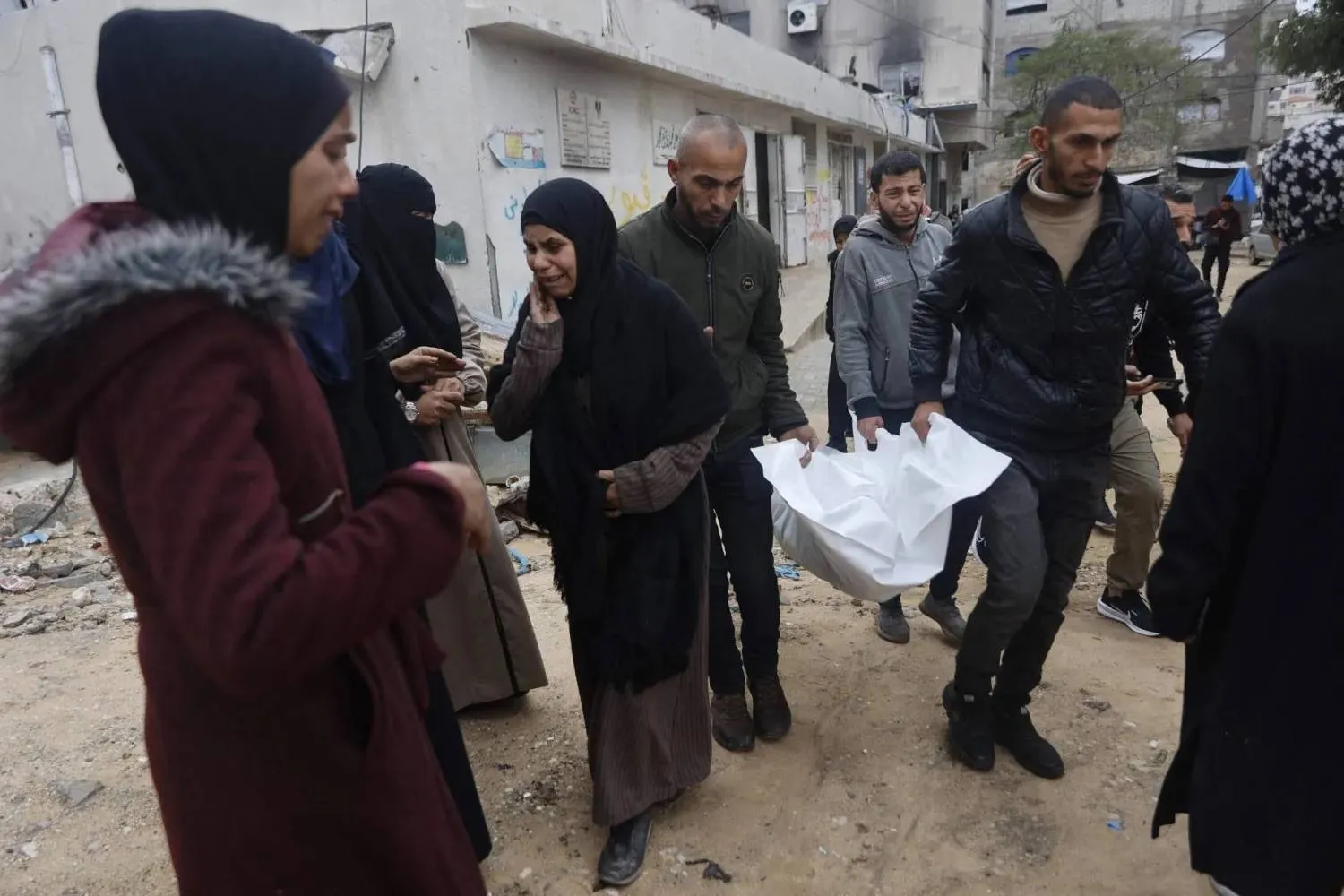
 Palestinians carry the remains of a victim of a fire that broke out in displacement tents in Gaza City (AFP). 
 Palestinians carry the remains of a victim of a fire that broke out in displacement tents in Gaza City (AFP). 
TT

First Direct Clashes Erupt Between Hamas, Armed Gangs in Gaza

 Palestinians carry the remains of a victim of a fire that broke out in displacement tents in Gaza City (AFP). 
 Palestinians carry the remains of a victim of a fire that broke out in displacement tents in Gaza City (AFP). 

The al-Tuffah neighborhood, east of Gaza City, witnessed on Sunday morning the first direct, face-to-face clashes between fighters from Hamas and members of an armed gang operating in the area, marking a new and dangerous escalation in Gaza’s internal security landscape.

Field sources said the clashes involved a group led by Palestinian Rami Halas, which calls itself the “Popular Defense Forces.” The group is reportedly active in areas under Israel’s control and has stepped up attacks against Palestinians over the past 10 days, killing at least two people and wounding several others.

According to the sources, members of the Halas gang advanced toward al-Sanafour junction in al-Tuffah, an area west of the so-called “Yellow Line,” designated as an initial withdrawal line under the Gaza ceasefire agreement.

As the gunmen entered residential neighborhoods, they were met with immediate gunfire from Hamas fighters and members of other armed factions. The exchange of fire lasted more than 20 minutes before the gang withdrew toward the Yellow Line, which remains under Israeli control.

The clashes coincided with the presence of Israeli surveillance drones overhead. Sources said that shortly after the fighting subsided, the drones carried out strikes on homes in al-Tuffah and surrounding areas. This was followed by the use of booby-trapped vehicles loaded with tons of explosives, detonated in stages to destroy what remained of houses in those zones.

The sources also revised earlier accounts of a killing on Saturday at the main junction in al-Shuja’iyya, east of Gaza City. A Palestinian initially believed to have been shot by Israeli forces was, in fact, killed by gunmen from the same armed gang, they said. He was at least the second person killed by the group in the area within roughly 10 days.

In recent weeks, the Halas gang has intensified its attacks in eastern Gaza City, allegedly operating under Israeli cover. About two weeks ago, it forced residents of a residential block in al-Tuffah to evacuate their homes.

Armed gangs in Gaza have become more active and increasingly sophisticated, carrying out assassinations — such as the killing of Internal Security officer Ahmed Zamzam —and opening fire on civilians in areas west of the Yellow Line. Sunday’s incident marked the first direct clash between such gangs and established armed factions.

Meanwhile, Hamas has expanded executions and crackdowns against armed gangs and individuals accused of collaborating with Israel since the ceasefire took effect on Oct. 10. Hamas sources said several alleged collaborators linked to the assassinations of senior leaders, including former Qassam Brigades commander Mohammed Deif, have been executed, while others have been arrested and remain under investigation.

Separately, Israeli fire killed three Palestinians in Khan Younis on Sunday, including a 15-year-old boy and a young man, while a fisherman was shot dead off the city’s coast. Since the ceasefire, more than 423 Palestinians have been killed in what are described as Israeli violations across Gaza.


Arab League: Yemen’s Southern Issue Can Only Be Resolved through Dialogue

Arab foreign ministers convene for an Arab League meeting in September. (Arab League)
TT

Arab League: Yemen’s Southern Issue Can Only Be Resolved through Dialogue

Arab foreign ministers convene for an Arab League meeting in September. (Arab League)

Spokesman for the Arab League secretary-general Gamal Roshdy underscored the importance of intra-Yemeni dialogue to address the “southern issue in Yemen”, saying this was the only way to resolve it.

In remarks to Asharq Al-Awsat, he added that the situation cannot be solved by imposing a fait accompli.

The Arab League’s stances on Yemen are clear, he added. “It supports the legitimate authorities and maintaining Yemen’s unity. It also backs the Arab coalition that was established to support legitimacy in Yemen.”

“These have been the Arab League’s positions for over a decade,” Roshdy stressed.

He hailed Saudi Arabia’s agreement to hold a comprehensive conference to discuss solutions to the southern issue, as requested by Presidential Leadership Council Chairman Dr. Rashad al-Alimi.

“Saudi Arabia is one of the most important parties in the Yemeni equation,” he remarked, reiterating the Arab League’s welcoming of the conference that will be held in Riyadh.

The southern issue, continued Roshdy, has “historical dimensions that cannot be resolved through separatist measures that impose a fait accompli. Such an approach will greatly harm the southern cause.”

The Arab coalition has in recent days taken de-escalation measures in eastern Yemen, namely in the Hadhramaut and al-Mahra provinces, to restore the control of the legitimate authorities.

Roshdy noted that Yemen has been suffering for years because of the Houthi coup, “so it is not in its interest to become embroiled in new divisions that will only deepen its crises.”


Egyptian, UAE FMs Review Developments in Palestine, Sudan, Yemen

FILED - 18 September 2024, Egypt, Cairo: Egypt's Foreign Minister Badr Abdelatty speaks during a press conference at Tahrir Palace. Photo: Khaled Elfiqi/dpa
TT

Egyptian, UAE FMs Review Developments in Palestine, Sudan, Yemen

FILED - 18 September 2024, Egypt, Cairo: Egypt's Foreign Minister Badr Abdelatty speaks during a press conference at Tahrir Palace. Photo: Khaled Elfiqi/dpa

Egyptian Foreign Minister Badr Abdelatty held a phone call on Tuesday with his Emirati counterpart, Sheikh Abdullah bin Zayed Al Nahyan, during which they discussed the developments in Gaza and the West Bank, as well as efforts to implement US President Donald Trump’s peace plan for Gaza.

In a statement, the Egyptian Foreign Ministry said the two sides underscored the importance of maintaining close coordination within the Quartet mechanism -which includes Saudi Arabia, the United Arab Emirates, Egypt, and the United States- to help secure a ceasefire in Sudan, review developments in Yemen and emphasize the need to support de-escalation efforts and reduce regional tensions.

Abdelatty stressed the importance of reaching a political settlement in Yemen through an inclusive Yemeni-led dialogue that preserves the country’s sovereignty, unity, and territorial integrity, and meets the aspirations of its people for security and stability, according to the statement.


Yemen Govt Continues to Consolidate Presence in Liberated Provinces

Saudi Defense Minister Prince Khalid bin Salman and deputy head of the PLC Abdulrahman Abou Zaraa meet in Riyadh on Monday. (Abou Zaraa on X)
TT

Yemen Govt Continues to Consolidate Presence in Liberated Provinces

Saudi Defense Minister Prince Khalid bin Salman and deputy head of the PLC Abdulrahman Abou Zaraa meet in Riyadh on Monday. (Abou Zaraa on X)

The legitimate Yemeni government continued on Monday to consolidate its presence in the liberated provinces of Hadhramaut and al-Mahra following the deployment of the National Shield Forces.

Several ministries issued several memos and statements about maintaining security and ensuring livelihoods, including barring people from carrying arms in the interim capital Aden.

Interior Minister Ibrahim Haidan called on all military leaderships and security units in Aden to commit to the orders issued by Presidential Leadership Council (PLC) Chairman Dr. Rashad al-Alimi related to the brandishing of weapons in Aden and other provinces.

Meanwhile, in Riyadh, Saudi Defense Minister Prince Khalid bin Salman held talks with deputy head of the PLC Abdulrahman Abou Zaraa on the developments in Yemen, notably the southern issue.

In post on the X platform, Abou Zaraa said they discussed means to bolster joint efforts to support stability in Yemen and preserve regional security.

In Hadhramaut, Governor Salem al-Khanbashi opened the headquarters of the Hadhramaut National Council in Seiyun city, kicking off a new phase of “tolerance, coexistence and national partnership.”

He revealed that a similar headquarters will be opened in Mukalla city, which would allow the council to carry out its duties at various local and regional events.

The council will spearhead national and development work, he added, hailing the political leadership and Saudi Arabia for supporting Hadhramaut.

He also praised the effective role played by the Corporate Protection Forces that are protecting oil companies, facilities and oilfields, reported the Saba state news agency.

Khanbashi met on Monday with Ahmed al-Maari, leader of the Corporate Protection Forces.
