
Syria Asks Lebanon to Hand Over Assad-Era Officers

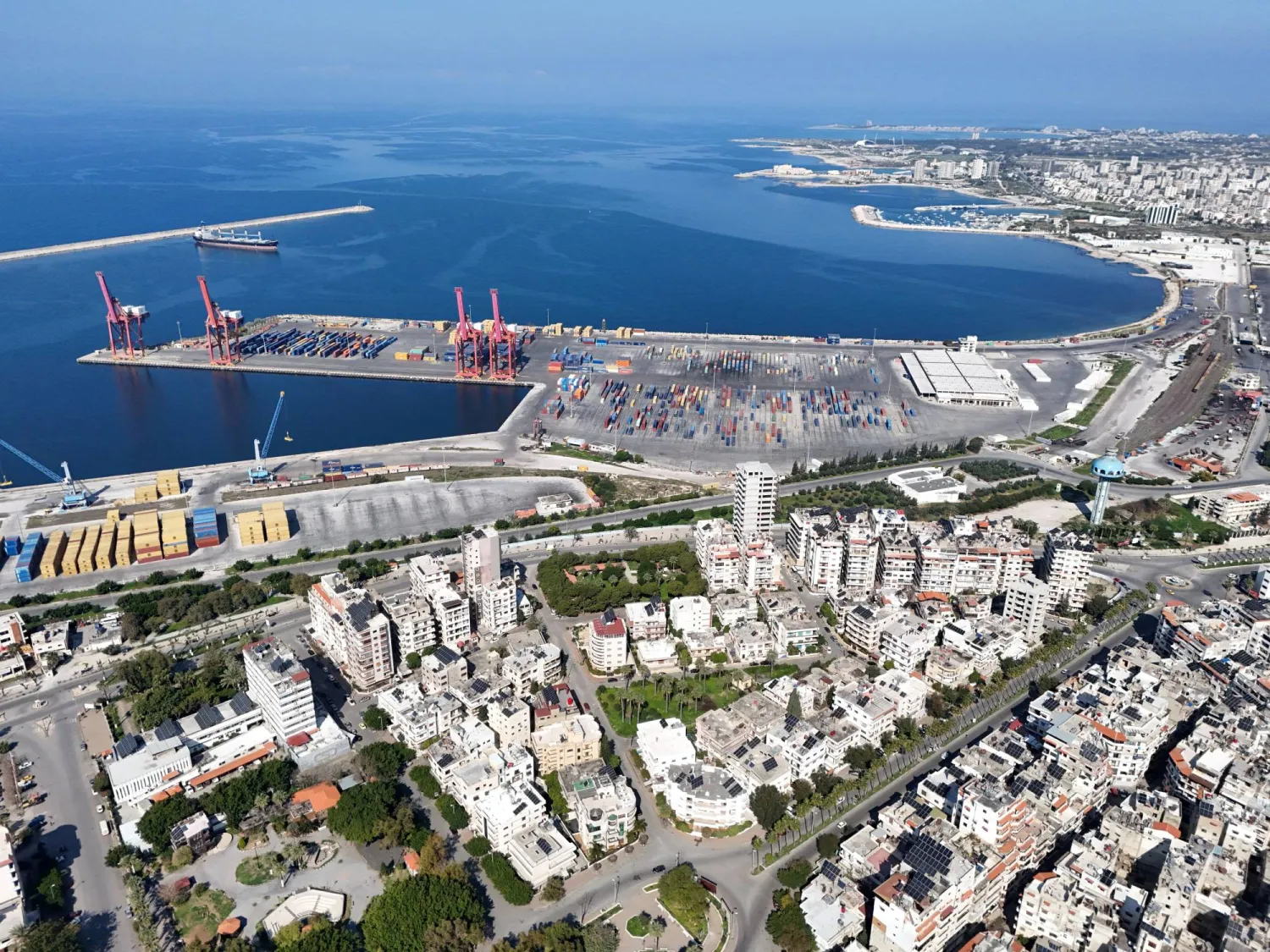
A drone view shows the port of the coastal city of Latakia, Syria, March 11, 2025. (Reuters)
TT

Syria Asks Lebanon to Hand Over Assad-Era Officers

A drone view shows the port of the coastal city of Latakia, Syria, March 11, 2025. (Reuters)

Syrian authorities have asked Lebanese security forces to hand over more than 200 senior officers who fled to Lebanon after the fall of Bashar al-Assad, following a Reuters investigation that showed how the neighboring country was a hub for insurgent plotting.

On December 18, a ​top Syrian security official, Brig. Abdul Rahman al-Dabbagh, met with his Lebanese counterparts in Beirut to discuss the exiled Assad-era officers, according to three senior Syrian sources, two Lebanese security officials, and a diplomat with knowledge of the visit.

The meetings came days after a Reuters investigation detailed rival plots being pursued by Rami Makhlouf, the billionaire cousin of the ousted president, and Maj. Gen. Kamal Hassan, former head of military intelligence, both living in exile in Moscow, to finance potential Alawite militant groups in Lebanon and along the Syrian coast. Syria and Lebanon share a 375-kilometer border.

The two rival camps aim to undermine the new Syrian government under President Ahmed al-Sharaa. Reuters found they are sending money to intermediaries in Lebanon to try and stir uprisings that would divide Syria and allow the plotters to regain control over the coastal areas. The population of those areas is dominated ‌by Alawites, the minority ‌sect associated with the Assad family and the dictatorship’s ruling elite.

Al-Dabbagh, an aide to the ‌head ⁠of ​internal security ‌in Syria’s Latakia province, an Alawite stronghold, met with Lebanese intelligence chief Tony Kahwaji and Major General Hassan Choucair, head of the General Security Directorate, and presented them with the list of senior officers wanted by Syria.

The visit focused on gathering information about the whereabouts and legal status of the officers, as well as trying to find ways to prosecute or extradite them to Syria, according to the Syrian sources.

They described it as a direct request from one security agency to another, rather than a demand for extradition.

Three senior Lebanese security officials confirmed the meetings. One of the Lebanese officials denied receiving any demands from the Syrians to hand over the officers. Two others acknowledged receiving a list of names but said none were senior officers.

One of the Lebanese security ⁠officials said there is no evidence of any insurgency being planned, despite the threats against Syria’s new government detailed in the Reuters reporting.

All the officials spoke on condition of anonymity to reveal details of ‌a highly sensitive cross-border issue.

Among the names handed over by Syrian officials to ‍Lebanon were several high-ranking figures acting as intermediaries for Makhlouf or Hassan in ‍Lebanon, according to a Syrian source who saw the list.

A Lebanese judicial official said Syria had not made a formal extradition request to ‍Lebanon, typically done through the two countries’ justice and foreign ministries.

Accompanying Dabbagh on his Beirut visit was Khaled al-Ahmad, a former Assad advisor and childhood friend of Sharaa, who is leading the government’s efforts to win over the Alawite community through development projects and aid, according to two witnesses who saw the men together on that mid-December day.

According to the two witnesses, who are both ex-Assad officers, al-Ahmad and Dabbagh went together to an upscale Beirut restaurant that is popular among Assad’s ​men. The two witnesses said they and others interpreted the outing as a warning to those trying to influence Alawites to rise up against Syria’s new leaders that Lebanon is no longer a haven.

In a January 2 post on X, Lebanese Deputy Prime Minister Tarek Mitri called on his government’s security agencies to verify the information circulating in the media and take action against the Lebanon-based agents for Assad’s former insiders, Makhlouf and Hassan.

“It is incumbent upon them, and upon all of us, to avert the dangers of any actions that undermine Syria’s unity or threaten its security and stability, whether in Lebanon or originating from it,” the tweet read.

In response to questions from Reuters, Lebanon’s General Security referred to January 11 remarks by Lebanese President Joseph Aoun, who said Lebanon’s military intelligence and other security agencies had carried out raids in several areas of the country’s north and east.

Aoun said the raids did not produce evidence of the presence of officers linked to the Assad dictatorship and said Lebanon was continuing to coordinate with Syria on the issue.

Syrian government officials did not respond to requests for comment.

From January 3 to January 6, Lebanese soldiers raided locations and shelters housing displaced Syrians. The Lebanese Army said 38 Syrians were arrested during the raids on different charges such as possession of drugs or weapons, or entering the country illegally.

A senior Lebanese security official told Reuters those ‌raids were linked to the exiles’ plots.

Another senior Lebanese security official emphasized that there was no arrest warrant for the Syrian officers in Lebanon, nor Interpol requests for them.

“We can't do anything against them,” the official added.


Oman Stresses Importance of Resumption of Negotiations between US and Iran 

Oman’s Sultan Haitham bin Tarik meets with Secretary of Iran's Supreme National Security Council Ali Larijani in Muscat on Tuesday. (ONA)
TT

Oman Stresses Importance of Resumption of Negotiations between US and Iran 

Oman’s Sultan Haitham bin Tarik meets with Secretary of Iran's Supreme National Security Council Ali Larijani in Muscat on Tuesday. (ONA)

Oman stressed on Tuesday the importance of the resumption of dialogue and negotiations between the United States and Iran in wake of talks hosted in Muscat on Friday between the two sides. Tehran said last week’s indirect talks allowed it to assess how serious Washington was about resuming that path.

Oman’s Sultan Haitham bin Tarik received in Muscat on Tuesday Ali Larijani, a former Iranian parliament speaker who now serves as the secretary to the country's Supreme National Security Council, for talks on the latest developments of the Iranian-American negotiations, reported the Sultanate’s official news agency ONA.

The nearly three-hour meeting also addressed paths toward achieving a balanced and equitable agreement for all parties.

It underscored the critical importance of resuming dialogue and returning to the negotiating table to bridge divides and resolve outstanding differences through peaceful means. Such efforts are fundamental to promoting and sustaining peace and security both in the region and the world at large, said ONA.

Sultan Haitham later sent a cable of greetings to Iran’s President Masoud Pezeshkian on his country's National Day.

He expressed his sincere wishes for Iran to achieve further accomplishments. He hoped relations of cooperation and partnership would grow and expand across various sectors in a manner that serves the interests of both countries.

Oman’s Foreign Minister Badr Albusaidi later received Larijani for a “productive” meeting on recent developments, especially the Iran-US talks, he wrote on X.

“Regional peace and security is our priority, and we urge restraint and wise compromise,” he stressed.

Larijani's entourage shared photos of him meeting with the FM, the chief intermediary in the US-Iran talks, with what appeared to be a letter sheathed in plastic and sitting alongside the Omani diplomat.

Iranian media had said Larijani would deliver an important message. However, Iranian state television hours after that meeting described Albusaidi as having “handed over a letter” to Larijani. It did not elaborate from where the letter came.

Iran talks a global focus

Iran and the US held new nuclear talks last week in Oman. Foreign Minister Abbas Araghchi, speaking Sunday to diplomats at a summit in Tehran, signaled that Iran would stick to its position that it must be able to enrich uranium — a major point of contention with US President Donald Trump. Israel’s war on Iran in June disrupted earlier rounds of nuclear talks between Washington and Tehran.

“The Muscat meeting, which was not a long one, it was a half-day meeting. For us it was a way to measure the seriousness of the other side, and to find out how we could continue the process. Therefore we mostly addressed the generalities,” Iranian Foreign Ministry spokesman Esmail Baghaei told journalists at a news conference Tuesday in Tehran.

“Our principles are clear. Our demand is to secure the interests of the Iranian nation based on international norms and the Non-Proliferation Treaty and peaceful use of nuclear energy,” Baghaei said. “So as for the details, we should wait for the next steps and see how this diplomatic process will continue.”

Israeli Prime Minister Benjamin Netanyahu also arrived in Washington for talks with Trump. Iran is expected to be the major subject of discussion.

Larijani accused Israel of trying to play a “destructive role” in the talks.

“Americans must think wisely and not allow him, through posturing, to imply before his flight that ’I want to go and teach Americans the framework of the nuclear negotiations,” Larijani said in a post on X.

Elsewhere, US Ambassador to Israel Mike Huckabee said there is “extraordinary alignment” between Washington and Israel over the talks with Tehran.

“Everyone would love to see something that would resolve without a war, but it’ll be up to Iran,” said Huckabee before he boarded a flight to Washington with Netanyahu.

The United States has moved the aircraft carrier USS Abraham Lincoln, ships and warplanes to the Middle East to pressure Iran into an agreement and have the firepower necessary to strike the country should Trump choose to do so.

Already, US forces shot down a drone they said got too close to the Lincoln and came to the aid of a US-flagged ship that Iranian forces tried to stop in the Strait of Hormuz, the narrow mouth of the Arabian Gulf.

The US Transportation Department's Maritime Administration issued a new warning Monday to American vessels in the strait to “remain as far as possible from Iran’s territorial sea without compromising navigational safety.”

Anti-government chants from people's homes

Meanwhile, people in various neighborhoods of Iran’s capital chanted “death to the dictator” from windows and rooftops on the eve of the anniversary of the 1979 revolution, witnesses said, turning the annual celebration into a protest.

State television in recent days has routinely encouraged people to chant pro-government slogans accompanied by fireworks across the city, an annual ritual in the country. The government plans to hold rallies Wednesday to celebrate the anniversary.

The move came nearly one month after a bloody crackdown in Iran on anti-government protests that led to the deaths of thousands of people and tens of thousands more being detained.


Village in Southern Lebanon Buries a Child and Father Killed in Israeli Drone Strike 

Lebanese special forces policemen carry the coffins of their comrade Hassan Jaber, who was killed on Monday with his son Ali, by an Israeli drone attack, during their funeral procession in Yanouh village, south Lebanon, Tuesday, Feb. 10, 2026. (AP)
TT

Village in Southern Lebanon Buries a Child and Father Killed in Israeli Drone Strike 

Lebanese special forces policemen carry the coffins of their comrade Hassan Jaber, who was killed on Monday with his son Ali, by an Israeli drone attack, during their funeral procession in Yanouh village, south Lebanon, Tuesday, Feb. 10, 2026. (AP)

Mourners in southern Lebanon on Tuesday buried a father and his young son killed in an Israeli drone strike that targeted a Hezbollah member.

Hassan Jaber, a police officer, and his child, Ali, were on foot when the strike on Monday hit a passing car in the center of their town, Yanouh, relatives said. Lebanon's health ministry said the boy was 3 years old. Both were killed at the scene along with the car driver, Ahmad Salami, who the Israeli military said in a statement was an artillery official with the Lebanese armed group.

It said it was aware of a “claim that uninvolved civilians were killed” and that the case is under review, adding it “makes every effort to reduce the likelihood of harm” to civilians.

Salami, also from Yanouh, was buried in the village Tuesday along with the father and son.

“There are always people here, it’s a crowded area,” with coffee shops and corner stores, a Shiite religious gathering hall, the municipality building and a civil defense center, a cousin of the boy’s father, also named Hassan Jaber, told The Associated Press.

When the boy and his father were struck, he said, they were going to a bakery making Lebanese breakfast flatbread known as manakish to see how it was made. They were standing only about 5 meters (5.5 yards) from the car when it was struck, the cousin said.

“It is not new for the Israeli enemy to carry out such actions,” he said. “There was a car they wanted to hit and they struck it in the middle of this crowded place.”

Jaber said the little boy, Ali, had not yet entered school but “showed signs of unusual intelligence.”

“What did this innocent child do wrong, this angel?” asked Ghazaleh Haider, the wife of the boy’s uncle. “Was he a fighter?”

Attendees at the funeral carried photos of Ali, a striking child with large green eyes and blond hair. Some also carried flags of Hezbollah or of its ally, the Amal party.

Lebanon’s Internal Security Forces, of which the child’s father was a member, said in a statement that the 37-year-old father of three had joined in 2013 and reached the rank of first sergeant.

The strike came as Israel has stepped up its campaign against Hezbollah and its allies in Lebanon.

The night before the strike in Yanouh, Israeli forces launched a rare ground raid in the Lebanese village of Hebbarieh, several kilometers from the border, in which they seized a local official with the Jamaa al-Islamiya group. The group is allied with Hezbollah and the Palestinian group Hamas.

After the Oct. 7, 2023, Hamas-led attack on Israel triggered war in Gaza, Hezbollah began firing rockets from Lebanon into Israel in support of Hamas and the Palestinians.

Israel responded with airstrikes and shelling. The low-level conflict escalated into full-scale war in September 2024, later reined in but not fully stopped by a US-brokered ceasefire two months later.

Since then, Israel has accused Hezbollah of trying to rebuild and has carried out near-daily strikes in Lebanon that it says target Hezbollah members and facilities.

Israeli forces also continue to occupy five hilltop points on the Lebanese side of the border. Hezbollah has claimed one strike against Israel since the ceasefire.


US Sanctions Target Alleged Hezbollah Gold Exchange 

Hezbollah supporters raise their group's flags during a protest condemning recent Israeli military actions in Lebanon and calling on the international community to intervene as tensions escalate along the southern border, outside the headquarters of the UN Economic and Social Commission for Western Asia, ESCWA, in Beirut, Lebanon, Wednesday, Feb. 4, 2026. (AP)
TT

US Sanctions Target Alleged Hezbollah Gold Exchange 

Hezbollah supporters raise their group's flags during a protest condemning recent Israeli military actions in Lebanon and calling on the international community to intervene as tensions escalate along the southern border, outside the headquarters of the UN Economic and Social Commission for Western Asia, ESCWA, in Beirut, Lebanon, Wednesday, Feb. 4, 2026. (AP)

The United States on Tuesday imposed sanctions against a gold exchange it said facilitates Iranian financial support to Lebanon’s Hezbollah.

The Treasury Department said the targeted gold exchange was part of Al-Qard al-Hassan, a Hezbollah financial institution already under US sanctions and whose branches were bombed by Israel in 2024 strikes.

"Hezbollah is a threat to peace and stability in the Middle East," Treasury Secretary Scott Bessent said in a statement.

"Treasury will work to cut these terrorists off from the global financial system to give Lebanon a chance to be peaceful and prosperous again."

The Treasury Department imposed sanctions on the gold exchange, Jood Sarl, which it said "masquerades as a non-governmental organization" and is used to ensure Hezbollah's cash flow from Iran.

It also said it was imposing sanctions on a number of individuals or entities, including a Russian national, for working on Hezbollah's finances.

The sanctions freeze any assets in the United States and make financial transactions with the listed entities a crime.

Israel struck a major blow against Hezbollah in the 2024 war, killing its longtime leader Hassan Nasrallah, a year after Hamas, another group backed by Iran, carried out a devastating attack against Israel.

In accordance with a truce, the Lebanese army said it had disarmed Hezbollah in an area close to the Israeli border. But Hezbollah has refused to surrender further arms and Israel says progress is insufficient, keeping up periodic attacks.