


Israel PM Holds Coalition Meeting After Objecting to Gaza Panel

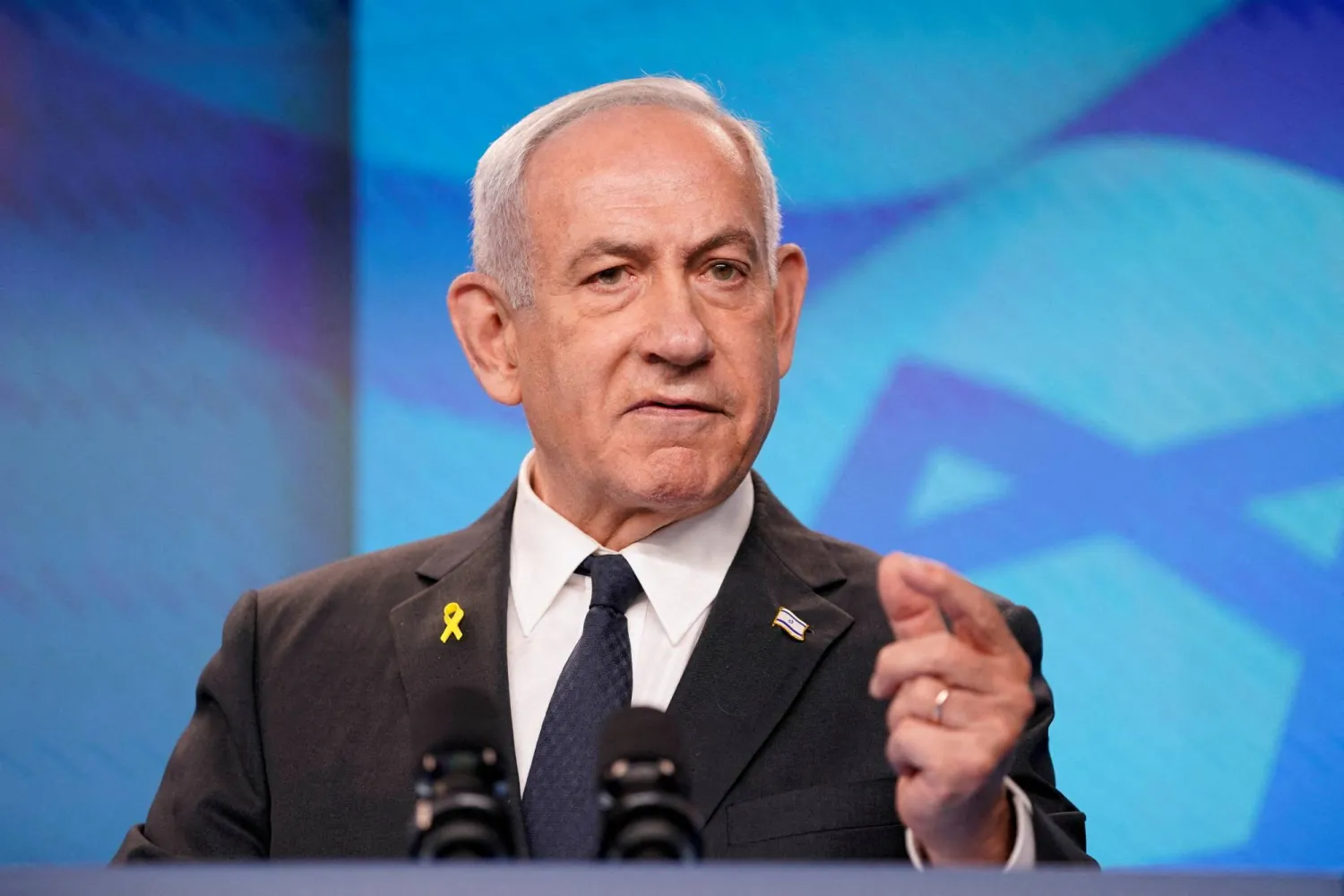
Israeli Prime Minister Benjamin Netanyahu gestures during a joint press conference with US Secretary of State Marco Rubio (not pictured) at the Prime Minister's Office, during Rubio's visit, in Jerusalem, September 15, 2025. (Reuters)
TT

Israel PM Holds Coalition Meeting After Objecting to Gaza Panel

Israeli Prime Minister Benjamin Netanyahu gestures during a joint press conference with US Secretary of State Marco Rubio (not pictured) at the Prime Minister's Office, during Rubio's visit, in Jerusalem, September 15, 2025. (Reuters)

Israeli Prime Minister Benjamin Netanyahu convened a meeting of his ruling coalition partners on Sunday after objecting to the composition of a Gaza advisory panel formed by the White House, according to an official and media reports.

The White House announced this week the setting up of a "Gaza Executive Board," which would operate under a broader "Board of Peace" to be chaired by US President Donald Trump as part of his 20-point plan to end the war in Gaza.

The executive board, described as having an advisory role, includes Turkish Foreign Minister Hakan Fidan and Qatari diplomat Ali Al-Thawadi, alongside other regional and international officials.

Late on Saturday, Netanyahu's office objected to the composition of the executive board.

"The announcement regarding the composition of the Gaza Executive Board, which is subordinate to the Board of Peace, was not coordinated with Israel and runs contrary to its policy," the office of Netanyahu said.

"The Prime Minister has instructed the Foreign Affairs Minister to contact the US Secretary of State on this matter."

It did not explain the reason for its objection, but Israel has previously objected strongly to any Turkish role in post-war Gaza, with relations between the two countries deteriorating sharply since the war began in October 2023.

In addition to naming Türkiye's foreign minister to the executive board, Trump has also invited Turkish President Recep Tayyip Erdogan to join the overarching Board of Peace.

Media reports said that leaders of the country's ruling coalition were scheduled to meet on Sunday to examine the composition of the executive board.

"There is a meeting scheduled of the coalition at 10:00 am (0800 GMT)," the spokesman of Netanyahu's Likud Party told AFP, declining to provide further details.

Alongside Likud, the coalition includes the Religious Zionist Party led by far-right Finance Minister Bezalel Smotrich and Otzma Yehudit (Jewish Power) led by far-right National Security Minister Itamar Ben-Gvir.

The White House said Trump's plan would include three bodies: the Board of Peace, chaired by Trump; a Palestinian committee of technocrats tasked with governing Gaza; and the Gaza Executive Board, which would play an advisory role.

The Palestinian technocratic committee held its first meeting in Cairo on Saturday.

The diplomatic developments came as the United States said this week that the Gaza truce plan had entered a second phase, shifting from implementing a ceasefire to the disarmament of Hamas, whose October 7, 2023 attack on Israel triggered the Israeli offensive in Gaza.


Yemeni Leadership Moves to Overcome Shock of Losing West Coast

An internally displaced (IDP) Yemen, one of many who fled their homes due to renewed clashes between Yemen's government forces and the Houthi group, sits in his shelter in the al-Kadha area of the Taiz governorate, southwestern Yemen on September 6, 2026. (AFP)
TT

Yemeni Leadership Moves to Overcome Shock of Losing West Coast

An internally displaced (IDP) Yemen, one of many who fled their homes due to renewed clashes between Yemen's government forces and the Houthi group, sits in his shelter in the al-Kadha area of the Taiz governorate, southwestern Yemen on September 6, 2026. (AFP)

The Yemeni leadership is moving to deal with the loss suffered by government forces on the west coast as a painful field setback, but one that should not become a turning point in the conflict with the Houthi group.

The government and Presidential Leadership Council are, meanwhile, seeking to rearrange forces and regain the initiative, while containing the humanitarian consequences of displacement and maintaining the operation of state institutions.

PLC member and Governor of Marib Sultan Al-Aradah said the developments on the west coast are "painful and regrettable," but are part of wars that witness advances and retreats.

The developments will not deflect from the main goal, he added.

In remarks carried by state media, he said the forces that withdrew from the coast are rearranging their ranks and will return to the battle "in one way or another."

Field developments on the west coast had forced government troops to redeploy after losing positions and areas, amid a broad Houthi escalation. The developments led to new waves of displacement, while a number of military personnel relocated to Marib, where Al-Aradah said authorities had prepared a camp for them and made arrangements to secure their needs.

Al-Aradah's remarks reveal that the Yemeni leadership is attempting to shift the handling of the west coast loss from a state of field shock to restoring combat capability.

This approach aligns with what Prime Minister Shaya Al-Zandani put forward during a cabinet meeting in the interim capital Aden, when he stressed that the difficult developments over the past days should not be understood as an end to the confrontation.

He stressed that battles are not measured by the outcome of a single day or a change in a position, but rather by the state's ability to reorganize its efforts, mobilize its resources, support its forces, maintain the cohesion of its institutions, and regain the initiative.

It appears that the Yemeni leadership's priority in the coming phase centers on rearranging the forces that withdrew from the coast and reintegrating them into operations, alongside elevating government support for the armed and security forces.

The cabinet confirmed that it reviewed a report from the minister of defense regarding the military situation across various fronts, operational readiness levels, and requirements, while underlining the need to boost the forces' capacity to confront the escalation and regain the initiative.

In Marib, Al-Aradah said that the governorate's forces are focused on victory and supporting various fronts, noting that the ultimate goal in the fighting, in Marib and elsewhere, remains the liberation of the capital, Sanaa, from the Houthis.

The forces and commanders on the ground bear a historic responsibility to defend the state and national dignity, he said.


Tareq Saleh’s Forces Accuses Iran’s Revolutionary Guards of Guiding Assault on Yemen’s West Coast

Smoke rises during clashes between Yemeni government forces and Houthis (Reuters)
TT

Tareq Saleh’s Forces Accuses Iran’s Revolutionary Guards of Guiding Assault on Yemen’s West Coast

Smoke rises during clashes between Yemeni government forces and Houthis (Reuters)

In its first statement since losing extensive positions on Yemen's west coast, the government’s National Resistance revealed the cost of a month-long battle against the Houthis. It accused Iran’s Revolutionary Guard Corps (IRGC) and its regional allies of providing direct support and managing the offensive, which culminated in the group seizing control of vast positions and areas along the coast.

The "National Resistance" forces, led by member of the Yemen’s Presidential Leadership Council Tareq Saleh, announced that more than 500 of their personnel were killed and nearly 1,500 others wounded. This was compared to more than 1,000 dead and thousands wounded among the Houthis, according to the statement about the battles that spanned from August 9 to September 10.

The statement, broadcast by the military forces' media, comes following a major field shift on the west coast fronts, with the Houthis advancing and seizing control of Hays, al-Khawkha, Mokha and its port, and extending their control to Bab al-Mandeb, Mayyun Island, and the rest of the Yemeni islands in the southern Red Sea.

The National Resistance described the battles as some of the "fiercest clashes" they have fought against the Houthis, stating that the offensive began with intensive missile bombardment and attacks using drones and booby-trapped boats, before expanding across the Hays, al-Kadha, Maqbanah, and al-Barah areas.

It added that the Houthis deployed large numbers of fighters and reinforcements from various axes in an attempt to shift the balance of power on the ground and besiege the defending forces.

The National Resistance linked the nature of the offensive and the Houthis' ability to mobilize forces and execute simultaneous operations to what they described as direct support from personnel and expertise of the IRGC and its regional allies.

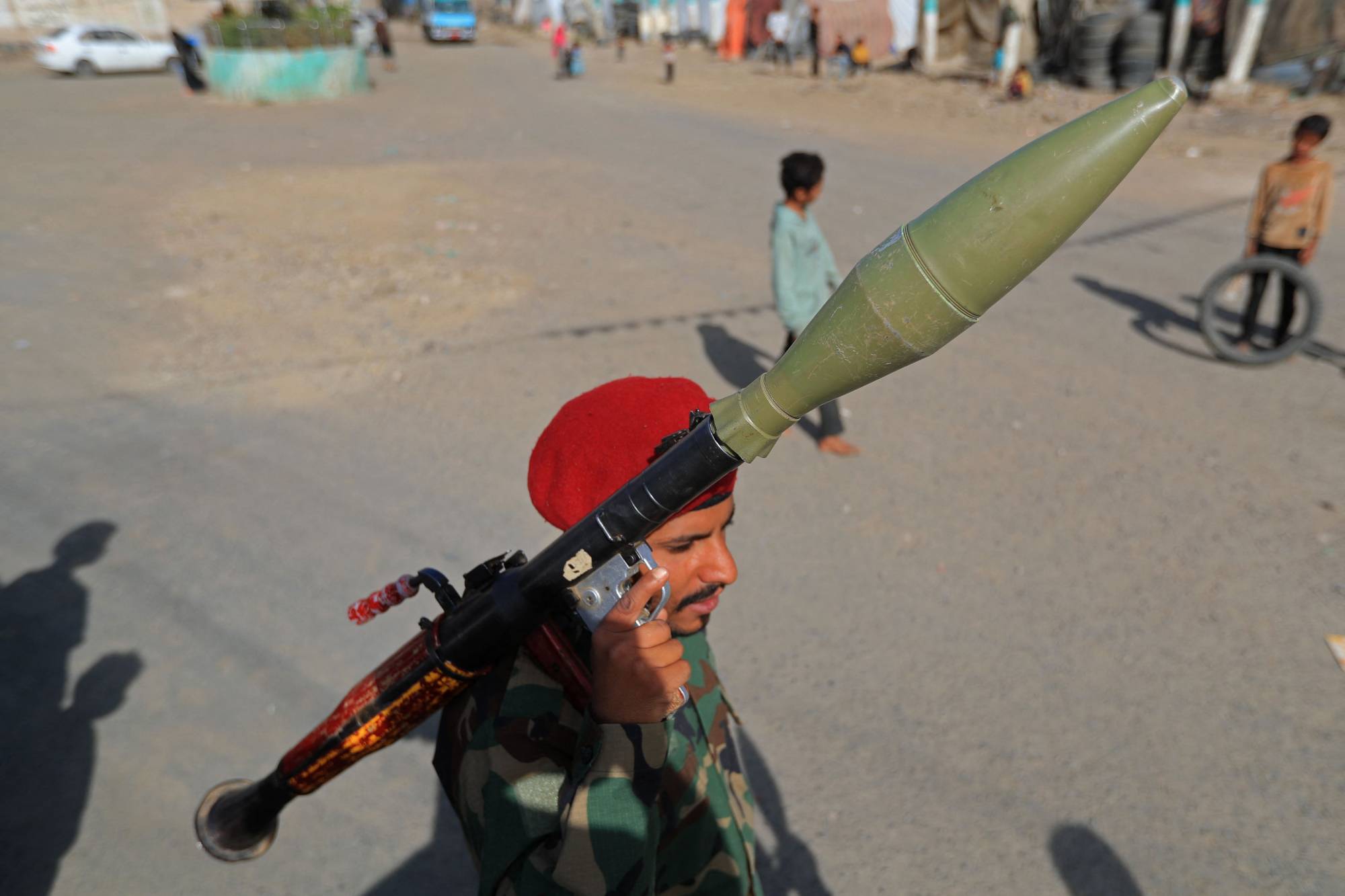
A Yemeni gunman brandishes his weapon during a rally to recruit more fighters in Sanaa on September 10, 2026. (AFP)

It said the offensive was prepared in advance to exploit the terrain and establish fire control over several commanding heights, in an attempt to tighten the siege on the forces and destroy their combat capability.

It added that the course of the battles revealed, according to its assessment, the nature of the Iranian role in supporting the Houthis, accusing the group of executing a project that targets Arab national security and international waterways.

Faced with the intensity of the offensive and the succession of reinforcements, the National Resistance revealed that its leadership decided to reposition forces into new defensive lines, aiming to preserve its "strike force" and foil the plan to encircle and destroy it.

The repositioning is not the end of the fight, but rather a measure to preserve its forces and rearrange their deployment after losing extensive positions.

The statement praised Saudi support, which it said continued until the "last moment," alongside the backing of the Giants Brigades, National Shield, and tribal volunteers, saying this is an embodiment of the unity among anti-Houthi forces.

The National Resistance said the developments underscore the need for integrating anti-Houthi fronts and mobilizing them simultaneously, rather than relying on a single military sector, aiming to regain the initiative and impose a new military reality.

In an attempt to avoid holding other Yemeni factions responsible for the loss, the statement stressed that the resistance has no intention of "accusing anyone of treason" or engaging in "settling scores or political posturing." It called for viewing developments objectively, drawing lessons, and rearranging priorities for the upcoming phase.


Israeli Strike Kills Two People in Gaza, Medics Say

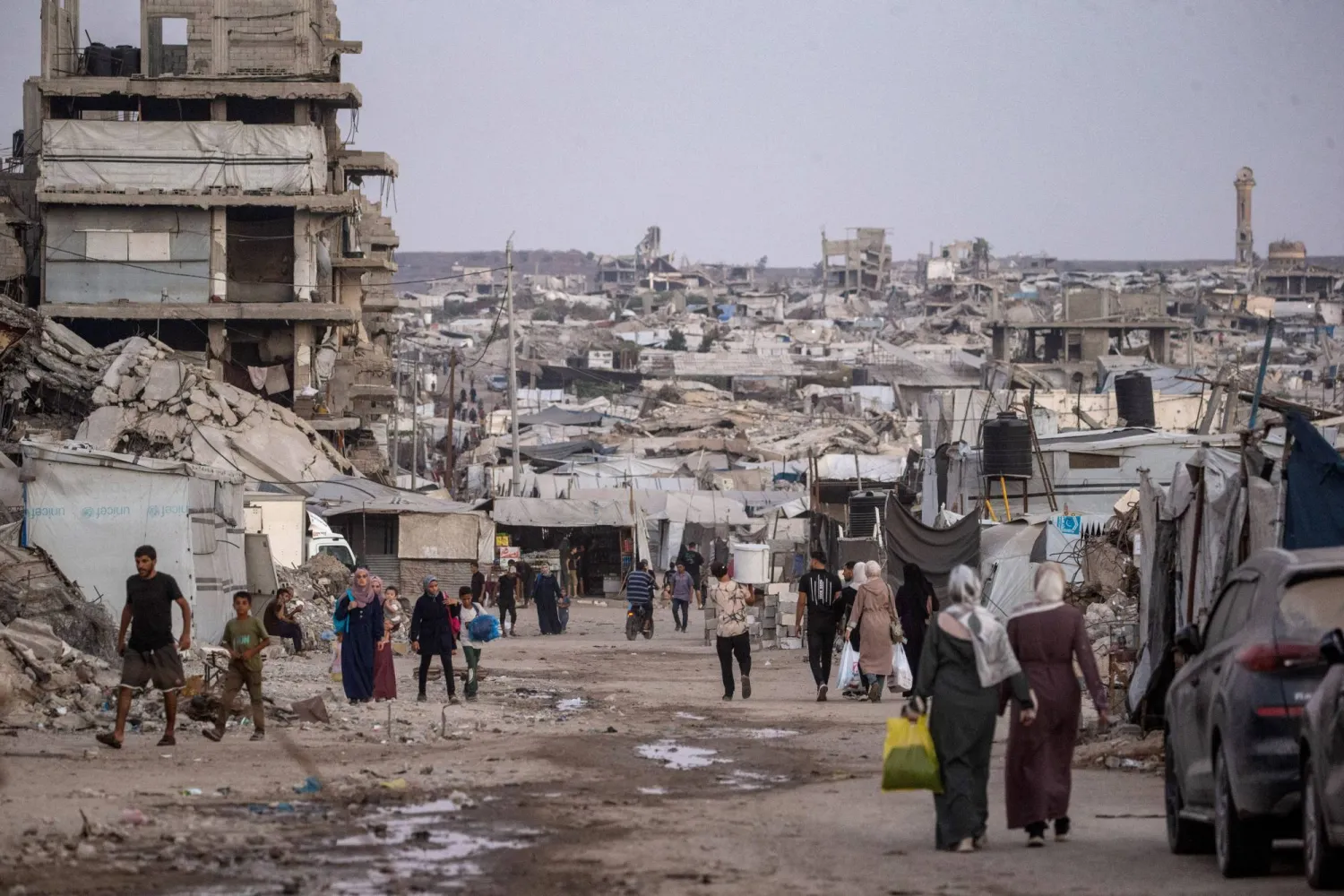
Internally displaced Palestinians walk among the ruins of destroyed residential buildings in the Al-Sheikh Radwan neighborhood, east of Gaza City, Gaza Strip, 10 September 2026. (EPA)
TT

Israeli Strike Kills Two People in Gaza, Medics Say

Internally displaced Palestinians walk among the ruins of destroyed residential buildings in the Al-Sheikh Radwan neighborhood, east of Gaza City, Gaza Strip, 10 September 2026. (EPA)

An ‌Israeli airstrike on Sunday killed at least two Palestinians in a vehicle and wounded 13 others in the Gaza Strip, medical staff said.

The strike in the Tel Al-Hawa neighborhood in western Gaza City, left the vehicle mangled, according to footage circulated on social media. Local medical staff told ‌Reuters that ‌they urged people to provide ‌information ⁠that could help identify ⁠the two people who were killed and whose bodies were dismembered by the explosion.

The Israeli military said the strike targeted two Hamas fighters, without giving further information.

An October 2025, ⁠US-backed, ceasefire halted large-scale fighting in ‌Gaza, but ‌it has not ended Israeli strikes and ‌there has been little progress on ‌steps towards permanent peace.

Hamas accuses Israel of violating the ceasefire and undermining efforts to implement US President Donald Trump's broader plan ‌to end the Gaza conflict, which includes the Israeli withdrawal ⁠from ⁠the strip and the disarmament of Hamas.

Israel says Hamas has been violating the deal.

More than 1,300 Palestinians, mostly civilians, have been killed in Gaza since the ceasefire took effect, according to the territory's health officials, while the Israeli military says four Israeli soldiers have been killed.

Hamas does not usually disclose information about fatalities among its fighters.
