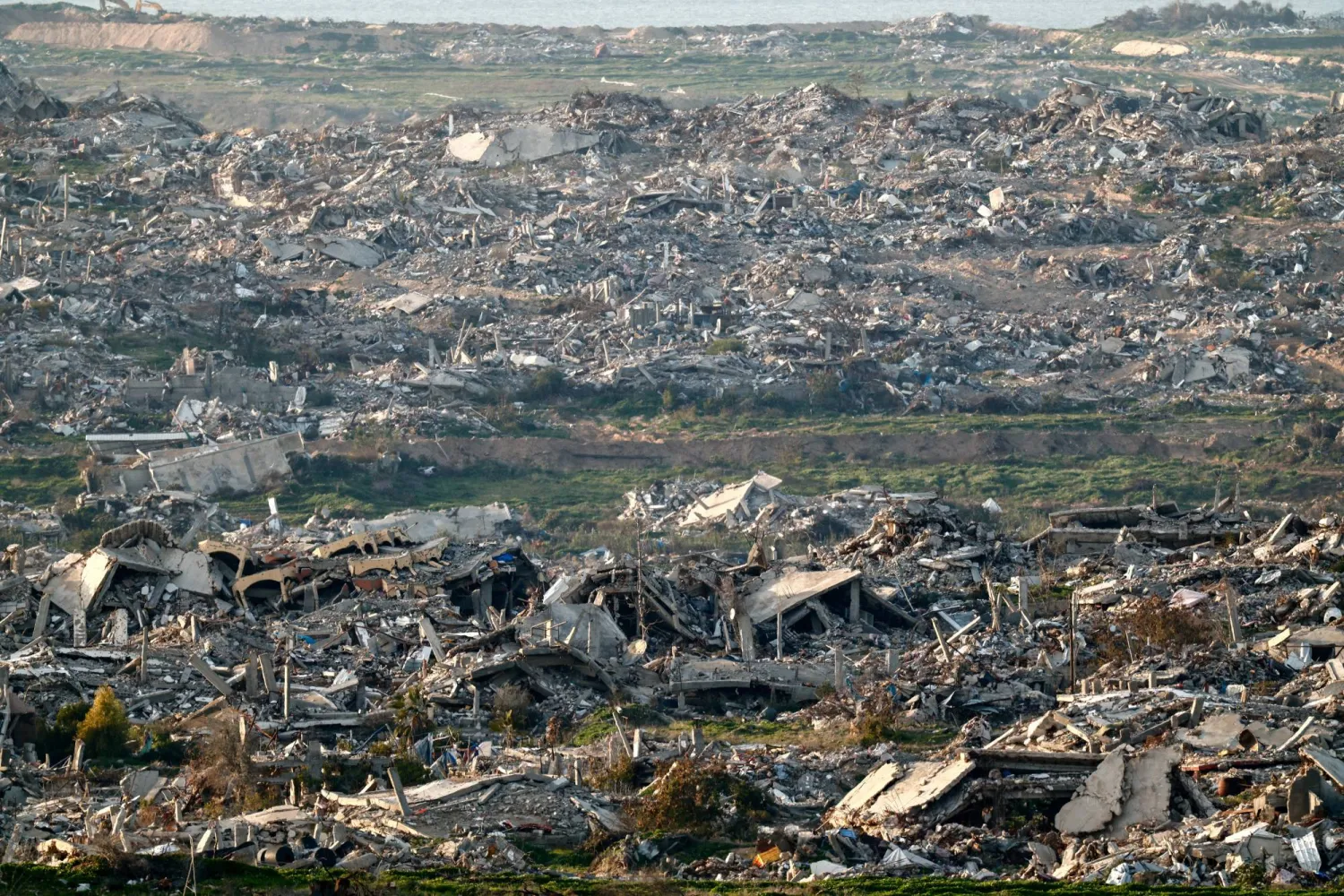

The committee tasked with administering the Gaza Strip has begun work in Cairo, but its planned entry into the enclave has been blocked by Israel, a move mediators are seeking to head off as part of the second phase of the Gaza ceasefire agreement that began in mid-January and has drawn objections from Prime Minister Benjamin Netanyahu.
The ban followed Israel's objection to the White House announcement of leaders who will play a role in overseeing the next steps in Gaza.
Experts speaking to Asharq Al-Awsat said these objections represent major obstacles that complicate the second phase, which includes an Israeli withdrawal from Gaza, the launch of reconstruction, the deployment of stabilization forces, and the disarmament of Hamas.
They warned the obstacles could delay or derail implementation, stressing that pressure from the international community and mediators could push Washington to neutralize any Israeli hurdles.
Israel’s Haaretz newspaper quoted sources on Tuesday as saying Netanyahu’s government is refusing to allow members of the Palestinian “technocrats committee” to enter Gaza.
It said the committee members had been scheduled to enter the enclave this week via the Rafah crossing to assume civil administration duties by the end of the week.
The report said the committee’s members continue to hold meetings in Cairo, while mediators, particularly Egypt, are working with the United States to secure approval for the committee’s entry into Gaza by the end of the month.
Qatar’s Foreign Ministry spokesman Majed al-Ansari said at a press conference in Doha on Tuesday that the international community must pressure Israel to allow the technocrats committee to enter Gaza.
Hamas said in a statement on Tuesday that government bodies in Gaza have begun taking steps to facilitate the work of the national committee and hand over authority.
It stressed it has placed no preconditions on forming the committee or starting its work, but expects “independent professional and technical performance.”
Ahmed Fouad Anwar, a member of the Egyptian Council for Foreign Affairs and an academic specializing in Israeli affairs, said the Israeli ban is part of a pattern of obstacles Israel has attempted to impose at every stage of the Gaza agreement, as it did during the first phase.
He said he expects US pressure to prevent the continued ban on committee members.
Palestinian political analyst Nizar Nazzal said Israel wants an administrative committee stripped of authority and willpower, adding that the ban is calculated and deliberate.
He nevertheless expects the committee to eventually enter Gaza to begin work, saying Israeli leaks appear to be a media bubble aimed mainly at domestic audiences.
Reuters reported that Israeli Finance Minister Bezalel Smotrich urged Netanyahu on Monday to shut down the US-led multinational coordination center supporting President Donald Trump’s plan to end the war in Gaza, calling for Hamas to be given a final ultimatum to disarm or face the destruction of the enclave.
The White House announced on Friday the formation of an 11-member Gaza Executive Board, including Egyptian intelligence chief Hassan Rashad, Turkish Foreign Minister Hakan Fidan, UN Special Coordinator for the Middle East Peace Process Sigrid Kaag, UAE Minister of State for International Cooperation Reem Al-Hashimy, and Israeli-Cypriot billionaire Yakir Gabay.
A day after Trump announced the executive bodies, Netanyahu’s office said the move was made without coordination with Israel and runs counter to its policy, adding that Foreign Minister Gideon Saar would raise the issue with his US counterpart Marco Rubio.
Anwar said Israeli objections began even before the second phase of the Gaza plan, with Netanyahu’s government demanding the return of the last remains of Israeli hostages and the disarmament of Hamas.
He said the phase began nonetheless without Washington responding to those demands, predicting that Israel would try to obstruct the second phase, while the US continues to ignore them.