



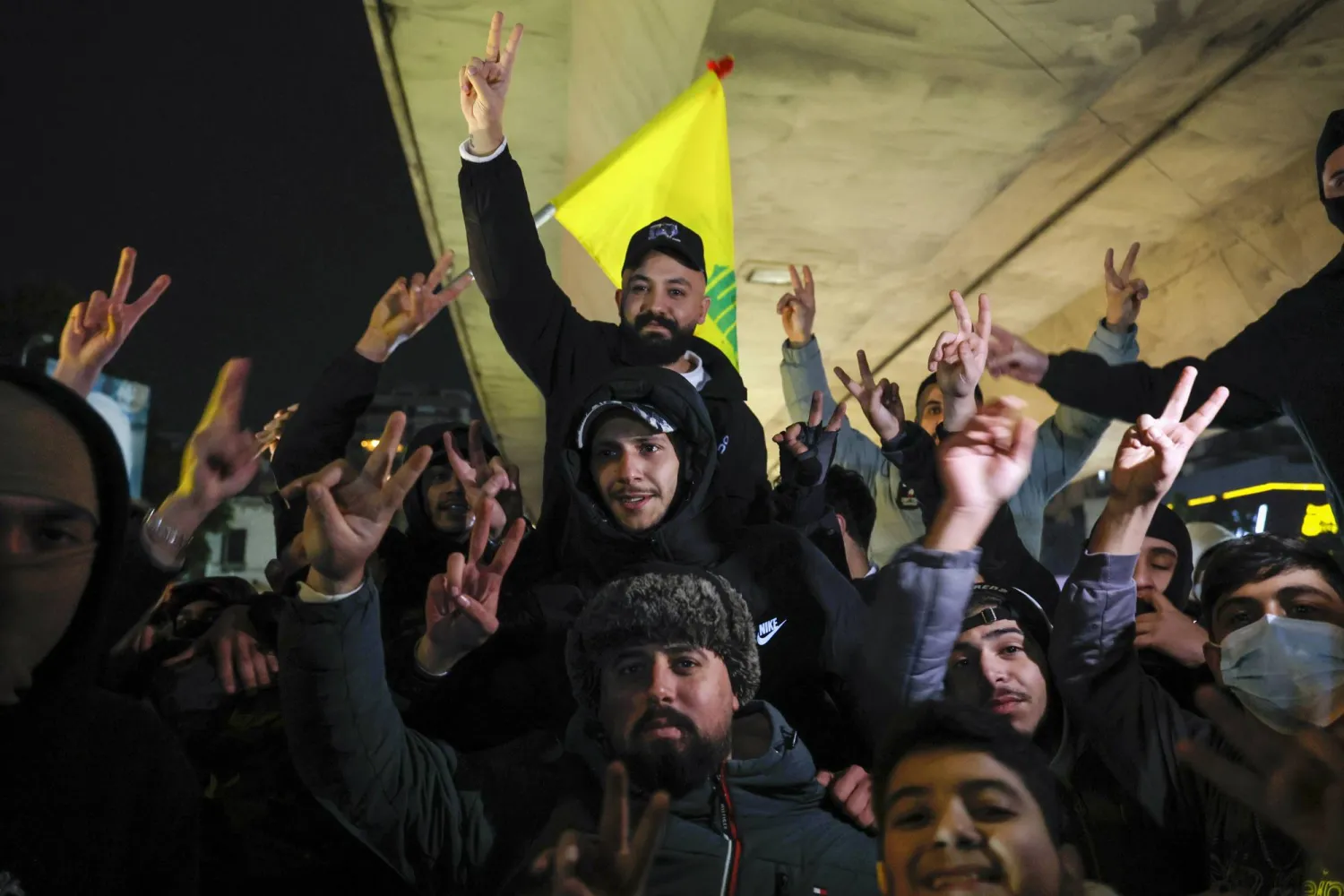

The Lebanese judiciary issued on Thursday summons of Hezbollah supporters who had slandered President Joseph Aoun in wake of his criticism of the Iran-backed party.
Aoun has made repeated statements in recent weeks over the need to impose state monopoly over weapons, effectively disarming Hezbollah.
The government had last year taken a landmark decision to impose state monopoly over arms. Hezbollah has refused to lay down its weapons, putting it at odds with the state, and most recently Aoun.
Lebanon is keen on preventing itself from being dragged into "suicidal adventures, whose price we paid dearly for in the past," he said on Tuesday, which was seen as an indirect reference to Hezbollah.
A judicial source told Asharq Al-Awsat that the judiciary summoned on Thursday a Lebanese journalist who is close to Hezbollah over a video he posted online. The journalist ignored the summons, saying that as a journalist he does not have to appear before the judicial police, but rather the "Press Court".
The source added that another summons will be made over insults levelled against the president.
Lebanon's Public Prosecution allows the judiciary to act without prompting in three cases: the first over attacks against the character of the president, the second, attacks against the army and third, attacks against the judiciary.
Attacks and slander against any other parties are addressed when a complaint is filed. The source said the presidency did not file a complaint to the judiciary over the campaign against Aoun.
Hezbollah supporters had been vocally criticizing Aoun on social media over his recent stances. The posts did not shy away from using offensive language against the president.
Lebanese law allows summons when insults are made against the president in order to protect constitutional institutions. Any country, during strained political times, is concerned with protecting its constitutional figures and entities while still respecting freedom of expression and the press.
The recent summons are not aimed at undermining freedom of expression, but drawing a line between how much criticism can be levelled and between insulting the president's character and infringing on a constitutional figure, explained the source. Political criticism is acceptable, but a line is drawn when personal insults are made.
Lawyer Farouk al-Moghrabi told Asharq Al-Awsat that the Lebanese judiciary clearly details the measures that should be taken when it comes to the president.
The president has the right to file a complaint or the Public Prosecution can act without being prompted when he comes under attack, he added.


