


Sudanese Slowly Rebuild Their War-Ravaged Capital

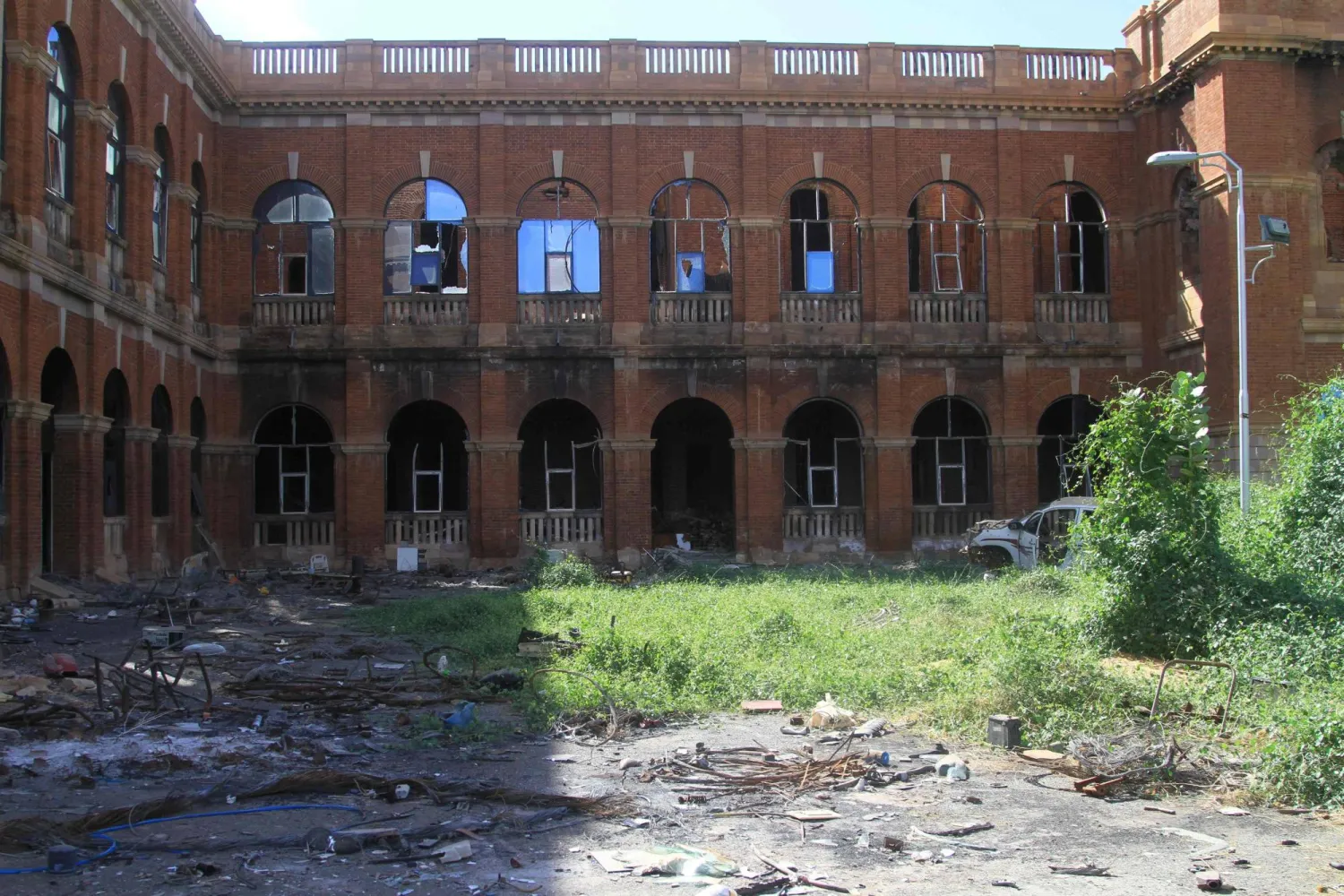
A view of Sudan's Ministry of Finance building after nearly three years of devastation caused by the war, as efforts to restore the city's infrastructure resumes, in the capital Khartoum on January 17, 2025. (AFP)
TT

Sudanese Slowly Rebuild Their War-Ravaged Capital

A view of Sudan's Ministry of Finance building after nearly three years of devastation caused by the war, as efforts to restore the city's infrastructure resumes, in the capital Khartoum on January 17, 2025. (AFP)

A jungle of weeds fills the Sudanese finance ministry's courtyard in central Khartoum, where the army-backed government says it plans a gradual return after nearly three years of war.

Abandoned cars, shattered glass and broken furniture lie beneath vines climbing the red-brick facades, built in the British colonial style that shaped the city's early 20th-century layout.

"The grounds haven't been cleared of mines," a guard warns at the ruined complex, located in an area still classified as "red" or highly dangerous by the United Nations Mine Action Service (UNMAS).

Even as war rages in the southern Kordofan region, Prime Minister Kamil Idris has announced that the government will return to Khartoum after operating from the Red Sea city of Port Sudan some 700 kilometers (440 miles) away for nearly three years.

Main roads have been cleared and cranes now punctuate the skyline of a capital scarred by the war between the Rapid Support Forces (RSF) and the army, which retook the city last March.

Since then, officials have toured reconstruction sites daily, promising a swift return to normal life.

Government headquarters, including the general secretariat and cabinet offices, have been refurbished. But many ministries remain abandoned, their walls pockmarked by bullets.

The central bank is a blackened shell, its windows blown out. Its management announced last week that operations in Khartoum State would resume, according to the official news agency SUNA.
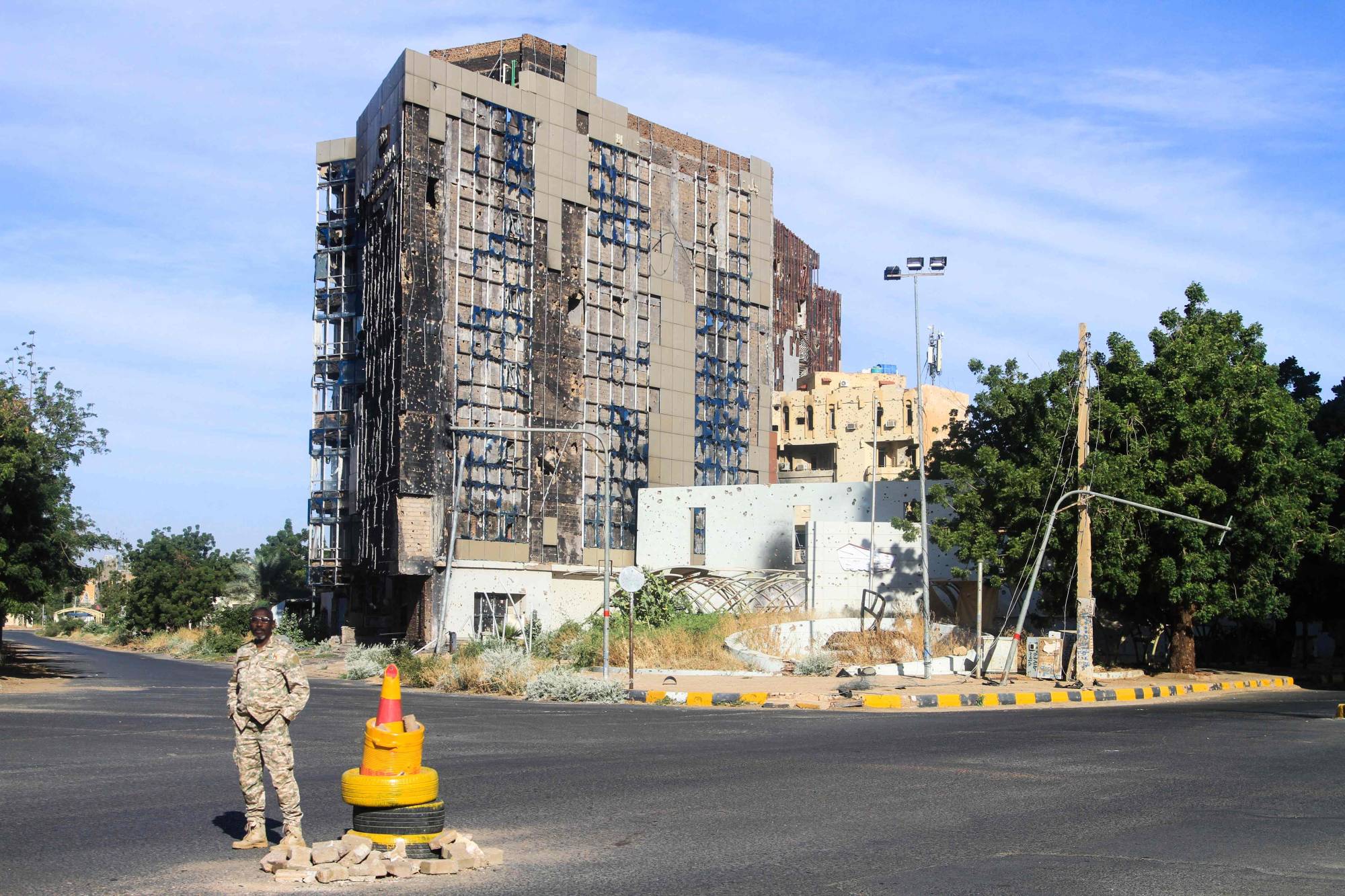
A member of security stands in front of a destroyed high-rise building, as efforts to restore the city's infrastructure resumes after nearly three years of devastation caused by war, in the Sudanese capital Khartoum on January 17, 2025. (AFP)

- 'Still empty' -

At a ruined crossroads nearby, a tea seller has reclaimed her usual spot beneath a large tree.

Halima Ishaq, 52, fled south when the fighting began in April 2023 and came back just three weeks ago.

"Business is not good. The neighborhood is still empty," the mother of five told AFP.

Ishaq earns between 4,000 and 5,000 Sudanese pounds a day, less than two euros and about a third of her pre-war income.

More than a third of Khartoum's nine million residents fled when the RSF seized it in 2023. Over a million have returned since the army retook the city.

The UN estimates that rebuilding infrastructure will cost at least $350 million.

"We sell very little," glazier Abdellah Ahmed told AFP.

"People have no money and the big companies haven't come back yet."

Khartoum's international airport has been renovated, but remains closed after an RSF drone strike last September, just weeks before its planned reopening.

Near the city's ministries, workers clear debris from a gutted bank.

"Everything must be finished in four months," said the site manager.

Optimism is also on display at the Grand Hotel, which once hosted Queen Elizabeth II. Management hopes to welcome guests again by mid-February.

While its chandeliered lobby survived, much of the neo-classical building's rear was destroyed, just a few years after it was renovated during Sudan's oil boom in the late 2000s.

Elsewhere, symbols of Khartoum's former ambitions lie in ruins.
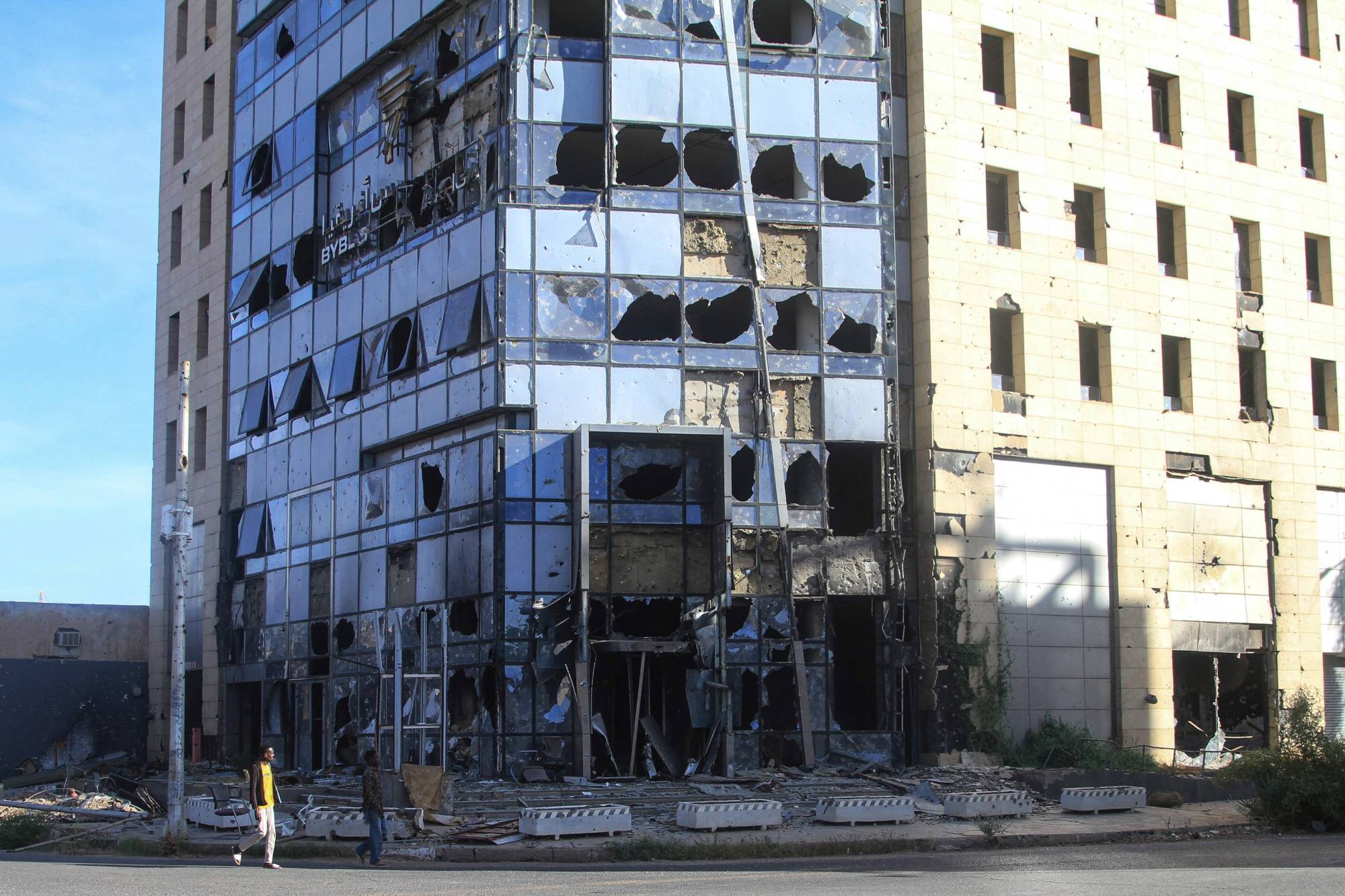
Men walk in front of a destroyed high-rise building as efforts to restore the city's infrastructure resumes after nearly three years of devastation caused by war, in the Sudanese capital Khartoum on January 17, 2025. (AFP)

The tower of the Greater Nile Petroleum Operating Company, unveiled when the city aspired to become "Africa's Dubai", stands charred and hollow.

Sudan lost half of its oil revenues during the war, on top of losses following South Sudan's secession in 2011, which removed about a third of the country's oil production.

Life is returning more quickly to the commercial districts of Khartoum's twin city Omdurman. On Liberty Street, Khartoum's main commercial avenue, only a few of the looted shops have reopened.

"Many shopkeepers aren't coming back," said Osman Nadir, an appliance seller.

"Suppliers are demanding repayment for goods destroyed during the fighting," added Nadir, who himself faces legal action.

For residents, restoring water and electricity remains the most urgent task.

- Dark streets -

At night, the streets are "dark and deserted," said Taghreed Awad al-Reem Saeed.

"You don't feel safe," the 26-year-old medical intern told AFP.

Men have returned to work alone, leaving their families elsewhere.

"Before I could go with my friends," Saeed said.

"I want my social life back," she added. "Like before."

"Like before and even better than before," hopes former National Theater director Abdel Rafea Hassan Bakhit, a retiree deeply involved in restoring the building.

Near the Nile, volunteers are repairing the National Theater, once graced by performers such as Umm Kulthum and Louis Armstrong.

The stage remains intact, but sound and lighting systems were destroyed. In recent weeks, official visits have multiplied, each bringing fresh promises of aid.

A few kilometers away, workers are clearing fallen trees from the red and yellow stands of Al-Merreikh Stadium, nicknamed "the Red Castle" and home to one of Africa's oldest football clubs.

Burnt-out cars still line the street outside. The pitch has been levelled, but machinery lies idle. The last match was played a week before the war. Since then, the club has competed in Rwanda's top division.



Israel Military Says Soldier Killed in Gaza 

A drone view shows the destruction in a residential neighborhood, after the withdrawal of the Israeli forces from the area, amid a ceasefire between Israel and Hamas in Gaza, in Gaza City, October 21, 2025. (Reuters)
TT

Israel Military Says Soldier Killed in Gaza 

A drone view shows the destruction in a residential neighborhood, after the withdrawal of the Israeli forces from the area, amid a ceasefire between Israel and Hamas in Gaza, in Gaza City, October 21, 2025. (Reuters)

The Israeli military announced that one of its soldiers had been killed in combat in southern Gaza on Wednesday, but a security source said the death appeared to have been caused by "friendly fire".

"Staff Sergeant Ofri Yafe, aged 21, from HaYogev, a soldier in the Paratroopers Reconnaissance Unit, fell during combat in the southern Gaza Strip," the military said in a statement.

A security source, however, told AFP that the soldier appeared to have been "killed by friendly fire", without providing further details.

"The incident is still under investigation," the source added.

The death brings to five the number of Israeli soldiers killed in Gaza since a ceasefire took effect on October 10.


Syria: SDF’s Mazloum Abdi Says Implementation of Integration Deal May Take Time

People sit outdoors surrounded by nature, with the Tigris river flowing in the background, following a long atmospheric depression, near the Syrian-Turkish border in Derik, Syria, February 16, 2026 REUTERS/Orhan Qereman
TT

Syria: SDF’s Mazloum Abdi Says Implementation of Integration Deal May Take Time

People sit outdoors surrounded by nature, with the Tigris river flowing in the background, following a long atmospheric depression, near the Syrian-Turkish border in Derik, Syria, February 16, 2026 REUTERS/Orhan Qereman

Mazloum Abdi, commander of the Syrian Democratic Forces, said the process of merging the SDF with Syrian government forces “may take some time,” despite expressing confidence in the eventual success of the agreement.

His remarks came after earlier comments in which he acknowledged differences with Damascus over the concept of “decentralization.”

Speaking at a tribal conference in the northeastern city of Hasakah on Tuesday, Abdi said the issue of integration would not be resolved quickly, but stressed that the agreement remains on track.

He said the deal reached last month stipulates that three Syrian army brigades will be created out of the SDF.

Abdi added that all SDF military units have withdrawn to their barracks in an effort to preserve stability and continue implementing the announced integration agreement with the Syrian state.

He also emphasized the need for armed forces to withdraw from the vicinity of the city of Ayn al-Arab (Kobani), to be replaced by security forces tasked with maintaining order.


Israeli Far-Right Minister to Push for ‘Migration’ of West Bank, Gaza Palestinians 

A Palestinian man checks leather belts as people prepare for Ramadan, in the old city of Hebron in the Israeli-occupied West Bank, February 17,2026. (Reuters)
TT

Israeli Far-Right Minister to Push for ‘Migration’ of West Bank, Gaza Palestinians 

A Palestinian man checks leather belts as people prepare for Ramadan, in the old city of Hebron in the Israeli-occupied West Bank, February 17,2026. (Reuters)

Israel's far-right Finance Minister Bezalel Smotrich said he would pursue a policy of "encouraging the migration" of Palestinians from the occupied West Bank and Gaza Strip, Israeli media reported Wednesday.

"We will eliminate the idea of an Arab terror state," said Smotrich, speaking at an event organized by his Religious Zionism Party late on Tuesday.

"We will finally, formally, and in practical terms nullify the cursed Oslo Accords and embark on a path toward sovereignty, while encouraging emigration from both Gaza and Judea and Samaria.

"There is no other long-term solution," added Smotrich, who himself lives in a settlement in the West Bank.

Since last week, Israel has approved a series of measures backed by far-right ministers to tighten control over the West Bank, including in areas administered by the Palestinian Authority under the Oslo Accords, in place since the 1990s.

The measures include a process to register land in the West Bank as "state property" and facilitate direct purchases of land by Jewish Israelis.

The measures have triggered widespread international outrage.

On Tuesday, the UN missions of 85 countries condemned the measures, which critics say amount to de facto annexation of the Palestinian territory.

"We strongly condemn unilateral Israeli decisions and measures aimed at expanding Israel's unlawful presence in the West Bank," they said in a statement.

"Such decisions are contrary to Israel's obligations under international law and must be immediately reversed.

"We underline in this regard our strong opposition to any form of annexation."

UN Secretary-General Antonio Guterres on Monday called on Israel to reverse its land registration policy, calling it "destabilizing" and "unlawful".

The West Bank would form the largest part of any future Palestinian state. Many on Israel's religious right view it as Israeli land.

Israeli NGOs have also raised the alarm over a settlement plan signed by the government which they say would mark the first expansion of Jerusalem's borders into the occupied West Bank since 1967.

The planned development, announced by Israel's Ministry of Construction and Housing, is formally a westward expansion of the Geva Binyamin, or Adam, settlement situated northeast of Jerusalem in the West Bank.

The current Israeli government has fast-tracked settlement expansion, approving a record 52 settlements in 2025.

Excluding Israeli-annexed east Jerusalem, more than 500,000 Israelis live in West Bank settlements and outposts, which are illegal under international law.