


Yemen Welcomes EU Terror Designation of Iran’s Revolutionary Guards

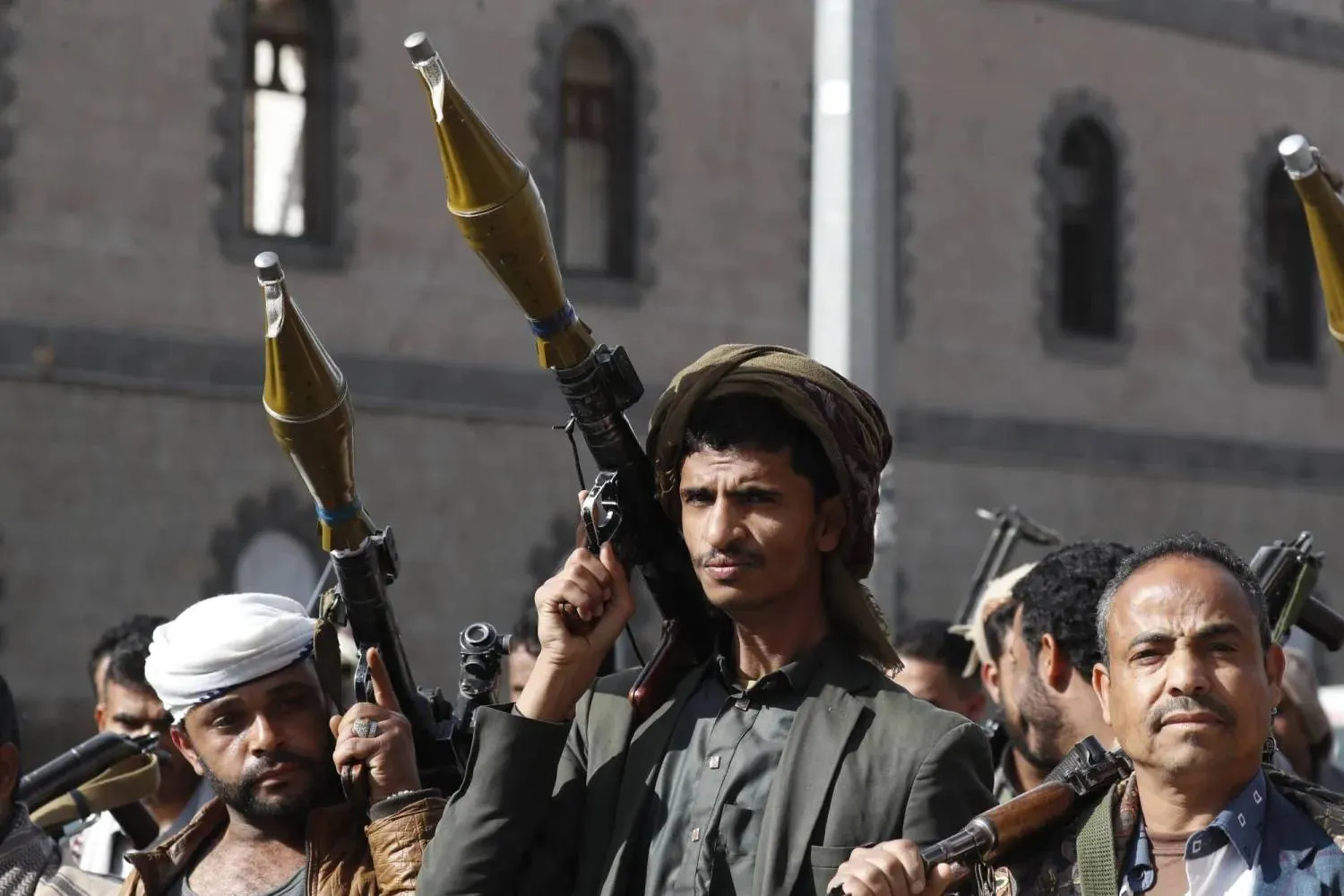
Iran’s Revolutionary Guards control the military activities of all Houthi units (EPA) 
TT

Yemen Welcomes EU Terror Designation of Iran’s Revolutionary Guards

Iran’s Revolutionary Guards control the military activities of all Houthi units (EPA) 

The Yemeni government welcomed a European Union decision to designate Iran’s Revolutionary Guards as a terrorist organization, saying the move marked a long-awaited shift toward confronting a central driver of instability and security threats across the region and beyond.

In an official statement, the government said the decision reflected growing European awareness of the destructive role the Guards had played over many years.

It said the group had fueled armed conflicts, systematically supported groups and militias operating outside national state institutions, repeatedly threatened international maritime routes, and persistently undermined the foundations of global stability and security.

The statement said classifying the Guards as a terrorist organization marked a qualitative shift in the international community’s approach to Iran’s behavior and brought to an end a long period of political leniency toward activities that have become a direct threat to collective security, both in the Middle East and beyond.

It added that Yemen’s Houthi group was nothing more than one of the Guards’ direct military arms, and that its project, based on violence, coups, and the imposition of faits accomplis by force, represented a straightforward extension of the destabilizing role led by the Iranian military body outside Iran’s borders.

The government said the Houthis’ record of targeting civilians, shelling civilian infrastructure, launching cross-border attacks, and threatening commercial shipping and maritime navigation in the Red Sea and the Gulf of Aden clearly demonstrated the group’s organic and operational links to the Guards, in terms of ideology, funding, armament, and military planning.

It said the obstruction of regional and international peace efforts in Yemen, the disruption of political tracks, and the use of organized violence as a negotiating tool were practices consistent with the model adopted by the Guards in managing their proxies in the region and turning them into tools of pressure and blackmail against the international community.

The Yemeni government called on the European Union to complete this step by taking a similar and decisive decision to designate the Houthis as a terrorist organization, in line with European laws and legislation and relevant UN Security Council resolutions, to help dry up the militias’ sources of funding, deter their aggressive behavior, and enhance prospects for a just and lasting peace in Yemen and the region.

Practical measures

In the same context, Information, Culture and Tourism Minister Muammar al-Eryani said the EU’s decision to classify the Guards as a terrorist organization was “a step in the right direction and a clear message that the international community has begun to deal seriously with one of the most dangerous sources of instability in the region, after years of overlooking its cross-border military and security roles.”

He said in an official statement that the importance of the decision lay not only in its political symbolism but also in the practical executive measures that must follow, including drying up funding sources, freezing assets, pursuing networks and fronts linked to the Guards, and cutting off channels of support, smuggling, and armament they manage across multiple countries and regions.

Eryani said the Guards had played a direct and organized role in Yemen by managing the Houthi coup project, noting that their involvement went beyond supplying weapons, experts, technology, and funding to include operational supervision and the management of military and security networks in areas under Houthi control.

He said this was proven by field evidence and by the roles played by Guards operatives, including Hasan Irlu and Abdul Reza Shahlai, whom he described as operational field managers of Iran’s project.

He said what happened in Yemen was not an exceptional case but part of a fixed regional pattern based on building armed militias parallel to the state, fueling conflicts, spreading chaos and terrorism, and using proxies to impose realities by force and blackmail the international community.

Historic decision

The Yemeni position follows what it described as a historic decision taken by EU foreign ministers on Jan. 29, 2026, to add Iran’s Revolutionary Guards to the bloc’s terrorist list, in a shift described as ending a phase of diplomatic caution and ushering in a new era of economic and legal confrontation with what it called the backbone of Iran’s ruling system.

The decision came in direct response to the violent crackdown by Iranian authorities on widespread protests in late 2025 and early 2026, which rights groups estimate resulted in the deaths of thousands of civilians, as well as the Guards’ expanding regional role, including supplying Russia with drones and threatening global energy security and international shipping.

The designation entails a package of strict legal and political consequences, including asset freezes, travel bans, and the criminalization of any form of cooperation or support, alongside tighter diplomatic isolation, limiting the Guards’ ability to operate under political or economic cover inside Europe.

The Yemeni government said the path to regional security and stability begins with ending the policy of impunity for actors that sponsor and manage cross-border armed militias, supporting national states and their legitimate institutions, and respecting countries’ unity, sovereignty, and territorial integrity.

It reiterated its full commitment to working closely with the international community, foremost the European Union, to achieve peace, combat terrorism, protect international navigation, and build a safe and stable future for the peoples of the region.



Lebanese Army Support Hinges on Disarmament Plan North of Litani

Two Lebanese army soldiers at a military border post with Israel in the village of Alma El Chaab in southern Lebanon (Archive - AP)
TT

Lebanese Army Support Hinges on Disarmament Plan North of Litani

Two Lebanese army soldiers at a military border post with Israel in the village of Alma El Chaab in southern Lebanon (Archive - AP)

The Qatari capital is set to host a preparatory meeting on Sunday ahead of an international conference in Paris aimed at supporting the Lebanese Armed Forces and the Internal Security Forces.

The Doha meeting will bring together the five sponsoring countries - France, the United States, Saudi Arabia, Qatar and Egypt - along with other states and international and regional organizations.

Its purpose is to understand LAF’s needs, while developing financial and military support mechanisms to ensure the success of the main conference, scheduled for March 5 in Paris. French officials expect around 50 countries and 10 organizations to take part.

Given the central role of the LAF, its responsibilities and its contribution to upholding Lebanese sovereignty, both the Doha meeting and the Paris conference are expected to provide it with substantial political backing.

According to French sources, the one-day conference will be co-hoted by French President Emmanuel Macron and Lebanese President Joseph Aoun.

Expectations from the Doha Meeting

Paris is playing a key role in organizing both meetings. Preparations were among the main issues discussed during the two-day visit to Beirut last weekend of French Foreign Minister Jean-Noël Barrot.

His visit coincided with the Lebanese army leadership’s preparations for the second phase of an operation to disarm Hezbollah. This phase covers the area stretching from the Litani River to the Awali River, north of the southern port city of Sidon.

Paris identifies two main challenges. The first is the need to continue the disarmament process launched by the army in line with UN Security Council Resolution 1701. The second is enabling conference participants to accurately assess the army’s needs, allowing international partners to coordinate their support through a dedicated mechanism.

France has deliberately avoided setting a specific figure for the assistance expected to be announced at the conference, stressing that support will be multi-dimensional and not limited to financial aid.

It will also include military capabilities, logistical support and training. Paris estimates the LAF’s annual needs at more than $1 billion, but notes that these cannot be met through foreign assistance alone and that part must be covered by the Lebanese state budget.

Army Commander Gen. Rodolphe Haykal reported receiving assurances during talks in Washington that the United States remains committed to supporting the LAF.

Paris and the other four sponsors are counting on the Doha meeting to allow the army command to present a detailed assessment of its needs.

Borders, Syria and the Economy

Paris has also expressed satisfaction with the results of Barrot’s talks in Beirut regarding Lebanon’s relations with its neighbors, particularly Syria. French officials believe that an agreement to transfer Syrian prisoners held in Lebanon back to Syria could have a positive impact on the demarcation of the land border between the two countries.

France has offered its assistance, saying it holds mandate-era maps.

The prisoner transfer deal could also impact the return of Syrian refugees, an issue of strategic importance for Lebanon.

At the same time, Paris is fully aware of the challenges Lebanon faces with Israel, whether due to near-daily military operations or Israel’s refusal to withdraw from five positions it occupies inside Lebanese territory.

France nevertheless welcomes the indirect talks held within the framework of the ceasefire mechanism committee and supports maintaining it, even though its impact on the ground has so far been limited.

Barrot's talks also focused on financial and economic issues, notably the so-called financial gap law approved by the cabinet and sent to parliament for discussion.

France has called for its approval before the spring meetings of the International Monetary Fund and the World Bank, arguing that such a step would send a positive signal about the seriousness of Lebanese authorities in addressing the country’s economic crisis.

Paris believes parliamentary approval would have a direct impact on prospects for a conference to support the Lebanese economy, which France has reaffirmed its readiness to host.


Grundberg Warns Against Reversal of Gains in Yemen, Broader Conflict 

UN Special Envoy for Yemen Hans Grundberg addresses the Security Council. (Office of the Special Envoy of the Secretary-General for Yemen/ Abdel Rahman Alzorgan)
TT

Grundberg Warns Against Reversal of Gains in Yemen, Broader Conflict 

UN Special Envoy for Yemen Hans Grundberg addresses the Security Council. (Office of the Special Envoy of the Secretary-General for Yemen/ Abdel Rahman Alzorgan)

UN Special Envoy for Yemen Hans Grundberg noted on Thursday a relative improvement in conditions in areas held by the legitimate government, warning, however, that “without a wider negotiated political settlement to the conflict, gains will continue to remain vulnerable to reversal.”

In a briefing before the UN Security Council, he said 73 UN colleagues are being held in Houthi jails. “Many have been held incommunicado, with serious concerns about their conditions and wellbeing,” he added.

He called on the Houthis “to unconditionally and immediately release detained staff and rescind all court referrals,” urging regional and international actors to use their influence to push for the same outcomes.

Elsewhere, he said that “there are early positive signs in government areas, including improvements in the provision of electricity and payment of public sector salaries. However, continued tensions, recent security incidents and demonstrations, where in some cases violence and loss of life have been reported, underscore the fragility of the situation.”

“Improvements in service delivery can be reversed if security deteriorates, if economic reforms stall, or if institutions are pulled in competing directions,” he warned.

“The new cabinet under Prime Minister Shaya al-Zindani’s leadership can protect recent gains by anchoring them in strengthened institutions and economic reforms. That will require an enabling environment that shields the cabinet and the Central Bank from politicization and rebuilds confidence,” continued Grundberg.

Political process

He revealed that in recent weeks, he has been engaging with the Yemeni parties, regional actors and members of the international community to explore pathways to restart an inclusive political process. His office has also been consulting with diverse Yemenis on this question, including with governors to gain more nuanced insights into local concerns and how to address them at the national level.

Grunberg said: “Across these discussions, three reflections on the way forward are clear: First, we must be honest about what more than a decade of war has done to Yemen. The conflict has become more complex. Lines of contestation have multiplied and local dynamics have grown alongside national ones.”

“While regional tensions have increasingly fueled the conflict and been fueled by it, our common objective has remained steady and firm: Yemen needs an inclusive political process under UN auspices to reach a negotiated political settlement that can sustainably end the conflict,” he urged.

“But getting there requires that the parties adopt a forward-looking approach. We need to build on what still works, revise what are outdated assumptions, and be pragmatic in designing a political process for today’s reality.”

“Second, Yemen’s conflict is a set of interlocking files. Treating political, economic and security issues in isolation can only produce partial results that will not hold,” said the envoy. “Restarting a political process will therefore require that the parties engage across these tracks in tandem, without making engagement in one track contingent on progress in another.”

“And third, a credible process must deliver for Yemenis on two time horizons. It should enable near-term agreements that reduce suffering and demonstrate progress, including economic de-escalation measures. At the same time, it must create space for Yemenis to negotiate the longer-term issues essential to ending the conflict, including the future shape of the state, security arrangements and principles of governance,” Grundberg added.

On the issue of detainees, the envoy said the file “is a clear example of what can be achieved when the parties choose to engage in dialogue.”

“Right now, the parties are in Amman, negotiating face-to-face under UN auspices, to work through the complex task of finalizing names of detainees so a release operation can materialize, building on the agreed outcome of their meeting in Muscat in December,” he told the council.

He encouraged the parties to sustain this engagement, finalize the remaining elements “without delay, and move swiftly to implementation”. He thanked Jordan for hosting these negotiations, and the International Committee of the Red Cross for its “indispensable” role.

Broader conflict

Grundberg also noted regional tension and hoped for de-escalation.

“Whatever the regional trajectory, Yemen must not be pulled back into broader confrontation. The question of peace and war is, fundamentally, a national one. It cannot be outsourced, nor can it be appropriated by a single actor,” he said.

“No single Yemeni actor has the right to unilaterally drag the country into a regional conflict. The responsibility borne by all Yemeni actors and decision makers is first and foremost to the Yemeni people – to their security, to their livelihoods and to their future,” he added.

“Upholding Yemen’s national interest and the aspirations of all its people must remain the guiding principles at all times including in moments of heightened tension. Restraint, in this context, is an obligation,” he urged.


ISIS Suspects Transferred from Syria to Iraq are Interrogated in a Baghdad Prison

Iraqi security forces lead suspected ISIS militants for questioning, after they were transferred from Syria to Iraq, at Al-Karkh Central Prison in Baghdad, Iraq, Thursday, Feb. 12, 2026. (AP Photo/Hadi Mizban)
TT

ISIS Suspects Transferred from Syria to Iraq are Interrogated in a Baghdad Prison

Iraqi security forces lead suspected ISIS militants for questioning, after they were transferred from Syria to Iraq, at Al-Karkh Central Prison in Baghdad, Iraq, Thursday, Feb. 12, 2026. (AP Photo/Hadi Mizban)

Inside a heavily guarded detention facility in Baghdad, men from scores of different countries and nationalities were brought one after another into interrogation rooms and questioned by Iraqi officers.

The prisoners are suspected members of the militant ISIS goup recently transferred from Syria to Iraq at the request of Baghdad — a move welcomed by the US-led coalition that had for years fought against ISIS.

Over a period of several weeks, the US military escorted more than 5,000 ISIS detainees from 60 different nationalities from prisons in northeastern Syria run by the US-backed and Kurdish-led Syrian Democratic Forces, to Baghdad.

The transfers have helped calm fears that the fighting in Syria would allow the ISIS prisoners to flee from detention camps there and join militant sleeper cells that even to this day are able to stage attacks in both Iraq and Syria.

On Thursday, The Associated Press was given rare access to the sprawling detention facility in western Baghdad — now known as Al-Karkh Central Prison but more widely known as Camp Cooper after the 2003 US-led invasion that ousted Saddam Hussein — where the men are being interrogated.

Laying the groundwork for trials Iraq is looking to put on trial some of the thousands of the ISIS detainees who were held for years in Syria without charges or access to the judicial system.

Iraqi Judge Ali Hussein Jafat, who is heading the committee interrogating ISIS detainees brought from Syria, says it's not easy because of the sheer numbers of prisoners involved.

It's "complicated and not easy at all,” he said, adding that the detainees are from 14 Arab and 46 other countries.

Many of the detainees have respiratory diseases, so a medical center was set up to treat them, he said.

To make room for the newcomers from Syria, thousands of prisoners long held at Al-Karkh were transferred to other prisons in Iraq.

The interrogations are usually a staggered affair — the men were brought in batches, handcuffed, in yellow or brown uniforms and wearing medical face masks and taken into a long corridor with rooms on both side.

One by one they are then taken into interrogation rooms, where they sit on a chair as an officer takes down their information. From behind a small window, the AP could observe the questioning but not discern the questions or the detainees' answers. It wasn't clear if the prisoners were under duress.

Some of the prisoners are taken to the medical center for a checkup.

How the transfer came about

The forces of Syria's new government that in December 2024 ousted strongman Bashar Assad launched an offensive in January, capturing wide swaths of territory from the Kurdish-led SDF.

A ceasefire was later reached, ending the fight and the SDF withdrew as part of the agreement.

At the time, the United States announced that many of the nearly 9,000 detainees held in more than a dozen Syrian detention centers will be transferred to Iraq.

So far, 5,383 ISIS suspects have been brought to Iraq. The last batch is expected to arrive on Sunday, Jafat said.

A dark past

When ISIS declared a caliphate — a self-proclaimed territory under a traditional form of their extremist rule — in large parts of Syria and Iraq that the militant group seized in 2014, it attracted extremists from around the world.

From the caliphate, the extremists plotted attacks around the world that left hundreds dead from Europe to Arab countries and Asia.

The group also carried out brutalities in Syria and Iraq, including the enslavement of thousands of Yazidi women and girls who were taken when the militants overran northern Iraq. Strict rules were implemented, with ISIS beheading its opponents, thieves having their hands amputated while women accused of adultery were stoned to death.

Over the years, an international campaign by a US-led coalition defeated ISIS in Iraq in 2017 and in Syria in 2019.

“Some of them are extremely dangerous,” Jafat said about the detainees.

He added that he has so far seen detainees from Australia, Canada, Türkiye, Germany, Britain and the former Soviet Union.

Many of the countries don't want the militants who are their nationals back and Jafat said it is too early to say whether the detainees could be extradited or repatriated to their countries of origin.

Those who committed crimes in Iraq will stand trials in Iraq and the proceedings will be open to the public, he added.