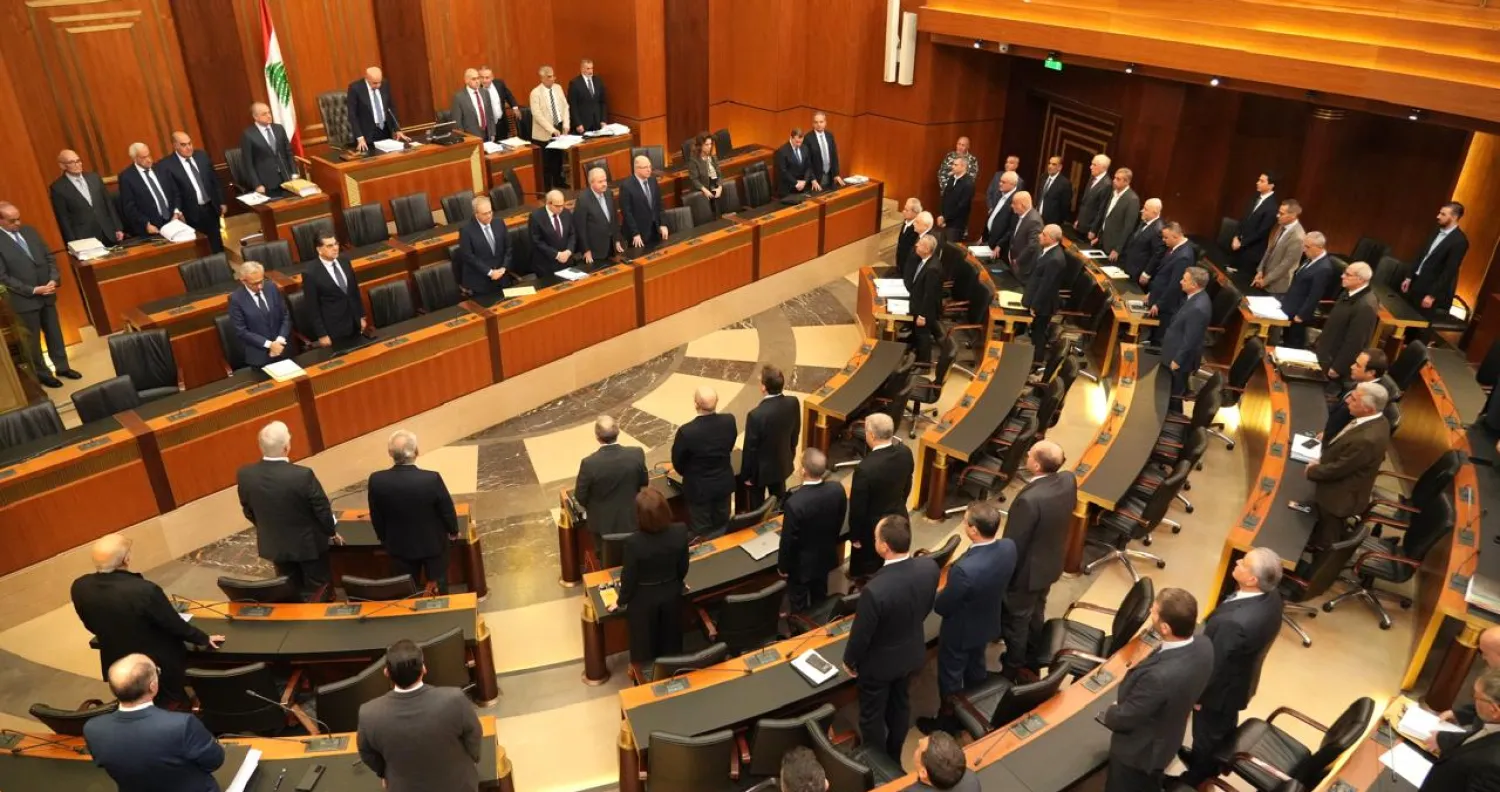

A legal opinion issued by Lebanon’s Ministry of Justice’s Legislation and Consultations Authority, responding to a query from Interior and Municipalities Minister Brig. Gen. Ahmad Hajjar on expatriate voting, has further unsettled the electoral scene in the country.
The opinion addresses whether Lebanese citizens abroad may vote from their country of residence for all 128 seats in Parliament. If adopted by the government, it could spark a confrontation with a parliamentary bloc that rejects it, potentially jeopardizing the holding of elections scheduled for May.
Parliament Speaker Nabih Berri reacted sharply, describing the opinion as “rejected, baffling, and not open to interpretation.”
Speaking to Asharq Al-Awsat, Berri said it was unprecedented “for a judge to suspend the implementation of a law rather than ensure its application,” adding that the law cannot be bypassed by a non-binding advisory opinion.
He went further, alleging that the opinion “reveals the existence of a plan to prevent parliamentary elections from taking place on time,” saying it was prompted by an “unnamed party”.
Berri stressed that the move “did not come out of nowhere,” but rather as part of advance planning to halt elections that must be held under the current electoral law.
He said he personally opened nominations for the polls to “cut off claims that I favor extending Parliament’s term,” rejecting suggestions that his Amal Movement fears waning popularity.
“We have chosen to submit to the ballot box,” he said, insisting he remains committed to holding elections on schedule and urging all sides to facilitate, not obstruct, the process.
Hajjar, who requested the opinion, is reportedly proceeding cautiously. Sources close to him told Asharq Al-Awsat he prefers consultations with President Joseph Aoun and Prime Minister Nawaf Salam before deciding whether to place the issue on the Cabinet agenda.
It remains unclear whether the government will embrace the advisory opinion - non-binding by nature - or use it to broker a compromise over proposed amendments to the electoral law.
Political sources downplayed the likelihood of a major clash, citing the country’s fragile conditions and escalating Israeli attacks, as well as the need for stability ahead of a Paris-hosted international conference on March 5 to support the Lebanese Armed Forces and Internal Security Forces. They noted that adopting the opinion would require legislative change.
Looking ahead, uncertainty persists over whether elections could be delayed under the pretext of disagreement on the law.
Sources point to waning international pressure to hold the vote on time, as foreign envoys now prioritize the state’s monopoly on arms - particularly north of the Litani River to the Awali - over electoral timelines.
While the international community is unlikely to demand a postponement, it appears to favor sequencing elections after progress on disarmament, arguing this would weaken Hezbollah’s leverage and advance the project of rebuilding the state.