


UN Chief Calls for Israel to Re-Open Gaza Crossings amid Fuel Shortage

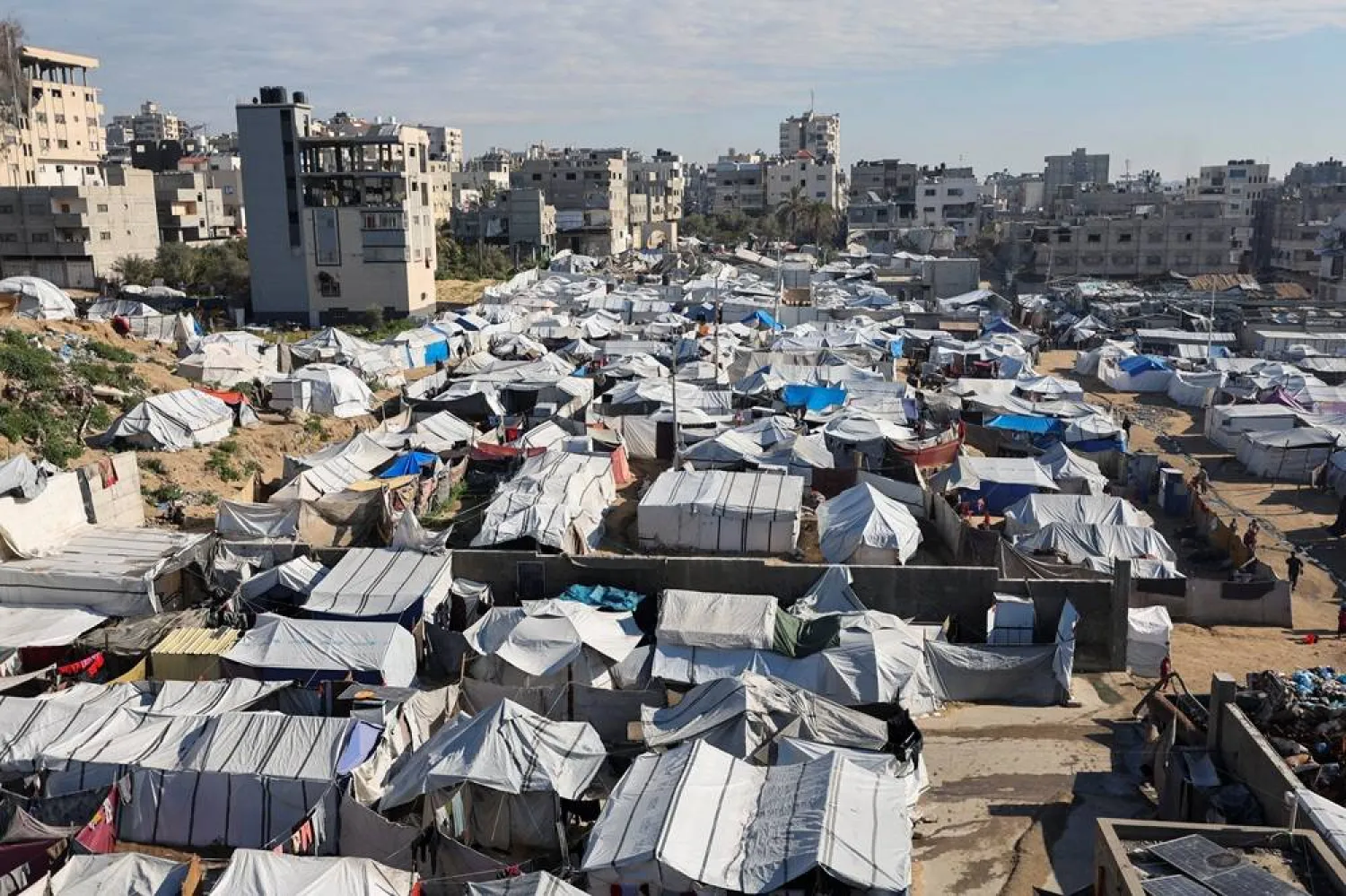
Palestinians displaced during the two-year Israeli offensive, shelter at a tent camp in Gaza City, March 1, 2026. (Reuters)
TT

UN Chief Calls for Israel to Re-Open Gaza Crossings amid Fuel Shortage

Palestinians displaced during the two-year Israeli offensive, shelter at a tent camp in Gaza City, March 1, 2026. (Reuters)

UN Secretary-General Antonio Guterres called Monday for Israel to re-open border crossings into Gaza to allow aid to flow into the war-ravaged territory, his spokesman said.

"Israeli authorities have closed all crossings, including Rafah, and have suspended humanitarian movements in and near areas where Israeli troops remain deployed in Gaza," said spokesman Stephane Dujarric.

"It is imperative that all crossings be reopened... as soon as possible."

Gaza is rapidly running out of its limited fuel supply and stocks of food staples may become tight, officials say, after Israel blocked the entry of fuel and goods into the war-shattered territory, citing fighting with Iran. 

Israel's military closed all Gaza border crossings on Saturday after announcing air strikes on Iran carried out jointly with the United States. Israeli authorities say the crossings cannot be operated safely during war and have not said how long they would be shut. 

FEW DAYS' ‌WORTH OF SUPPLIES 

Gaza ‌is wholly dependent on fuel brought in ‌by ⁠trucks from Israel and ⁠Egypt and a lack of fresh supplies would put hospital operations at risk and threaten water and sanitation services, local officials say. Most Palestinians in Gaza are internally displaced after Israel's two-year war with Hamas. 

"I expect we have maybe a couple of days' running time," said Karuna Herrmann, the Jerusalem director of United Nations Office ⁠for Project Services (UNOPS), which manages fuel distribution in ‌Gaza. 

Amjad Al-Shawa, a Palestinian aid leader ‌in Gaza, who works with the UN and NGOs, estimated fuel supplies ‌could last three or four days, while stocks of vegetables, flour, ‌and other essentials could also soon run out if the crossings remain shut. 

Reuters was unable to independently verify those estimates. 

Israel's COGAT military agency, which controls access to Gaza, said that enough food had been delivered ‌to the territory since the start of an October truce to provide for the population. 

"(The) existing stock ⁠is expected ⁠to suffice for an extended period," COGAT said, without elaborating. It declined to comment on potential fuel shortages. 

The truce was part of broader US-backed plan to end the war that involves reopening the Rafah border crossing with Egypt, increasing the flow of aid into the enclave, and rebuilding it. 

Hamada Abu Laila, a displaced Palestinian in Gaza, said the closures were stoking fear of a return of famine, which gripped parts of the enclave last year after Israel blocked aid deliveries for 11 weeks. 

"Why is it our fault, in Gaza, with regional wars between Israel, Iran, and America? It is not our fault," Abu Laila said. 


Israel Will Strike Hezbollah Until Group Disarmed, Vows Army Chief

A picture taken along the Israel-Lebanon border shows rockets being fired from southern Lebanon towards Israel on March 3, 2026. (AFP)
TT

Israel Will Strike Hezbollah Until Group Disarmed, Vows Army Chief

A picture taken along the Israel-Lebanon border shows rockets being fired from southern Lebanon towards Israel on March 3, 2026. (AFP)

Israel's military chief on Tuesday said his forces would keep attacking Hezbollah until the Iran-backed Lebanese group was disarmed, as the war in the Middle East raged for a fourth day.

"We are determined to eliminate the threat Hezbollah poses and will not stop until this organization is disarmed," Lieutenant General Eyal Zamir was quoted as saying in a military statement.

The latest round of fighting between Hezbollah and Israel started early Monday when Hezbollah launched rockets towards Israel in retaliation for the killing of Iranian supreme leader Ali Khamenei in US-Israeli attacks on Saturday.


Sources to Asharq Al-Awsat: Iran Contacts with Hamas, Islamic Jihad Cut

Islamic Jihad leader Ziad al-Nakhalah (R) sits beside Hezbollah Secretary-General Naim Qassem and senior Iranian military officials during the funeral of late Hamas leader Ismail Haniyeh in Tehran in August 2024. (Reuters)
TT

Sources to Asharq Al-Awsat: Iran Contacts with Hamas, Islamic Jihad Cut

Islamic Jihad leader Ziad al-Nakhalah (R) sits beside Hezbollah Secretary-General Naim Qassem and senior Iranian military officials during the funeral of late Hamas leader Ismail Haniyeh in Tehran in August 2024. (Reuters)

Israeli-US operations targeting various Iranian military and security leaders have cut off communication between officials handling the Palestinian file in Iran’s Revolutionary Guard Corps (IRGC) and leaders at multiple levels within Palestinian factions, both inside and outside Gaza.

Asharq Al-Awsat has learned from informed Palestinian factional sources that contact with commanders in the IRGC - whether in the Quds Force or in branches directly linked to Palestinian groups, particularly Hamas and Islamic Jihad - has been severed since the first day of the Israeli-US attacks last Saturday.

According to those sources, it remains unclear whether the IRGC commanders in question have been assassinated or are implementing standard security measures, although some had maintained contact and relayed messages through various means during the 12-day war in June.

“Messages are usually transmitted through encrypted channels, either electronically or by other means. Since the start of this war, no messages have been received,” the sources revealed.

Officials overseeing the Palestinian file in the IRGC are primarily responsible for supporting the factions, financially and militarily. They maintain regular, direct communication with top political and military leaders, and at times with second-tier officials, in efforts to develop plans and scenarios for potential or unfolding events.

The same sources said Iran had appointed a successor to Saeed Izadi, known as Hajj Ramadan, who was responsible for the Palestinian file in the Quds Force and was assassinated by Israel last June.

Two deputies were also assigned to the new commander to oversee the file in case he was killed. However, none of them have communicated with officials from Palestinian factions funded by Tehran during this period.

Deep crisis

Palestinian factions, particularly the Islamic Jihad and smaller groups such as the Popular Resistance Committees, the Mujahideen Brigades and some armed groups active in Gaza, have been facing a severe financial crisis for several months due to a sharp decline in Iranian support for more than seven months, Asharq Al-Awsat previously reported.

Before the Israeli-US strikes, leadership sources within those factions voiced concern over the potential impact, expressing fears of “the collapse of the Iranian regime, which would mean an irreversible halt to support.”

While Hamas relies on multiple funding sources, Islamic Jihad and other factions depend solely on Iranian backing. The downturn has affected salary payments to their members, raising fears of significant damage and even the potential collapse of some groups.

In a related development, sources within the Islamic Jihad told Asharq Al-Awsat that Adham al-Othman, commander of the Al-Quds Brigades, the movement’s armed wing in Lebanon, who was assassinated by Israel on Monday in Beirut’s southern suburbs, had been staying in an apartment belonging to Lebanon’s Hezbollah.

The apartment was considered a “safe location” and was secured by the party. He was killed alongside several individuals, some of whom were Hezbollah security personnel.

It remains unclear whether Israel had precise intelligence on Othman’s presence at the site or targeted it on the basis of its affiliation with Hezbollah, particularly as the Israeli military announced his killing only after a significant delay, hours after the Islamic Jihad had issued a statement mourning him.

Islamic Jihad members had taken part in attacks alongside Hezbollah along the border with Israel during what was known as the “support war”, which was launched by the party in October 2023 and ended with a ceasefire in November 2024. Some of those mourned by the group had moved to Beirut from Syria.


Israel Strikes Jamaa Islamiya Group’s HQ in Sidon, South Lebanon

Rescue workers gather in front of the destroyed center of the Jamaa Islamiya group which hit by an Israeli strike, in the southern port city of Sidon, Lebanon, Tuesday, March, 3, 2026. (AP)
TT

Israel Strikes Jamaa Islamiya Group’s HQ in Sidon, South Lebanon

Rescue workers gather in front of the destroyed center of the Jamaa Islamiya group which hit by an Israeli strike, in the southern port city of Sidon, Lebanon, Tuesday, March, 3, 2026. (AP)

Beirut, Lebanon, March 3, 2026 (AFP) - Israel struck a headquarters belonging to the Jamaa Islamiya group, an ally of Hamas and Hezbollah, in the southern Lebanese city of Sidon on Tuesday, state media reported.

"The Israeli enemy carried out an air raid a short while ago, targeting a headquarters of the Jamaa Islamiya" in the coastal city, state media said.

Sidon was largely spared of major Israeli attacks during the last war between Israel and Hezbollah, which a November 2024 ceasefire sought to end.

The strike almost entirely destroyed a seven-storey building, according to an AFP photographer, and ambulances rushed to the scene.

It caused a powerful blast in a densely populated area, as seen on local media.

The Jamaa Islamiya in a statement said no one was killed or wounded in the strike, which it called a "war crime".

The Israeli military then issued an evacuation warning for another building in Sidon, saying it will hit "Hezbollah military infrastructure... in light of its prohibited attempts to rebuild its activities in the area".

The Jamaa Islamiya had previously been the target of Israeli strikes in Lebanon after claiming responsibility for rocket launches towards Israel during the war between Israel and Hezbollah that began in October 2023.

Last month, it accused Israel of seizing one of its officials from a town near the border.

The Israeli military said that it "apprehended a senior terrorist" in the group who was then "transferred for further questioning in Israeli territory".
