Kurdish Forces Tighten Security on Iraq-Iran Border

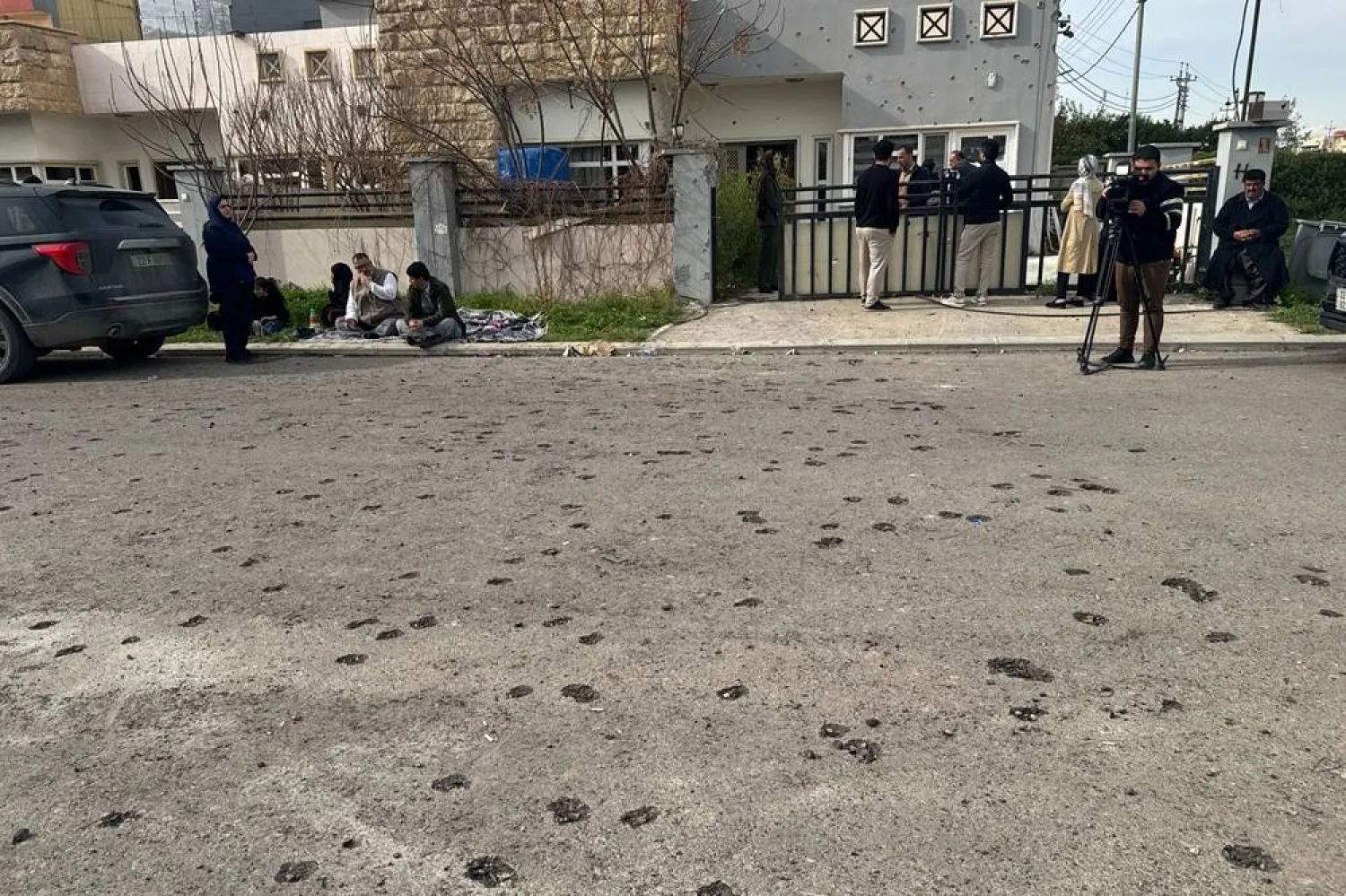
Iraqi Kurds inspect the damage to their homes, after a drone attack struck their neighborhood in Erbil, Iraq, Wednesday, March 4, 2026. (AP)
TT

Kurdish Forces Tighten Security on Iraq-Iran Border

Iraqi Kurds inspect the damage to their homes, after a drone attack struck their neighborhood in Erbil, Iraq, Wednesday, March 4, 2026. (AP)

Iraqi Kurds inspect the damage to their homes, after a drone attack struck their neighborhood in Erbil, Iraq, Wednesday, March 4, 2026. (AP)

Iraq's national security advisor said on Wednesday that Kurdish forces have bolstered security along the Iranian border to prevent any infiltration or attacks on Iran from Iraq.

Iraq's autonomous Kurdistan region has been dragged into the Middle East war with drones threatening US bases and other attacks blamed on Iran targeting Kurdish-Iranian rebel fighters.

The Kurdistan region hosts camps and rear bases operated by several Iranian Kurdish rebel groups that have repeatedly faced cross-border strikes from Iran, which has long accused them of serving Western or Israeli interests.

Qassem al-Araji told Iranian official Ali Bagheri during a phone call that Iraq's Prime Minister Mohammed Shia al-Sudani has ordered that no group may "infiltrate into Iran and carry out terrorist acts from Iraqi territory".

Araji said that Iraqi Kurdish authorities have sent "security reinforcements to the border strip to fully tighten control over" it from the direction of Erbil, the capital of the Kurdistan region.

He also said that Sudani ordered strict adherence to the security agreement between the two countries which they signed in 2023 to protect their common borders.

Iraq and Iran had previously agreed to disarm the Kurdish-Iranian rebels and remove them from border areas.

Since Tuesday, two Iranian Kurdish groups accused Iran of striking their positions in Kurdistan.

Last month, five groups announced a political coalition with the main goal being "the struggle to overthrow the Islamic republic of Iran, and to achieve self-determination for the Kurds".

On Wednesday, the Secretary General of the Democratic Party of Iranian Kurdistan (PDKI), Mustafa Hijri, urged soldiers and security personnel in Iran, especially in Kurdistan, to desert the Iranian forces.


Israel Army Says Soldier Killed ‘in Combat’ in South Lebanon

 Israeli military vehicles drive in Lebanon, as seen from the Israeli side of the Israel-Lebanon border, April 30, 2026. (Reuters)
Israeli military vehicles drive in Lebanon, as seen from the Israeli side of the Israel-Lebanon border, April 30, 2026. (Reuters)
TT

Israel Army Says Soldier Killed ‘in Combat’ in South Lebanon

 Israeli military vehicles drive in Lebanon, as seen from the Israeli side of the Israel-Lebanon border, April 30, 2026. (Reuters)
Israeli military vehicles drive in Lebanon, as seen from the Israeli side of the Israel-Lebanon border, April 30, 2026. (Reuters)

The Israeli army said Thursday that a soldier was killed in southern Lebanon, the fourth such death since a fragile ceasefire took effect there earlier this month.

Sergeant Liem Ben Hemo, 19, "died in combat in the south of Lebanon", the army said in a statement, adding that another soldier was wounded in the incident.

The latest death brings to 17 the number of soldiers killed since the war began with Iran-backed Hezbollah on March 2, according to an AFP tally based on military figures.

One Israeli civilian working for the army has also been killed.


South Lebanese Mayors, Residents Protest Israeli Demolitions

A child waves a Lebanese flag while residents, mukhtars, and inhabitants of the devastated southern Lebanese border villages protest against the destruction of their villages and being prevented from returning by order of the Israeli army, at Martyrs’ Square in central Beirut on April 30, 2026. (AFP)
TT

South Lebanese Mayors, Residents Protest Israeli Demolitions

A child waves a Lebanese flag while residents, mukhtars, and inhabitants of the devastated southern Lebanese border villages protest against the destruction of their villages and being prevented from returning by order of the Israeli army, at Martyrs’ Square in central Beirut on April 30, 2026. (AFP)

Dozens of residents and local officials from southern Lebanon gathered in Beirut on Thursday to protest Israel's destruction of their villages, which has been ongoing despite a fragile ceasefire.

Before and after the truce agreed on April 17 in the war between Israel and Hezbollah, Israel has been carrying out demolitions in the south and preventing the return of residents to more than 50 villages.

"We can't go back. It's been bulldozed -- basically there's nothing to go back to," Ibrahim Hamza, the mayor of the coastal town of Naqoura, told AFP.

"The situation is dire and the Israeli enemy is present inside the village."

Standing in Beirut's central square, protesters carried Lebanese flags and photos of their devastated villages, some had signs asking "where is the ceasefire?".

Two days after the ceasefire began, Israeli Defense Minister Israel Katz said the country's military would "remove the houses in the contact villages near the border that served in every respect as Hezbollah terror outposts".

Israel has declared a "yellow line", some 10 kilometers (six miles) deep inside Lebanon, where its troops are operating.

"What is happening in Bint Jbeil... is systematic annihilation and destruction of trees and people," said Mohamed Souheili, 56, a local official in the town, now on the Israeli-controlled side of the "yellow line".

The southern town witnessed intense clashes in the days leading up to the ceasefire, evoking for many Lebanese its history of major battles in earlier wars.

"Trees are being uprooted from the ground, and not a single sign of life remains in the town," Souheili said.

The Lebanese government's scientific research council estimated earlier this month that the war had already damaged or destroyed more than 50,000 housing units.

AFP photos from April 15 showed extensive destruction in two such villages, including Mais al-Jabal.

Hosn Qabalan, from Mais al-Jabal, lost her home during an earlier round of fighting between Israel and Hezbollah in 2023 and 2024.

"We went back and our house was gone," the 55-year-old grandmother said, "we sat on the rubble".

Lebanon accused Israel, which refused to withdraw from five positions in southern Lebanon during the 2024 ceasefire, of carrying out a campaign of destruction in those villages and preventing their reconstruction.

Qabalan is nonetheless determined to make it back home once again.

"Even if we have to sit on bare ground, what matters is that we return to our land," she said.


Hezbollah Signals Possible Return to 1980s 'Tactics' Against Israeli Army

Israeli military vehicles maneuver on the Lebanese side of the border, as seen from the Upper Galilee in northern Israel, 29 April 2026, amid a ceasefire between Israel and Lebanon.  EPA/ATEF SAFADI
Israeli military vehicles maneuver on the Lebanese side of the border, as seen from the Upper Galilee in northern Israel, 29 April 2026, amid a ceasefire between Israel and Lebanon. EPA/ATEF SAFADI
TT

Hezbollah Signals Possible Return to 1980s 'Tactics' Against Israeli Army

Israeli military vehicles maneuver on the Lebanese side of the border, as seen from the Upper Galilee in northern Israel, 29 April 2026, amid a ceasefire between Israel and Lebanon.  EPA/ATEF SAFADI
Israeli military vehicles maneuver on the Lebanese side of the border, as seen from the Upper Galilee in northern Israel, 29 April 2026, amid a ceasefire between Israel and Lebanon. EPA/ATEF SAFADI

Overlapping media leaks from within Hezbollah on activating “martyrdom fighters” (suicide operatives) have raised questions about the next phase on the southern front, amid talk of non-traditional combat options that echo the warfare of the 1980s.

Media leaks citing military sources within Hezbollah said the group is studying a return to “1980s tactics,” including activating what it described as “martyrdom units.”

The issue gains additional weight in light of prior rhetoric within the group. Former Hezbollah Secretary-General Hassan Nasrallah described fighters in the south during the 2024 “support war” as “martyrdom fighters,” reflecting the nature of the fighting and battlefield conditions.

The renewed use of the term raises questions over whether it is mobilizing rhetoric or an indication of potential operational choices.

Environmental Constraints and Technological Shift

Retired Brigadier General Yarub Sakhr told Asharq Al-Awsat that “the field reality in southern Lebanon makes talk of a return to suicide operations closer to a theoretical proposition than a practical option.”

He added: “The south today is largely depopulated due to displacement and destruction, which strips this type of operation of one of its key elements, namely the ability to conceal within a civilian environment.”

“Technological advances in surveillance and reconnaissance, along with Israel’s extensive target bank, make carrying out such operations extremely difficult, if not impossible, under constant monitoring and precise tracking, in addition to the difficulty of movement and field access.”

He noted that “signaling the existence of such operations along the border with Israel is used in a propaganda context,” adding that “the real message goes beyond the military dimension to the Lebanese domestic arena, where this rhetoric is employed as a pressure tool on officials and political forces to push them toward certain foreign policy choices.”

According to Sakhr invoking the 1980s approach does not stop at suicide operations but also recalls a broader pattern that included kidnappings and assassinations.

He affirmed that the comparison between the current situation in the south and that of the 1980s is not accurate, stressing that “talk of a return to this mode of warfare remains within the realm of slogans and political pressure rather than a viable military option under current conditions.”

Between Theory and Application

By contrast, retired Brigadier General Fadi Daoud told Asharq Al-Awsat: “Talk of reviving 1980s methods is not merely media rhetoric, but reflects that this option exists within the party’s available capabilities.”

He said references to suicide operatives ready to act “fall within the human capabilities that have long been one of the party’s strengths.”

“These operations, despite major technological advances in surveillance and monitoring, can still have battlefield impact, because technology remains limited in effectiveness against a human element determined to reach its target.”

Daoud said the effectiveness of such operations “depends on the nature of the target, the level of surrounding security protection, and field measures around sites and facilities,” noting that “the chances of success vary from case to case based on these factors.”

He said any potential use of such capabilities would remain directed at Israeli targets, adding that carrying out such operations inside Israel would require infiltration and direct access to the target, which faces major field challenges and makes success rates uneven.

“Merely signaling this option carries psychological and strategic weight, recalling past experiences in the Israeli memory and sending a message that any settlement that does not take balances into account could lead to escalation outside conventional frameworks.”

Operational Meaning of the Term

A source following Hezbollah’s operations told Asharq Al-Awsat that “the use of the term ‘martyrdom fighters’ does not necessarily mean a return to traditional suicide operations, but reflects the nature of the current battlefield phase under the siege imposed on areas in southern Lebanon.”

He added: “Fighters are fully aware of the scale of risks surrounding them and deal with them on the basis of fighting to the utmost limits.”

The source noted: “What is meant by the term is readiness for engagement under the most difficult battlefield conditions, and continuing the confrontation until death if imposed, not as a separate tactical option but as part of the nature of the battle itself.”