


UN Warns Global Aid at Risk as Middle East War Spreads

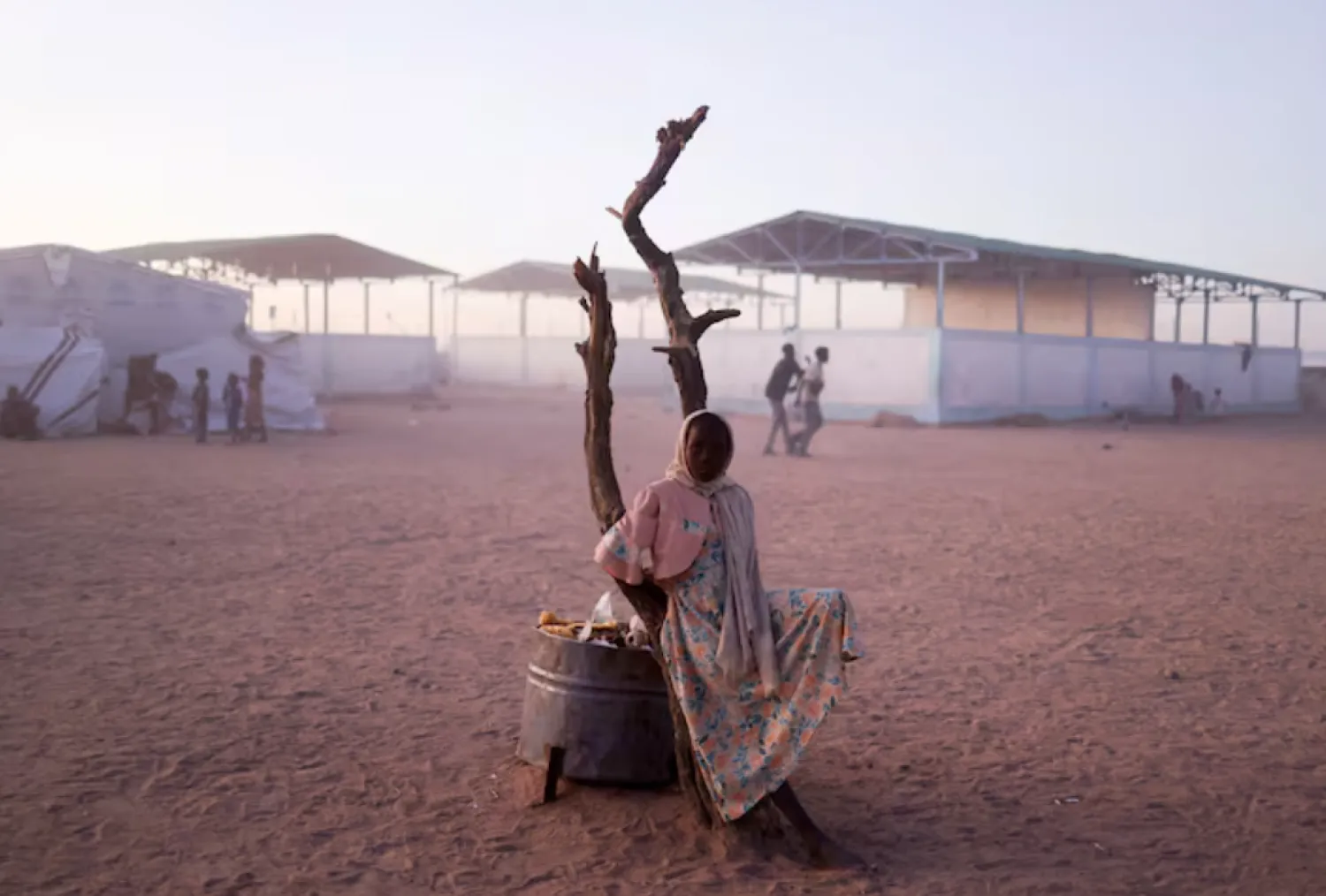
A Sudanese refugee girl from al-Fashir rests next to a burnt tree in the middle of the Tine transit camp, amid the conflict between the paramilitary Rapid Support Forces (RSF) and the Sudanese army, in eastern Chad, November 23, 2025. REUTERS/Amr Abdallah Dalsh/File Photo
TT

UN Warns Global Aid at Risk as Middle East War Spreads

A Sudanese refugee girl from al-Fashir rests next to a burnt tree in the middle of the Tine transit camp, amid the conflict between the paramilitary Rapid Support Forces (RSF) and the Sudanese army, in eastern Chad, November 23, 2025. REUTERS/Amr Abdallah Dalsh/File Photo

The United Nations aid chief warned on Wednesday that the conflict in the Middle East is straining humanitarian operations worldwide, disrupting supply chains and slowing the delivery of life-saving assistance to numerous crisis zones.

“We are in a moment of grave peril for the Middle East and, actually I believe, for the wider world,” Tom Fletcher, the UN aid chief, told Reuters.

The US-Israeli war with Iran, which has expanded to Lebanon and dragged in Gulf countries, has convulsed global markets and disrupted supply chains, with airspace closures and the halt of shipping through the critical Strait of Hormuz.

Fletcher said aid supplies to Gaza and sub-Saharan Africa are being affected by the conflict, as humanitarian relief that needs to travel through the Strait of Hormuz or through airspace in the Gulf has been largely blocked or constrained.

Conflict-ridden Somalia, which is facing a major drought, and Sudan are among a number of countries facing dire humanitarian crises.

"These (constraints) will damage our humanitarian supply chains, reduce the humanitarian supplies we can get to people who need them, but they'll also drive up energy costs and food costs across the region," Fletcher said.

"This really is a perfect storm of factors right now, and I'm seriously worried," he stated.

There is particular concern for aid supplies to sub-Saharan Africa, Flether said, which are being impacted by restricted movement through the Strait of Hormuz, with alternative routes slapped with rising freight costs.

Higher oil prices are making the UN's aid deliveries by air more expensive, at a time when UN agencies and NGOs budgets are already facing major donor cuts, Fletcher explained.

"We've just about put some money together to keep more of our UN humanitarian flights in the air, but they've suddenly, almost overnight, become much more expensive," Fletcher said.



Lebanon: Hezbollah Claims Targeting 10 Israeli Merkava Tanks

Israeli tanks near the Israeli side of the border with Lebanon, amid escalating hostilities between Israel and Hezbollah, as the US-Israeli conflict with Iran continues, in northern Israel, March 25, 2026. REUTERS/Tyrone Siu
TT

Lebanon: Hezbollah Claims Targeting 10 Israeli Merkava Tanks

Israeli tanks near the Israeli side of the border with Lebanon, amid escalating hostilities between Israel and Hezbollah, as the US-Israeli conflict with Iran continues, in northern Israel, March 25, 2026. REUTERS/Tyrone Siu

Lebanon's Iran-aligned Hezbollah group said Thursday that it struck10 Israeli Merkava tanks in three southern towns along the border.

In a series of separate statements, Hezbollah said that its members targeted the advanced Israeli tanks with guided missiles in the towns of Deir Siryan, Debel, and Al-Qantara, and achieved confirmed hits.

Earlier, Hezbollah said it targeted the headquarters of the Israeli Ministry of War in the center of Tel Aviv, and the Dolphin barracks of the Military Intelligence Division north of Tel Aviv with a number of missiles.

The Israeli military said an Israeli soldier was killed in fighting in south Lebanon after the army announced it was conducting ground operations against Hezbollah.

"Staff sergeant Ori Greenberg, aged 21, from Petah Tikva, a soldier of the Reconnaissance unit, Golani Brigade, fell during combat in southern Lebanon," the military said.

In total, three Israeli soldiers have been killed in fighting in south Lebanon since Hezbollah drew the country into the Israel and US war on Iran by launching rocket attacks against Israel on March 2 to avenge the killing of Iran's supreme leader Ali Khamenei.

Israel is responding by launching large-scale raids on Lebanon, while its forces have advanced into southern Lebanon.

After the Lebanese Presidency repeatedly announced its readiness to open direct negotiations with Israel in order to end the war, Hezbollah announced its refusal to negotiate "under fire."

Its Secretary-General, Naim Qassem, said Wednesday in a statement: "When negotiating with the Israeli enemy under fire is proposed, it is an imposition of surrender and a deprivation of all of Lebanon's capabilities."

He called on the government to "reverse its decision to criminalize resistance and the resistance fighters," after announcing a ban on the party's security and military activities, as part of a series of unprecedented measures it has taken since the outbreak of the war.


At Least 28 Civilians Killed in Sudan Drone Strikes

Displaced Sudanese families from Kurdufan at a football stadium in the town of Kadugli, south of the region (AP)
TT

At Least 28 Civilians Killed in Sudan Drone Strikes

Displaced Sudanese families from Kurdufan at a football stadium in the town of Kadugli, south of the region (AP)

Two drone strikes in Sudan, one at a market in Darfur and the other along a road in Kordofan, killed at least 28 civilians, health workers told AFP Thursday.

The three-year war between Sudan's army and the Rapid Support Forces (RSF) has seen a recent uptick in near-daily drone strikes that kill dozens at a time.

On Wednesday, a strike hit a market in North Darfur state's Saraf Omra town, killing "22 people, including an infant, and injuring 17 more", one health worker at the local clinic told AFP.

"The drone hit a parked oil truck, which caught fire along with part of the market," said Hamid Suleiman, a vendor at the market, which serves Saraf Omra and the surrounding towns in the remote Darfur area.

Some 800 kilometers (500 miles) east of the RSF's strongholds in Darfur, another drone strike set fire to a truck travelling on a North Kordofan road in army territory.

"Six bodies arrived at the hospital yesterday, three of them charred, in addition to 10 wounded," a medical source at the local hospital in El-Rahad told AFP, blaming the RSF for the attack.

The civilians were travelling between the army-controlled towns of El-Rahad and Um Rawaba.

Drones from both sides have repeatedly attacked Sudan's central east-west highway, which runs through North Kordofan state capital El-Obeid and connects Darfur to the army-controlled east.

Sudan's war has killed tens of thousands and left some 11 million displaced, in the world's largest hunger and displacement crisis.


Guterres Names Envoy for Middle East… Warns of a Wider War

FILED - 14 May 2025, Berlin: United Nations Secretary-General Antonio Guterres holds a press conference at the Federal Chancellery. Photo: Kay Nietfeld/dpa
TT

Guterres Names Envoy for Middle East… Warns of a Wider War

FILED - 14 May 2025, Berlin: United Nations Secretary-General Antonio Guterres holds a press conference at the Federal Chancellery. Photo: Kay Nietfeld/dpa

UN Secretary-General Antonio Guterres on Wednesday named veteran French diplomat Jean Arnault as his personal envoy to support efforts to end the Middle East conflict, saying the “world is staring down the barrel of a wider war.”

Guterres told reporters that he had been in close contact with many in the region and around the world and that a number of initiatives ⁠for dialogue and peace were underway.

“It is time to stop climbing the escalation ladder – and start climbing the diplomatic ladder,” he said in New York.

The UN chief also warned that prolonged closure of the Strait of Hormuz was choking movement of oil, gas, and fertilizer at a critical moment in the global food planting season.

Guterres said ⁠Gulf countries are important suppliers of raw materials for nitrogen fertilizers crucial for developing countries.

“Without fertilizers today, we might have hunger tomorrow,” he noted.

Guterres said UN mediators have offered their services and Arnault would do “everything possible” to support peace efforts.

The UN says Arnault has more than ⁠30 years' experience in international diplomacy focusing on peace settlements and mediation, with a background in UN missions in Africa, Asia, Europe and Latin America.

His most recent assignment was in 2021 as Guterres' personal envoy on Afghanistan and regional issues.

Disrupted fertilizer shipments and soaring energy ⁠prices are threatening to unleash a fresh food-price surge across vulnerable nations, risking a years-long setback just as many were recovering from successive global shocks, UN and other experts warn.

An analysis released by ⁠the UN World Food Programme last week warned that tens of millions more people will face acute hunger if the Iran war continues through to June.