Israel Says Lebanese Displaced Won’t Return Until Its Own Citizens Are Safe

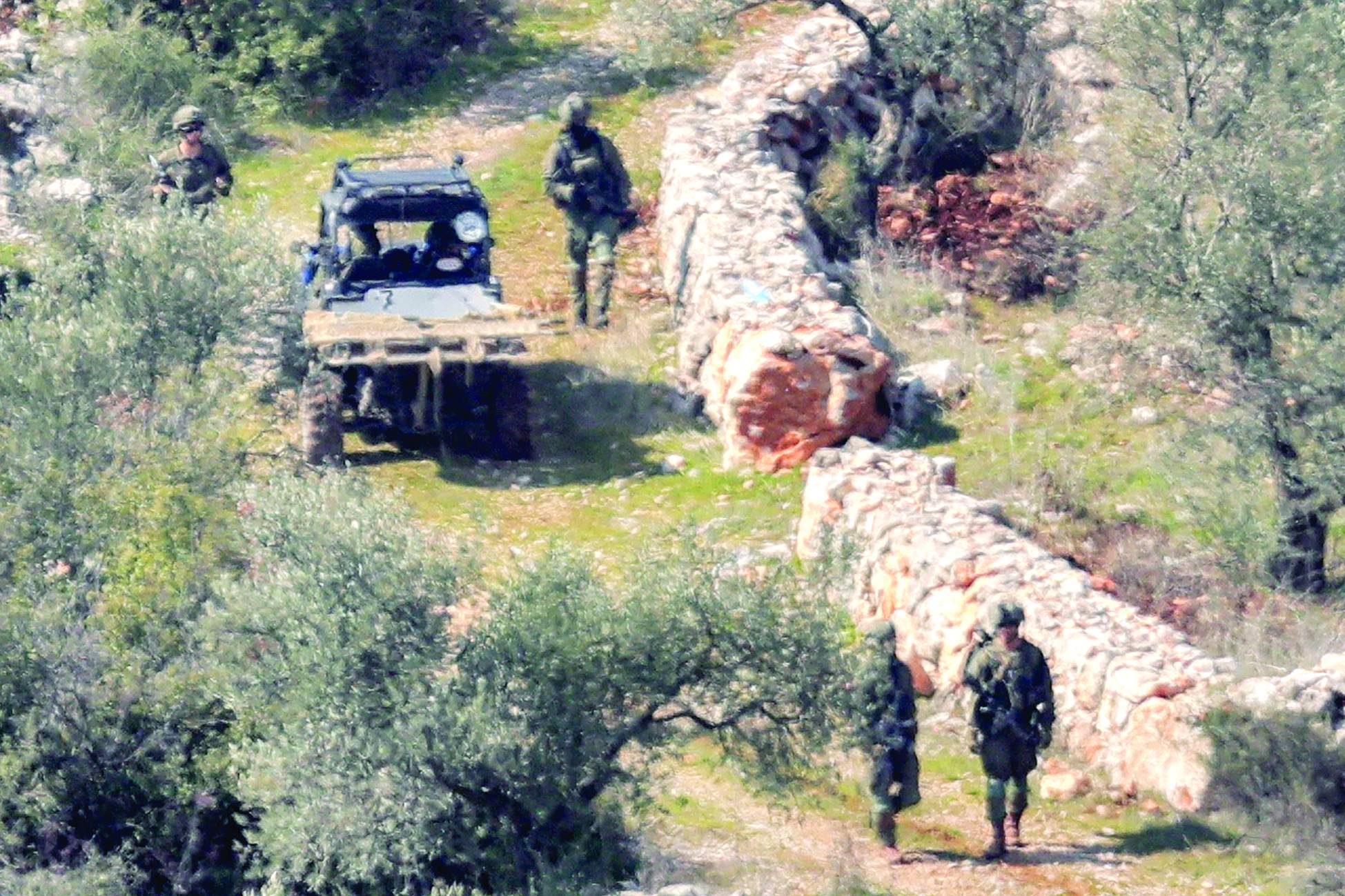
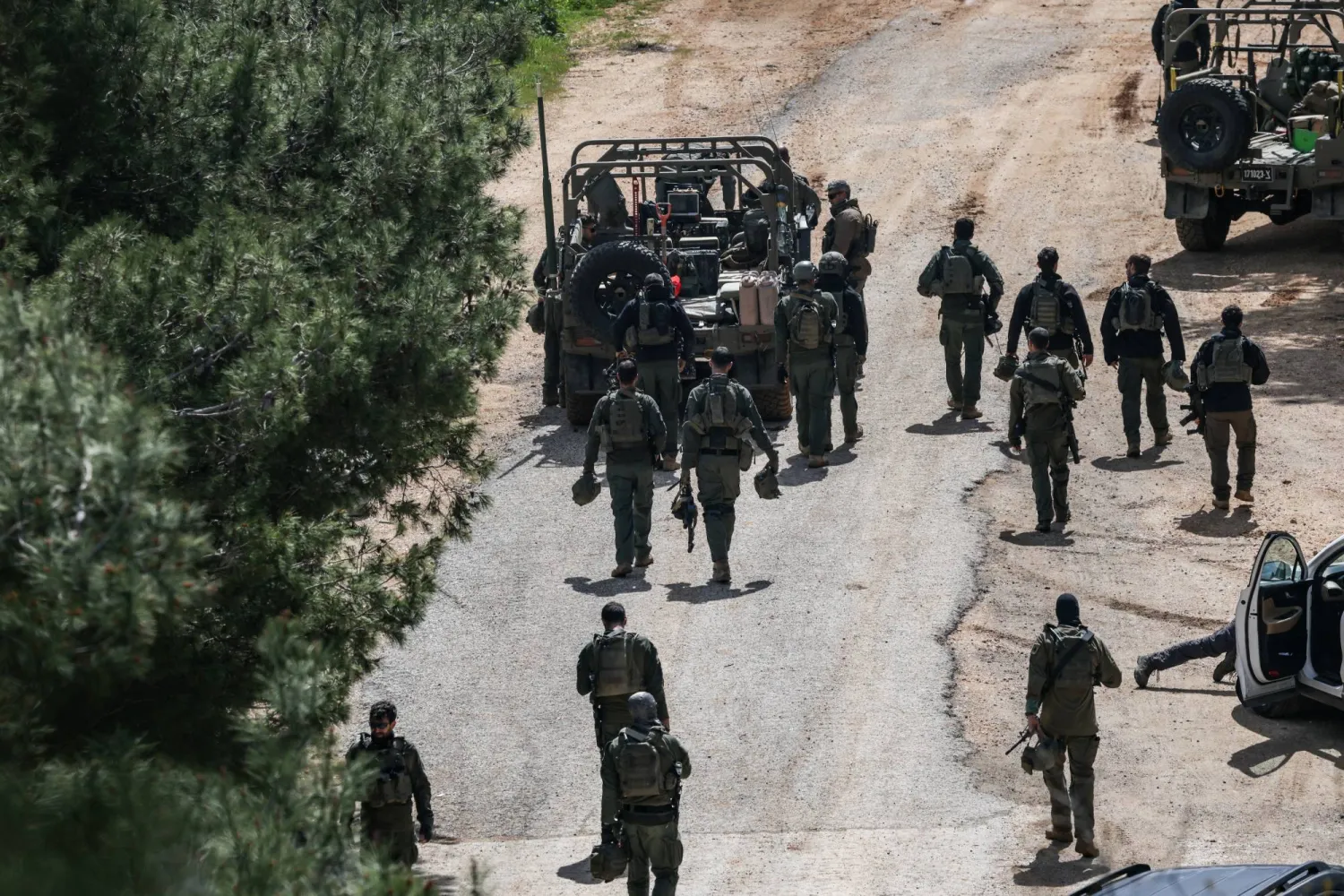
Israeli soldiers gather on the Israeli side of the border with Lebanon, amid escalation between Hezbollah and Israel, and amid the US-Israeli conflict with Iran, in northern Israel, March 16, 2026. REUTERS/Shir Torem
TT

Israel Says Lebanese Displaced Won’t Return Until Its Own Citizens Are Safe

Israeli soldiers gather on the Israeli side of the border with Lebanon, amid escalation between Hezbollah and Israel, and amid the US-Israeli conflict with Iran, in northern Israel, March 16, 2026. REUTERS/Shir Torem

Israel on Monday warned that displaced Lebanese driven from their homes by its military campaign would not be able to return until the safety of Israelis living near the border was ensured, as Israeli troops pushed into new parts of southern Lebanon. 

In a briefing, Israeli military spokesperson Lieutenant Colonel Nadav Shoshani told reporters that soldiers were now conducting ground operations in "new locations", describing the latest offensive as "limited and targeted". 

The extended operation began days after Defense Minister Israel Katz said the military had been ordered to expand its campaign. He later warned that the country could face territorial losses and damage to its infrastructure unless Hezbollah was disarmed. 

Israel's military, which has occupied five positions in southern Lebanon since a November 2024 ceasefire with Hezbollah, sent additional forces into the country ‌after Hezbollah fired ‌a salvo of rockets on March 2, dragging Lebanon into an expanding regional war. 

Hezbollah ⁠said its attack was in retaliation for the killing of Iran's supreme leader on February 28, the first day of the US-Israeli war with Iran. Israel has responded with an intensive bombing campaign on Lebanon. 

COMPARISON WITH GAZA 

The military has framed the ground offensive, launched after March 2, as a defensive effort to protect northern Israel from Hezbollah attacks, which it says have averaged at least 100 rockets and drones a day and have reached as far as central Israel. 

More than 880 people in Lebanon have been killed, according to Lebanon's health ministry, and more than 800,000 have been driven from their homes, many from the ⁠south as well as from areas near the capital, Beirut. 

On Monday, Katz linked the ‌return of displaced Lebanese residents to the safety of Israelis living near ‌the border. 

"Hundreds of thousands of Shiite residents of southern Lebanon who have evacuated or are evacuating their homes in southern Lebanon and ‌Beirut will not return to areas south of the Litani line until the safety of northern residents is ensured," he ‌said in a statement.  

He said the military had been instructed to destroy "terrorist infrastructure" in villages in southern Lebanon near the border with Israel, drawing a comparison to operations in cities in the Gaza Strip that were largely destroyed by Israeli forces.  

Katz also suggested that Hezbollah’s leader, Sheikh Naim Qassem, could face a fate similar to that of his predecessor, and to Iran's supreme leader, both of ‌whom were killed in Israeli strikes.  

Qassem said last week threats against his life were “worthless.” 

ISRAELI TROOPS ADVANCE WEST  

Over the weekend, Israeli troops encircled the key southern Lebanese town ⁠of Khiam and were advancing ⁠west toward the Litani River, a move that could leave large swathes of southern Lebanon under Israeli control, Lebanese security sources told Reuters. 

Israeli troops battled Hezbollah fighters in southern Lebanon throughout the day on Monday, and advanced towards Bint Jbeil, a Lebanese village and Hezbollah stronghold located about 4 km from the border with Israel, the sources said. 

Two Israeli officials said on Sunday that Israel and Lebanon were expected to hold talks in the coming days aimed at securing a durable ceasefire which would see Hezbollah disarmed. 

A Lebanese source familiar with the matter said it didn't seem talks with Israel would be taking place soon, though they would happen eventually. 

Israel's Ambassador to the United Nations Danny Danon told reporters that a "few players were trying to mediate and host talks", adding: "I believe the next step will be talks but first we have to degrade the capability of Hezbollah." 

Under the November 2024 ceasefire, Hezbollah was to pull back from southern Lebanon as the Lebanese military took over. 

Israel said Lebanon never upheld its part of the deal, continuing near-daily air strikes against what it said were Hezbollah positions and weapons.  


Israeli Forces Search Homes, Make Incursions on Fringes of Jabal al-Sheikh

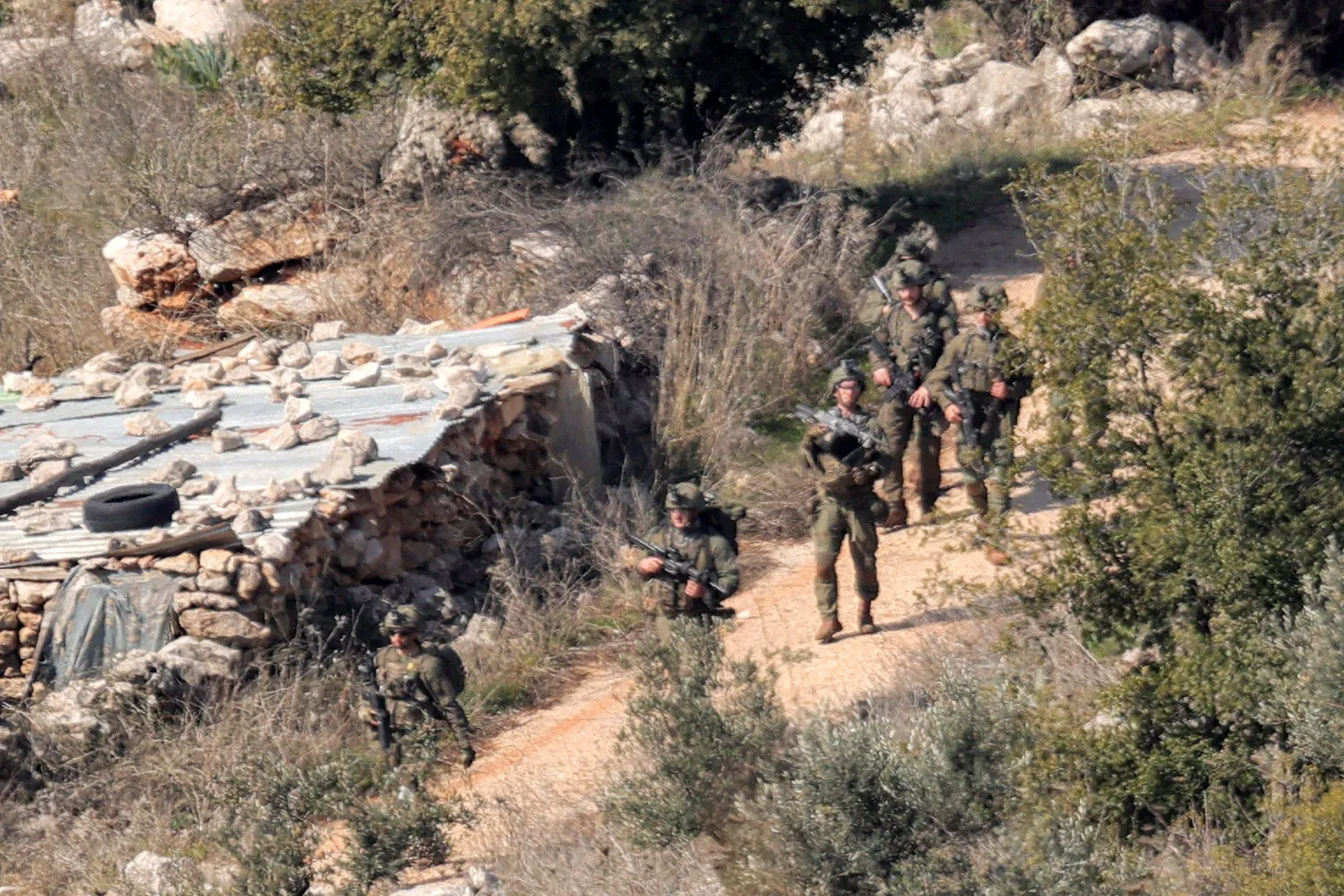
Israeli army forces patrol in the village of Kfar Shouba in southern Lebanon on February 17, 2025. (AFP)
TT

Israeli Forces Search Homes, Make Incursions on Fringes of Jabal al-Sheikh

Israeli army forces patrol in the village of Kfar Shouba in southern Lebanon on February 17, 2025. (AFP)

Repeated Israeli incursions into the Arqoub region of southeastern Lebanon, along the border with Israel and Syria, have raised fears that Israel was planning on expanding its control and further restricting the lives of residents.

These developments have prompted locals to issue warnings, the latest of which came in a statement by an Arqoub committee that highlighted "incursions, alterations of terrain, and the clearing of roads" in the towns of Kfar Shouba, Shebaa, Habbariyeh, and Halta, all of which are located on the western slope of Jabal al-Sheikh.

The warning followed repeated Israeli incursions into the area, including the searching of homes in Kfar Shouba last week.

The committee warned against “a recurrence of past events that led to the occupation of the Shebaa Farms and the Kfar Shouba Hills,” pointing to “a historical lack of action or disregard by successive authorities and governments.”

It stressed “the need for swift and urgent intervention through the Arab League, United Nations, and UN Security Council to halt this aggression, these incursions, and the renewed attempts to encroach upon Lebanese territory.”

These operations are taking place within the context of ongoing Israeli movements over several months across southern border villages, specifically within unoccupied areas adjacent to what Israel calls the "Yellow Line."

According to retired General Khalil Gemayel, these actions carry "military, tactical, and security dimensions that extend far beyond searching for Hezbollah weapons or facilities."

"The Israeli incursion into Kfar Shouba and its surrounding villages, alongside the house searches, cannot be viewed simply as a transient military maneuver or a limited security operation," he told Asharq Al-Awsat.

These movements involve "three interconnected dimensions," he said.

Israeli forces conduct a patrol in the village of Kfar Shouba in southern Lebanon on February 17, 2025 (AFP)

The first is "expanding the scope of maneuver and field reconnaissance; entering the village outskirts, advancing between houses, and conducting searches allows Israeli forces to gather direct intelligence on the terrain, corridors, roads, and residents."

He added that these operations also aim to "erase as much of the villages' urban landscape and vegetation cover as possible, under the pretext of preventing Hezbollah from rebuilding its military capabilities in areas close to where Israeli units are stationed."

Gemayel noted that the second dimension involves "imposing a new security reality on the ground," explaining that "Israel is no longer satisfied with stationing itself in elevated positions and fixed military outposts on commanding hills that stretch from the sea to Jabal al-Sheikh to shield northern settlements.”

“Instead, it is seeking to expand its capacity to execute recurring ground operations within a geographical buffer that grants it greater freedom of movement and intervention,” he explained.

He said that "this does not necessarily mean it has decided to advance to occupy additional villages," but rather indicates "its desire to control and monitor the forward border area in accordance with its security interests, by creating a buffer zone held under fire where Israel applies the theory of flexible defense outside its occupied and fixed defensive lines."

The third dimension, it involves "pressuring the population and preventing a return to normalcy by searching homes, blocking farmers from accessing their fields, and restricting movement, thereby maintaining security, economic, and social pressures on dozens of unoccupied villages and complicating the resumption of regular activity."

Gemayel cited "the restrictions that farmers and shepherds in Kfar Shouba and Halta face regarding access to their lands and pastures."

Retired Brigadier General George Nader viewed the "repeated Israeli incursions into southern villages, not as limited military operations or random movements, but rather as a prelude to cementing Israeli military control and widening its operational reach inside Lebanese territory."

"Israel is seeking to encroach upon more land and impose new realities on the ground, either to improve its negotiating leverage following the Israeli elections, or to pave the way for expanding its military operations into areas beyond the Litani River,” he told Asharq Al-Awsat.


Palestinian Authority Says 2,670 Displaced in Israel’s Hebron Operation

 Israeli forces take Palestinian cars during a military operation in Hebron, in the Israeli-occupied West Bank October 25,2026. (Reuters)
Israeli forces take Palestinian cars during a military operation in Hebron, in the Israeli-occupied West Bank October 25,2026. (Reuters)
TT

Palestinian Authority Says 2,670 Displaced in Israel’s Hebron Operation

 Israeli forces take Palestinian cars during a military operation in Hebron, in the Israeli-occupied West Bank October 25,2026. (Reuters)
Israeli forces take Palestinian cars during a military operation in Hebron, in the Israeli-occupied West Bank October 25,2026. (Reuters)

The Palestinian Authority said Sunday that nearly 2,700 people had been displaced by an Israeli military operation in the occupied West Bank city of Hebron launched after two soldiers were killed in an attack nearby.

Following Friday's attack, Israeli forces entered the Hebron neighborhood of Ein Deir Baha, where the assailants lived, and ordered residents to pack up and leave after Prime Minister Benjamin Netanyahu pledged a major operation in the occupied territory.

"More than 2,670 Palestinians have been forcibly displaced from their homes in Hebron by Israeli occupation forces, the majority of them women, children, and elderly people, according to data from Hebron Municipality," the Palestinian prime minister's office said on X.

A convoy of Israeli military and police vehicles accompanied by soldiers was seen in Hebron on Sunday, making its way down a street blocked to civilian traffic by parked cars and motorbikes, AFP images showed.

Local shopkeeper Higazi al-Tamimi, who also plays a leadership role in the evacuated neighborhood, accused Israeli soldiers of beating him as he attempted to go to his home.

"I remember one or two people starting to strike my legs, chest and shoulders. One of them even hit me on the head," he said from a hospital bed, with his leg thickly bandaged.

"They then pushed me backwards, and I kept moving until I reached a safe area."


Jordan Arrests Three Suspects in Deadly Church Attack

A Jordanian security officer guards a church (Reuters)
TT

Jordan Arrests Three Suspects in Deadly Church Attack

A Jordanian security officer guards a church (Reuters)

Jordanian security forces have arrested three suspects in connection with an attack on a church that killed nine people, state television reported on Monday.

The attack, in which gunmen opened fire during a funeral at a Greek Orthodox church on Friday in the village of Hamoud in Karak governorate, about 120 km (75 miles) southwest of the capital Amman, also wounded 40 others. The shooting lasted several minutes, witnesses ‌said.

Jordan's Public Security ‌Directorate said security forces located the three ‌suspects ⁠early on Monday ⁠hiding in an abandoned house in Karak. The suspects refused to surrender and opened fire on security forces, who returned fire and arrested all three after they were wounded, the directorate said in a statement carried on state media.

No security personnel were injured, and a number of firearms ⁠and ammunition were found in the suspects' ‌possession after their arrest, reported Reuters.

"Terrorism has ‌no place among us," the directorate said, adding that the suspects ‌had met their "just fate".

The Public Security Directorate did not ‌identify the suspects' affiliation or say whether they belonged to any militant group.

Jordanian authorities have said the attack was carried out by "extremist terrorists", but it was too early to determine whether they had ‌links to known groups inside or outside Jordan. There has been no claim of ⁠responsibility.

Interior Minister ⁠Mazen al-Faraya said on Monday authorities were reviewing the circumstances that led young people towards extremism and would hold accountable anyone found to have participated in the attack.

King Abdullah has ordered security forces to respond with an "iron fist" to the rare attack on Jordan's Christian minority.

Such violence is highly unusual in Jordan, a relatively stable state in the Middle East, though authorities say they have foiled several extremist militant plots over the years.