
Israel Strikes Beirut Suburbs as Displacement Shelters Overflow

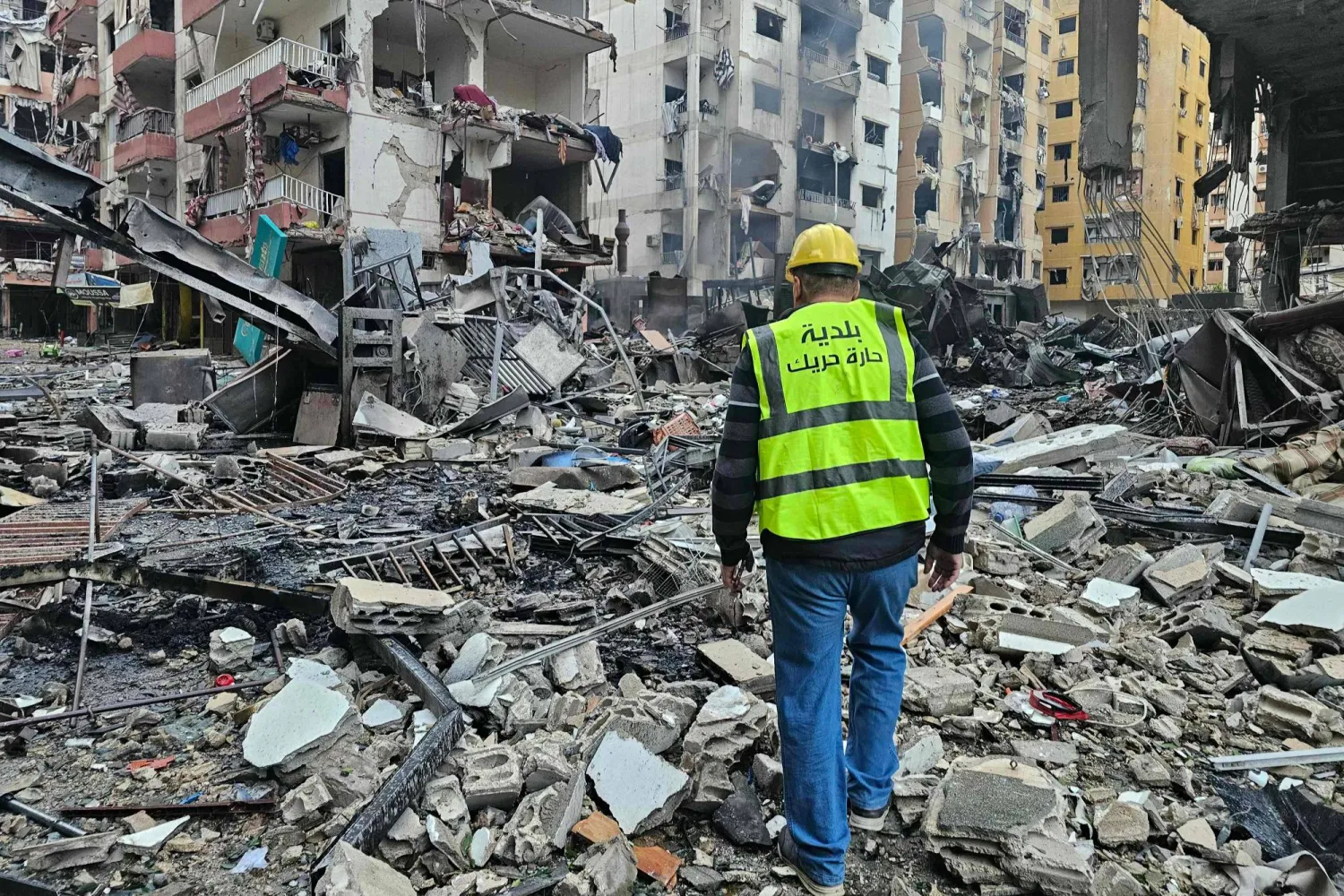
A man inspects a site of overnight Israeli airstrikes in the southern suburbs of Beirut on March 16, 2026. (Photo by AFP) /
TT

Israel Strikes Beirut Suburbs as Displacement Shelters Overflow

A man inspects a site of overnight Israeli airstrikes in the southern suburbs of Beirut on March 16, 2026. (Photo by AFP) /

Israel carried out new strikes on Beirut's southern suburbs and again ordered residents of vast parts of southern Lebanon to evacuate, as more than a million people have been displaced across the country. 

Early Tuesday morning Israeli aircraft bombed two neighborhoods of Beirut's southern suburbs, state media said, and also struck Doha Aramoun, south of the capital, wounding an Ethiopian woman. 

Lebanon was drawn into the Middle East war on March 2 when pro-Iran Hezbollah launched rockets towards Israel in response to US-Israeli strikes that killed Iranian supreme leader Ali Khamenei. 

Israel has responded with intense strikes in multiple Lebanese regions and some ground operations in the south. 

Israel confirmed the Tuesday strikes, saying it was targeting Hezbollah, as it has since the start of the conflict, a day after announcing the start of "limited" ground operations in southern Lebanon. 

Israeli strikes have killed 886 people, including 67 women and 111 children, since March 2, Lebanon's health ministry said on Monday, adding that 2,141 others have been wounded. 

At the same time, the Israeli military renewed its call for residents to evacuate a region stretching more than 40 kilometers from the Lebanon-Israel border. 

Around 14 percent of Lebanese territory is under Israeli evacuation warnings, according to the Norwegian Refugee Council. 

Lebanese authorities said more than one million people had registered as displaced since March 2 -- more than a sixth of the country's population -- with more than 130,000 people staying in upwards of 600 official shelters. 

These displaced people "will not return to their homes" in the south as long as the security of residents in northern Israel is not guaranteed, Israeli Defense Minister Israel Katz said this week. 

- Overcrowded centers - 

In the southern city of Sidon, far from the border, displaced people were sleeping in their cars parked along the seafront corniche, according to an AFP team on the ground. 

"Sidon is full, we have no more capacity", said Jihan Kaisi, the director of an NGO that runs a school-turned-shelter, where more than 1,100 people are crammed together. 

"Lots of people are coming every day to ask for shelter but we don't have space anymore, we can't accept them," she added. 

She said that the road from the south was blocked on Monday with people fleeing north following evacuation orders. 

A strike on Tuesday morning targeted a building in a village in the Sidon region, after a warning from the Israeli military, according to state media. 

Another strike in the Nabatieh region wounded five Lebanese army soldiers travelling in a car and on a motorcycle, one of them seriously, according to an army statement. 

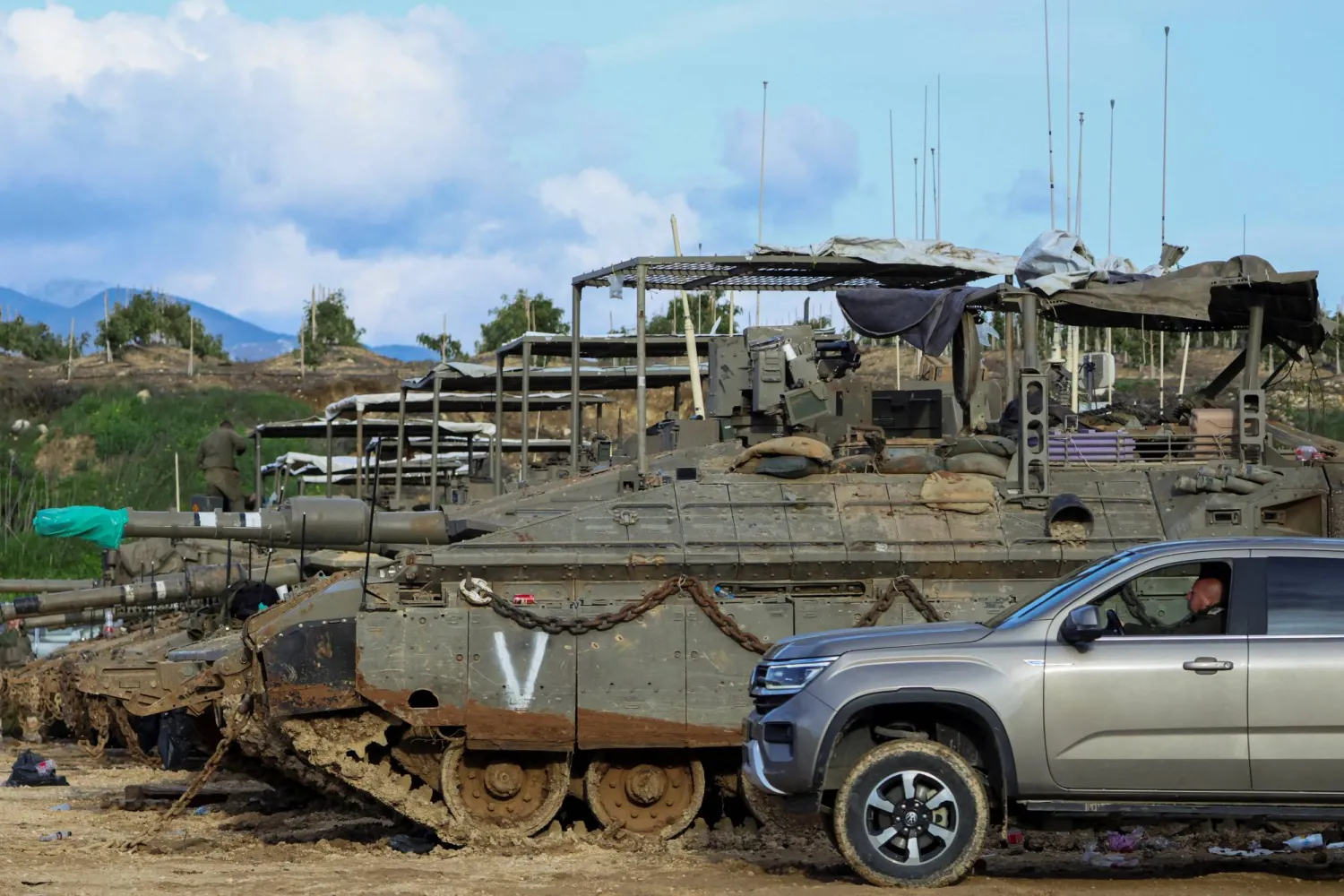
Alongside its massive bombardment campaign, Israel has announced that it is carrying out ground incursions in the south with troops and armored vehicles. 

On Tuesday the Israeli military said "additional... troops have been deployed in Lebanon, continuing efforts to establish a forward defense posture in order to remove threats and create an additional layer of security for residents of northern Israel against Hezbollah's threat". 

Israel's military chief of staff Eyal Zamir said on Monday that "more than 400 terrorists have been eliminated so far". 

Hezbollah said the same day that it had launched rockets and drones towards the city of Nahariya in northern Israel, where a man was wounded by an explosion, according to Israeli rescuers. 

The group also claimed responsibility early on Tuesday for two rocket attacks on groups of Israeli soldiers near the villages of Maroun al-Ras and Mais al-Jabal, located on the border. 

On Monday evening, the leaders of Germany, Canada, France, Italy and the United Kingdom warned that a large-scale Israeli ground operation in Lebanon "would have devastating humanitarian consequences and could lead to a protracted conflict". 


Civilians Pay a Heavy Price as War in Lebanon Drives Death, Displacement, UN Says

Smoke rises from the site of an Israeli airstrike that targeted an area in Beirut's southern suburbs on March 17, 2026. (AFP)
TT

Civilians Pay a Heavy Price as War in Lebanon Drives Death, Displacement, UN Says

Smoke rises from the site of an Israeli airstrike that targeted an area in Beirut's southern suburbs on March 17, 2026. (AFP)

Civilians are paying a heavy price as the war in Lebanon continues to expand, driving death, injuries and displacement the United Nations said on Tuesday.

"Displacement is increasing incredibly quickly. Right ‌now, hundreds of ‌thousands of people ‌left ⁠their homes. Many ⁠leaving with very little, just the clothes they were wearing," said the UN Humanitarian Coordinator Imran Riza.

Lebanon was sucked ⁠into the war in ‌the ‌Middle East on March 2 when ‌Hezbollah opened fire at ‌Israel, saying it aimed to avenge the killing of Iran's supreme leader. Israel has responded ‌with an offensive that has killed more ⁠than ⁠800 people in Lebanon and forced more than 800,000 from their homes.

Almost a fifth of people living in Lebanon are now registered as displaced, according to Lebanese government figures, with displacement set to increase, the UN said.

Israeli air strikes on residential buildings in Lebanon raise concerns under international law, the human ‌rights ‌office said ‌on ⁠Tuesday said.

"Israeli air ⁠strikes have destroyed entire residential buildings in dense ⁠urban environments with ‌multiple ‌members of the ‌same family, ‌including women and children often killed together," ‌UN human rights office spokesperson ⁠Thameen Al-Kheetan ⁠told reporters in Geneva.

"Such attacks raise concerns under international humanitarian law," he added.


Lebanese Army Says One Soldier Killed, Four Wounded in Israeli Strike

 17 March 2026, Lebanon, Khiam: Smoke rises over Khiam, a southern Lebanese village roughly 6 km from the Israeli border, after Hezbollah missile strikes targeted advancing Israeli troops. (dpa)
17 March 2026, Lebanon, Khiam: Smoke rises over Khiam, a southern Lebanese village roughly 6 km from the Israeli border, after Hezbollah missile strikes targeted advancing Israeli troops. (dpa)
TT

Lebanese Army Says One Soldier Killed, Four Wounded in Israeli Strike

 17 March 2026, Lebanon, Khiam: Smoke rises over Khiam, a southern Lebanese village roughly 6 km from the Israeli border, after Hezbollah missile strikes targeted advancing Israeli troops. (dpa)
17 March 2026, Lebanon, Khiam: Smoke rises over Khiam, a southern Lebanese village roughly 6 km from the Israeli border, after Hezbollah missile strikes targeted advancing Israeli troops. (dpa)

One Lebanese soldier was killed and four were wounded in an Israeli airstrike in the city of Nabatieh in southern Lebanon, the Lebanese army said on Tuesday, amid escalating hostilities between Israel and Iran-backed armed group Hezbollah. 

The soldiers were struck while travelling by car and motorcycle and were taken to ‌hospital, the army ‌said in a post on ‌X, ⁠adding in a ⁠subsequent statement that one of the wounded had died of his injuries. 

The Israeli military said it was aware of reports that Lebanese soldiers were wounded in a strike in southern Lebanon and that the incident was ⁠under review. 

It said that it operates ‌against Hezbollah and ‌not against the Lebanese Armed Forces. 

The strike comes ‌amid intensifying Israeli attacks across Lebanon, which have ‌killed more than 880 people and displaced more than 1 million, according to Lebanese authorities. 

The Lebanese army has also reported casualties in recent days, ‌including an incident earlier this month in which three soldiers were among ⁠those ⁠killed in Israeli strikes, according to the army. 

Israel's military, which has occupied five positions in southern Lebanon since a November 2024 ceasefire with Hezbollah, sent additional forces into the country after the group fired a salvo of rockets on March 2, dragging Lebanon into the expanding US-Israeli war with Iran. 

Israel's Defense Minister Israel Katz has warned Lebanon that it could face territorial losses unless Hezbollah was disarmed. 


Iraq in Talks with Iran to Safeguard Oil Tanker Traffic Through Hormuz

Vehicles enter and exit an underpass road during rainfall in Baghdad on March 15, 2026. (AFP)
TT

Iraq in Talks with Iran to Safeguard Oil Tanker Traffic Through Hormuz

Vehicles enter and exit an underpass road during rainfall in Baghdad on March 15, 2026. (AFP)

Iraq's oil minister said Baghdad is talking to Iran about allowing some of the country's oil tankers to pass through the Strait of Hormuz, the state news agency reported on Tuesday, as Iraq seeks to ease disruptions to crude exports following recent attacks on tankers in its own waters.

Iraq is also working to restore a disused pipeline that would allow oil to be pumped directly ‌to Türkiye's ‌Ceyhan port without passing through the ‌Kurdistan ⁠region, Oil Minister ⁠Hayan Abdel-Ghani said in a video statement released on Monday.

Iraq will complete an inspection of a 100-km (62-mile) section of the pipeline within a week to enable direct exports from Kirkuk, he added.

The reopening of the Kirkuk-Ceyhan pipeline, which has been shut for ⁠more than a decade, would offer ‌an alternative export route ‌at a time when shipping through the strategic Strait ‌of Hormuz is severely disrupted by the conflict ‌in the Middle East.

Exports via the 960-km pipeline, which once handled about 0.5% of global supply, were halted in 2014 after repeated attacks by ISIS militants.

The ‌oil ministry has said exports via the route could initially reach around 250,000 ⁠barrels ⁠per day, rising to about 450,000 bpd of crude from fields in the Kurdistan region is included.

Baghdad has sought to use the Kurdistan pipeline as a temporary route for crude flows but said the Kurdistan Regional Government had set arbitrary conditions for its use, warning it may take legal action if exports are blocked.

Kurdish authorities have rejected the accusations, saying they are not obstructing exports and that Baghdad has failed to address security and economic challenges facing the region’s oil sector.