


UN Expert Says Israel Using ‘Systematic’ Torture

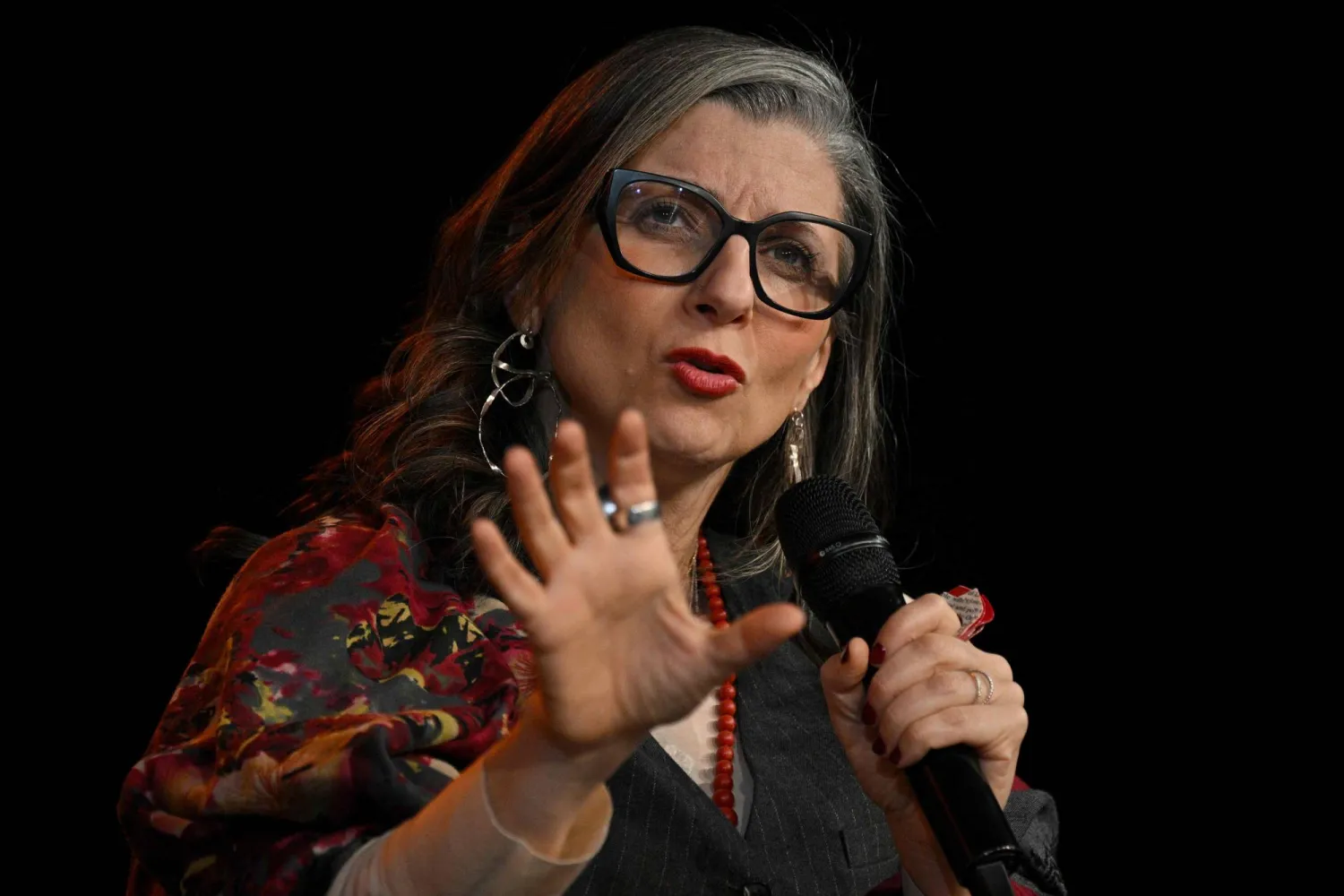
UN Special Rapporteur for the Palestinian Territories occupied since 1967, Francesca Albanese gestures as she speaks during a public event hosted by the Olof Palme International Center in Belgrade on March 17, 2026. (AFP)
TT

UN Expert Says Israel Using ‘Systematic’ Torture

UN Special Rapporteur for the Palestinian Territories occupied since 1967, Francesca Albanese gestures as she speaks during a public event hosted by the Olof Palme International Center in Belgrade on March 17, 2026. (AFP)

A UN expert claimed Israel was systematically torturing Palestinians on a scale "that suggests collective vengeance and destructive intent", in a report released to media on Friday.

Francesca Albanese, the UN's special rapporteur on the rights situation in the Palestinian territories occupied since 1967, said that since Hamas's October 7, 2023 attack, which triggered the Gaza war, Palestinians in custody "have been subjected to exceptionally ruthless physical and psychological abuse".

AFP has sought a comment from Israel's mission in Geneva, which has previously accused Albanese of being motivated by an "obsessive, hate-driven agenda to delegitimize the state of Israel".

Albanese has faced harsh criticism, allegations of anti-Semitism and demands for her removal, from Israel and some of its allies, over her relentless criticism and long-standing accusations of "genocide".

Last month, France and Germany called for her to resign following her remarks to a forum in Doha. Albanese said they had done so based on "false accusations" and a "manipulation" of what she had actually said.

Though appointed by the UN Human Rights Council, special rapporteurs are independent experts and do not speak on behalf of the United Nations itself.

- 'Unprecedented scale' -

A statement accompanying her new report said that while Albanese "unequivocally condemns torture and other forms of ill-treatment committed by all actors, including Palestinian armed groups", this report "focuses on Israeli conduct".

Entitled "Torture and genocide", the report "examines Israel's systematic use of torture against Palestinians from the occupied Palestinian territory since October 7, 2023".

It claimed that "torture in detention has been used on an unprecedented scale as punitive collective vengeance".

"Brutal beatings, sexual violence, rape, lethal mistreatment, starvation, and the systematic deprivation of the most basic human conditions have inflicted profound and lasting scars on the bodies and minds of tens of thousands of Palestinians and their loved ones," the report said.

"Torture has become integral to the domination of and punishment inflicted on men, women and children, both through custodial abuse and through a relentless campaign of forced displacement, mass killings, deprivation and destruction of all means of life to inflict long-term collective pain and suffering," it said.

Israel is party to the Convention against Torture and Other Cruel, Inhuman or Degrading Treatment or Punishment.

Albanese said she had gathered written submissions, including over 300 testimonies.

- 'Widespread humiliation' -

Albanese said that since October 2023, arrests of Palestinians in the occupied territories had "escalated dramatically", with more than 18,500 people arrested, including at least 1,500 children.

The report said around 9,000 Palestinians were still in detention, while "more than 4,000 have been subjected to enforced disappearance".

Albanese said Israel's detention system "has descended into a regime of systemic and widespread humiliation, coercion, and terror".

She said Israel should "immediately cease all acts of torture and ill-treatment of the Palestinian people as part of its ongoing genocide" and urged all countries "to do everything in their power to stop the destruction of what remains of Palestine" as every delay "worsens irreversible harm and further entrenches a system of cruelty".

Albanese urged the prosecutor of the International Criminal Court to request arrest warrants for Israel's Defense Minister Israel Katz, National Security Minister Itamar Ben Gvir and Finance Minister Bezalel Smotrich.

She is due to present her report to the UN Human Rights Council on Monday.


Trump Says Israel and Lebanon Leaders to Hold Talks Thursday

TOPSHOT - US President Donald Trump speaks to the press outside the Oval Office at the White House in Washington, DC, on April 13, 2026. (Photo by Brendan SMIALOWSKI / AFP)
TT

Trump Says Israel and Lebanon Leaders to Hold Talks Thursday

TOPSHOT - US President Donald Trump speaks to the press outside the Oval Office at the White House in Washington, DC, on April 13, 2026. (Photo by Brendan SMIALOWSKI / AFP)

US President Donald Trump said Wednesday that leaders of Israel and Lebanon will speak Thursday, after they held a high-level face-to-face meeting in Washington Tuesday -- the first such negotiation since 1993.

"Trying to get a little breathing room between Israel and Lebanon. It has been a long time since the two leaders have spoken, like 34 years. It will happen tomorrow," Trump wrote without specifying who will be involved or offering further details.

Lebanon was pulled into the Middle East war on March 2 after Iran-backed Hezbollah attacked Israel, and more than 2,000 people have been killed by Israeli strikes since.

Israel pressed ahead with its aerial and ground war in Lebanon. The country's National News Agency reported airstrikes and artillery shelling throughout southern Lebanon on Wednesday, including near Bint Jbeil, where Israeli forces have encircled Hezbollah fighters.

Israeli Prime Minister Benjamin Netanyahu said Israeli troops were about to “eliminate this great stronghold of Hezbollah” and would continue expanding control of areas in southern Lebanon.

Netanyahu said negotiations are continuing, with disarming Hezbollah a key goal.

The Lebanese Health Ministry said Israel struck three teams of paramedics Wednesday in southern Lebanon, first hitting one team and then two more that rushed to help. The attacks killed three paramedics and wounded six others, the ministry said.

The Israeli military did not immediately respond to a request for comment.

Israel and Lebanon have technically been at war since Israel was established in 1948, and Lebanon remains deeply divided over diplomatic engagement with Israel.


Damascus Foils Smuggling of 6,000 Detonators to Lebanon

Tunnel found in Homs countryside linking Qusayr to Lebanon (Syrian media)
TT

Damascus Foils Smuggling of 6,000 Detonators to Lebanon

Tunnel found in Homs countryside linking Qusayr to Lebanon (Syrian media)

Syrian authorities said they had thwarted an attempt to smuggle a large shipment of military-grade detonators from the Nabk area in the Qalamoun region of rural Damascus into Lebanon.

They also uncovered a cross-border tunnel and seized weapons depots prepared for smuggling, state media reported on Wednesday.

The Internal Security Directorate in Nabk said it dismantled a plan to move a large quantity of explosive detonators used in making improvised explosive devices, adding the shipment was bound for Lebanon.

In a statement, it said the operation was carried out with “high professionalism” after precise technical and field surveillance, preventing the materials from reaching their destination.

Authorities said about 6,000 detonators were seized, without identifying the smugglers or the intended recipients in Lebanon.

The announcement came as internal security forces in Homs reported discovering a tunnel linking Syrian and Lebanese territory in the border town of Housh al-Sayyed Ali, in the Qusayr area of southern Homs province.

Weapons and ammunition depots prepared for smuggling were also seized, according to the Syrian Al-Ikhbariya channel, which gave no details on who dug the tunnel.

Earlier this month, Syria’s defense ministry said it had uncovered a network of tunnels in the Qusayr area used to smuggle drugs and weapons, adding that Hezbollah had used them.

Qusayr has been one of Hezbollah’s main areas of influence in Syria since 2013, until the fall of its ally Bashar al-Assad. The area served as a key supply route from Albu Kamal on the Iraqi border in Deir al-Zor, through Palmyra and Homs, to the Lebanese border.

Media reports say tunnels are widespread along the Qusayr border, alongside informal crossings used by residents to move between the two countries. For many, smuggling has become a source of income amid worsening economic conditions, poverty, and security instability, complicating efforts to secure the border.

The developments come amid fears Syria could be drawn into a wider conflict through Lebanon and efforts to disarm Hezbollah, with backing from the United States and Israel.

On April 11, Syria’s interior ministry said its counterterrorism department, working with internal security in rural Damascus, arrested five people in a cell linked to Hezbollah after tracking suspicious activity in the capital.

Authorities said a woman in the cell was caught attempting to carry out an attack by planting an explosive device near the home of a religious figure in Bab Touma, close to the Mariamite Cathedral. Media reports identified the target as Rabbi Michael Houri.

Earlier this month, the defense ministry allowed a photographer from Agence France-Presse to document the army’s deployment along the border for the first time since reinforcements were sent about a month earlier, including several cross-border tunnels that had recently been uncovered.

Mohammad Hammoud, a Syrian-Lebanese border official, told AFP the army had discovered “a network of tunnels linking the two countries” used to smuggle weapons and drugs. A Syrian army field commander also said Hezbollah had used the tunnels.

Hezbollah fought alongside Assad’s forces in the conflict that began in 2011 as a peaceful uprising before escalating into war.

An AFP photographer saw at least five tunnels crossing the border, including one that started in a house basement and led via concrete steps into narrow, dark passageways used for transit.

On March 28, Syrian authorities said they found a tunnel near a village west of Homs linking Syria to Lebanon, adding that “Lebanese militias” had used it for smuggling before it was closed.

In February, the interior ministry said it dismantled a cell behind attacks in the Mezzeh district of Damascus, adding the weapons used had come from Hezbollah, which denied involvement.


Beirut MPs Meet to Back Weapons-Free City Declaration

Lebanese army soldiers deploy at the site of an Israeli airstrike in Beirut (AP)
TT

Beirut MPs Meet to Back Weapons-Free City Declaration

Lebanese army soldiers deploy at the site of an Israeli airstrike in Beirut (AP)

Beirut lawmakers and political parties in Lebanon’s parliament will hold a conference on Thursday backing a declaration of the capital as “safe and free of weapons,” after a government decision that followed deadly Israeli attacks on the city last week.

Organizers invited all Beirut MPs except those from Hezbollah and the Islamic Group, in a move targeting the party’s arms after the government banned its military activities.

The gathering also signals support for Prime Minister Nawaf Salam, who came under attack from Hezbollah after the decision.

Organizers told Asharq Al-Awsat that rejecting the targeting of Salam reflects that the move “expresses the decisions of the Council of Ministers collectively.”

Beirut MPs are expected to endorse government efforts to assert state sovereignty and cement the state’s exclusive authority over decisions of war and peace. This includes measures tied to Hezbollah, notably limiting arms to legitimate state forces.

They will also back the executive authority, represented by the president, prime minister, and cabinet, in declaring Beirut a weapons-free city, and call for a strong, comprehensive deployment of the Lebanese army and security forces to protect citizens and prevent any unauthorized arms or threats to stability.

MP Fouad Makhzoumi said the Israeli attack last Wednesday, while condemned, underscored the risks to the city’s security.

“There is no solution except to place all weapons under the control of the state, including Hezbollah’s arms. This is the gateway to strengthening stability and protecting all Lebanese,” he told Asharq Al-Awsat.

Makhzoumi said Beirut MPs fully support the decision and stressed the need for full, uncompromising implementation.

He called for a robust deployment of the army and security forces, warning against any leniency in enforcing measures he said would protect the city, its residents, and people displaced from southern Lebanon and other areas hit by Israeli attacks.

Last week, Beirut MPs, along with economic bodies and civil society groups, called for the conference to present a unified stance on developments, reaffirm the state’s role, and press for implementation of government decisions to protect the capital, its institutions, and residents.

In a statement, they condemned Israeli strikes on Lebanese territory, including Beirut, and rejected dragging Lebanon into a war “that has nothing to do with it,” while backing government steps to reinforce sovereignty and stability.

They also denounced incitement and unrest in Beirut, saying it endangers residents and threatens security, and reiterated their commitment to national unity and rejection of sectarian strife.
