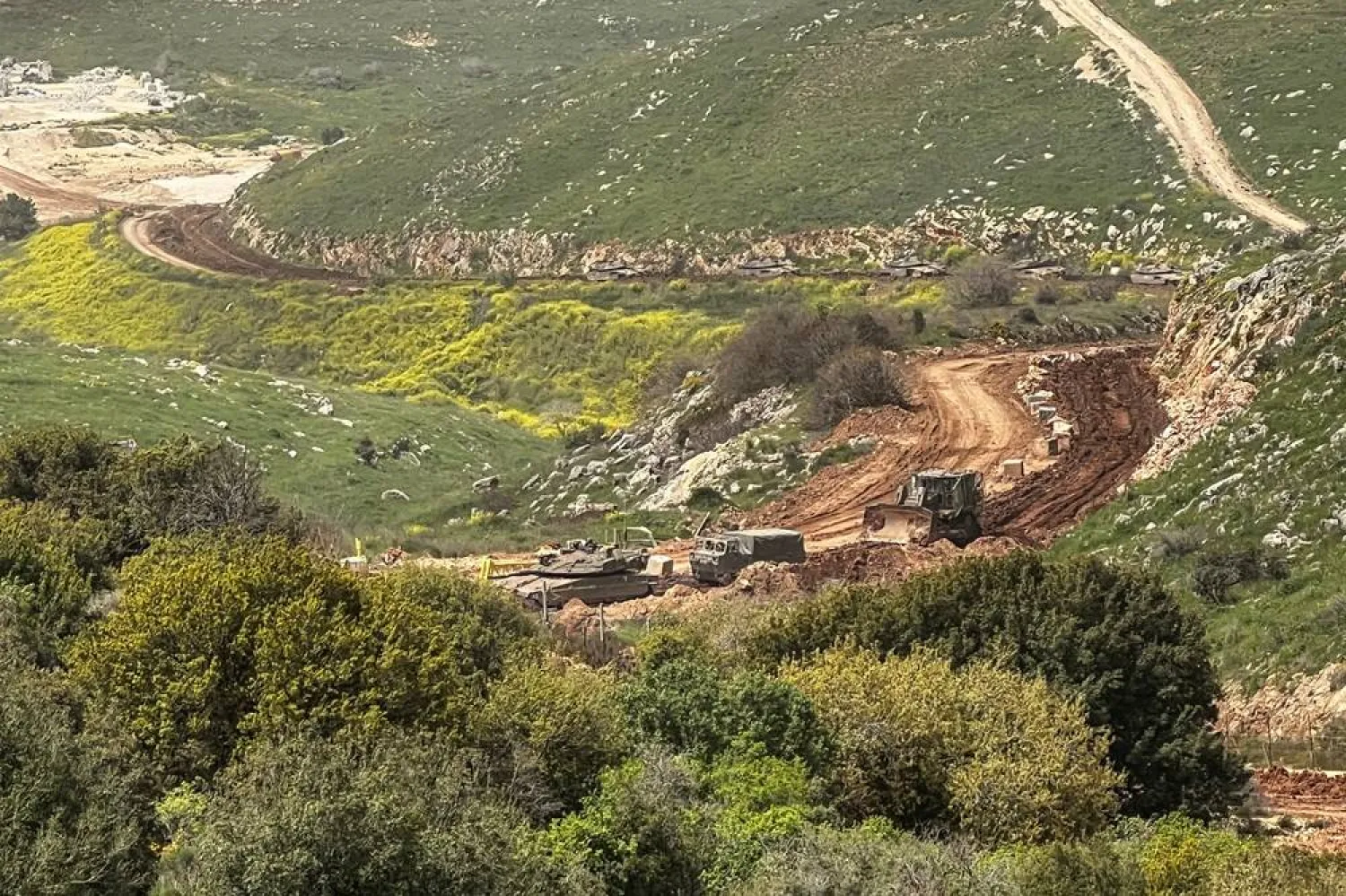

The conflict between Hezbollah and Israel in southern Lebanon is taking on a more complex shape, no longer limited to images of tanks and front line. Based on its operations on the ground and statements from its officials, Israel is not aiming for a traditional sense of occupation of the South, but rather imposing security control without actually holding territory.
This position reflects a shift in tactics and push towards managing the conflict, moving from military control that is based on advances and positioning, to security hegemony based on prevention, control, and reshaping geography and the population.
Modern security belt
Here rises the concept of the security belt, but in a more modern form than the one that prevailed pre-2000 when Israel occupied the South for nearly two decades. Israeli Prime Minister Benjamin Netanyahu has spoken of “expanding the security belt in southern Lebanon.”
Defense Minister Israel Katz has also said that Israel aims to disarm Iran-backed Hezbollah and that it will target its leaders and members “throughout Lebanon.” Houses that are used as Hezbollah positions “will be destroyed according to the model adopted in [Gaza’s] Rafah and Khan Younis.”
Israel will seek to control territories up to the Litani River and prevent tens of thousands of people from returning to their homes before it achieves its security.
Despite the escalation, Israel keeps saying that it is not aiming to fully occupy Lebanon. Israel’s Haaretz reported that the army has not set this as a war goal, despite acknowledging that in theory, the disarmament of Hezbollah would demand it.
This contradiction reflects the essence of the strategy: avoiding the cost of occupation, while achieving its end goals through other means based on control by fire and clearing the area.
18 positions
An informed source on the ground told Asharq Al-Awsat that Israel is seeking to re-occupy 18 strategic positions it had held before 2000. They include al-Bayyada, Shamaa, Beit Leef, Tallet al-Aweida, al-Tayba hills, the Beaufort Castle, and the Iqlim al-Tuffah heights that overlook the western Bekaa region.
Israel will not deploy its forces, but impose complete security control by fire over the Nabatieh district, all the way to al-Zahrani, Sidon, western Bekaa and Jezzine, allowing for control on the ground without actually having to position its troops there permanently.
Israel is aiming to acquire the ability to manage the South from heights and strategic points, the source explained.
Of the 600,000 people displaced from the area, the source said Israel will prevent them from returning. This includes areas beyond Iqlim al-Tuffah, al-Nabatieh and parts of the western Bekaa, reflecting an intent to change demographics on the ground.
Retired General Naji Malaeb told Asharq Al-Awsat that Israel does not want a permanent ground occupation, but the ability to control the field through fire, air or alternate forces.
This can happen through either direct military presence that runs the area or through establishing a buffer zone on scorched earth that prevents the people from returning to their homes and prevents any military positioning in the area.
This approach also prevents Israel’s adversaries from using the territory, he added.