


Israel Military Says ‘Battle’ in Lebanon Continues, Ceasefire Does Not Apply

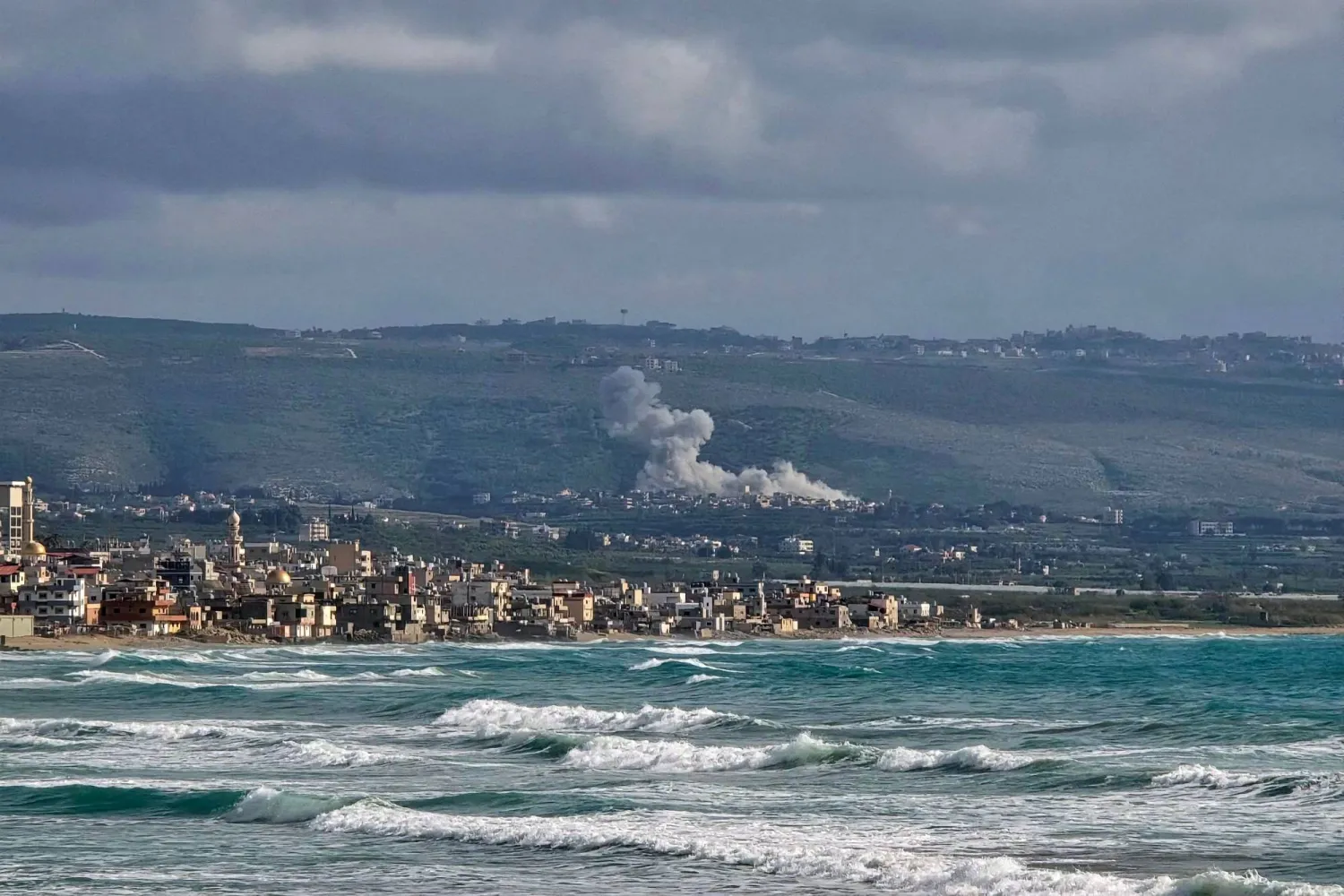
This photograph taken from the southern Lebanese area of Tyre shows smoke rising from the site of an Israeli strike in Hanniyeh village of Lebanon, on April 5, 2026. (AFP)
TT

Israel Military Says ‘Battle’ in Lebanon Continues, Ceasefire Does Not Apply

This photograph taken from the southern Lebanese area of Tyre shows smoke rising from the site of an Israeli strike in Hanniyeh village of Lebanon, on April 5, 2026. (AFP)

Israel's military said Wednesday its forces would continue their campaign against Hezbollah fighters, claiming the ceasefire with Iran does not apply to Lebanon. 

"The battle in Lebanon continues, and the ceasefire does not include Lebanon," the military's Arabic-language spokesman, Colonel Avichay Adraee, said on X, warning residents to evacuate areas south of the Zahrani River. 

Israeli Prime Minister Benjamin Netanyahu earlier said the Iran war truce does not include Lebanon. 

The strikes came despite Iran-backed armed group Hezbollah, which drew Lebanon into the Middle East war by attacking Israel on March 2, not claiming any operations since 1am (Tuesday 2200 GMT). 

Israel renewed an evacuation order for an area more than 40 kilometers inside Lebanon. It followed another warning to evacuate a building in the southern Tyre region, which Israel then struck, according to Lebanon's state-run National News Agency. 

NNA reported several strikes across the south. 

Pakistani Prime Minister Shehbaz Sharif, who has acted as a mediator in the conflict, said the two-week ceasefire between Iran and the United States applied "everywhere including Lebanon", but Netanyahu later said the country was excluded. 

Lebanese President Joseph Aoun welcomed the ceasefire, saying he hoped his country would be included in the regional truce. 

Aoun said Beirut "continued efforts to ensure that the regional peace includes Lebanon in a stable and lasting manner", according to a statement from the presidency. 

A Lebanese official told AFP that authorities "have not been informed" of Lebanon being included. 

Hezbollah told people displaced by the war to refrain from returning to their homes before a ceasefire is announced in Lebanon, while claiming to be nearing a "historic victory". 

"Today, we stand on the threshold of a great and historic victory," the Iran-backed group said in a statement, calling on people to "not head to the targeted villages, towns, and areas in the south, the Bekaa, and the southern suburbs of Beirut before the official and final ceasefire declaration in Lebanon is issued". 

Hezbollah did not share an official stance on the truce. 

French President Emmanuel Macron, welcoming the ceasefire, said "our wish is to ensure that the ceasefire fully includes Lebanon". 

Spain's foreign minister said it was "unacceptable" that Israel continued its invasion of Lebanon after the ceasefire. 

"All fronts must cease, and all fronts also means Lebanon. It is unacceptable that Israel's war, Israel's invasion of a sovereign country like Lebanon... continues," Jose Manuel Albares told public radio RNE. 

Prime Minister Pedro Sanchez welcomed the US-Iran ceasefire as "good news" on X but said Spain would not "applaud those who set fire to the world because they show up with a bucket". 

Israel's attacks in recent weeks have killed more than 1,500 people and displaced over a million, according to Lebanese authorities, especially in the country's south, east and Beirut's southern suburbs, areas where Hezbollah holds sway. 

On Wednesday an AFP correspondent in southern Lebanon saw small numbers of people heading south, some in cars and others carrying their children on motorcycles. 

But Lebanon's military warned displaced people against returning south "since they may be exposing themselves to the ongoing Israeli attacks". 

Another correspondent in Beirut's southern suburbs, which have been heavily struck by Israel, said the area remained deserted. 

Shortly before the ceasefire announcement, an Israeli strike on the southern city of Sidon killed eight people. 


Israeli Forces Damage UN Convoy Vehicle in Lebanon

UNIFIL vehicles in southern Lebanon (Reuters)
TT

Israeli Forces Damage UN Convoy Vehicle in Lebanon

UNIFIL vehicles in southern Lebanon (Reuters)

Israeli forces fired warning shots at a convoy of Italian UN peacekeepers in Lebanon on Wednesday, damaging a vehicle but causing no injuries, the Italian government said.

Defense Minister Guido Crosetto said the incident was "unacceptable" while Foreign Minister Antonio Tajani said the government was seeking clarification from the Israeli ambassador.

"To reiterate, Italian soldiers in Lebanon are not to be touched," Tajani told parliament.

An Italian convoy from the United Nations Interim Force in Lebanon (UNIFIL) was carrying personnel from the town of Shama to Beirut when it was targeted by warning shots fired by the Israeli Defense Forces, Crosetto said in a statement.

The convoy immediately stopped and returned to base.

"There was only minor damage to the vehicles and no injuries were reported, but for how long?" Crosetto said.

"It is unacceptable that Italian soldiers deployed under the UN flag, tasked exclusively with guaranteeing peace and stability, should be exposed to risky situations by the Israeli army."

Israel has insisted that Lebanon is not included in the ceasefire agreed between the United States and Iran.

On Wednesday it said it had struck around 100 Hezbollah sites across Lebanon, describing the operation as the "largest coordinated strike" since the war with Iran began.

Three Indonesian peacekeepers were killed in separate incidents in southern Lebanon at the end of March, including two who died after an explosion struck a UNIFIL logistics convoy.


Panic in Lebanon as Israel Carries out Most Violent Strikes on Capital

Smoke rises following several Israeli airstrikes in Beirut, Lebanon, Wednesday, April 8, 2026. (AP Photo/Hassan Ammar)
TT

Panic in Lebanon as Israel Carries out Most Violent Strikes on Capital

Smoke rises following several Israeli airstrikes in Beirut, Lebanon, Wednesday, April 8, 2026. (AP Photo/Hassan Ammar)

Lebanon's government said Wednesday Israeli strikes killed dozens and wounded hundreds across the country, with the capital Beirut hit by the most violent bombardment since the start of the war with militant group Hezbollah.

AFPTV's live broadcast showed plumes of smoke rising over Beirut and the suburbs, while AFP journalists saw panic in the streets before the Lebanese health ministry issued an emergency call for the capital's roads to be cleared for ambulances.

"In a very serious escalation, Israeli warplanes launched a wave of simultaneous airstrikes on several Lebanese areas, resulting in, in an initial count, dozens of martyrs and hundreds of wounded," the ministry said in a statement.

Israel's Defense Minister Israel Katz said the military had carried out a surprise attack on Wednesday targeting hundreds of Hezbollah members across Lebanon, calling it the largest blow against the group since a 2024 operation involving pager bombs.

It came despite a deal for a two-week ceasefire between the United States and Hezbollah's backer Iran.

Simultaneous strikes on Beirut came without warning, prompting people on the street to start running and motorists to honk their horns in an effort to clear the way, according to AFP journalists.

"I saw the blast, it was very strong, and there were children killed, some with their hands cut off," Yasser Abdallah, who works in an appliance store in central Beirut, told AFP.

One of the strikes hit Corniche al-Mazraa, one of the main roads in the capital.

An AFP photographer saw widespread damage, buildings ablaze and destroyed cars.

The strikes came as Iran-backed armed group Hezbollah, which drew Lebanon into the Middle East war by attacking Israel on March 2, claimed it was close to a "historic victory".

- Displaced warning -

Israeli Prime Minister Benjamin Netanyahu had said earlier that the truce excluded his country's fight with Hezbollah.

Israel renewed an evacuation order for an area more than 40 kilometres (25 miles) inside Lebanon, saying "the battle in Lebanon is ongoing", before also reiterating its call for residents of Beirut's southern suburbs to leave.

It also issued a warning for a building in the coastal city of Tyre, after striking another one near it.

The state-run National News Agency (NNA) reported several strikes across the south.

Israel's attacks in recent weeks have killed more than 1,500 people and displaced over a million, according to Lebanese authorities, especially in the country's south, east and Beirut's southern suburbs, areas where Hezbollah holds sway.

On Wednesday an AFP correspondent in southern Lebanon saw small numbers of people heading south, some in cars and others carrying their children on motorcycles.

But Lebanon's military warned displaced people against returning south "since they may be exposing themselves to the ongoing Israeli attacks".

Hezbollah meanwhile said displaced people must "not head to the targeted villages, towns, and areas in the south, the Bekaa, and the southern suburbs of Beirut before the official and final ceasefire declaration in Lebanon is issued".

Staying in a tent near Beirut's southern suburbs, 50-year-old delivery worker Ali Youssef said he was "waiting for Hezbollah to issue an official statement".

Youssef said he was confident that "Iran will not let us down" if Israel keeps attacking Lebanon.

- 'Regional peace' -

In a statement, Lebanese President Joseph Aoun welcomed the two-week truce between Tehran and Washington, and said his government "continued efforts to ensure that the regional peace includes Lebanon in a stable and lasting manner".

Aoun noted that "the decision regarding war and peace ... rests solely with the Lebanese state".

Prime Minister Nawaf Salam also welcomed the truce but called on the country's friends to help put an end to Israeli attacks following the series of deadly strikes across the country.

Pakistani Prime Minister Shehbaz Sharif, who has acted as a mediator in the regional conflict, said the two-week ceasefire between Iran and the United States applied "everywhere including Lebanon".

But Netanyahu later said the country was excluded, and a Lebanese official told AFP that authorities "have not been informed" of Lebanon being included in the truce.


Lebanon PM Calls on Country's Friends to Help End Israeli Attacks

Smoke rises from the site of Israeli airstrikes in Beirut and its southern suburbs on April 8, 2026. Israel launched a series of strikes on Beirut on April 8, hitting several parts of the capital as well as its southern suburbs, Lebanese state media reported. (Photo by anwar amro / AFP)
TT

Lebanon PM Calls on Country's Friends to Help End Israeli Attacks

Smoke rises from the site of Israeli airstrikes in Beirut and its southern suburbs on April 8, 2026. Israel launched a series of strikes on Beirut on April 8, hitting several parts of the capital as well as its southern suburbs, Lebanese state media reported. (Photo by anwar amro / AFP)

Lebanese Prime Minister Nawaf Salam on Wednesday called on his country's friends to help put an end to Israeli attacks following a series of deadly strikes across the country.

In a statement, Salam said that while Beirut "welcomed the agreement between Iran and the United States and intensified our efforts to reach a ceasefire agreement in Lebanon, Israel continues to escalate its attacks".

"All of Lebanon's friends are called upon to help us stop these attacks by all available means," he added, after Israeli strikes that Lebanon's health ministry said killed dozens of people and wounded hundreds more.
