


Israel Military Says ‘Battle’ in Lebanon Continues, Ceasefire Does Not Apply

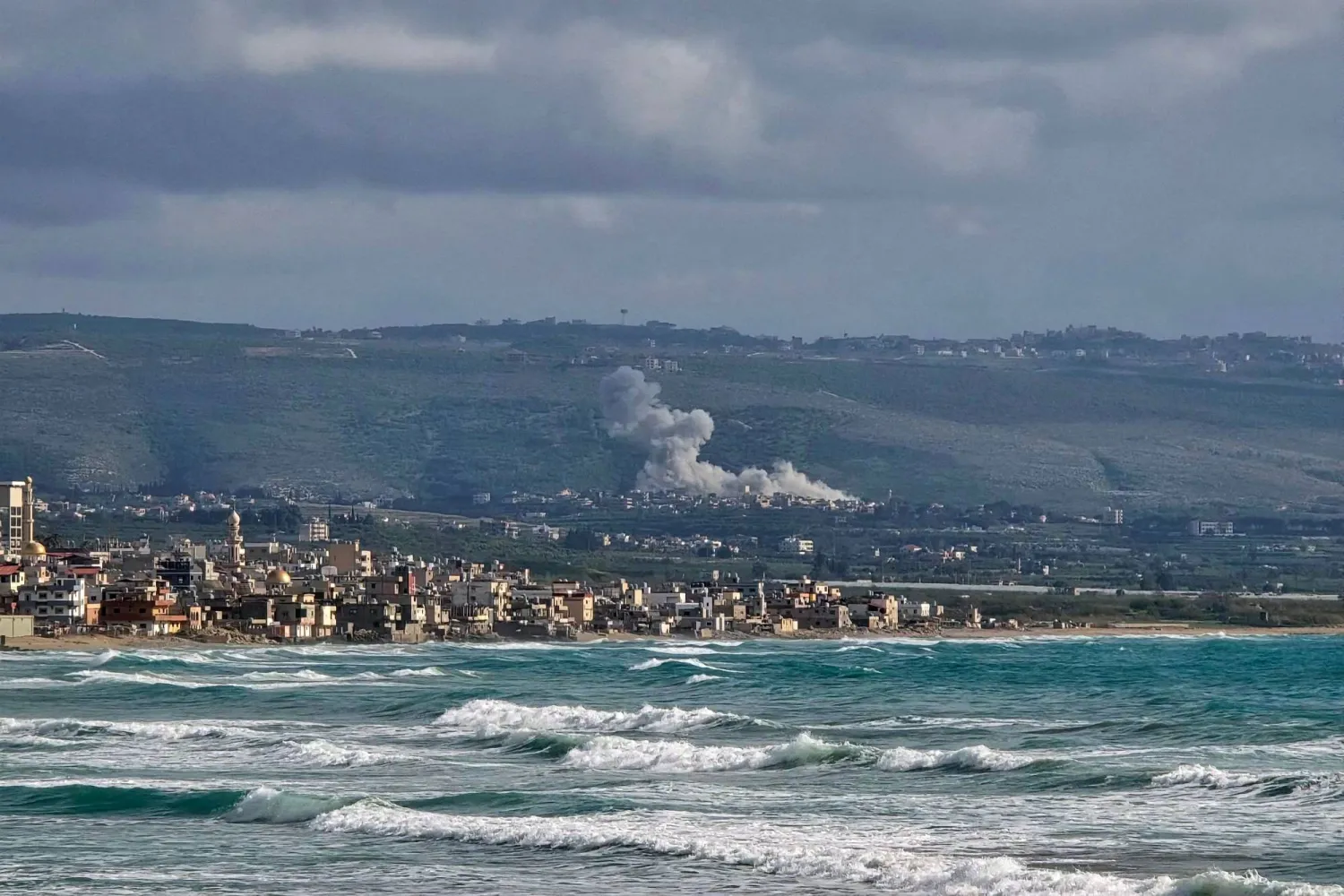
This photograph taken from the southern Lebanese area of Tyre shows smoke rising from the site of an Israeli strike in Hanniyeh village of Lebanon, on April 5, 2026. (AFP)
TT

Israel Military Says ‘Battle’ in Lebanon Continues, Ceasefire Does Not Apply

This photograph taken from the southern Lebanese area of Tyre shows smoke rising from the site of an Israeli strike in Hanniyeh village of Lebanon, on April 5, 2026. (AFP)

Israel's military said Wednesday its forces would continue their campaign against Hezbollah fighters, claiming the ceasefire with Iran does not apply to Lebanon. 

"The battle in Lebanon continues, and the ceasefire does not include Lebanon," the military's Arabic-language spokesman, Colonel Avichay Adraee, said on X, warning residents to evacuate areas south of the Zahrani River. 

Israeli Prime Minister Benjamin Netanyahu earlier said the Iran war truce does not include Lebanon. 

The strikes came despite Iran-backed armed group Hezbollah, which drew Lebanon into the Middle East war by attacking Israel on March 2, not claiming any operations since 1am (Tuesday 2200 GMT). 

Israel renewed an evacuation order for an area more than 40 kilometers inside Lebanon. It followed another warning to evacuate a building in the southern Tyre region, which Israel then struck, according to Lebanon's state-run National News Agency. 

NNA reported several strikes across the south. 

Pakistani Prime Minister Shehbaz Sharif, who has acted as a mediator in the conflict, said the two-week ceasefire between Iran and the United States applied "everywhere including Lebanon", but Netanyahu later said the country was excluded. 

Lebanese President Joseph Aoun welcomed the ceasefire, saying he hoped his country would be included in the regional truce. 

Aoun said Beirut "continued efforts to ensure that the regional peace includes Lebanon in a stable and lasting manner", according to a statement from the presidency. 

A Lebanese official told AFP that authorities "have not been informed" of Lebanon being included. 

Hezbollah told people displaced by the war to refrain from returning to their homes before a ceasefire is announced in Lebanon, while claiming to be nearing a "historic victory". 

"Today, we stand on the threshold of a great and historic victory," the Iran-backed group said in a statement, calling on people to "not head to the targeted villages, towns, and areas in the south, the Bekaa, and the southern suburbs of Beirut before the official and final ceasefire declaration in Lebanon is issued". 

Hezbollah did not share an official stance on the truce. 

French President Emmanuel Macron, welcoming the ceasefire, said "our wish is to ensure that the ceasefire fully includes Lebanon". 

Spain's foreign minister said it was "unacceptable" that Israel continued its invasion of Lebanon after the ceasefire. 

"All fronts must cease, and all fronts also means Lebanon. It is unacceptable that Israel's war, Israel's invasion of a sovereign country like Lebanon... continues," Jose Manuel Albares told public radio RNE. 

Prime Minister Pedro Sanchez welcomed the US-Iran ceasefire as "good news" on X but said Spain would not "applaud those who set fire to the world because they show up with a bucket". 

Israel's attacks in recent weeks have killed more than 1,500 people and displaced over a million, according to Lebanese authorities, especially in the country's south, east and Beirut's southern suburbs, areas where Hezbollah holds sway. 

On Wednesday an AFP correspondent in southern Lebanon saw small numbers of people heading south, some in cars and others carrying their children on motorcycles. 

But Lebanon's military warned displaced people against returning south "since they may be exposing themselves to the ongoing Israeli attacks". 

Another correspondent in Beirut's southern suburbs, which have been heavily struck by Israel, said the area remained deserted. 

Shortly before the ceasefire announcement, an Israeli strike on the southern city of Sidon killed eight people. 


Syria Justice Chief Says Pursuing Assad Regime Requires Patience

Brig. Gen. Abdul Basit Abdul Latif, head of Syria’s National Transitional Justice Commission (file photo)
TT

Syria Justice Chief Says Pursuing Assad Regime Requires Patience

Brig. Gen. Abdul Basit Abdul Latif, head of Syria’s National Transitional Justice Commission (file photo)

Syria’s judiciary has begun investigating four senior figures from the former regime accused of war crimes against Syrians, even as the National Transitional Justice Commission has yet to complete the formation of its council, raising questions over whether the move falls within a transitional justice framework, particularly in the absence of a dedicated law.

Commission head Brig. Gen. Abdul Basit Abdul Latif said the referrals are part of that process.

“Referring the four former regime figures to the courts falls within the path of transitional justice,” he told Asharq Al-Awsat, adding that the move was coordinated with the Ministry of Justice.

His remarks come amid doubts about the state’s willingness to hold former regime figures accountable.

Public Prosecutor Judge Hassan al-Turba said on July 30 that prosecutions had been launched against several defendants accused of crimes and violations against Syrians, as part of efforts to implement transitional justice, ensure accountability, and protect victims’ rights.

Those targeted include former officials under Bashar al-Assad: Atef Najib, Ahmad Badr al-Din Hassoun, Mohammad al-Shaar, and Ibrahim al-Huweija.

Justice process launched

On May 17, Syria’s president issued a decree establishing a transitional justice commission to uncover violations by the former regime, hold those responsible accountable, and provide redress to victims.

The decree describes transitional justice as a cornerstone for building a state governed by the rule of law, guaranteeing victims’ rights, and achieving national reconciliation.

The decree appointed Abdul Latif to lead the body and tasked him with forming a team and drafting internal regulations within 30 days. It grants the commission legal personality and financial and administrative independence, with authority to operate across Syria.

Abdul Latif, born in Deir al-Zor in 1963, studied law at the University of Aleppo and holds advanced degrees in police and legal sciences.

He headed the Qamishli district before defecting in 2012 and later served as secretary-general of the Syrian opposition National Coalition until the regime’s fall.

The commission will examine complaints related to the Assad government’s crackdown on protests that began in March 2011.

Alleged violations include chemical attacks, widespread aerial bombardment with barrel bombs, arbitrary detention, enforced disappearance, and systematic torture in detention centers, which rights groups say killed or disappeared hundreds of thousands of civilians.

Draft law in the works

Abdul Latif said a draft law on transitional justice and serious violations is being prepared and is expected after the upcoming parliamentary elections.

Trials will cover “all types of crimes defined in the decree,” including genocide, war crimes, torture, enforced disappearance, and the use of toxic and chemical gases, as defined under the Geneva Conventions.

On the prospect of prosecuting Bashar al-Assad and his brother Maher, who have fled abroad, Abdul Latif said Syrians are waiting for justice but warned that building legally sound cases will take time.

“Nothing is achieved easily,” he said.

Broad accountability

The commission is preparing to establish committees, compile case files, and refer them to the judiciary for the issuance of arrest warrants.Abdul Latif said it would work with international bodies to ensure justice and support for victims. Accountability will span both Hafez al-Assad and his son, covering 54 years of rule.

Abdul Latif said it would be “unethical” to ignore crimes under Hafez al-Assad, including the 1982 Hama massacre, as well as killings in Jisr al-Shughour, Aleppo’s Masharqa neighborhood, and abuses in Tadmor prison.

He said residents of Hama have asked whether the commission will address the largely overlooked massacres of the 1980s. “The commission will listen to all,” he said.

Focus on past crimes

The process will cover the period before Dec. 8, as stipulated in the decree. “Transitional justice addresses past crimes,” Abdul Latif said, noting that current violations fall under the transitional government’s ministries of defense, interior, and justice.

While the commission is not directly responsible for those cases, he did not rule out a role where relevant.

On crimes committed by non-Syrian armed groups before the regime’s fall, Abdul Latif said the decree targets violations by the former regime. However, any Syrian harmed by any group can file a complaint with the commission, which will review it.

Building the commission

Since mid-May, the commission has received about 120 applications. Fifteen will be selected to join the council alongside the chairman, bringing the total to 16 members.

Other applicants will be assigned to specialized teams supporting committee work, with victims at the center of the commission’s mandate.

Abdul Latif said he has met representatives from more than 20 countries and around 30 local and international civil society organizations in recent weeks. Discussions have focused on creating a compensation fund under Syrian sovereignty with international support, given the scale of destruction and the state’s limited capacity.

He said reconstruction could form part of compensation, at least through partial repairs to damaged homes.

Syrian organizations, he added, bring significant expertise in human rights, transitional justice, and the issue of missing persons. They will form a second pillar of the commission’s work, alongside a third made up of legal academics and historians tasked with documenting violations and preserving national memory.

Complaints mechanism

The commission is preparing to launch an online platform and dedicated phone lines to receive complaints, alongside a witness protection program.

Cases will be reviewed by specialized committees, including a truth-seeking body tasked with gathering evidence and building case files.

Drawing on global experience, Abdul Latif said some countries prioritized reconciliation while others focused on accountability.

Syria, he said, will pursue both tracks in parallel to ensure justice and pave the way for national reconciliation.

Globally, such processes have taken five to eight years. Syria’s decree sets a five-year mandate, with the possibility of extension.

“We hope to complete the work within five years,” Abdul Latif said.


Hamas Revives Momentum for Political Bureau Chief Election

Hamas leaders, from right: Rawhi Mushtaha, Saleh al-Arouri and Ismail Haniyeh, all of whom were assassinated, and Khaled Meshaal and Khalil al-Hayya (file photo, Hamas media)
TT

Hamas Revives Momentum for Political Bureau Chief Election

Hamas leaders, from right: Rawhi Mushtaha, Saleh al-Arouri and Ismail Haniyeh, all of whom were assassinated, and Khaled Meshaal and Khalil al-Hayya (file photo, Hamas media)

Two sources in the Palestinian group Hamas said on Wednesday that the movement has resumed the process of electing a new head of its political bureau, pending the full selection of its members.

The move restores momentum to the leadership race after it stalled at least twice in January and February.

A source inside Gaza told Asharq Al-Awsat that “conditions that had been hindering the elections have been resolved,” opening the way for the process to restart.

He said some of those conditions were linked to internal organizational disputes in the enclave, adding that once settled, the decision was made to resume the process, alongside external political and security factors and ongoing negotiations.

Hamas faces its most severe crisis since its founding in 1987, after Israeli strikes launched in response to the Oct. 7, 2023, attack hit multiple wings and levels of the group, triggering organizational and financial strains.

Estimates suggest Khaled Meshaal, head of the political bureau abroad, and Khalil al-Hayya, head of the political bureau in Gaza, are the leading contenders.

Observers and figures inside and outside Hamas say al-Hayya is backed by members in Gaza and the Qassam Brigades, while Meshaal has stronger support in the West Bank and abroad.

A source outside Gaza said the vote will take place across all accessible arenas, inside Gaza, the West Bank and abroad, depending on conditions, with a decision expected soon.

For about a year and a half, a leadership council has been managing Hamas affairs.

At the start of this year, a new push began to elect a leader for the remainder of the current political bureau’s term, originally due to end in 2025 and extended by one year, pending broader elections expected at the end of this year or early next year.

An attempt to hold the vote in mid-February was disrupted by the US-Israeli war on Iran, sources said at the time.

The vote will be limited to selecting a new political bureau chief to lead Hamas inside and outside the territories. Full elections for the bureau are not expected before the end of this year or early 2027.

The current leadership council, which includes Hamas leaders in Gaza, the West Bank and abroad, along with the movement’s secretary-general, and is headed by Shura Council chief Mohammed Darwish, will become an advisory body overseeing the group’s internal and external affairs.


Hamas Angered by Continued Violations, Prepares Amendments to New Mediator Plan

Mourners weep beside the body of a child at a hospital in Gaza City (AFP)
TT

Hamas Angered by Continued Violations, Prepares Amendments to New Mediator Plan

Mourners weep beside the body of a child at a hospital in Gaza City (AFP)

Three Hamas sources said the movement has expressed anger to mediators over the continued Israeli violations in the Gaza Strip, most recently the assassination of Iyad al-Shanbari, a senior commander in the Qassam Brigades, the movement’s armed wing.

The three sources, speaking to Asharq Al-Awsat, said Hamas considers these violations, particularly the assassination of security leaders, a blow to mediation efforts aimed at establishing a clear agreement that obliges Israel to carry out its commitments.

It called on mediators to intervene in a “serious and firm” manner to halt these operations, which have led to the killing of about 1,000 Palestinians since the ceasefire entered into force on October 10, 2025. The sources said mediators confirmed they are continuing their efforts to put an end to the Israeli violations.

A Palestinian source in contact with the Gaza Administration Committee told Asharq Al-Awsat that Nickolay Mladenov, the highest representative for Gaza in the Peace Council, “requested on Monday that Israel halt airstrikes in the Gaza Strip for 48 hours to give the Cairo negotiations a chance to succeed, but received no response.” Hamas sources said they had no knowledge of this request.

A day after a new proposal was presented by mediators and the Peace Council regarding Gaza and advancing the implementation of the ceasefire agreement, Hamas sources said the movement is preparing a response containing remarks and requested amendments to be submitted by its negotiating delegation to Mladenov and the mediators.

Members of the Palestinian Civil Defense and local residents inspect a damaged vehicle following an Israeli airstrike in the west of Gaza City, Gaza Strip, 28 April 2026. EPA/MOHAMMED SABER

Asharq Al-Awsat had obtained details of the proposal drafted by representatives of the Peace Council and mediators from Egypt, Qatar and Türkiye, along with the United States, concerning the Gaza Strip, particularly its disarmament.

The document, titled “Roadmap” to complete implementation of US President Donald Trump’s comprehensive Gaza peace plan, outlines 15 provisions addressing the implementation of the second phase of the ceasefire agreement between Israel and Hamas.

The response will focus, according to the sources, on demands for a clear timetable for Israeli withdrawal, the establishment of clear international mechanisms and guarantees to oblige Israel, rejecting any linkage between reconstruction and the confinement and disarmament issue, and affirming the right of factions to fully exercise their political role without restrictions.

The new paper indicates the formation of a body named the “Implementation Verification Committee,” to be established by the highest representative for Gaza, comprising guarantor states, an international stabilization force and the Peace Council, to ensure that the parties fulfill their obligations, supported by an enhanced monitoring mechanism.

In its first provisions, the document stresses the importance of full commitment by all parties to implement UN Security Council Resolution 2803 and Trump’s comprehensive plan, as an agreed international framework that will guide the implementation of this process, in a way that ensures achieving the primary objective of restoring civilian life, enabling Palestinian governance, reconstruction, security and economic recovery, and creating the conditions for a credible path toward self-determination and a Palestinian state in line with the Security Council resolution.
