


Israel Military Says ‘Battle’ in Lebanon Continues, Ceasefire Does Not Apply

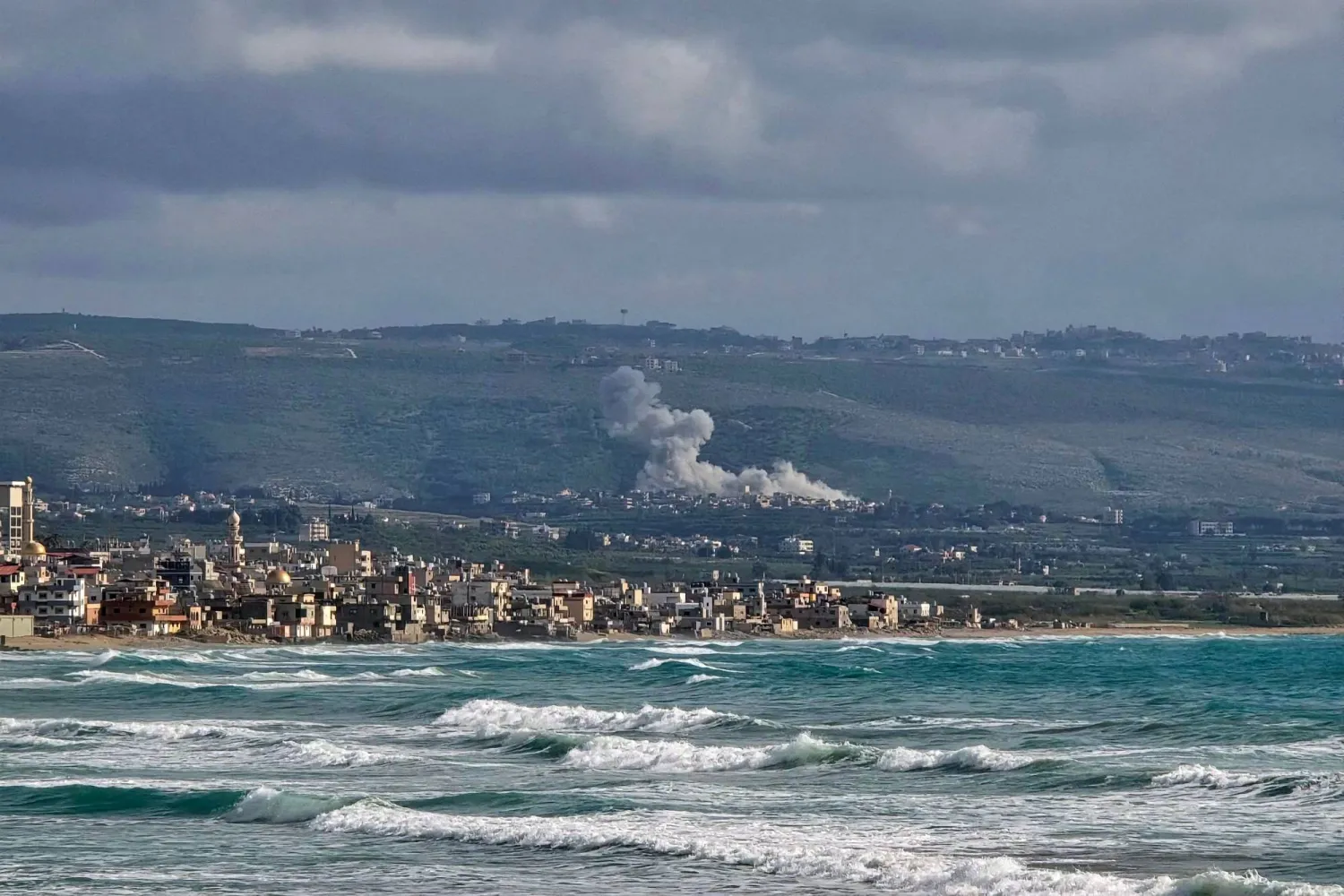
This photograph taken from the southern Lebanese area of Tyre shows smoke rising from the site of an Israeli strike in Hanniyeh village of Lebanon, on April 5, 2026. (AFP)
TT

Israel Military Says ‘Battle’ in Lebanon Continues, Ceasefire Does Not Apply

This photograph taken from the southern Lebanese area of Tyre shows smoke rising from the site of an Israeli strike in Hanniyeh village of Lebanon, on April 5, 2026. (AFP)

Israel's military said Wednesday its forces would continue their campaign against Hezbollah fighters, claiming the ceasefire with Iran does not apply to Lebanon. 

"The battle in Lebanon continues, and the ceasefire does not include Lebanon," the military's Arabic-language spokesman, Colonel Avichay Adraee, said on X, warning residents to evacuate areas south of the Zahrani River. 

Israeli Prime Minister Benjamin Netanyahu earlier said the Iran war truce does not include Lebanon. 

The strikes came despite Iran-backed armed group Hezbollah, which drew Lebanon into the Middle East war by attacking Israel on March 2, not claiming any operations since 1am (Tuesday 2200 GMT). 

Israel renewed an evacuation order for an area more than 40 kilometers inside Lebanon. It followed another warning to evacuate a building in the southern Tyre region, which Israel then struck, according to Lebanon's state-run National News Agency. 

NNA reported several strikes across the south. 

Pakistani Prime Minister Shehbaz Sharif, who has acted as a mediator in the conflict, said the two-week ceasefire between Iran and the United States applied "everywhere including Lebanon", but Netanyahu later said the country was excluded. 

Lebanese President Joseph Aoun welcomed the ceasefire, saying he hoped his country would be included in the regional truce. 

Aoun said Beirut "continued efforts to ensure that the regional peace includes Lebanon in a stable and lasting manner", according to a statement from the presidency. 

A Lebanese official told AFP that authorities "have not been informed" of Lebanon being included. 

Hezbollah told people displaced by the war to refrain from returning to their homes before a ceasefire is announced in Lebanon, while claiming to be nearing a "historic victory". 

"Today, we stand on the threshold of a great and historic victory," the Iran-backed group said in a statement, calling on people to "not head to the targeted villages, towns, and areas in the south, the Bekaa, and the southern suburbs of Beirut before the official and final ceasefire declaration in Lebanon is issued". 

Hezbollah did not share an official stance on the truce. 

French President Emmanuel Macron, welcoming the ceasefire, said "our wish is to ensure that the ceasefire fully includes Lebanon". 

Spain's foreign minister said it was "unacceptable" that Israel continued its invasion of Lebanon after the ceasefire. 

"All fronts must cease, and all fronts also means Lebanon. It is unacceptable that Israel's war, Israel's invasion of a sovereign country like Lebanon... continues," Jose Manuel Albares told public radio RNE. 

Prime Minister Pedro Sanchez welcomed the US-Iran ceasefire as "good news" on X but said Spain would not "applaud those who set fire to the world because they show up with a bucket". 

Israel's attacks in recent weeks have killed more than 1,500 people and displaced over a million, according to Lebanese authorities, especially in the country's south, east and Beirut's southern suburbs, areas where Hezbollah holds sway. 

On Wednesday an AFP correspondent in southern Lebanon saw small numbers of people heading south, some in cars and others carrying their children on motorcycles. 

But Lebanon's military warned displaced people against returning south "since they may be exposing themselves to the ongoing Israeli attacks". 

Another correspondent in Beirut's southern suburbs, which have been heavily struck by Israel, said the area remained deserted. 

Shortly before the ceasefire announcement, an Israeli strike on the southern city of Sidon killed eight people. 


Rival Palestinian Factions Discuss Gaza Disarmament

A Palestinian woman stands amid debris at the site of an Israeli airstrike in Khan Younis, southern Gaza Strip, on June 7, 2026. (AFP)
TT

Rival Palestinian Factions Discuss Gaza Disarmament

A Palestinian woman stands amid debris at the site of an Israeli airstrike in Khan Younis, southern Gaza Strip, on June 7, 2026. (AFP)

Members of Palestinian factions including Hamas agreed in principle for Gaza's armed groups to hand over parts of their arsenals to a yet-to-be-created, ad hoc Palestinian entity during talks in Cairo, Palestinian sources told AFP on Tuesday.

Such a proposal has almost no chance of being accepted by Israel, which demands a complete demilitarization of the Gaza Strip, starting with Palestinian movement Hamas.

Several of those who attended the Cairo talks that began on Saturday expressed hope the proposal would break a months-long deadlock on negotiations over Gaza's future.

The talks are being attended by most major factions, including Hamas and its ally Islamic Jihad, but not the Fatah party that dominates the Palestinian Authority.

On Tuesday, the factions discussed the details of the weapons handover to a new entity with representation from various Palestinian political currents, according to a source close to negotiations.

They rejected the idea of a full disarmament, as demanded by Israel, several sources who asked for anonymity said.

"Egypt and the mediators are working to formulate a new, acceptable formula that takes into account the factions' agreement," one of the participants told AFP.

Another Palestinian taking part in the talks told AFP that Egyptian and Qatari mediators welcomed this approach.

"Hamas is linking the weapons question to a full Israeli withdrawal from Gaza and to Gaza's reconstruction," one Palestinian political official said.

Senior Hamas official Taher al-Nunu told AFP that recent days had brought "significant progress", adding that the factions aimed to implement US President Donald Trump's peace plan for Gaza.

Israeli strikes have continued at an almost daily pace despite the ceasefire announced in October 2025 after two years of war, under Trump's phased peace plan.

Hamas and Israel blame each other for the current impasse, each accusing the other almost daily of violating the ceasefire.

Hamas accuses Israel of failing to honor its commitments, particularly on allowing humanitarian aid into Gaza, while Israel insists on the complete disarmament of the movement before any further implementation of the plan.

Hamas has repeatedly stated that it is not opposed to handing over some of its arsenal, but only as part of a Palestinian political process.

Former Hamas chief Khaled Meshaal also suggested a weapons "freeze" or "storage", which Israel rejected.


UN Inquiry Finds Israeli Forces Shield Settlers during Attacks on Palestinians

Men attempt to extinguish a fire in a field in the Palestinian town of Huwara in the occupied West Bank on June 6, 2026, after a reported arson attack by Israeli settlers according to local officials. (Photo by JAAFAR ASHTIYEH / AFP)
TT

UN Inquiry Finds Israeli Forces Shield Settlers during Attacks on Palestinians

Men attempt to extinguish a fire in a field in the Palestinian town of Huwara in the occupied West Bank on June 6, 2026, after a reported arson attack by Israeli settlers according to local officials. (Photo by JAAFAR ASHTIYEH / AFP)

Israeli authorities are directly involved in settler attacks that have killed, injured and displaced Palestinians in the occupied West Bank, while Israeli security forces provide protection to settlers, a UN inquiry said on Tuesday.

The report by the Commission of Inquiry on the Occupied Palestinian Territory found that Israeli authorities have enabled settler attacks through financial and military support, in a climate of impunity fostered by judicial and law-enforcement bodies, Reuters said.

It said attacks on Palestinian villages and agricultural land have surged since 2023, rising by 130%, including incidents involving groups of masked assailants. Israeli security forces have routinely accompanied settlers and acted as a shield for the violence, the report said.

The Israeli Prime Minister Office and military did not immediately respond to a request for comment.

Israel rejects charges that its troops shield settlers during attacks on Palestinians in the West Bank, saying ‌such actions are rogue ‌incidents that violate military protocol and are investigated. Israeli and Palestinian rights groups say ‌such investigations ⁠rarely lead to ⁠punishment.

Hundreds of thousands of Israeli settlers live among millions of Palestinians on land Israel captured in a 1967 war, where Palestinians hope to build a state. Most countries and the UN's top court consider such settlements a violation of international law, which Israel disputes citing historical and biblical ties to the land.

At least seven Palestinians were killed and 832 injured last year, with violence continuing into 2026 in the form of near-daily attacks, according to the United Nations.

“The increasing participation of Israeli security forces in settler attacks amounts to a de facto collapse of the distinction between settlers and soldiers,” the report found.

It said such violence has been ⁠used to advance state policy, including the unlawful occupation, displacement of Palestinians and the annexation ‌of Palestinian territory.

The Commission documented cases of assaults, abductions and abuse of Palestinian ‌children by settlers. In one incident on April 19, 2025, a 12-year-old girl and her 3-year-old brother were abducted at knifepoint, dragged ‌to an olive grove and tied to a tree with plastic restraints until their family intervened. In July 2024, the ‌International Court of Justice issued a non-binding advisory opinion that Israel’s occupation of Palestinian territories and its settlements there are illegal and should be withdrawn as soon as possible, in its strongest findings to date on the conflict.

The Commission also said settlers committed or threatened sexual violence to instill fear and harassed Palestinian women.

“The relentless, daily assaults by Israeli settlers against Palestinians are intolerable — and must end,” said the commission's ‌head, S. Muralidhar, an Indian former senior judge. He urged the international community to pressure Israel to dismantle settlements and outposts and curb the violence.

Despite periodic condemnations and ⁠the dismantling of some unauthorized outposts, ⁠Israeli authorities have not taken sustained measures to stop the attacks, the report said.

HAMAS VIOLATIONS

The report said it was also gravely alarmed by serious abuses it documented in the Gaza Strip, another Palestinian territory, by the militant group Hamas which controls it.

Hamas did not immediately respond to a request for comment on the findings.

The commission found that Hamas-affiliated forces were involved in at least 60 of 249 documented cases of executions and severe physical violence in 2024 to 2025, including beatings with metal pipes and bone-breaking as punishment for alleged collaboration with Israel or looting aid.

In two instances, 11 men were publicly executed. The Commission said these acts amount to war crimes and violations of international law.

The Commission found that October 7, 2023 attacks on Israel by Hamas and other armed groups, which killed 1,200 people and involved hostage-taking and destruction of property, amounted to war crimes. The attacks precipitated an Israeli assault on Gaza which has killed tens of thousands of Palestinians and destroyed much of the territory.

A previous report by the Commission found that Israel had committed genocide during its military offensive in Gaza, and that senior Israeli officials, including Prime Minister Benjamin Netanyahu, had incited these acts. Israel rejected those allegations as "scandalous".


Pakistan, Lebanon Army Chiefs Meet as Middle East Mediation Drags On

This handout photograph taken and released on June 9, 2026 by Pakistan's Inter-Services Public Relations (ISPR) shows Pakistan's Army Chief and Field Marshal Syed Asim Munir (R) speaking with General Rodolphe Haykal, Commander-in-Chief of the Lebanese Armed Forces during their meeting in Rawalpindi. (Photo by Handout / Pakistan's Inter-Services Public Relations (ISPR) / AFP)
TT

Pakistan, Lebanon Army Chiefs Meet as Middle East Mediation Drags On

This handout photograph taken and released on June 9, 2026 by Pakistan's Inter-Services Public Relations (ISPR) shows Pakistan's Army Chief and Field Marshal Syed Asim Munir (R) speaking with General Rodolphe Haykal, Commander-in-Chief of the Lebanese Armed Forces during their meeting in Rawalpindi. (Photo by Handout / Pakistan's Inter-Services Public Relations (ISPR) / AFP)

The heads of the Pakistani and Lebanese armed forces agreed to boost cooperation on Tuesday as they met in Pakistan with peace talks over the Middle East war dragging on.

Pakistan has been mediating between the United States and Iran to end the months-long conflict, with Tehran insisting that any deal should include Lebanon, where Israel has been fighting Iran-backed Hezbollah, reported AFP.

Lebanese army chief Rodolphe Haykal left on Saturday to meet his powerful Pakistani counterpart Asim Munir, with a Lebanon-based source telling AFP the visit was linked to the broader peace talks.

The two military commanders discussed "matters of mutual interest, (the) evolving regional security environment, defense cooperation and prospects for enhancing bilateral military relations", a statement from the media wing of the Pakistani military said on Tuesday.

Munir "underscored (the) Pakistan Army's commitment to expanding defense collaboration with the Lebanese Armed Forces," it said, after Haykal received a guard of honor ahead of the meeting in the city of Rawalpindi.

Conflict in Lebanon has become a centerpiece of weeks of stop-start efforts to bring a formal end to the war.

Armed hostilities flared further during Haykal's visit, though both Iran and Israel indicated on Monday that they had halted the fighting.

US President Donald Trump, who has expressed frustration at the slow progress of peace talks, said on Tuesday that negotiators were in the "final throes" of reaching a deal.

Lebanon was drawn into the war when Hezbollah militants fired rockets at Israel on March 2 to avenge the US-Israeli killing of Iran's supreme leader.

Israel responded with an extensive campaign of airstrikes and a ground invasion that have killed nearly 3,600 people. Exchanges of fire with Hezbollah have not stopped despite an ongoing truce.

Pakistan's Prime Minister Shehbaz Sharif has said a US-Iranian agreement to end the war was "about to be achieved" when fresh fighting between Iran and Israel erupted on Sunday.

Even after an April 17 ceasefire agreement began, the Israeli military announced a so-called Yellow Line inside Lebanese territory about a dozen kilometers from its northern border where its ground troops are fighting with Hezbollah, who have fired rockets at Israel.
