


Hemedti Says Ready to Cooperate with UN Envoy to End Sudan War

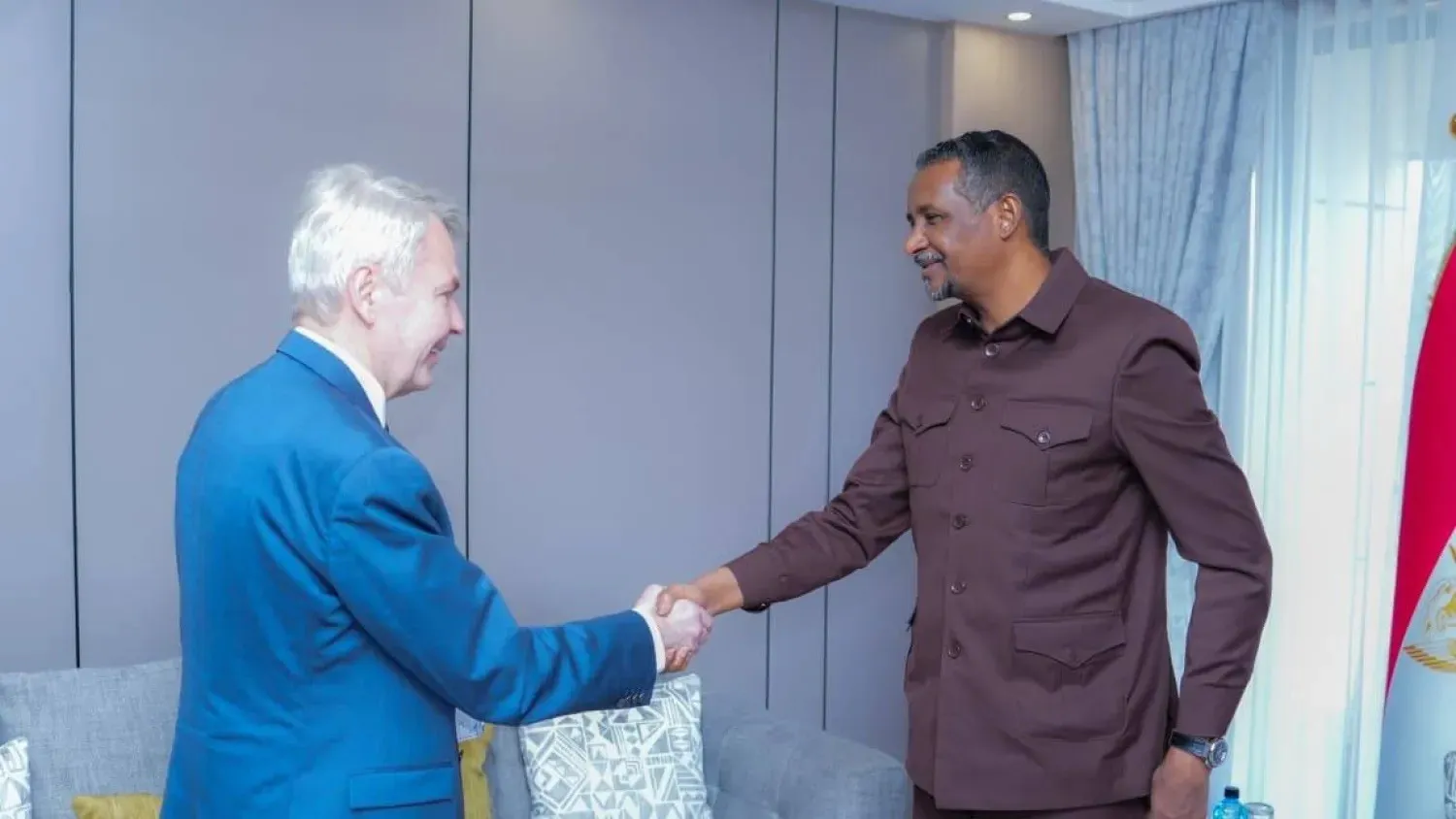
RSF commander receives the UN secretary-general’s personal envoy Pekka Haavisto in Nairobi. (Rapid Support Forces)
TT

Hemedti Says Ready to Cooperate with UN Envoy to End Sudan War

RSF commander receives the UN secretary-general’s personal envoy Pekka Haavisto in Nairobi. (Rapid Support Forces)

Commander of Sudan’s Rapid Support Forces Mohamed Hamdan Dagalo, known as Hemedti, said he is ready to “stop the war and cooperate to deliver humanitarian aid to all areas affected by the conflict in the country,” in talks with the United Nations secretary-general’s personal envoy, Pekka Haavisto.

Dagalo, who heads a parallel government, met Haavisto late Monday in the Kenyan capital, Nairobi, according to UN spokesman Stephane Dujarric.

In a statement on Facebook, Hemedti said he discussed with Haavisto “political and security developments, as well as the humanitarian situation and efforts aimed at achieving peace and stability.”

He added that his government, based in the Darfur city of Nyala, is “fully prepared to cooperate with the United Nations and work to provide the necessary assistance to help alleviate the suffering of the Sudanese people.”

Hemedti briefed the UN envoy on “the causes of the war ignited by the Muslim Brotherhood and its allies within the Sudanese army,” reiterating his government’s commitment to “the unity of the country to block attempts aimed at fragmenting Sudan and dismantling its social fabric.”

The RSF leader stressed “the importance of conducting a transparent and fair investigation into the violations suffered by Sudanese civilians, foremost among them the use of chemical weapons,” describing this as “a fundamental step toward ending the war and achieving peace in the country — a demand that is non-negotiable under any circumstances.”

Hemedti renewed his call for the United Nations to open offices in areas under the control of his government, known as Tasis, in the Darfur and Kordofan regions to deliver humanitarian assistance to civilians there.

For his part, Haavisto affirmed the UN’s efforts to end the war and achieve peace in Sudan.

He welcomed the RSF leader’s response to the meeting, during which they exchanged views on the overall situation in Sudan, noting that he has listened to a number of Sudanese parties as part of efforts to identify the most effective paths toward resolving the crisis.

Dujarric said the meeting between the UN envoy and the RSF commander provided a constructive opportunity to exchange views and explore practical ways to de-escalate and ensure the continued protection of civilians.

In a press briefing, he added that all Sudanese parties the envoy met in Nairobi expressed readiness to cooperate with the United Nations. He pointed in this regard to Haavisto’s meeting last week in the Sudanese capital, Khartoum, with army commander and Sovereign Council chief Abdel Fattah al-Burhan, during which they discussed international efforts to end the war.

The UN spokesman renewed the organization’s call on the parties to the conflict in Sudan to “immediately cease hostilities, protect civilians and infrastructure, and ensure rapid, safe and unhindered humanitarian access.”

He also stressed the need for additional funding for humanitarian assistance in Sudan, estimating that $2.9 billion is required to reach more than 20 million people across the country.



Houthis Accused of Stripping Western Yemen of Power Equipment, Property

The Houthis seized food aid in Mokha and redistributed it in exchange for loyalty (Houthi media)
TT

Houthis Accused of Stripping Western Yemen of Power Equipment, Property

The Houthis seized food aid in Mokha and redistributed it in exchange for loyalty (Houthi media)

The Houthis have expanded their systematic seizure of public and private property in areas under their control along Yemen’s western coast, including Hodeidah province and parts of Taiz, according to local sources, who accuse the group of treating cities and public facilities as spoils to be transferred to their strongholds.

The latest reported seizures involved equipment and solar panels from two power stations in the Hays and Al-Khawkhah districts of Hodeidah province. The installations were dismantled and their components transported to Saada, the group’s main stronghold, depriving thousands of residents of electricity and worsening hardship amid deteriorating services and high temperatures in coastal areas.

Informed sources told Asharq Al-Awsat that Gharsan al-Matari, a Houthi leader acting as Hodeidah’s electricity director, instructed members of the group several days ago to dismantle both solar power systems and transport all their components, equipment and technical supplies to Saada aboard large trucks.

The two installations had supplied approximately 20 megawatts of electricity, helping power homes and ease hardship for residents, particularly in coastal communities where temperatures are high.

According to the sources, the incident reflects a broader pattern of seizures targeting public utilities and private property in areas brought under Houthi control.

Other service infrastructure, equipment and networks are also being dismantled and transferred to Saada and Sanaa rather than remaining in the communities they were intended to serve, they added.

An economy of spoils

Activists from Hodeidah described the transfer of electricity equipment from Hays and Al-Khawkhah as an example of what they called an “economy of spoils,” accusing the Houthis of treating areas under their control as sources of assets to be appropriated.

Residents are paying the price through the loss of essential services, they argued, while resources are concentrated in the group’s centers of power.

In the coastal district of Mokha, local sources reported continuing seizures and looting that began within hours of the Houthis taking control of the city, targeting homes, government facilities, humanitarian organizations and charitable associations.

Sources told Asharq Al-Awsat that Houthi members raided dozens of houses and apartments, particularly in the Al-Hali neighborhood and December 2 City, removing furniture, household appliances and other belongings before loading them onto trucks and transporting them out of the city.

Government premises were also targeted, including the local authority headquarters and the city’s branch of the Central Bank of Yemen.

The reported looting extended to commercial establishments.

Eyewitnesses recounted seeing Houthi patrols repeatedly transporting food supplies and consumer goods from wholesale stores in central Mokha to locations outside the city.

Local activists indicated that the seizures took place under the supervision of unidentified individuals believed to be linked to the group’s security and intelligence agencies.

Shops broken into in Al-Turbah

In Al-Turbah, the administrative center of Al-Shamayatayn district in southwestern Taiz province, local sources accused the Houthis of following the same pattern, targeting government institutions, private homes and figures associated with the Yemeni government.

Several shopkeepers closed their businesses as the group entered the city, fearing looting. But residents reported that some of the shuttered premises were forcibly broken into.

According to their accounts, Houthi members broke down the doors of several shops and seized merchandise, apparently in retaliation for the owners’ decision to close their businesses during the group’s entry into the city.

The successive incidents point to what residents and activists describe as a recurring pattern of seizures extending beyond damage directly caused by fighting.

They accuse the Houthis of stripping cities of essential infrastructure and economic assets and transferring them to areas under the group’s control, further undermining public services and worsening living conditions.


Egypt, South Korea Seek to Expand Strategic Partnership

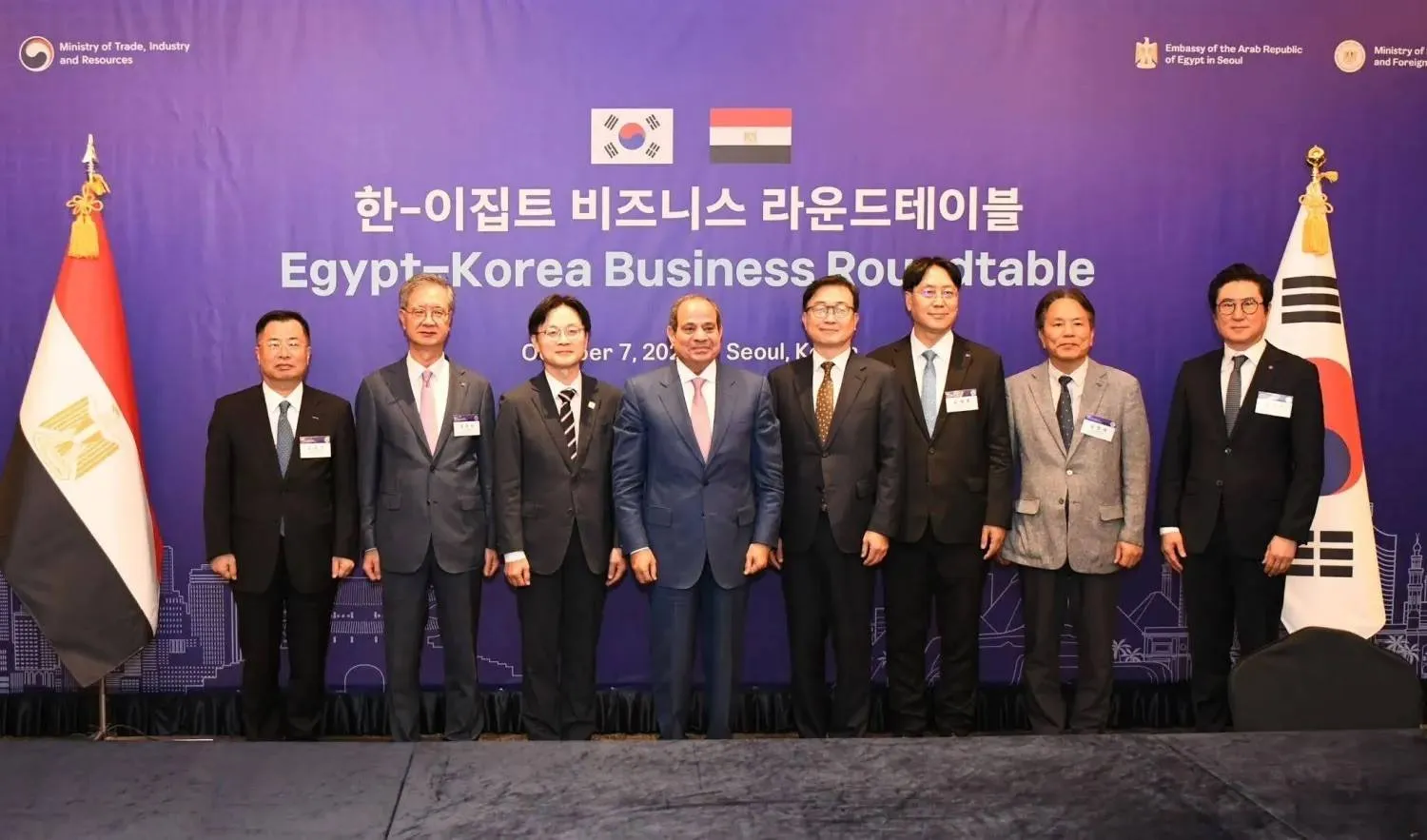
The Egyptian president on Wednesday stressed the importance of Korean companies considering expanding their investments (Egyptian Presidency’s Facebook page). 
TT

Egypt, South Korea Seek to Expand Strategic Partnership

The Egyptian president on Wednesday stressed the importance of Korean companies considering expanding their investments (Egyptian Presidency’s Facebook page). 

Egyptian President Abdel Fattah al-Sisi’s first visit to Seoul in a decade has brought renewed commitments to strengthen bilateral ties and expand cooperation between the two countries.

On Wednesday, Sisi attended a roundtable with executives from major South Korean companies and business representatives, with 23 companies taking part, according to the Egyptian presidency.

The Egyptian president expressed his country’s determination to deepen cooperation with South Korea and take relations to more ambitious levels, highlighting Cairo’s strong political will to expand ties, particularly in investment, manufacturing, technology and the wider economy.

He also called for closer cooperation on strategically important projects and renewed his proposal to establish an integrated Korean industrial zone within the Suez Canal Economic Zone.

The proposed zone could serve as a regional production and export hub for Korean companies, supplying not only Egypt’s large domestic market but also regional and international markets through the country’s free trade agreements with African nations, the European Union and Arab states, he explained.

Sisi encouraged Korean companies to expand their investments in oil, gas and mining and explore opportunities in renewable and clean energy projects, including solar and wind power, green hydrogen, smart grids and energy storage technologies.

He also highlighted opportunities for Egyptian and Korean companies to undertake joint construction and infrastructure projects in Arab and African countries.

According to the presidency, the roundtable included discussions with South Korean business leaders on opportunities to establish sustainable strategic partnerships.

Former Egyptian Assistant Foreign Minister Mohamed Hegazy believes relations between Egypt and South Korea are poised for significant progress following the visit, which included efforts to broaden cooperation in projects and investment.

“South Korea has all the technological capabilities needed to provide what Egypt and Africa require,” Hegazy told Asharq Al-Awsat.

Amid regional instability, he expects Seoul and countries such as China, Indonesia and Malaysia to show greater interest in investing in Egypt and through it.

Sisi’s visit is part of an Asian trip that also includes Malaysia and Indonesia, according to a presidential statement issued Tuesday. It comes amid critical regional circumstances and disruptions to supply chains.

South Korean President Lee Jae Myung welcomed Sisi’s visit in a post on X.

“We are delighted to welcome the Egyptian president as an honored guest to the Republic of Korea for the first time in 10 years,” Lee wrote.

“Meeting the Egyptian president again in Seoul after our candid discussions in Cairo last year makes this encounter all the more significant and meaningful,” he added.

“I hope the Miracle on the Han River and the Miracle on the Nile will come together to further enhance the shared prosperity of our two countries.”

Hegazy described Sisi’s Asian trip as reflecting Egypt’s recognition of the importance of Asia in its foreign policy and a direct effort to put the comprehensive strategic economic partnership between the two sides into practice across several sectors.

According to Egypt’s Central Agency for Public Mobilization and Statistics (CAPMAS), trade with South Korea totaled $874 million in the first eight months of 2026, down from $920 million during the same period in 2025.

Sisi last visited South Korea in March 2016, when he held talks in Seoul with then-President Park Geun-hye.

The visit saw the signing of several agreements and memorandums of understanding, as well as the elevation of bilateral relations to a comprehensive partnership.


UN Peacekeeping Force Says Shots Fired at Post on Lebanon-Israel Border

UNIFIL currently has 7,500 blue helmets from around 50 countries. (Reuters)
TT

UN Peacekeeping Force Says Shots Fired at Post on Lebanon-Israel Border

UNIFIL currently has 7,500 blue helmets from around 50 countries. (Reuters)

The United Nations Interim Force in Lebanon said one of its posts was targeted on Wednesday near the border with Israel by small-arms fire, but there were no casualties.

"This morning, several rounds of small arms fire impacted a UNIFIL position near Kfar Shouba along the Blue Line in Sector East," the UN force said in a statement, referring to the de facto border between Lebanon and Israel.

The blue helmets described the shooting as "unacceptable".

"Such deliberate attacks gravely endanger the lives of peacekeepers," it said, adding that it was investigating the incident.

Under US pressure, the UN Security Council decided in August to fix December as the end of the mandate for UNIFIL, which has been deployed since 1978.

Last month, Lebanon's Prime Minister Nawaf Salam insisted at the UN on the need to "avert the vacuum" that would be caused by withdrawing the peacekeeping mission deployed in the country's south without a viable replacement.

UNIFIL currently has 7,500 blue helmets from around 50 countries.

Violence has decreased since a ceasefire following a memorandum of understanding in the US-Iran war struck in June, while Lebanon and Israel concluded a US-sponsored framework agreement later that month.

The Lebanon-Israel deal involves the disarmament of Hezbollah, a gradual withdrawal of Israeli forces from Lebanon's south and the deployment of the Lebanese army to the region, starting in test areas known as "pilot zones".