


Fallout from Iran War Casts Shadow over Egypt’s New Budget

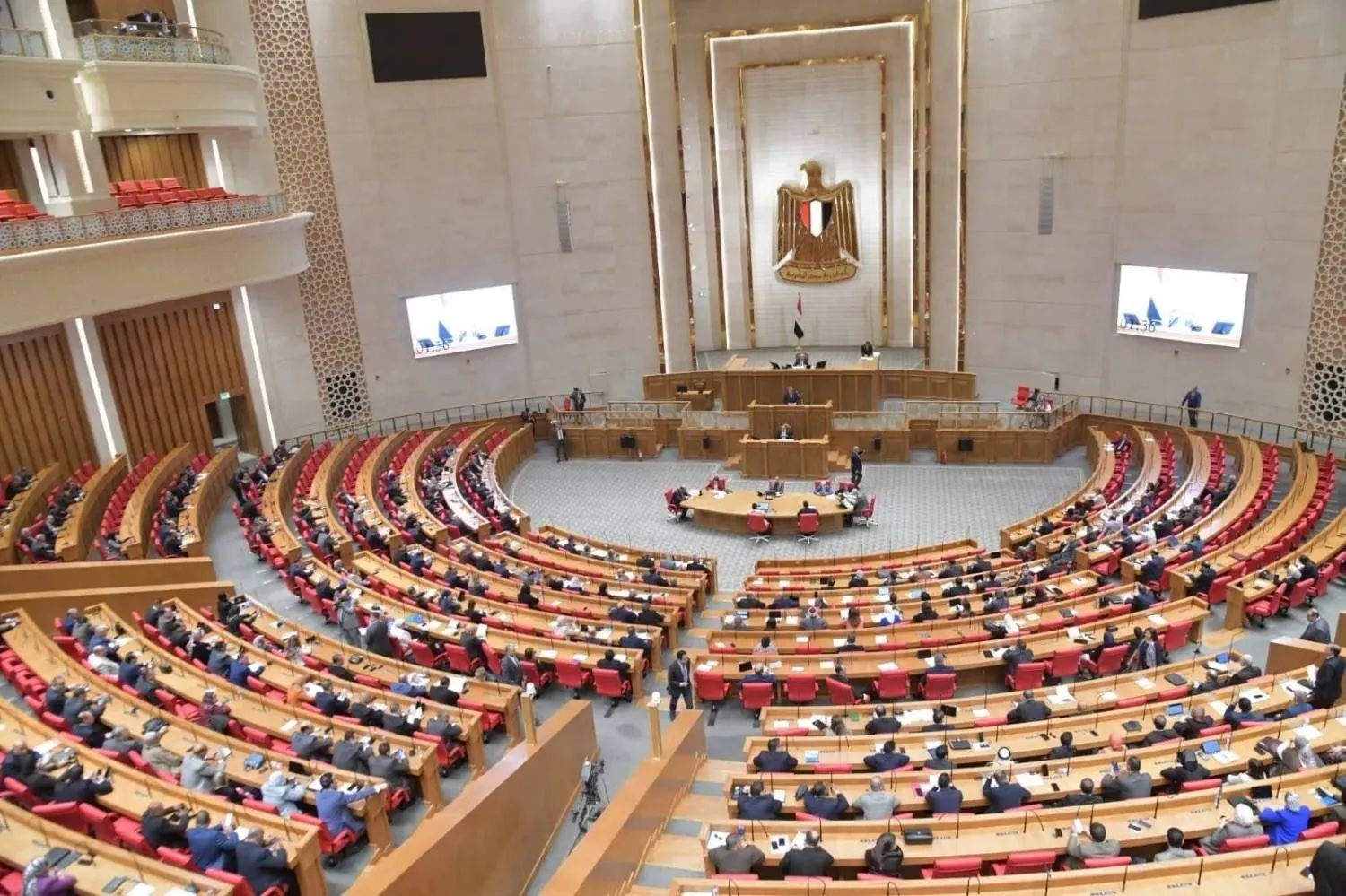
Egypt’s House of Representatives being briefed on the government’s outlook on the state budget (House of Representatives)
TT

Fallout from Iran War Casts Shadow over Egypt’s New Budget

Egypt’s House of Representatives being briefed on the government’s outlook on the state budget (House of Representatives)

The economic fallout from the Iran war has cast a shadow over Egypt’s new state budget, Finance Minister Ahmed Kouchouk told parliament on Wednesday, as he presented the draft before it was referred to specialized committees for discussion, with the government pledging swift amendments “to enhance its ability to deal with current and potential risks.”

Kouchouk’s statement came a day after Prime Minister Mostafa Madbouly addressed the House of Representatives, focusing on the damage caused by the conflict and ways to manage its repercussions.

He said the government was treating the current regional escalation as a “prolonged crisis,” whose end is difficult to predict given the complexity and overlap of regional and international dynamics, and suggested its economic effects could last through the end of the year.

During the presentation of the 2026-2027 fiscal year budget, 600 billion Egyptian pounds ($11.5 billion) were allocated for energy subsidies, including electricity support, which rose by 39%, according to the finance minister.

A total of 832.3 billion pounds was earmarked for social protection - a 12% annual increase - to support the most vulnerable groups, alongside 90 billion pounds set aside for programs to support economic activity. (The dollar is equivalent to about 52 Egyptian pounds.)

The minister said spending priorities focus on healthcare, education, social protection, and support for production and exports, alongside flexible precautionary policies to address potential challenges and strike a balance between fiscal discipline and economic stimulus. He pointed to “uncertainty in markets and disruptions in trade and supply chains,” describing them as “major challenges and pressures on economies, especially emerging markets.”

Data presented to lawmakers also indicated a 3% reduction in fuel consumption and a 15% cut in electricity and lighting use in response to recent developments. Regarding national projects, the government decided to postpone or slow the implementation of “slow-moving” or fuel-intensive projects on an exceptional basis for three months, renewable if needed.

According to the minister, the government has also decided to limit spending in the final quarter of the current fiscal year to essential expenditures only, including wages, salaries, pensions, and the needs of the health, electricity and petroleum sectors.

Egypt’s budget has been affected by rising costs of securing energy supplies, prompting the government to increase subsidy allocations in the new budget while relying on consumption rationalization and hedging against future developments in the conflict, said economist Mohieddin Abdel Salam. He noted that Egypt has been significantly impacted by rising oil and gas prices.

Figures presented by the finance minister showed the government has mobilized about 135.6 billion pounds since early March to ensure the stability of vital sectors. This includes 90.6 billion pounds for the energy sector, 30 billion pounds to secure essential commodities, subsidized goods, wheat and sugar, and 15 billion pounds to support the healthcare sector and provide medicines.

Abdel Salam told Asharq Al-Awsat that uncertainty remains over Egypt’s ability to attract foreign investment, as some investors are wary of committing funds in the region due to war-related risks. However, he said Egypt could still benefit from opportunities if it manages to distance itself from ongoing tensions.

He noted that these conditions have led to tighter fiscal policies, reflected in holding interest rates steady rather than cutting them, as well as austerity measures and reduced spending by government institutions.

This can be seen in the new budget, he added, which focuses on vital sectors and strengthening social support, particularly amid declining revenues from the Suez Canal and tourism, and potential impacts on remittances from Egyptians abroad.



Palestinian Authority Says Teen Killed by Israeli Forces in West Bank

Palestinian boys from a local soccer academy run after the ball during a training session at the municipal stadium of the West Bank City of Nablus, Thursday, May 7, 2026. (AP Photo/Leo Correa)
TT

Palestinian Authority Says Teen Killed by Israeli Forces in West Bank

Palestinian boys from a local soccer academy run after the ball during a training session at the municipal stadium of the West Bank City of Nablus, Thursday, May 7, 2026. (AP Photo/Leo Correa)

The Palestinian Authority said Friday that a 15-year-old was killed by Israeli forces in the occupied West Bank, while the Israeli army said he had been throwing stones at Israeli cars on a road.

The authority's health ministry said it had been informed of the killing of Fahd Zidan Oweis. He was "shot dead by the (Israeli) forces at dawn today in the town of Al-Lubban al-Sharqiyya in the Nablus governorate. His body has been withheld," it said.

The Israeli army told AFP it "eliminated a masked terrorist" who had "hurled rocks towards Israeli vehicles on a central road, endangering lives.”


Israel Threatens to Sue NYT Over Report on Sexual Abuse of Palestinian Inmates

The NYT report described "a pattern of widespread Israeli sexual violence against men, women and even children -- by soldiers, settlers, interrogators in the Shin Bet internal security agency and, above all, prison guards". (WAFA)
TT

Israel Threatens to Sue NYT Over Report on Sexual Abuse of Palestinian Inmates

The NYT report described "a pattern of widespread Israeli sexual violence against men, women and even children -- by soldiers, settlers, interrogators in the Shin Bet internal security agency and, above all, prison guards". (WAFA)

Israel on Thursday threatened to take The New York Times to court over a piece it published denouncing allegedly widespread sexual abuse against Palestinian detainees.

Prime Minister Benjamin Netanyahu and Foreign Minister Gideon Saar have ordered the "initiation of a defamation lawsuit against The New York Times", according to a joint statement issued by their offices.

The offices said that the piece by Nicholas Kristof, a prominent opinion columnist, was "one of the most hideous and distorted lies ever published against the State of Israel in the modern press, which also received the backing of the newspaper".

Kristof's investigation is based on testimonies gathered in the Israeli-occupied West Bank from 14 men and women who said that they had been sexually assaulted by Israeli settlers or members of the security forces.

The report described "a pattern of widespread Israeli sexual violence against men, women and even children -- by soldiers, settlers, interrogators in the Shin Bet internal security agency and, above all, prison guards".

The New York Times responded that any legal claim over the "deeply reported opinion column" lacked merit.

"This threat, similar to one made last year, is part of a well-worn political playbook that aims to undermine independent reporting and stifle journalism that does not fit a specific narrative," Danielle Rhoades Ha, a spokesperson for the newspaper, said in a statement.

Kristof's piece said there was no evidence that Israeli leaders ordered rapes.

The Israeli foreign ministry alleged that Kristof had based his piece "on unverified sources tied to Hamas-linked networks".

It also accused the paper of deliberately timing the publication to "undermine" an independent Israeli report on Hamas sexual violence perpetrated during its October 7, 2023, attack on Israel, which was published on the same day.

Israeli forces have detained thousands of Palestinians in the West Bank since Hamas's 2023 attack, which triggered the war in Gaza.

The United States has high protections for journalistic expression, with libel suits needing to prove that information was purposefully untrue and with harmful intent.

President Donald Trump and his allies have nonetheless filed a number of lawsuits against media outlets, some of which have reached settlements rather than risk repercussions from his administration.


Yemen Consolidates Int’l Partnerships to Support Development, Stability and Services

Al-Alimi praised the existing partnership between the Yemeni government and UN agencies. Photo: Al-Alimi's official website
TT

Yemen Consolidates Int’l Partnerships to Support Development, Stability and Services

Al-Alimi praised the existing partnership between the Yemeni government and UN agencies. Photo: Al-Alimi's official website

The Yemeni government has consolidated efforts with its international partners to gradually transition from the emergency response phase toward recovery and institution-building.

Its efforts have also focused on improving basic services, empowering local authorities, developing the transport and infrastructure sectors, and facilitating the work of international organizations operating in the country.

The head of the Presidential Leadership Council, Rashad Al-Alimi, met this week with Peter Hawkins, the Resident Representative of the United Nations Children’s Fund (UNICEF).

They discussed UNICEF’s interventions in humanitarian fields, particularly in the sectors of health, education, child protection, combating malnutrition, immunization against deadly diseases, and psychological support.

They also tackled environmental health programs and efforts to build the capacities of local authorities in operating and managing water systems and reservoirs.

Al-Alimi praised the existing partnership between the government and UN agencies, foremost among them UNICEF’s presence in Yemen since the 1970s and its continued role in supporting Yemeni children and families.

He also lauded its valued interventions aimed at mitigating the repercussions of the humanitarian crisis caused by the Iran-backed Houthi militias.

Al-Alimi referred to the Houthi coup, which he said had led to the collapse of the humanitarian protection network and turned millions of children into direct victims of the conflict through recruitment and deprivation of education and essential vaccines.

He also pointed to the destruction of infrastructure and the national economy caused by the militias’ coup.

Al-Alimi stressed the importance of building on the existing partnership with UN organizations to expand humanitarian and development interventions related to children.

He particularly highlighted the areas of school feeding, support for education and prevention of school dropout, water and environmental health, primary healthcare, and psychosocial support programs, while stressing the need to broaden their impact across all parts of the country.

He also hoped for a gradual shift from an emergency-response approach toward a more sustainable framework that supports recovery and the rebuilding of institutions and essential services.

Al-Alimi commended donor countries and entities supporting UNICEF programs in Yemen, foremost among them Saudi Arabia and international partners that continue to support the Yemeni people.

He renewed the commitment of the state and government to providing all means of protection and facilitation for humanitarian and UN organizations, and to ensuring a safe environment for their work. He considered humanitarian action an essential partner in protecting society and preserving stability.

He also reiterated full support for the humanitarian community and for aid workers and UN staff arbitrarily detained by the Houthis, describing their detention as a flagrant violation of international law and all national norms.

As part of the Yemeni government’s efforts to engage with the international community, the temporary capital, Aden, witnessed a series of meetings between officials and representatives of the United Nations, the European Union, and the World Food Programme.

The meetings reflected a government approach aimed at expanding international partnerships and linking humanitarian aid to more sustainable development projects, amid the ongoing economic and humanitarian crisis exacerbated by the war and the Houthi coup.