Israeli Attacks Kill at Least Four Palestinians in Gaza

FILE PHOTO: Displaced Palestinians shelter in a tent camp on a windy day in Khan Younis in the southern Gaza Strip, April 2, 2026. REUTERS/Haseeb Alwazeer/File Photo
TT

Israeli Attacks Kill at Least Four Palestinians in Gaza

FILE PHOTO: Displaced Palestinians shelter in a tent camp on a windy day in Khan Younis in the southern Gaza Strip, April 2, 2026. REUTERS/Haseeb Alwazeer/File Photo

Israeli military attacks killed at least four Palestinians in the Gaza Strip on Sunday, health officials in the enclave said.

Medics said an airstrike carried out by Israel's forces killed one person near the central village of Al-Mughraqa, while Israeli gunfire and tank shelling killed two others near Gaza City.

In another incident, Israeli forces shot and killed a 40-year-old ⁠woman in Khan ⁠Younis, in the south of the territory, health officials said. The Israeli military said it was unaware of any attack by its troops in that area at the time of the reported incident ⁠on Sunday.

The Israeli military said it was looking into the other reported strikes.

Separately, it said it had struck and killed several Hamas militants in Gaza since Friday.

Violence in Gaza has persisted despite an October 2025 ceasefire, with Israel conducting almost daily attacks on Palestinians.

At least 800 Palestinians have been killed since the ceasefire deal took ⁠effect, ⁠according to local medics, while Israel says militants have killed four of its soldiers over the same period.

Israel and Hamas have blamed each other for ceasefire violations.

More than 72,500 Palestinians have been killed since the Gaza war started in October 2023, most of them civilians, according to Gaza health authorities.

Hamas' October 7, 2023, attacks on Israel killed 1,200 people, according to Israeli tallies.


How Can Gaza's Children Make Up for Years of Lost Education?

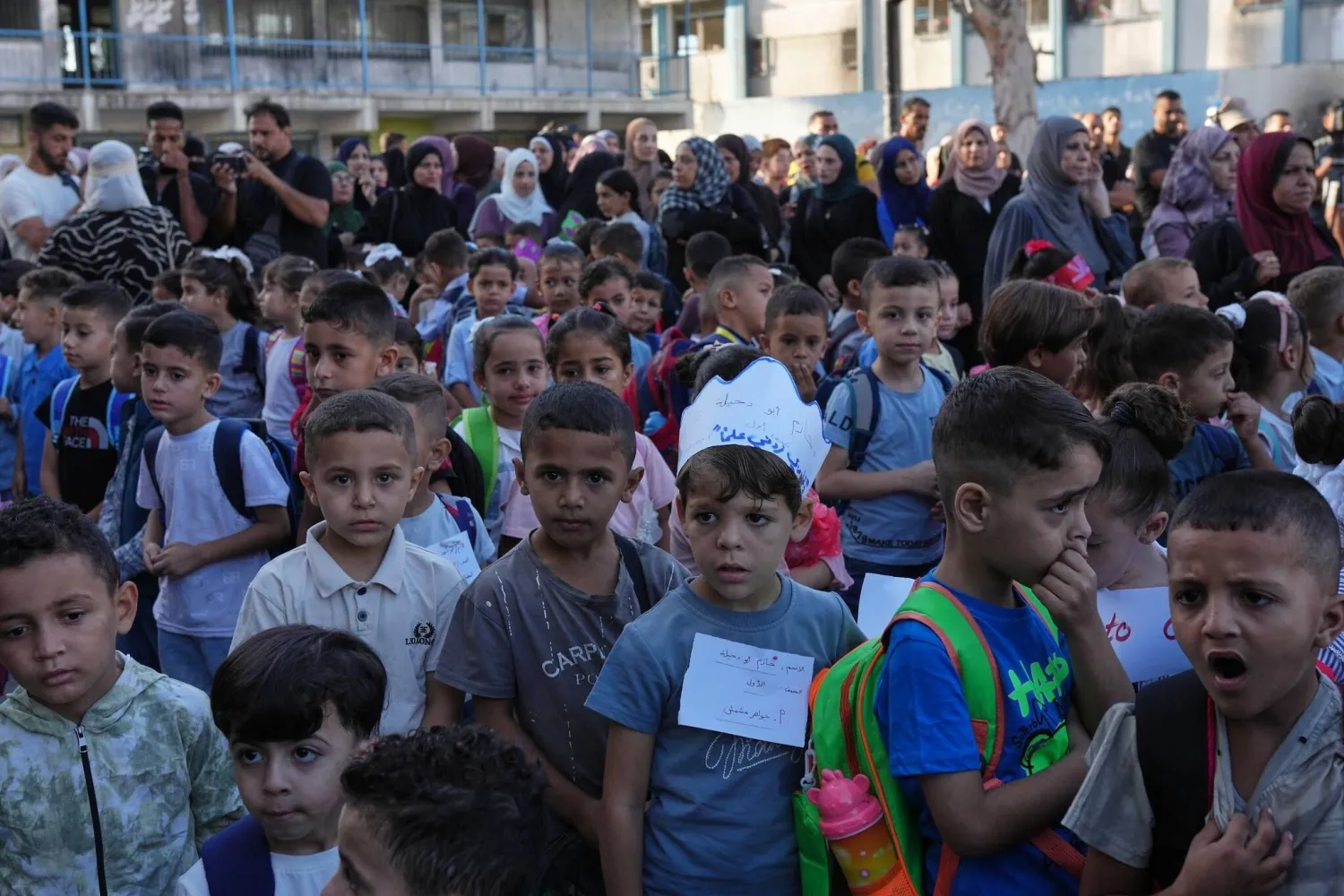
Palestinian children line up on the first day of the new school year at a UN-run school in Nuseirat, central Gaza Strip, on September 19, 2026 (AP)
TT

How Can Gaza's Children Make Up for Years of Lost Education?

Palestinian children line up on the first day of the new school year at a UN-run school in Nuseirat, central Gaza Strip, on September 19, 2026 (AP)

After nearly three years of war, children in the Gaza Strip face a long road to recovering lost learning, with significant gaps in reading, writing and mathematics, destroyed schools, and psychological and living conditions that make regular attendance difficult.

Two education experts who spoke to Asharq Al-Awsat said addressing the learning losses suffered by Gaza's children could require programs lasting several years, beginning with assessments of what each child already knows and what they still need to learn.

Reading and Writing Difficulties

While in Gaza, Dr. Ahmed Kamal Junina, head of the English Department at Al-Aqsa University, witnessed the effects of disrupted education through his own children and conversations with relatives and parents of schoolchildren.

He found that one of the most serious problems was that many children lacked even basic reading and writing skills.

"I believe we are facing profound learning losses that continue to accumulate over time, with the extent varying from one child to another," Junina, currently a fellow-in-residence at Harvard University's Radcliffe Institute for Advanced Study, told Asharq Al-Awsat.

The prospect of returning to school after nearly three years of war raises questions about children's actual learning levels, the limited hours available for instruction and how to design programs that allow them to continue their education without falling further behind.

The gaps include skills children previously acquired but have since lost through lack of practice, as well as foundational skills others never had the opportunity to develop.

Even when students are promoted to higher grades, weak reading skills can prevent them from keeping up with other subjects, allowing new difficulties to accumulate on top of unresolved learning gaps.

According to Junina, children have also lost the structure of school routines and daily interaction with teachers and classmates, experiences that help shape their personalities and develop social and life skills.

To illustrate the limited learning opportunities available, Junina cited a UNICEF survey conducted between December 2025 and January 2026, covering 2,071 households in Gaza.

The survey found that 68% of children aged five to 11 had participated in educational activities for three months or less between October 2023 and the time of the survey.

That figure reflects the duration of children's participation in education, however, rather than the extent of their learning losses, which would require direct assessment.

Needs That Must Be Addressed Before Learning Can Begin

A child's ability to benefit from education can be undermined by unaddressed physical or psychological needs.

Junina cited a case documented by War Child, a Netherlands-based organization supporting children affected by conflict, involving Karim, a seven-year-old Palestinian boy in Deir al-Balah, central Gaza.

After losing his father and home, Karim struggled to participate in activities and remain at a learning center.

With psychological support, group activities, remedial education and eyeglasses to address a vision problem, he gradually began participating with greater confidence.

Junina said the case illustrates the importance of addressing needs that can determine whether a child is able to engage with teachers and benefit from lessons.

The UNICEF survey provided further evidence of such challenges, with parents reporting sleep disturbances, social withdrawal and behavioral changes among their children, underscoring the need to consider their psychological and social well-being when schooling resumes.

"I don't think we can understand what a child experiences in the classroom without considering the circumstances of their life outside it," Junina said.

Where a child sleeps, whether they feel safe, whether they have space to study and whether someone is available to help with schoolwork all influence their ability to concentrate and continue learning.

Junina also witnessed the effects of instability among his university students.

Some had their studies repeatedly disrupted by displacement, while others waited until nighttime to find a quiet environment in which to work. They also struggled to obtain internet access, charge their phones and access educational materials.

Although these experiences relate to university education, they illustrate how difficult simply accessing a lesson has become, even before students can begin following and understanding it.

Lessons From Earlier Programs and the Limits of Comparison

Previous experiences suggest that remedial education can produce substantial improvements in foundational skills.

Junina cited a UNICEF-documented program from 2021, completed by 5,000 children in grades one through four in Gaza.

Participants' average mathematics test scores rose from 37% before the program to 95.5% afterward.

However, the differences between conditions during that program and the current situation mean its results cannot be used to estimate how long educational recovery will take today.

"We are dealing with an education system that has lost most of its schools and facilities, in addition to the killing, displacement, bereavement, hunger and harsh living conditions experienced by teachers, children and their families," Junina explained.

"We therefore cannot use the 2021 experience to estimate how long children will need to recover from the effects of the current war."

The program nevertheless demonstrates the potential benefits of remedial interventions, provided that recovery efforts are designed to continue for years, with their objectives and outcomes regularly reviewed.

Junina warned against turning the process into a race to complete curricula, administer examinations and promote students to higher grades.

"The goal is for children to genuinely learn and acquire the skills they need to continue their education without accumulating further gaps," he said.

Teachers as Partners in Recovery

Such programs require teachers who can continue working despite facing the effects of war, displacement, loss, financial hardship and psychological pressure themselves.

Junina considers stable incomes and psychological and professional support for teachers essential to restoring education, enabling them to work consistently with children and respond to the traumatic experiences they have endured.

According to Junina, the first priority for educational recovery is "ending the ongoing attacks and killings, ensuring the safety of children and teachers, and providing safe places they can reach and where they can learn."

He said education should continue in temporary learning spaces while damaged schools are repaired and children's basic needs are met, allowing them to attend classes regularly.

Developing and implementing recovery plans also requires meaningful participation by local education professionals.

"Most importantly, Palestinian teachers and educational institutions must play a central role in developing and implementing recovery plans, with the participation of students' families, because they understand children's needs and living conditions better than anyone," Junina said.

When Lessons Are Consumed by Revision

In classrooms and temporary learning spaces, everyday challenges can prevent remedial education plans from translating into sustained progress.

Raed Abu Makhda, a specialist in school administration and education in emergencies, explained to Asharq Al-Awsat how interruptions in attendance prevent teachers from building on skills children have already learned.

"We begin teaching a skill, then attendance is interrupted, so we have to review it instead of building on it. A large part of the available time ends up being spent revisiting material that has already been taught," he said.

For this reason, simply counting missed school days is not enough to measure a child's learning losses.

Even on days when classes take place, lessons may be short or irregular, while children may arrive exhausted, hungry or frightened, reducing their ability to benefit from the available instruction time, Abu Makhda explained.

Teachers face additional constraints in temporary learning spaces.

"Noise and the close proximity of different groups can make listening and concentrating difficult, while limited space restricts activities, group work and the ability to give each child individual attention," he said.

Tents also provide inadequate protection from changing weather conditions and may lack desks, blackboards, textbooks, teaching materials and suitable sanitation facilities.

Shortened school days further reduce the time available for instruction, practice and assessment. Lessons may end before teachers can establish whether children have understood the material or provide additional support to those who are struggling.

Abu Makhda summarized the limitations of this approach: "A tent may provide a place for lessons, but it cannot, on its own, provide the conditions of a school capable of addressing accumulated learning losses."

Grouping Children by Skill Level

Abu Makhda believes educational recovery should begin with diagnostic assessments of children's reading, writing and mathematics skills.

Children should then be grouped according to their abilities and provided with regular remedial instruction, clear learning objectives and continuous monitoring of their progress.

This approach requires training teachers to manage students with different learning levels, providing appropriate educational materials and allowing sufficient time for practice and assessment.

A child's age or assigned grade should not be taken as proof that they possess the corresponding skills without first establishing what they can actually do.

The ability to recover lost learning varies according to age, previous educational attainment, the length of interrupted schooling, and psychological and living conditions.

Certain skills may improve within months if children can attend classes consistently, while addressing accumulated learning gaps could take several years.

Abu Makhda stressed that these are conditional educational estimates, not guaranteed timelines for recovery.

Consistent schooling remains essential to preserving any progress.

"Continued interruptions mean that a child is trying to recover lost learning while simultaneously falling further behind," he said.

Who Faces the Greatest Risks?

Learning gaps have different consequences depending on a child's age and educational stage.

In the early grades, weak foundational skills affect performance across other subjects. Simply understanding a question can become an obstacle to following a lesson or completing a test.

As Abu Makhda explained: "A child who cannot read the question will be unable to demonstrate what they know, even if they understand some of the content."

Older students face different risks.

According to Abu Makhda, the need to work, family responsibilities or losing hope of completing their education may cause them to leave school permanently.

Children with disabilities, as well as those who have experienced injuries, bereavement or repeated displacement, face additional difficulties because of shortages of specialized services.

For these reasons, Abu Makhda believes remedial education programs must include efforts to identify and follow up with children who have stopped attending school or are at risk of dropping out.

Success should be measured by what children have actually learned to read, write and understand, alongside their attendance and continued participation, rather than relying solely on enrollment figures or the number of lessons delivered.

"Recovering lost learning requires time, stability and resources," Abu Makhda said.

"Talking about educational recovery without providing these conditions places responsibility on children and teachers for circumstances they have no power to change."


Israeli Elections Official: No Evidence Arab Parties 'Stole' Election

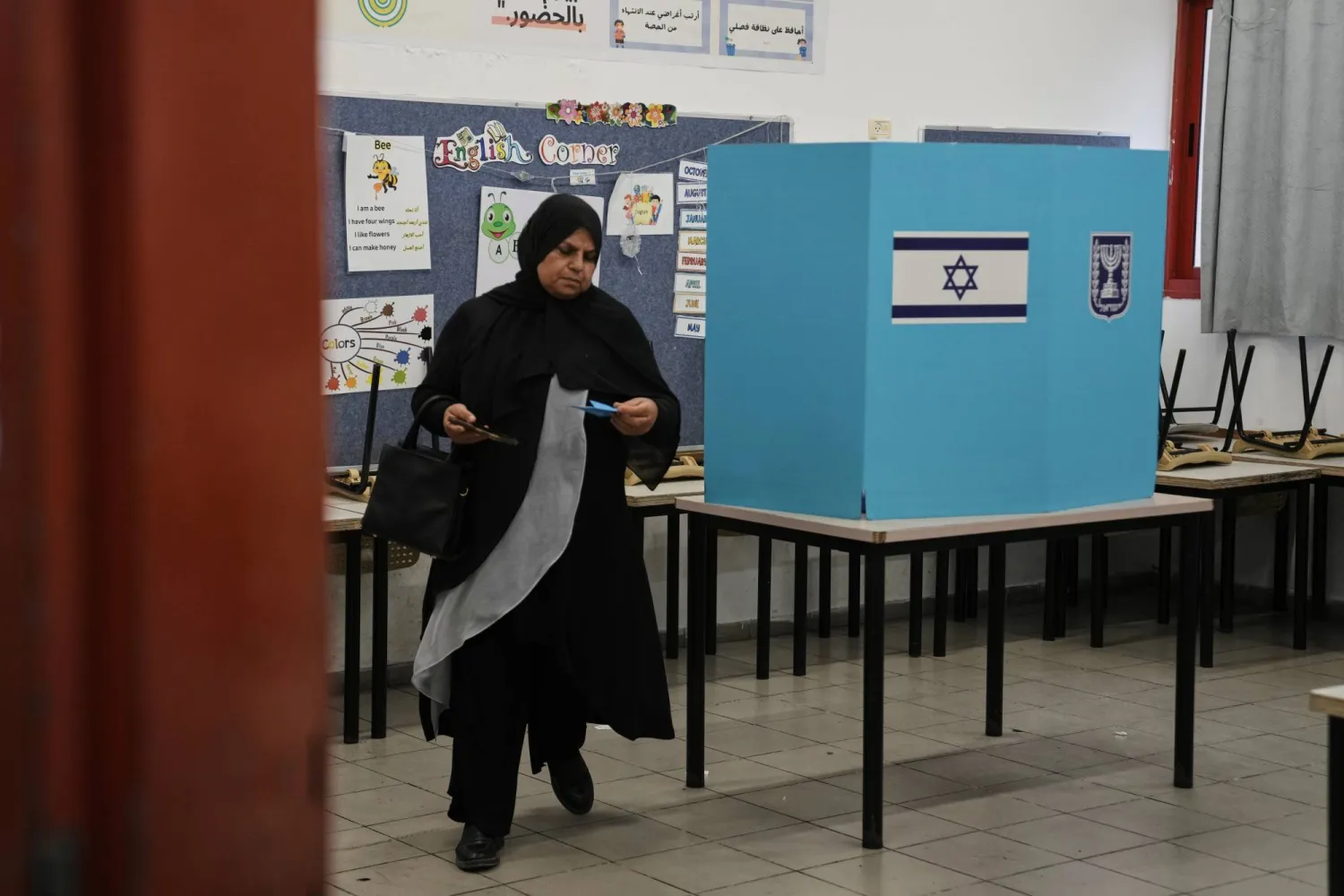
A Palestinian citizen of Israel casts her ballot in the country's general election at a polling station in Umm al-Fahm, Israel, Tuesday, Oct. 27, 2026. (AP Photo/Mahmoud Illean)
TT

Israeli Elections Official: No Evidence Arab Parties 'Stole' Election

A Palestinian citizen of Israel casts her ballot in the country's general election at a polling station in Umm al-Fahm, Israel, Tuesday, Oct. 27, 2026. (AP Photo/Mahmoud Illean)

Israel's Central Elections Committee has rejected allegations of electoral fraud following the strong showing by Arab parties in Tuesday's parliamentary elections, saying there is no evidence to support claims that Arab voters "stole" the election, according to dpa.

Dean Livne, acting director-general of the committee, told Israel's Kan public broadcaster there was no evidence that Arab parties had obtained votes illegally.

A senior police official also dismissed the allegations as propaganda tactics with no factual basis. The official told Haaretz that authorities had received fewer complaints of election irregularities than in previous elections.

Police Commissioner Daniel Levy said every election-related complaint would be examined and investigated thoroughly and impartially.

He added that if any criminal activity was suspected, police would act decisively to uncover the truth and bring those responsible to justice.

For his part, Mansour Abbas, leader of the United Arab List (Ra'am), denied that his party had any involvement in the alleged fraud, according to Israeli media reports.

Arab parties nearly doubled their representation compared with the 2022 elections, winning 19 seats in the 120-member Knesset.


Palestinian Authority, West Bank Palestinians Await Formation of Next Israeli Government

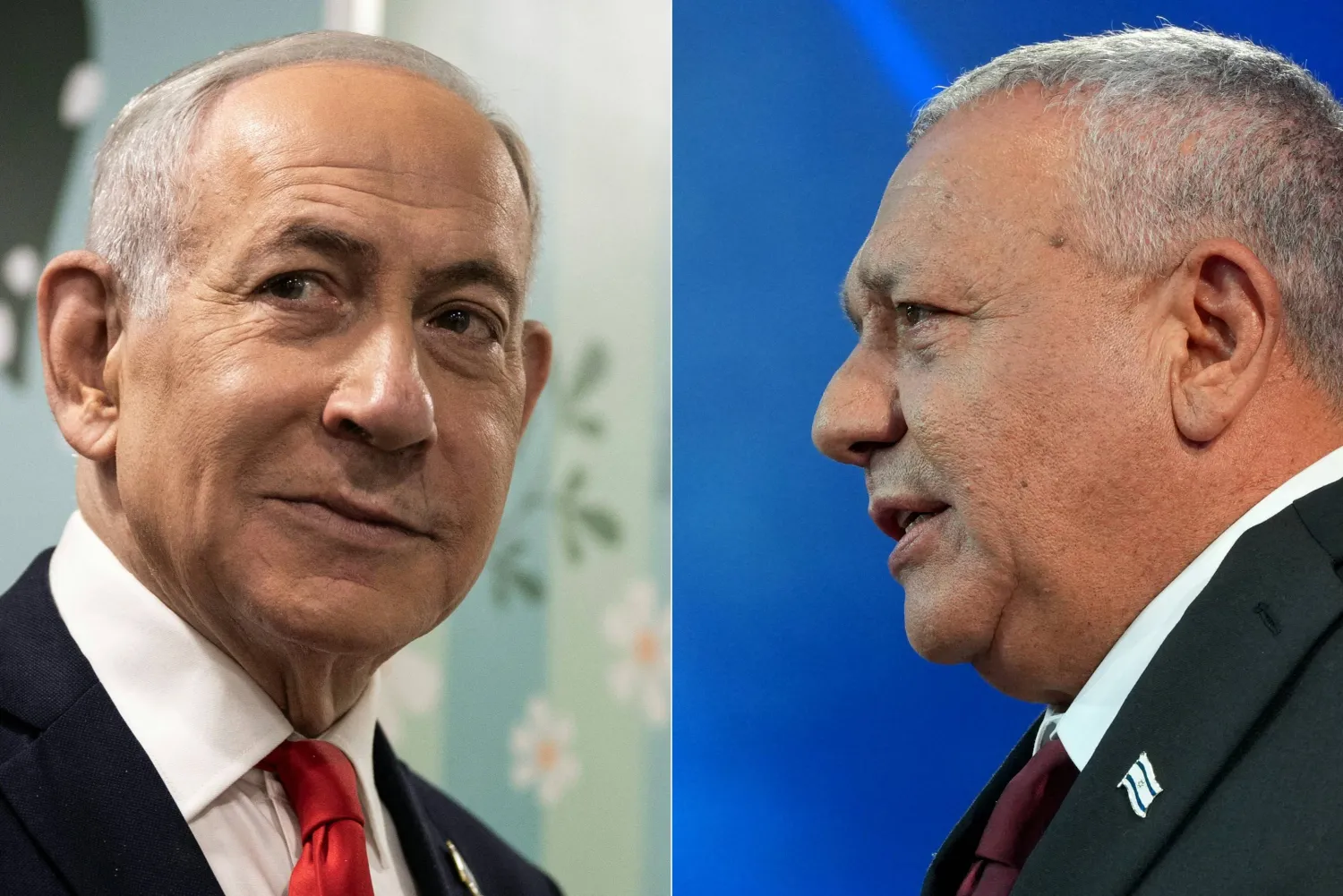
This combination of pictures created on October 28, 2026, shows Prime Minister Benjamin Netanyahu (L) speaking to the media after voting in Jerusalem on October 27, 2026, and Yashar party leader Gadi Eisenkot addressing his supporters at the election night rally in Tel Aviv early on October 28, 2026. (Photo by Jewel SAMAD and Maya LEVIN / various sources / AFP)
TT

Palestinian Authority, West Bank Palestinians Await Formation of Next Israeli Government

This combination of pictures created on October 28, 2026, shows Prime Minister Benjamin Netanyahu (L) speaking to the media after voting in Jerusalem on October 27, 2026, and Yashar party leader Gadi Eisenkot addressing his supporters at the election night rally in Tel Aviv early on October 28, 2026. (Photo by Jewel SAMAD and Maya LEVIN / various sources / AFP)

When Israeli Prime Minister Benjamin Netanyahu adopted his familiar campaign slogan, "The Right or Palestine," during the latest elections, he was seeking to turn voters against his rivals, Gadi Eisenkot, Naftali Bennett and Avigdor Lieberman, claiming that they would grant Palestinians a state if they won and bring disaster upon Israel.

Regardless of how many Israelis believed Netanyahu's claims, Palestinians were never convinced. They know better than anyone that none of Israel's political leaders, whether from the far right, center-right or left, are prepared to grant them statehood or even autonomy at this stage.

Despite this widespread understanding, Palestinians have followed the elections minute by minute and are awaiting the final results with unprecedented interest. The next Israeli prime minister and the ministers serving alongside him will largely determine what life looks like in the West Bank and Gaza Strip over the coming years.

An informed Palestinian source told Asharq Al-Awsat: "We realize that no government will launch a political process at this stage. It is difficult and complicated, and none of them intends to grant us the right to self-determination and statehood. But we will never abandon that right, and we will continue struggling for it through every available means."

The source added: "Many other critical issues are at stake: the future of the Palestinian Authority, the economic situation, the future of the West Bank, security conditions there, settler terrorism, the future of the Gaza Strip, reconstruction and governance in Gaza. All these issues depend on the coalition that comes to power in Israel."

"If Netanyahu's right-wing coalition remains in power, with ministers such as Itamar Ben-Gvir and Bezalel Smotrich, we will face a difficult and complicated situation with an uncertain future. But if Gadi Eisenkot forms a government, or even if a unity government emerges without Ben-Gvir and Smotrich, we could see some relief," the source said.

The Palestinian Authority

The Palestinian Authority is closely monitoring the electoral process and hoping for Eisenkot's success and Netanyahu's defeat.

It believes that improvements in security and economic conditions may be possible under any new Israeli government other than the current one.

A government willing to negotiate outstanding economic and security issues, release withheld Palestinian funds and resume regular financial transfers would be considered the lesser of two evils.

The Palestinian Authority has refrained from expressing this position publicly, maintaining silence and exercising considerable caution while describing the elections as an internal Israeli matter.

During the previous elections in 2022, the PA attempted to help defeat Netanyahu, prompting Israel's domestic security agency, Shin Bet, to issue an explicit "stern warning" against interfering in the electoral process.

The warning followed a meeting between Palestinian intelligence chief Majed Faraj and leaders of Arab political parties in Israel.

Israeli officials said the meeting was intended to persuade the Arab parties to unite, while the PA maintained that the elections had not been discussed.

Israeli reports at the time said the PA had expressed concern to Arab party leaders that low Arab voter turnout could return Netanyahu to power at the head of a hardline right-wing government.

The reports also claimed that the Palestinian official had gone as far as accusing Arab lawmakers of failing to do enough to prevent such an outcome.

This time, the PA made no attempt to meet Arab political leaders. Nevertheless, it undoubtedly maintained channels of communication with them through various means.

The PA is pleased with the number of Knesset seats won by Arab parties, which effectively prevents Netanyahu from securing an outright victory.

The "Erasure Project"

Netanyahu led a far-right government that escalated its measures against Palestinians in the West Bank on multiple fronts while waging a bloody war in the Gaza Strip.

During this period, his government worked to weaken the Palestinian Authority, withheld its revenues and gave settlers a free hand to kill, attack and seize land in the West Bank.

It also advanced plans to expand existing settlements and establish new ones, connecting them through contiguous settlement corridors.

The government established approximately 1,000 military checkpoints and gates across the West Bank in an attempt to confine Palestinians within Area A.

Netanyahu's government also annulled the Hebron Agreement governing the West Bank's largest city and introduced an electronic land registration and rights settlement system in the occupied Palestinian territories.

The move marked a dramatic step that could deepen the annexation of the West Bank, leaving the Palestinian Authority without sovereignty and Palestinians without legal protection.

Together, these policies served what has been described as a project to "erase" Palestinians as a people.

According to an extensive investigation by the Israeli human rights organization B'Tselem, this erasure project targets the Palestinian presence in the West Bank through an interconnected system of five measures: violence and intimidation, restrictions on movement, economic strangulation, political and social destruction, and ethnic cleansing and the seizure of territory.

"They Turned Our Lives into Hell"

Ahmed Taim, 50, from Ramallah in the West Bank, told Asharq Al-Awsat: "We don't expect any significant change from any government. They're all the same. But if people other than Netanyahu, Ben-Gvir and Smotrich come to power, things might improve when it comes to everyday life."

He added: "If they transfer the money to the Palestinian Authority, do more to restrain settlers, allow workers to return to their jobs in Israel, ease the pressure on the West Bank and reduce checkpoints and gates, that would make a huge difference to people's lives. That matters."

Palestinians in the West Bank are facing severe economic hardship, daily restrictions and delays at checkpoints, Israeli military operations and deadly settler attacks, making everyday life extremely difficult.

Mousa Awad, from Bethlehem, expressed hope that Arab parties would succeed in "sending Netanyahu, Ben-Gvir and Smotrich home."

"They have turned our lives into hell," he said.

The suffering has not been confined to Palestinians in the West Bank. It has also extended to prisoners in Israeli jails, where Ben-Gvir has deprived them of food, visits and privileges they previously enjoyed.

The mother of Palestinian prisoner Khaldoun Obeiyat said she prays every day for her son and for Ben-Gvir's departure.

"He has turned the prisons into graveyards. My heart burns for my son every time news reaches us from prison. God willing, he will leave and never return," she told Asharq Al-Awsat.

Palestinians will now have to wait weeks, perhaps longer, for Israel's political situation to be resolved. They may then face many more months of waiting before a new government, if one is formed, takes any significant measures affecting their lives.