



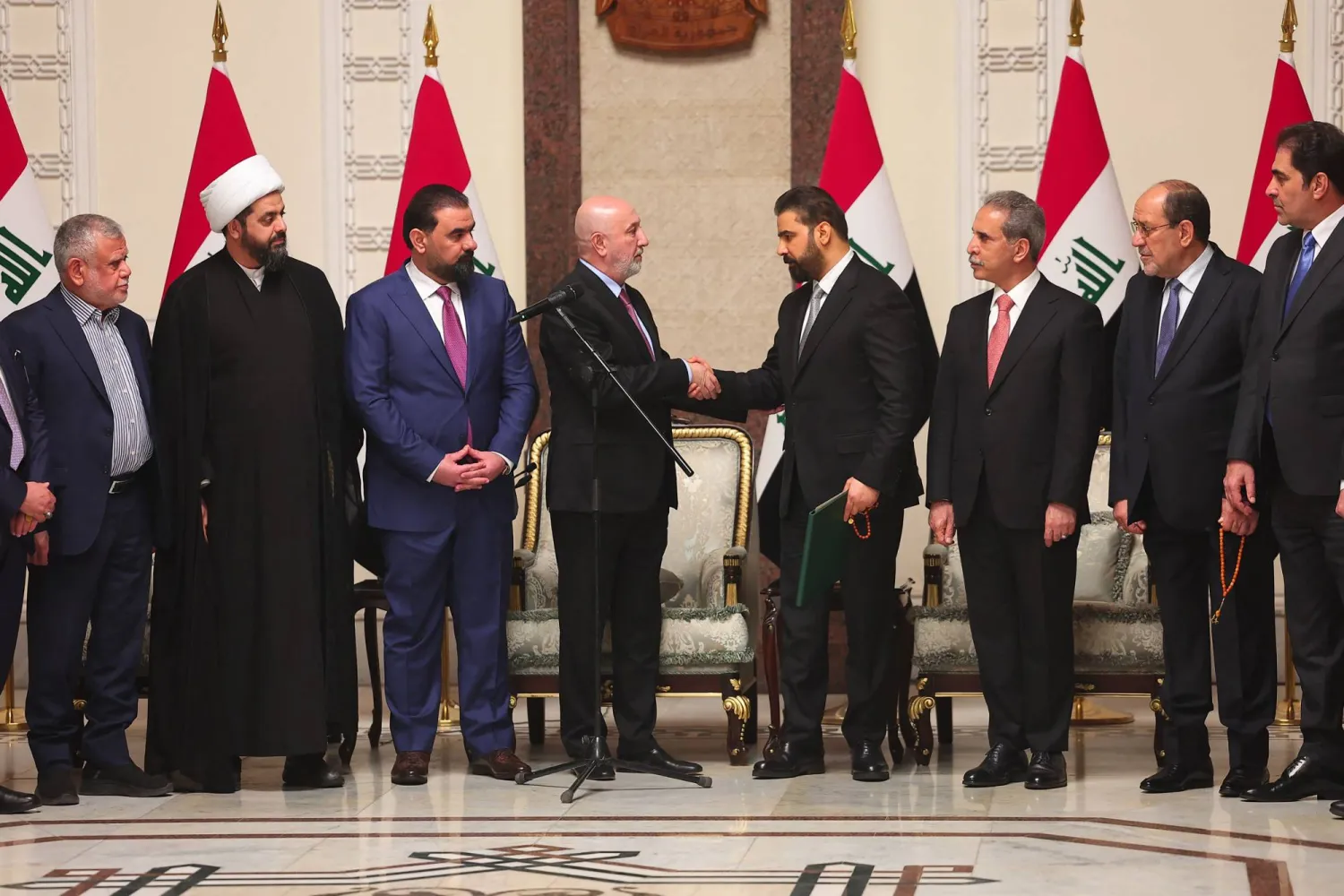

Iraq’s Prime Minister-designate Ali al-Zaidi is facing an early test in forming a government as disputes over cabinet posts risk straining ties with political blocs, despite what observers describe as unprecedented US backing.
Al-Zaidi concluded a visit Saturday to the Kurdistan Region, where he met head of the Kurdistan Democratic Party Masoud Barzani in Erbil and lader of the Patriotic Union of Kurdistan Bafel Talabani in Sulaymaniyah. He said he had secured strong Kurdish support.
Deep divisions persist between the two main Kurdish parties, particularly over the presidency — traditionally held by the PUK — and over the delayed formation of the regional government, stalled for more than a year. Those disputes could spill into Baghdad as parties negotiate ministries based on electoral representation.
Al-Zaidi’s reported breakthrough includes persuading the KDP to return its lawmakers to the federal parliament, paving the way for participation in government. But bargaining over ministries is expected to be the first major hurdle, as blocs seek to retain key portfolios or demand additional ones reflecting their gains in the elections.
Concerns have also emerged among Shiite factions, particularly within the ruling Coordination Framework, over al-Zaidi’s perceived US backing. US President Donald Trump was cited as saying al-Zaidi came “with American help,” heightening unease, especially among groups with armed branches.
US factor
A senior Iraqi source told Asharq Al-Awsat that Coordination Framework leaders, who had remained publicly silent about what appeared to be a lengthy call between Trump and al-Zaidi last week, later pressed him in a private meeting to disclose its details.
The source said al-Zaidi outlined the conversation clearly, prompting the bloc to encourage him to maintain balanced ties with Washington — avoiding provoking discontent while not fully yielding to US demands — and to leave contentious issues to be resolved over time.
The source added that this position followed briefings on the broad outlines of a US message, after which an initial shipment of US dollars was sent, seen as an incentive. Washington is said to be insisting on a government “free of terrorism,” referring to pro-Iran armed Iraqi factions.
At the same time, al-Zaidi has drawn backing from civil and political groups. A meeting hosted by former Prime Minister Iyad Allawi discussed political developments and endorsed efforts to form a government based on competence, integrity and broad representation.
Participants urged political forces to prioritize national interests, overcome divisions and meet constitutional deadlines.
However, pressure is mounting. Political blocs are pressing for specific ministries, seeking to rotate portfolios, or proposing new posts, including deputy prime ministers, to accommodate party figures, even in roles with limited authority.
Political observers in Baghdad warned that if these demands persist, the current “honeymoon” between al-Zaidi and the blocs could unravel.
The prime minister-designate is seeking to form a government free of armed factions, bureaucratic bloat and partisan dictates, buoyed by broad regional and international support that gives him room to maneuver.


