


Land Registration in East Jerusalem Israeli ‘Tool’ to Expel Palestinians

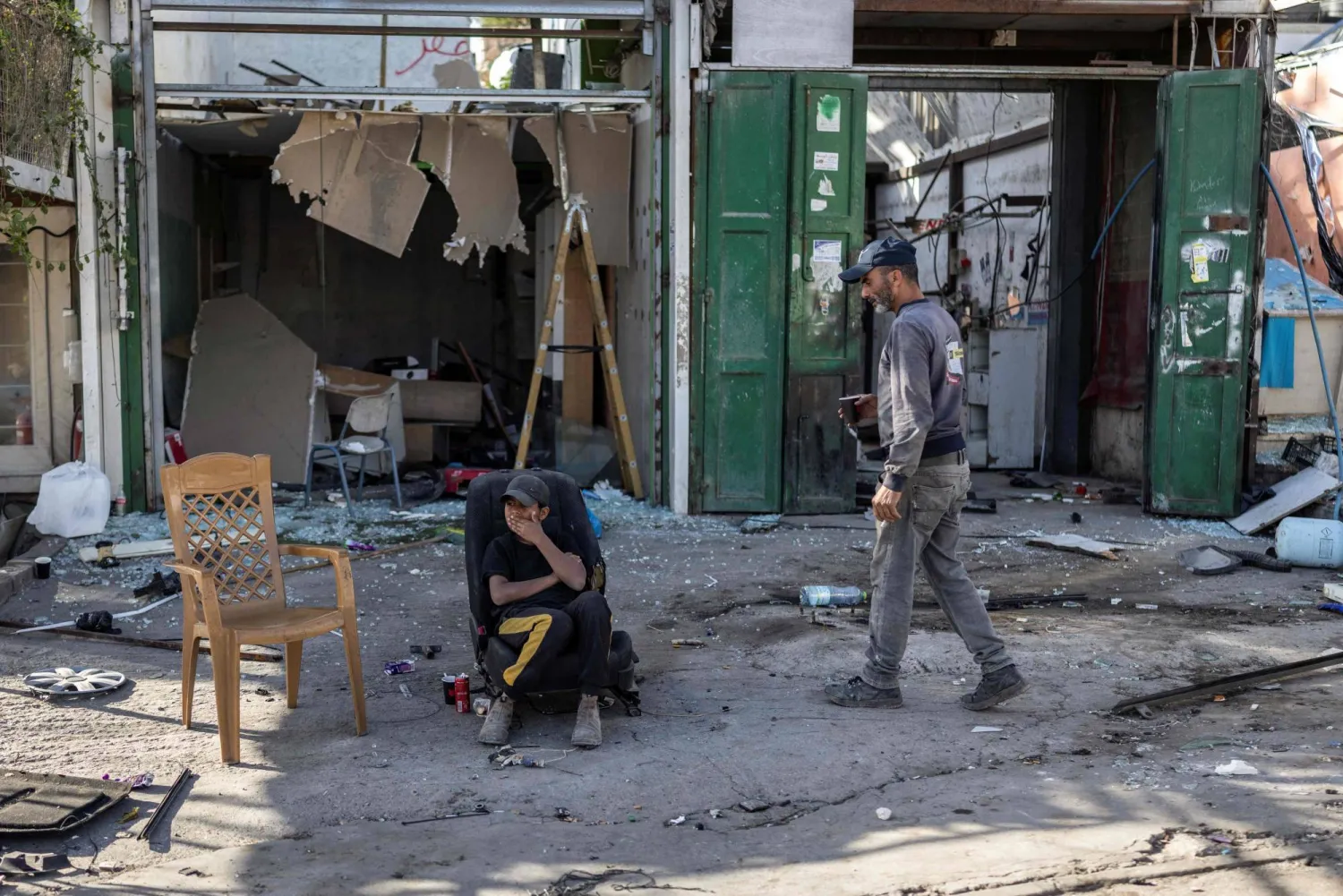
Palestinian workers rest during the demolition of shops before the arrival of an Israeli army demolition team in the occupied Palestinian West Bank town of Al-Eizariya adjacent to East Jerusalem on Sunday (AFP) 
TT

Land Registration in East Jerusalem Israeli ‘Tool’ to Expel Palestinians

Palestinian workers rest during the demolition of shops before the arrival of an Israeli army demolition team in the occupied Palestinian West Bank town of Al-Eizariya adjacent to East Jerusalem on Sunday (AFP) 

Initial data from a land registration drive launched in Israeli-annexed east Jerusalem point to a “deeply alarming” trend of land appropriation by the Israeli state, an Israeli rights group said Monday.

Land registration in East Jerusalem began during the British Mandate between 1923 and 1948, and continued under the Jordanian administration starting in 1949.

Israel resumed land registration in east Jerusalem in 2018, reviving a process that had largely been suspended after it occupied and annexed the territory in 1967, said Bimkom, an Israeli rights group focused on urban planning and the protection of Palestinian rights in east Jerusalem.

The rights group examined the first official data covering roughly 2.3 square kilometers, or about 3% of east Jerusalem, where registration procedures have been completed.

It found that 82% of the land surveyed had been registered under the Israeli state or the Jerusalem municipality.

Another 9% was listed under “unknown owners” -- a classification the group described as an initial step toward eventual state takeover -- while 4% was registered to Jewish owners, most of them connected to the settler movement, according to AFP.

According to Bimkom, approximately 4% of the plots were registered to churches, while only 1% were recorded under Palestinian ownership.

Bimkom warned that the registration process is being used by Israeli authorities for “effectively taking land ... from beneath people's feet,” calling it “deeply alarming.”

“This data clearly indicates that the renewed... procedures do not serve -- and were not intended to serve -- the Palestinian residents of the city, but rather to provide a bureaucratic tool for the appropriation of Palestinian land for the benefit of the state,” it said.

The registration process advances plot by plot and lacks transparency, Bimkom architect Sari Kronish told AFP.

“There is no transparency regarding why and how the choices of where to begin are made,” Kronish said.

The areas where registration has already been completed largely correspond to vacant land earmarked for settlement construction, a pattern Bimkom says reinforces concerns that political motivations are driving the process.

The NGO added that a small part of these zones include Palestinian homes, but most of which have been registered under the state or entities linked to settlement groups.

Until Monday noon, Israel's justice ministry, which oversees the registration process, did not respond to requests for comment.

Bimkom denounced what it described as increasingly restrictive measures toward Palestinians, for whom proving land ownership has become nearly impossible.

Jerusalem lies at the core of the Israeli-Palestinian conflict.

Also, the report said that in 2025, Israeli authorities approved only about 640 housing units for Palestinians in East Jerusalem, compared to roughly 9,000 units approved for Jewish residents across the city.



Israeli Forces Shoot Dead Palestinian Man in West Bank Raid

Palestinians inspect a family home destroyed by the Israel army following a military operation after a Palestinian man barricaded himself inside the house in the Israel-occupied West Bank village of Aqraba, south of the city of Nablus on September 8, 2026. (Photo by JAAFAR ASHTIYEH / AFP)
TT

Israeli Forces Shoot Dead Palestinian Man in West Bank Raid

Palestinians inspect a family home destroyed by the Israel army following a military operation after a Palestinian man barricaded himself inside the house in the Israel-occupied West Bank village of Aqraba, south of the city of Nablus on September 8, 2026. (Photo by JAAFAR ASHTIYEH / AFP)

Israeli forces shot dead a Palestinian man in the occupied West Bank on Tuesday, the Palestinian health ministry said, while the military said it killed a suspect who had attempted to attack troops.

The Palestinian health ministry announced the death of 28-year-old Abdul Karim Muhammad Khader Suleiman, who it said was "shot and killed by the occupation forces on Tuesday morning in the town of Aqraba.”

It said his body was being withheld by Israeli authorities.

The Israeli military said soldiers arrived in Aqraba, in the north of the West Bank, "in order to question a terrorist," who then threw a Molotov cocktail and an improvised explosive device towards them, causing no injuries.

It said soldiers surrounded and then entered the building, where they encountered him holding a knife "which he intended to use to attack the soldiers" and killed him.

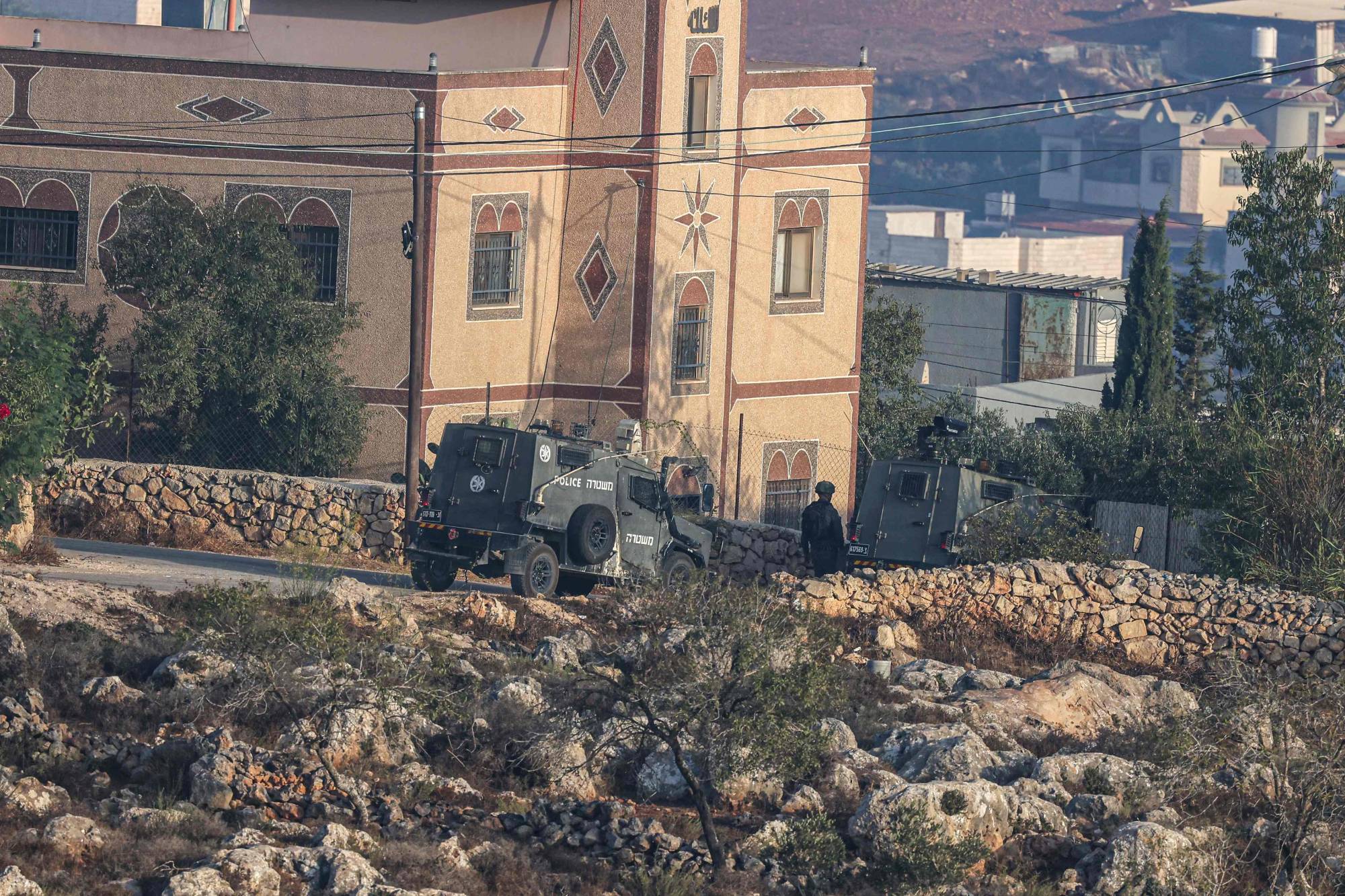
Israeli soliders gather during a military operation in the Israel-occupied West Bank village of Aqraba, south of the city of Nablus on September 8, 2026. (Photo by JAAFAR ASHTIYEH / AFP)

AFP footage from the scene showed the exterior wall of the targeted house with gaping holes in the side, while young Palestinian boys stood among the pile of rubble strewn below.

An eyewitness and Aqraba's mayor said Israeli forces had fired projectiles at the house and brought in military bulldozers.

The mayor, Salah al-Din Jaber, said between 300 and 400 soldiers raided the town overnight, declared it a closed military zone, and surrounded the house.

Suleiman's wife and mother left the house first, and he stayed inside, Jaber told AFP by telephone. "After that, they arrested him and executed him in front of the house, and they seized his body."

"This was a show of force, nothing more and nothing less," he added.

Jaber said the slain man had been unarmed and there had been no exchange of fire.


Iraqi Judiciary Backs Government Efforts to Bring Weapons Under State Control

The head of the Supreme Judicial Council met with the US chargé d'affaires in Iraq (The Judiciary’s Media Office)
TT

Iraqi Judiciary Backs Government Efforts to Bring Weapons Under State Control

The head of the Supreme Judicial Council met with the US chargé d'affaires in Iraq (The Judiciary’s Media Office)

Iraq’s Supreme Judicial Council President Faiq Zidan has stressed the judiciary’s support for government efforts to bring weapons under state control based on a plan adopted by the Coordination Framework.

Zidan made the remarks during a meeting Monday with the new US chargé d’affaires in Iraq, Steven Fagin. A statement from the Supreme Judicial Council said the two discussed the judiciary’s role in supporting the government’s program to restrict weapons to the state.

The process will proceed under “a well-studied plan” adopted by the Coordination Framework, with a committee established by the alliance tasked with preparing it and announcing it once completed and at the appropriate time. The plan is intended to uphold Iraq’s positive relations with the international community and ensure compliance with the constitution and the law.

Legal and political sources have previously indicated that the Iraqi judiciary is determined to designate militias as terrorist organizations if they refuse to disarm by the deadline for the withdrawal of international coalition forces.

Coordination Framework leaders were also expected to hold their weekly meeting Monday to discuss several issues, foremost among them bringing weapons under state control, completing the government lineup and proposed amendments to the Popular Mobilization Forces law.

Coalition withdrawal

With the Sept. 30 deadline for the withdrawal of US-led international coalition forces approaching, uncertainty continues to surround key political and security issues, particularly efforts to disarm Iran-aligned factions.

Washington has repeatedly pressed Baghdad in recent months to resolve the issue, warning that failure to do so could expose Iraq to economic and political sanctions at a time when the country is already facing financial strains.

A source close to the Coordination Framework told Asharq Al-Awsat that Prime Minister Ali al-Zaidi’s government had softened its previously firm rhetoric on disarming the factions, while armed groups had become increasingly vocal in rejecting the demand.

The source attributed the shift to tense discussions within the Coordination Framework and between its leaders and al-Zaidi. The prime minister has repeatedly warned of the risks of failing to disarm and pointed to US demands, while some Framework leaders believe there is room to maneuver with Washington.

Conflicting statements by Framework leaders are also part of an effort to buy time, the source added, as the alliance faces pressure from two sides: Washington, which wants the issue resolved, and Tehran, which opposes disarmament.

State of Law Coalition leader Nouri al-Maliki recently raised the possibility of distinguishing between heavy, medium and light weapons, questioning whether restrictions should cover all arms or only weapons capable of striking domestic or foreign targets.

His comments were widely interpreted as a shift toward opposing comprehensive disarmament, prompting his office director, Hisham al-Rikabi, to say they had been “misunderstood.”

Factions resist disarmament

Kataib Hezbollah, Harakat Hezbollah al-Nujaba and Kataib Sayyid al-Shuhada are among the most prominent Iran-aligned factions strongly resisting disarmament. Their demands have included the withdrawal of Turkish forces from northern Iraq and placing Kurdish Peshmerga forces under the commander-in-chief of the armed forces.

Firas Elias, a political science professor at the University of Mosul, told Asharq Al-Awsat that Sept. 30 was unlikely to mark a comprehensive handover of weapons.

Instead, he expects the deadline to begin a lengthy process involving the coalition’s withdrawal, a transitional period, the classification of factions and weapons, and the integration or redistribution of some fighters, alongside efforts to place heavy weapons, drones and missiles under state supervision.

The factions’ stringent conditions may indicate a shift from rejecting disarmament outright to negotiating the price of surrendering their weapons autonomy, Elias said.

The equation, he added, is moving from “weapons versus the state” to “weapons versus guarantees,” with factions setting demands Baghdad cannot fully meet so they can later concede some conditions while retaining part of their power and influence.


New Battlefronts in Yemen Leave Houthis in Disarray

Armed forces celebrate their advances in al-Jawf. (X)
TT

New Battlefronts in Yemen Leave Houthis in Disarray

Armed forces celebrate their advances in al-Jawf. (X)

The Yemeni army and the National Resistance made progress on the ground on Monday across fronts in the Taiz, al-Bayda, and al-Jawf governorates, amid successive collapses and retreats among the Houthis. Al-Jawf is witnessing tribal mobilization in support of government forces following their field advances.

Yemeni army media announced that government forces secured a tactical breakthrough on the al-Bayda front, successfully liberating the Hayd al-Khazzan and al-Falhan areas up to the al-Nasifa region. The development allows the forces an advantage to sever Houthi supply lines between the central and southern governorates.

The advance coincided with the establishment of control over all hills and plateaus overlooking the al-Zaher district.

The director of media for the al-Bayda governorate, Aref Al-Amari, confirmed that the armed forces have tightened their control over the strategic highlands overlooking al-Zaher.

He noted that forces are currently combing al-Nasifa in preparation for an advance toward the Dhi Naem area, a development that strengthens the position of government forces in the governorate.

Spokesman for the Yemeni armed forces Colonel Maeen al-Nuzaili said the forces are achieving progress and victories on the al-Jawf and al-Bayda fronts as part of operations "aimed at restoring state institutions and ending the Houthi coup."

He called on the group's operatives to abandon their positions with their light weapons to save their lives.

On the western front, the Joint Forces managed to secure a vital artery in al-Kadha connecting Taiz city to the western coast, following the defeat of Houthis stationed in the controlling highlands.

Government forces targeted massive Houthi military reinforcements west of Taiz city, leaving heavy losses in lives and equipment.

Comprising more than 21 military vehicles, they were heading to support the al-Barh and Maqbanah fronts.

Meanwhile, tribes were mobilizing in al-Jawf to support the armed forces against the Houthis. According to local sources, the tribes moved toward the al-Yatma district.
