


Lebanon: Truce Gradually Draws South Beirut Residents Back Home

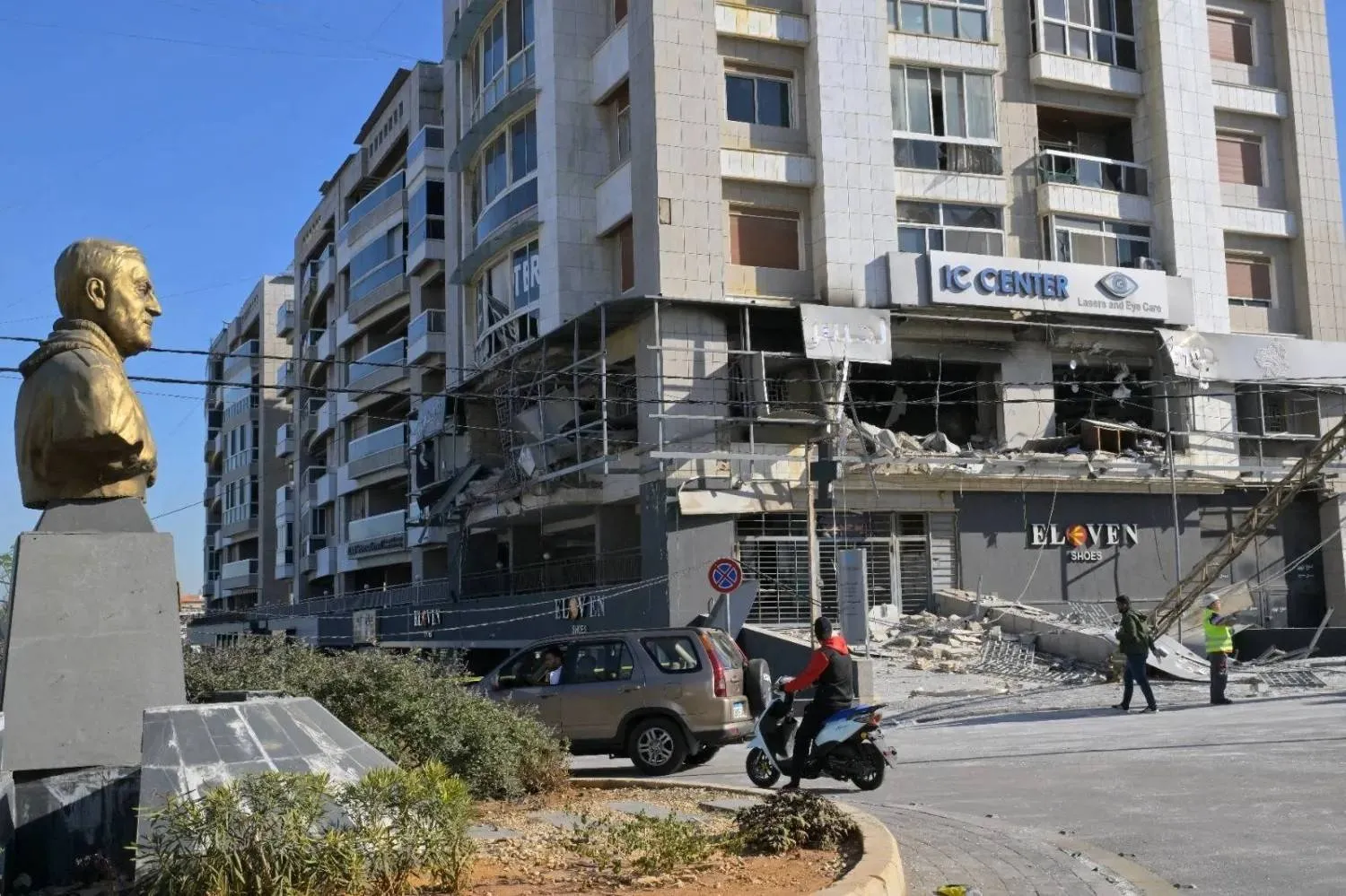
A branch of Al-Qard Al-Hassan in Beirut’s southern suburbs after it was hit by an Israeli strike during the 2024 war (File photo, Asharq Al-Awsat)
TT

Lebanon: Truce Gradually Draws South Beirut Residents Back Home

A branch of Al-Qard Al-Hassan in Beirut’s southern suburbs after it was hit by an Israeli strike during the 2024 war (File photo, Asharq Al-Awsat)

Residents are gradually returning to Beirut’s southern suburbs after a ceasefire agreement was extended for six weeks, three months after they were displaced from the area, and after the suburbs were largely spared Israeli bombardment during the truce.

Residents say they have no choice but to return after experiencing the hardship of displacement and a sense of joblessness.

The return to the southern suburbs began early this week, although residents told Asharq Al-Awsat that complete reassurance remains absent. They said returning to livelihoods and homes had become necessary, driven by the need to restore the rhythm of daily life.

Livelihoods reopen doors

In an area where a large part of the population depends on self-employment and small shops, restoring livelihoods has become essential to restarting life itself.

Ali Zeineddine, a father of two and the owner of a clothing shop in Beirut’s southern suburbs, said, “People are returning because they have work, a business, or a source of income. Today, the return is tied more to earning a living than to feeling reassured.”

He said owning the shop helped him reopen at a time when many others faced difficulty returning because of rent burdens and losses. But reopening did not mean life had fully returned to what it was before.

“There is movement, but it is timid. There is buying and selling on a limited scale, but it helps cover part of the family’s expenses,” he said.

He added that the pattern of life itself had changed after the war.

“Before the war, we used to work until late at night. Today, I open in the morning and close earlier, before sunset, because people’s movement has changed. Many come down during the day and then leave in the evening, so the night is no longer what it used to be.”

He said the overall scene still reflects a gradual return rather than full stability. “People are trying to restore their lives with what is available, but no one is acting as if everything has returned to normal.”

A long wait

Wissam Shehab, the owner of a vegetable shop and a father supporting a family of five, had not initially planned to return quickly, but found himself facing a different reality as time passed.

“We returned because my source of income is here. My shop is in the southern suburbs, and it is how I live and support my family. At first, we thought the displacement phase would be short and that it only needed some time. But when the period began to drag on, it was no longer possible to keep life suspended,” he said.

He added that keeping the family in an open-ended state of waiting would make matters more complicated, both economically and psychologically. That is why he decided to return and settle in his home again.

But the return did not lead him to rule out other possibilities. “We kept our place of displacement in Mount Lebanon as it is, in case of any new developments. It is true that we returned and settled in the southern suburbs, but no one feels that conditions have become fully settled,” he said.

Shehab said the feeling of insecurity was no longer tied to one particular area. “The southern suburbs today appear relatively spared, but insecurity has become a general condition people feel wherever they are.”

Return does not end displacement

By contrast, Umm Hassan Harqous and her family have not yet decided to return fully. The family still moves between the southern suburbs and Bchamoun, where they are currently displaced.

She said she goes down to the suburbs during the day and leaves before sunset, because, for her, returning does not simply mean opening the house door for a few hours.

She explained that the reasons for delaying the return are not only security concerns but also the loss of the source of income on which the family had depended. The grocery shop that had provided its main income became a means of survival during the war, after the family relied on the food items inside it during the displacement period.

“We lived on what was in the shop, and we gradually consumed its contents during the war so we could continue,” she said.

“How can a person return and settle if their very source of livelihood has stopped? Return is not just about a home. People need work and a life they can sustain,” she added.

She said members of her family had also suffered professional and livelihood losses, making the decision to return fully more difficult.

Institutions wait, individuals return

Sawsan Ammar, a teacher at a school in Beirut’s southern suburbs, said schools located deep inside the suburbs, including the one where she works, have not yet reopened due to concerns about the safety of students and teaching staff.

“There is no need to take risks while instability continues,” she said.

She noted that educational institutions differ by nature from individual businesses. “It is not about one person making a decision for themselves, but about hundreds of students and employees.”

Home is less harsh than displacement

On the other side, Hassan Maatouk sums up another aspect of the scene. The man, who had been living with his family in a school designated for displaced people, decided to return home despite realizing that fears remain.

“Returning home, even with a relative risk, remains better than staying in a state of continuous displacement,” he said.

He added that the long period of displacement had left a deep psychological impact. “When a person lives for a long time outside their home, they feel as if they are living a temporary life, as if they are a guest in a place that is not theirs.”

“No one can say they returned because they are no longer afraid, but people grow tired of the life of waiting itself,” he said.



Lebanese Bury Victims of Deadliest Israeli Strike since Ceasefire

20 May 2026, Lebanon, Tyre: A view of the destruction after Israeli airstrike in the southern Lebanese port city of Tyre. Photo: Marwan Naamani/dpa
TT

Lebanese Bury Victims of Deadliest Israeli Strike since Ceasefire

20 May 2026, Lebanon, Tyre: A view of the destruction after Israeli airstrike in the southern Lebanese port city of Tyre. Photo: Marwan Naamani/dpa

Mourners gathered in a southern Lebanese town on Thursday to bury victims from an Israeli airstrike earlier this week that killed 14 people, the deadliest single bombing raid on Lebanon since the announcement of a tenuous ceasefire last month.

The toll from Israel's strike on the town of Deir Qanoun En-Nahr on Tuesday included four children and three women, according to Lebanon's health ministry.

Dozens of people gathered in the southern town on Thursday to bury the victims, carrying pictures of three children and their parents who were killed in the bombing raid.

Ali Reda Dibo identified them as his 33-year-old brother, who was killed at home along with his wife and their children -- a 1-year-old son, and two daughters aged 6 and 8.

"They were children, angels, what more can we say? There is nothing left to say after what you are seeing today, nothing at all," Dibo said.

Two of the coffins were draped in the yellow flag of Hezbollah, and a third bore the green flag of Hezbollah's ally, the Amal movement.

When asked about the strike, the Israeli military told Reuters that it had "struck a Hezbollah terrorist in a structure used for military purposes in the area of Deir Qanoun in southern Lebanon".

It said the area had been evacuated of civilians and that precise munitions and aerial surveillance had been used to mitigate harm.

Israel has issued orders for people across southern Lebanese towns to leave their homes and head north, including during the ceasefire. More than one million people have been displaced in Lebanon by the evacuation orders and by Israel's bombing campaign.

But many have opted to stay in their hometowns, refusing to stay in government-run shelters or unable to afford rent for a new home.

More than 3,070 people have been killed in Israeli strikes on Lebanon since March 2, when Lebanese armed group Hezbollah fired on Israel and ignited a new war.

They include more than 200 children, nearly 300 women and more than 110 healthcare workers. Fighting has continued despite a US-brokered ceasefire announced on April 16, with each side accusing the other of truce violations.


Israel Says Deported 'All Foreign Activists' from Gaza-bound Flotilla

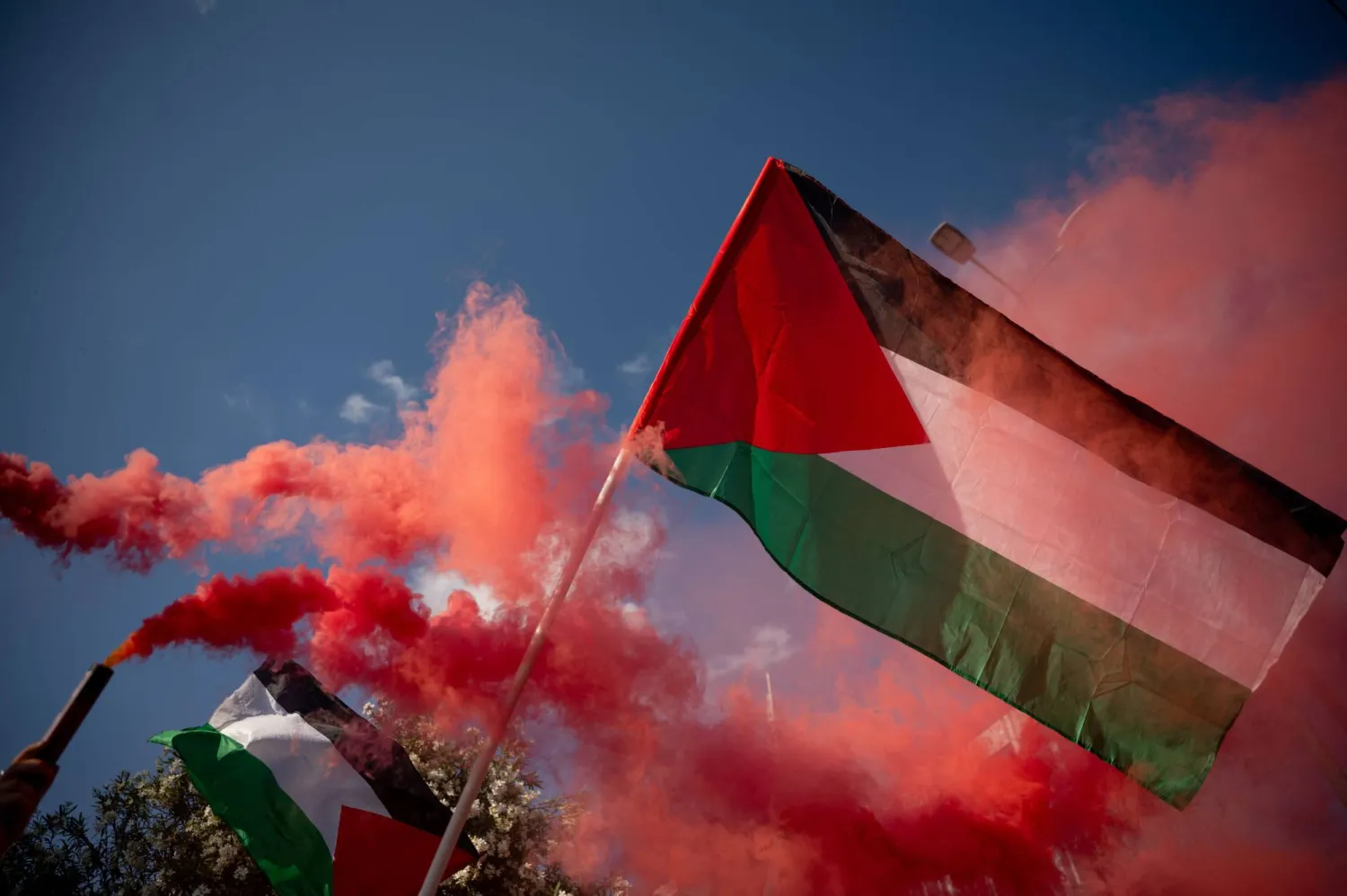
A Palestinian flag is pictured against a background of smoke grenades during a gathering against the interception of the Global Sumud Flotilla by the Israeli Navy off the coast of Cyprus outside the Ministry of Foreign Affairs in Athens on May 18, 2026.  (Photo by Aggelos NAKKAS / AFP)
A Palestinian flag is pictured against a background of smoke grenades during a gathering against the interception of the Global Sumud Flotilla by the Israeli Navy off the coast of Cyprus outside the Ministry of Foreign Affairs in Athens on May 18, 2026. (Photo by Aggelos NAKKAS / AFP)
TT

Israel Says Deported 'All Foreign Activists' from Gaza-bound Flotilla

A Palestinian flag is pictured against a background of smoke grenades during a gathering against the interception of the Global Sumud Flotilla by the Israeli Navy off the coast of Cyprus outside the Ministry of Foreign Affairs in Athens on May 18, 2026.  (Photo by Aggelos NAKKAS / AFP)
A Palestinian flag is pictured against a background of smoke grenades during a gathering against the interception of the Global Sumud Flotilla by the Israeli Navy off the coast of Cyprus outside the Ministry of Foreign Affairs in Athens on May 18, 2026. (Photo by Aggelos NAKKAS / AFP)

Israel said it had deported on Thursday all the foreign activists seized by Israeli forces from a Gaza-bound flotilla, following global outcry over their treatment in custody.

"All foreign activists from the PR flotilla have been deported from Israel. Israel will not permit any breach of the lawful naval blockade on Gaza," said foreign ministry spokesman Oren Marmorstein.

Earlier, western governments voiced outrage on Thursday after Israel’s far-right security minister posted a video of himself taunting Gaza-bound flotilla activists being pinned to the ground, with two later alleging ​they were physically assaulted in detention.

The activists' treatment by police officers under the direction of National Security Minister Itamar Ben-Gvir also drew a rebuke from Israeli Prime Minister Benjamin Netanyahu and from the United States, Israel's staunchest ally.

The activists, whose vessel was intercepted on Wednesday in international waters by Israeli naval forces as they were trying to deliver humanitarian aid to Gaza, were expected to be deported from Israel on Thursday.

Across Europe, governments summoned Israeli ambassadors to condemn the video. Italy demanded an apology, Spain said it would not tolerate maltreatment of its citizens, and France demanded the release of all the detainees.

Britain's foreign ministry said the video "violates the most basic standards of respect and dignity for people", while Poland's foreign minister called for Ben-Gvir to be banned from entering the country.

The US Ambassador to Israel, Mike Huckabee, said Ben-Gvir had "betrayed (the) dignity of his nation".

The outpouring of anger follows ‌the posting of campaign-style ‌videos by Ben-Gvir and at least one other minister in Netanyahu's government, transport chief Miri ​Regev, showing ‌them visiting ⁠the port ​and ⁠lambasting the protesters, attention-grabbing antics ahead of a potential early election in Israel


Türkiye Planning Special Flights to Bring Back Activists on Gaza Flotilla

Türkiye’s Foreign Minister Hakan Fidan speaks to the reporters at Antalya Diplomacy Forum in Antalya, Türkiye, April 19, 2026. (Reuters)
TT

Türkiye Planning Special Flights to Bring Back Activists on Gaza Flotilla

Türkiye’s Foreign Minister Hakan Fidan speaks to the reporters at Antalya Diplomacy Forum in Antalya, Türkiye, April 19, 2026. (Reuters)

Türkiye is planning special flights ​from Israel on Thursday to fly out its citizens and some activists from ‌third ‌countries ​who ‌joined ⁠a ​global aid flotilla that ⁠was intercepted by Israeli forces while trying to break ⁠its Gaza blockade, ‌Foreign ‌Minister Hakan ​Fidan ‌said.
Fidan said ‌on X that all Turkish institutions were working to ‌ensure the security and safe ⁠return ⁠of Turkish nationals. Broadcaster NTV separately said Turkish Airlines has sent three planes to Israel for the repatriations.
