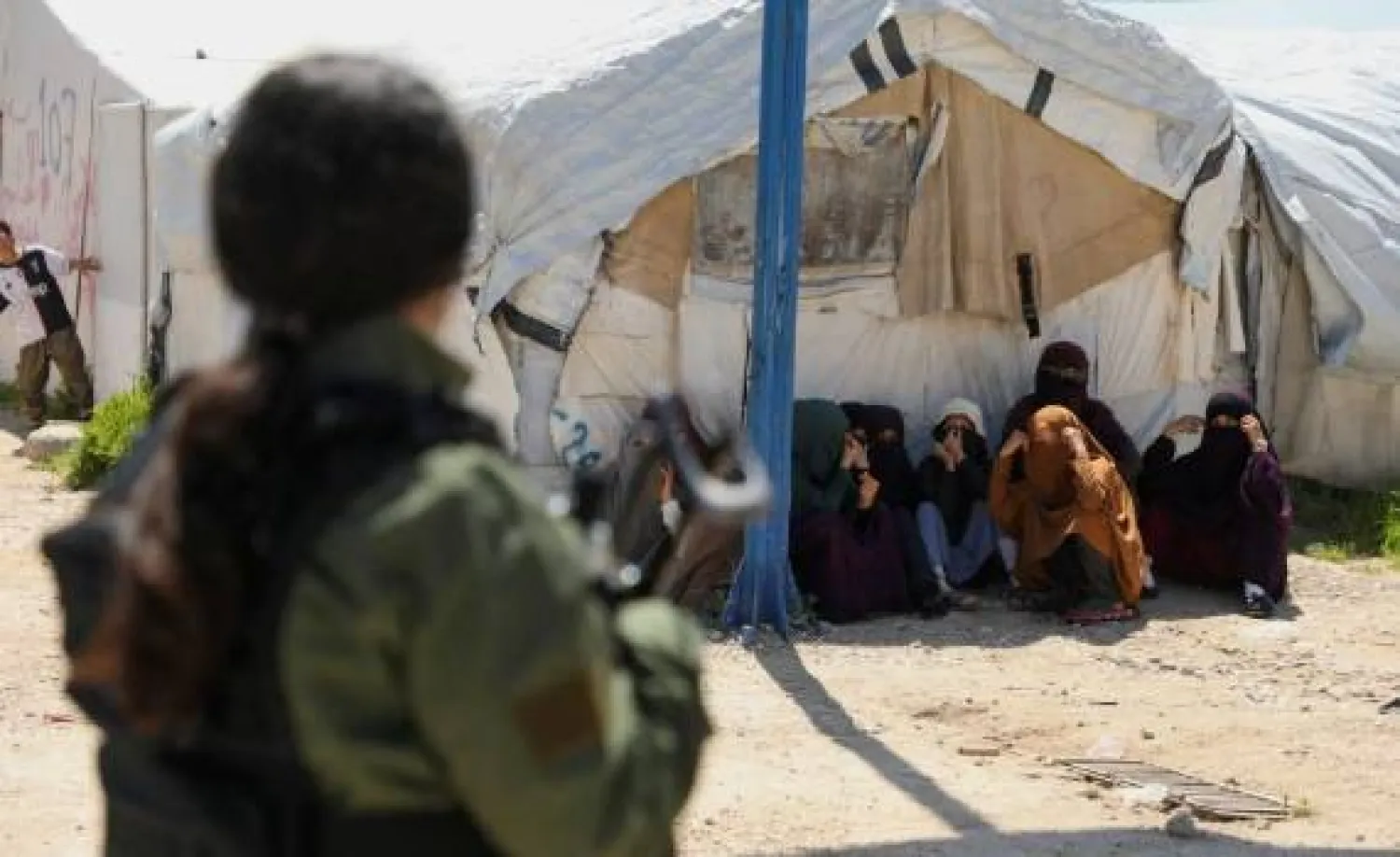
Members of Australian families believed to be linked to the ISIS militants wait to leave Roj camp near Derik, Syria April 24, 2026. REUTERS/Orhan Qereman/File Photo
Members of Australian families believed to be linked to the ISIS militants wait to leave Roj camp near Derik, Syria April 24, 2026. REUTERS/Orhan Qereman/File Photo
A second group of Australian women and children linked to the ISIS extremist group have departed a refugee camp in northeast Syria and may be returning to Australia, the Australian Broadcasting Corporation reported on Friday.
The broadcaster said a bus carrying the group left the Al-Roj camp on Thursday afternoon under escort by a convoy of Syrian government officials. The group is expected to reach Damascus, though it remains unclear when they might travel to Australia, the report said.
Home Affairs Minister Tony Burke said Australia's security and intelligence agencies had been preparing for the return of women linked to ISIS for more than a decade, reported Reuters.
"This is not a coherent group, there is a spectrum in terms of the actions of the individuals while they have been away from Australia," Burke said by email.
He did not provide details about the group's travel to Australia.
The Australian government has previously ruled out providing direct assistance for the return of Australian families linked to ISIS but has acknowledged "very serious limits" to preventing citizens from re-entering the country. Earlier this month, four women and nine children linked to ISIS returned to Australia after spending seven years in detention camps. Upon arrival, Kawsar Ahmad, 54, and her daughter Zeinab Ahmad, 31, were charged with slavery offences, while 32-year-old Janai Safar faced terror-related charges.
The return of the women drew criticism, with opponents accusing Australia's center-left government of failing to prevent their repatriation.
Between 2012 and 2016, some Australian women travelled to Syria to join their husbands who were allegedly members of ISIS. Following the collapse of the “caliphate” in 2019, many were detained in camps, while others returned home. In January, the United States began moving detained ISIS members out of Syria after the collapse of the Kurdish-led Syrian Democratic Forces, which had been guarding several detention facilities housing ISIS fighters and affiliated civilians, including foreigners.
Eryani: Yemen Dawn Operation Will Restore the State, New Battlefronts Will Be Openedhttps://english.aawsat.com/arab-world/5326394-eryani-yemen-dawn-operation-will-restore-state-new-battlefronts-will-be-opened
An armored vehicle belonging to the Yemeni government forces is stationed under a tree near to the Jabal Han front west of the city of Taiz following fierce battles with the Houthis on October 3, 2026. (AFP)
Eryani: Yemen Dawn Operation Will Restore the State, New Battlefronts Will Be Opened
An armored vehicle belonging to the Yemeni government forces is stationed under a tree near to the Jabal Han front west of the city of Taiz following fierce battles with the Houthis on October 3, 2026. (AFP)
Yemen has entered a new phase after the Yemeni leadership announced the launch of Operation Yemen Dawn aimed at restoring the state and ending the coup by the Iran-backed terrorist Houthi militia.
The operation spans the west coast and Baba al-Mandeb Strait, as well as Taiz, Marib, al-Jawf, Midi and aims to liberate Sanaa from the Houthis. The air force has carried out in recent days air strikes against the Houthis in the capital.
As the scale of operations expands across multiple fronts, questions are mounting over the ability of government forces to translate field advancements into broader shifts along the lines of contact. Uncertainty also surrounds how seizing control of Bab al-Mandeb and securing coastal areas will influence the battle, alongside the role of the coalition’s aerial support in sustaining ground operations.
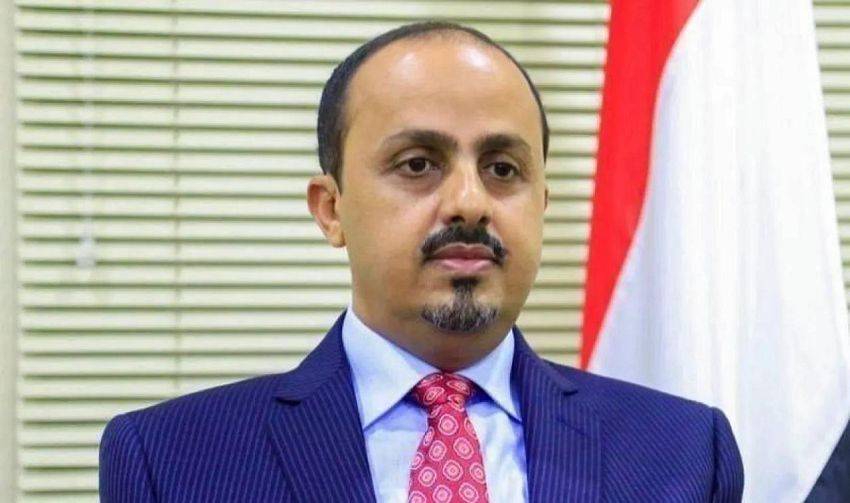
Yemeni Minister of Information Muammar al-Eryani told Asharq Al-Awsat in an exclusive interview that the address delivered by President of the Presidential Leadership Council Chairman Dr. Rashad Al-Alimi “reflects absolute clarity regarding the political and military objectives of the current phase.”
“We are not talking about a limited battle to achieve temporary field gains, but rather a path aimed at restoring state institutions, authority, and sovereignty over the entire nation, and ending the situation imposed by the Houthi coup,” he remarked.
He noted that the “core message the PLC intended to convey is that the state has entered a new phase, moving from crisis management to executing the decision to restore the state.”
“All resources of the state, the armed forces, security, and military formations, as well as the Yemeni people, must stand behind the national objective,” he urged.
The Yemen Dawn Operation is “a war to restore the state, its institutions, and its sovereignty, rather than to reclaim specific regions or achieve limited gains,” Eryani said.
Yemeni Minister of Information Muammar al-Eryani. (Saba)
Advances
Eryani confirmed that the armed forces, represented by the Giants and Nation’s Shield forces, have successfully recaptured the city of Mokha, the Bab al-Mandeb region, Dhubab, and surrounding strategic sites in a major field development under the new operation.
Current efforts are focused on completing securing, sweeping, and clearing operations on islands near the Bab al-Mandeb Strait to consolidate control and prevent the re-emergence of threats to this vital waterway, he added.
“For the government, Bab al-Mandeb is not merely a geographic location or a military asset, but an integral part of Yemen's security and sovereignty. At the same time, it serves as a critical international corridor for trade and navigation, meaning its securing represents a combined Yemeni, regional, and international interest,” he stressed.
Aerial support
Eryani described the aerial support from the Saudi-led Coalition to Restore Legitimacy in Yemen as an “important factor” in sustaining the advancement of troops on the ground, noting its impact on the ability of the armed forces and military formations to execute simultaneous operations across multiple fronts.
He noted that the coalition announced the participation of around 100 fighter jets at the launch of the Yemen Dawn Operation.
“The primary objectives of the operation consist of reclaiming areas where the Houthi militia has recently expanded, completing the restoration of state territories and institutions, and securing strategic corridors and sites, foremost among them the Bab al-Mandeb Strait and the coastal strip,” said the minister.
Multiple fronts
Military operations are taking place across multiple axes, including the west coast, Taiz, Marib, al-Jawf, and Midi, he added.
“Several fronts no longer means a multiplicity of goals; the objective is one: restoring and clearing the remaining state territories and institutions, and extending its sovereignty over the entire national territory,” he stressed.
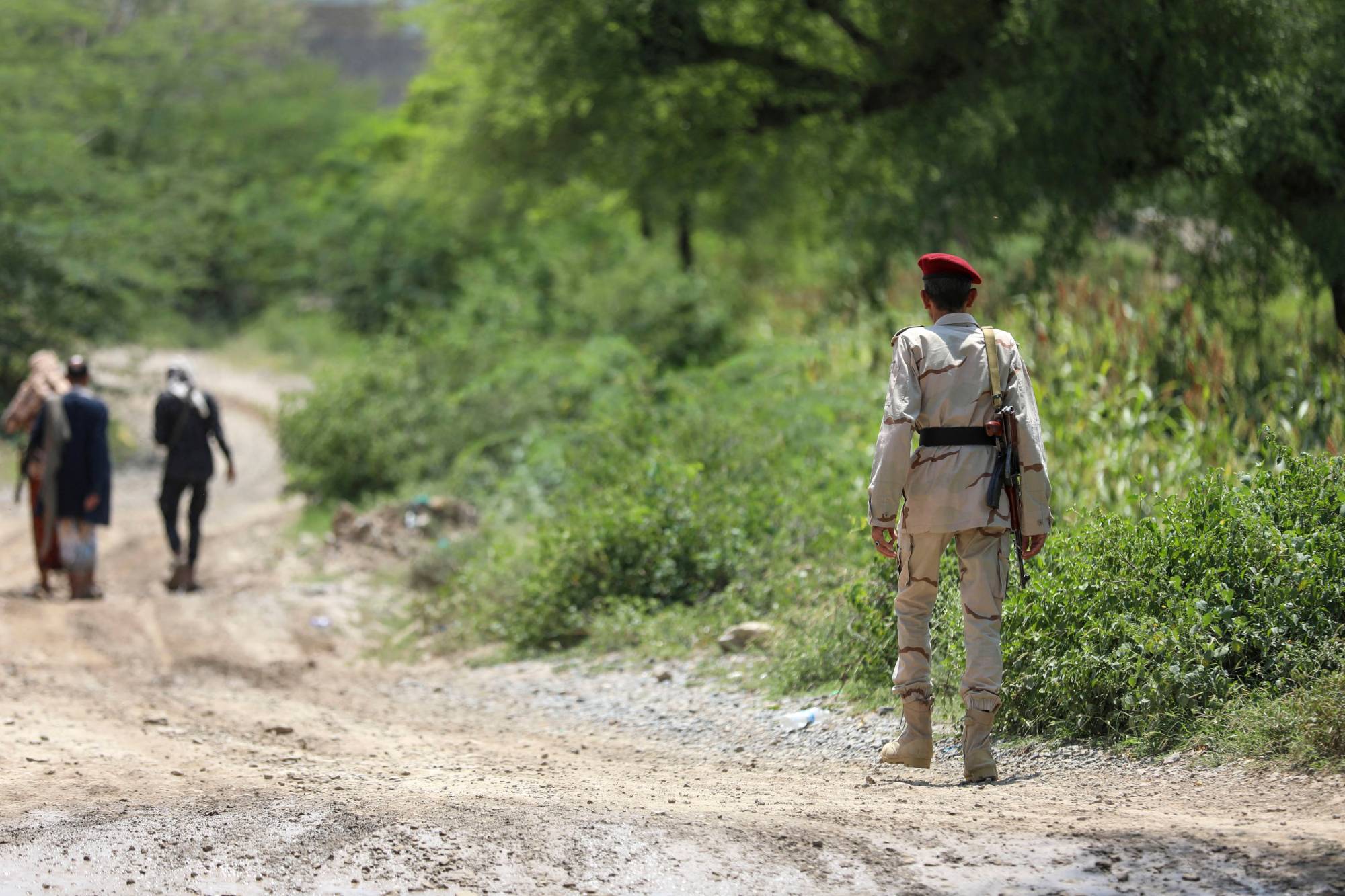
Government forces walk along a dirt road near the Jabal Han front, west of the city of Taiz, following fierce battles with the Houthis on October 3, 2026. (AFP)
Reclaiming Sanaa
On the operation’s goal to reclaim Sanaa, Eryani said it is the Houthi-held capital and the center of state institutions.
“Its recapture is the ultimate goal of this operation. All Yemenis look forward to the day when the capital returns to the fold of the state and its institutions,” he added.
He added that over the past few days, the air force carried out operations targeting Houthi military sites, coinciding with the armed forces beginning a “strategic offensive” on the capital using modern capabilities.
“The armed forces are moving according to approved military plans. As for the field details and the nature of movements and breakthroughs, these are military matters, and their results will be announced at the appropriate time. Operation Yemen Dawn does not target a city, a sect, or residents, but rather aims to restore the state, its institutions, and end the coup,” he stressed.
“The objective is not merely to achieve a military breakthrough or alter the lines of contact, but rather to restore the state, clear Yemeni territory of the manifestations of the coup, reinstate state institutions, and extend its authority and sovereignty,” Eryani stated.
“We are facing a broad national battle waged by Yemenis using their capabilities, armed forces, and military formations, with the support and backing of the Coalition led by Saudi Arabia,” he continued.
“What has been achieved so far confirms that the operation has entered a new phase, and that Yemenis look forward to completing its goals and successfully restoring their state, capital, and institutions,” he noted.
“Ultimately, success is measured not only by field achievements, but by the subsequent return of the state, security, stability, and normal life to the Yemeni people,” he remarked.
Coalition Carries out Military Operation in Yemen’s Hodeidah to Protect Marine Navigationhttps://english.aawsat.com/arab-world/5326387-coalition-carries-out-military-operation-yemen%E2%80%99s-hodeidah-protect-marine
Coalition spokesman Major General Turki al-Malki. (Asharq Al-Awsat)
TT
TT
Coalition Carries out Military Operation in Yemen’s Hodeidah to Protect Marine Navigation
Coalition spokesman Major General Turki al-Malki. (Asharq Al-Awsat)
The Coalition to Restore Legitimacy in Yemen announced on Monday that naval forces carried out a military operation in the Hodeidah governorate as part of its goals to protect marine navigation in the Bab al-Mandeb Strait.
In a post on the X platform, Coalition spokesman Major General Turki al-Malki said the operation destroyed legitimate terrorist Houthi militia military targets.
The Coalition obstructed plans for attacks and a network that was targeting waterways in the southern Red Sea.
It confirmed the destruction of weapons warehouses, sea mines and booby-trapped vessels, added the spokesman.
Earlier on Monday, the Coalition announced that 100 fighter jets were taking part in Operation Yemen Dawn that was launched by the legitimate Yemeni government to liberate territories held by the Houthis.
Al-Malki said the Coalition was providing “around the clock” aerial support for the Yemeni armed forces on the ground, revealing that the air forces were securing the Bab al-Mandeb Strait.
He added that 324 “high value” targets have been destroyed since the launch of the operation.
At Oct 7 Memorial, Netanyahu Says Will Be No Hamas Rule in Gazahttps://english.aawsat.com/arab-world/5326217-oct-7-memorial-netanyahu-says-will-be-no-hamas-rule-gaza
Israeli Prime Minister Benjamin Netanyahu speaks at the State Memorial Ceremony for the three year anniversary of the October 7, 2023, Hamas attack - REUTERS
At Oct 7 Memorial, Netanyahu Says Will Be No Hamas Rule in Gaza
Israeli Prime Minister Benjamin Netanyahu speaks at the State Memorial Ceremony for the three year anniversary of the October 7, 2023, Hamas attack - REUTERS
Israeli Prime Minister Benjamin Netanyahu on Monday vowed there would be no Hamas rule in Gaza as he attended a memorial event marking three years since the October 7, 2023 attack.
Speaking during a state ceremony at the Mount Herzl military cemetery in Jerusalem, Netanyahu said "we have achieved enormous accomplishments, but there are still missions ahead of us, and we intend to complete them".
"There will be no Hamas rule in Gaza," he added, vowing to continue targeting anyone who was involved in the attack or who held hostages.
The Hamas-led attack resulted in the deaths of 1,221 people, according to an AFP tally based on official Israeli figures. Militants also dragged 251 hostages into Gaza, 44 of them already dead.
In response, Israel launched a massive military offensive that has killed more than 74,200 people in Gaza, according to the territory's health ministry, which is under Hamas authority and whose figures are considered reliable by the United Nations.
Since a ceasefire was declared last October, Israeli forces have killed more than 1,440 people in Gaza, according to the ministry.
Plans for Gaza's post-war governance have begun to take shape, but the issue remains largely unresolved in practice.
Since Hamas's October 2023 attack, Israel has fought wars on several fronts, including against Iran-backed Hezbollah in Lebanon.
During his speech on Monday, Netanyahu also vowed to keep striking Hezbollah to "create an opportunity for peace with a country whose people, for the most part, want peace with us".
Netanyahu also hit out at the clerical leadership in Iran, where Israel and the United States launched a joint attack on February 28, triggering the Middle East war.
"We will not allow the ayatollah regime in Tehran to threaten our existence," Netanyahu said, adding the Iranian leadership was "weaker than it has been since its establishment".
لم تشترك بعد
انشئ حساباً خاصاً بك لتحصل على أخبار مخصصة لك ولتتمتع بخاصية حفظ المقالات وتتلقى نشراتنا البريدية المتنوعة