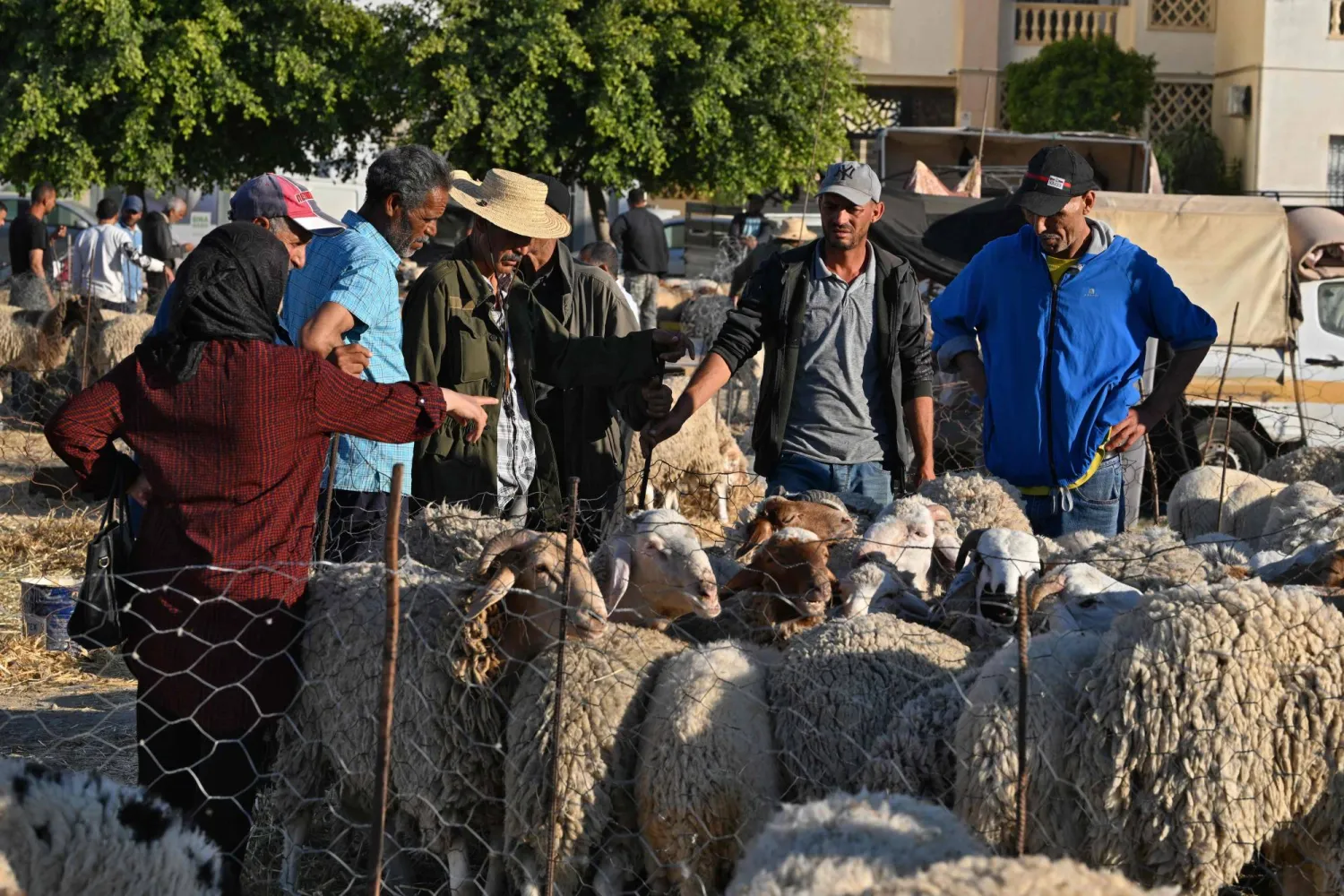

Tunisia's presidency has blamed profiteering networks for the sharp rise in prices, which has become more acute ahead of Eid al-Adha.
Tunisians are facing mounting pressure from high sacrificial animal prices this year, despite a rainy season that ended five consecutive years of drought.
Markets are also witnessing an unusual increase in fruit and vegetable prices, prompting protests earlier this month over the rising cost of living and the erosion of purchasing power among broad segments of the population.
In a video published on its official Facebook page following a meeting between Tunisian President Kais Saied and security officials, the presidency said security forces had dismantled profiteering and hoarding networks in several regions of the country that had deliberately driven up prices "in an attempt to harm producers and consumers alike."
It added that this approach "represents a consistent state policy that will continue without hesitation until this criminal and outrageous rise in prices is completely eliminated."
Despite the security campaigns, prices in markets remained elevated on the eve of Eid al-Adha, including red meat prices, according to observations by a correspondent for the German Press Agency (dpa).
Tunisia's inflation rate stood at 5.5 percent in April, according to the latest official update, marking its highest level in about a year, and is expected to rise further this month.
The Tunisian General Labour Union (UGTT) had earlier warned of deteriorating purchasing power among Tunisians because of rising prices and the absence of effective policies for price monitoring and regulation.