


Hamas Weighs Collective Leadership to Fill Qassam Vacuum

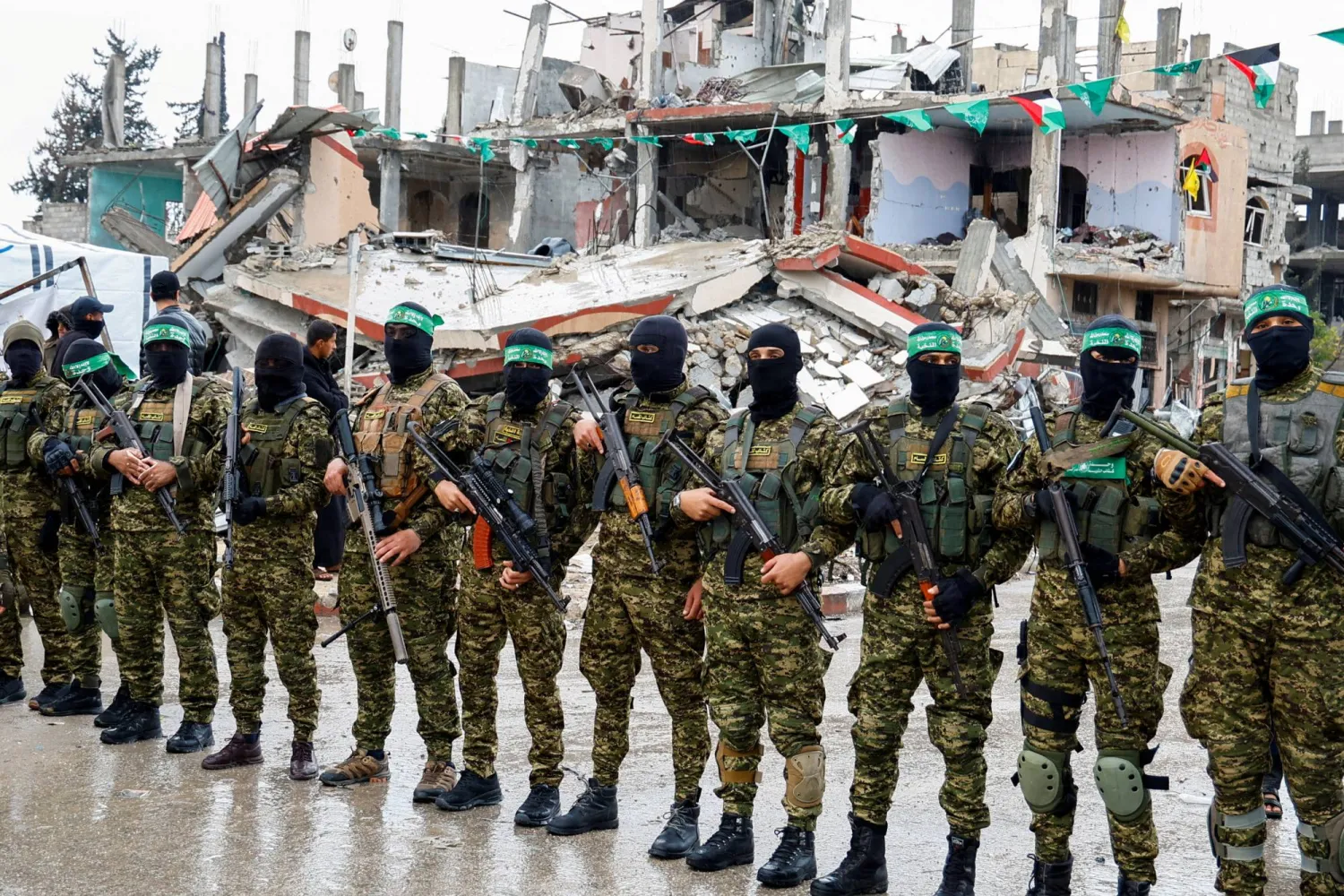
FILE PHOTO: Palestinian Hamas militants stand guard on the day of the handover of hostages held in Gaza, in Rafah in the southern Gaza Strip, February 22, 2025. REUTERS/Hatem Khaled/File Photo
TT

Hamas Weighs Collective Leadership to Fill Qassam Vacuum

FILE PHOTO: Palestinian Hamas militants stand guard on the day of the handover of hostages held in Gaza, in Rafah in the southern Gaza Strip, February 22, 2025. REUTERS/Hatem Khaled/File Photo

A wave of Israeli assassinations targeting commanders of al-Qassam Brigades, Hamas’ armed wing, has thrown the movement and its military command into greater difficulty.

Filling the vacuum at the top of Qassam’s general staff has become harder at what Hamas sees as the most perilous stage in its history since its founding in 1987.

Despite a supposed ceasefire agreement in Gaza since last October, Israel has killed many Hamas and Qassam members and commanders.

In less than two weeks, it killed Qassam commander Izz el-Deen al-Haddad, his successor Mohammed Odeh, and Imad Aslim, deputy commander of the Gaza Brigade and a prominent field commander, after decades of pursuit.

A fourth figure, the new commander of the Northern Brigade, survived and is believed to have been wounded.

Hamas sources told Asharq Al-Awsat that several options are under discussion within the movement, including a “collective leadership” for Qassam, modeled on the leadership council now overseeing Hamas affairs.

With the killings of Haddad and Odeh, Israel has most likely eliminated all those who planned and oversaw the Oct. 7, 2023, attack, as well as the members of the military council and general staff, except for Qassam commander Imad Aqel.

Aqel did not take part in planning or supervising the attack, but is believed to have known about it because he was then responsible for the Home Front Directorate, a post he held until Odeh was killed.

What are the options?

Three Hamas sources in Gaza, speaking separately to Asharq Al-Awsat, agreed that choosing or announcing a new chief of staff could take longer this time than the swift handover from Haddad to Odeh.

They cited several reasons, including “the security situation and Israel’s pursuit of anyone who is chosen.”

One source said the decision had also been complicated by “the internal impact of the assassinations on the movement and the need for more caution.”

A third source said a new commander was likely to be chosen soon, but under tighter secrecy to prevent his identity from being leaked, especially if the choice is a figure not widely seen as a contender.

The sources acknowledged that the assassinations had wiped out senior or charismatic Qassam leaders, making the task of choosing a successor more difficult.

Still, the Gaza sources and a fourth Hamas leader outside the enclave did not rule out a new course, appointing a “leadership council” similar to the body that runs Hamas politically.

The source outside Gaza said: “A council of five of the most prominent remaining military commanders may be formed to run Qassam during this critical period until conditions stabilize.”

Imad Aqel

“There are several options for the Qassam chief of staff. There are candidates for the post, such as Imad Aqel, the last remaining figure in the current military council, as well as others who were once members of the council and left years ago. They may be brought back after being summoned during the current war to take on specific field and administrative roles,” the Gaza sources said.

All sources said Aqel could become chief of staff in the near future.

Three Hamas sources in Gaza said Aqel is a major military figure. Israel has tried to assassinate him at least twice, wounding him in one attempt. During the current war, he lost one son at the hands of armed members of the Doghmush clan south of Gaza City, two days after the Oct. 10, 2025, ceasefire.

The clan abducted and killed him before a decision was issued to attack it, eliminate its gunmen and seize its weapons. Aqel’s other son was killed while taking part in the Oct. 7 attack.

Aqel originally lived in Nuseirat refugee camp in central Gaza. At the start of the second intifada in late September 2000, he was forced to leave the camp and move to the Zeitoun neighborhood in southern Gaza City.

In 2002, he was accused of being behind the assassination of Rajeh Abu Lehia, commander of the Riot Control Unit in the Palestinian Authority police.

Aqel served at various times as commander of the Central Brigade and then the Gaza Brigade. He also headed the Manufacturing Directorate before spending longer years in the Home Front Directorate.

Muhannad Rajab and a mysterious veteran figure

Other Qassam commanders are also being mentioned, including Gaza Brigade commander Muhannad Rajab, Northern Brigade commander Izz el-Deen al-Beik, whom Israel tried to assassinate days ago, and Khan Younis Brigade commander Mohammed al-Bureim. Other former members of the brigades’ military council are also being pushed by some to return to the general staff.

A Hamas source familiar with Rajab said he is “known for strategic thinking and security experience,” qualities that helped him become Gaza Brigade commander despite the presence of more senior military names. His ability to draw up strategies, the source said, enabled him to command the Sabra and Tel al-Islam battalions, and he was close to Haddad.

The source said Rajab has “a strong chance of becoming Qassam commander-in-chief, especially since many field commanders could be nominated to replace him as commander of the Gaza Brigade.”

The name of Northern Brigade commander Izz el-Deen al-Beik also appears as another option, if his health allows, after conflicting reports about his injury in an Israeli strike days ago.

One source said the candidates include a mysterious figure he described as “historical,” whom Israel tried to assassinate several times during the latest war.

The source, who declined to name the candidate to lead Qassam, said they “are not wounded, have considerable security and military experience, and are one of the brigades’ veteran military and security figures.”


Lebanon: Southern Activists Mount First Political Challenge to Hezbollah

29 May 2026, Lebanon, Tyre: A Lebanese takes video footages of an Israeli air strike on the southern Lebanese port city of Tyre as Israeli forces continued to expand their invasion in south Lebanon amid ongoing direct talks between Lebanon and Israel in Washington. Photo: Stringer/dpa
TT

Lebanon: Southern Activists Mount First Political Challenge to Hezbollah

29 May 2026, Lebanon, Tyre: A Lebanese takes video footages of an Israeli air strike on the southern Lebanese port city of Tyre as Israeli forces continued to expand their invasion in south Lebanon amid ongoing direct talks between Lebanon and Israel in Washington. Photo: Stringer/dpa

Activists in southern Lebanon have opened the first political confrontation with Hezbollah, issuing two appeals in the names of Tyre and Nabatieh that call for the cities to be declared “free of weapons” and placed “under the authority and protection of the Lebanese state.”

Their aim is to protect the cities from Israeli bombardment and prevent them, along with nearby villages, from being emptied of residents.

As Israel’s war on Lebanon continues, leaving widespread destruction and unprecedented human and material losses in the south, voices from within the southern community itself are beginning to call for an end to the war and to the transformation of the region into an open arena for regional conflicts.

The move goes beyond humanitarian appeals and reaches into the heart of the debate over the south’s future and the role of weapons there.

Tyre appeal

A number of residents of Tyre and nearby areas issued an appeal calling for “saving their city from the ongoing destruction caused by Israeli aggression, which has claimed dozens of its people and seeks to empty it of its residents and remove it from history and geography through the systematic targeting of civilians and infrastructure.”

The signatories said their moral responsibility “requires raising their voices loudly and without equivocation.”

They said their goal was “to reach a final end to the war and fully liberate Lebanese land, away from axis politics and other people’s wars, so that the south does not remain a card in regional negotiations that have nothing to do with the Lebanese.”

They also stressed “the need to impose the sovereignty of the Lebanese state over all its territory.”

They called for “putting an end to the destruction of Tyre, working to consolidate a comprehensive ceasefire across all Lebanese territory, and for the Lebanese government to launch an urgent Arab and international diplomatic and political initiative to protect the historic city from ongoing Israeli attacks.”

They also urged “strengthening the deployment of the Lebanese army and official security forces inside the city and around it, and consolidating the presence of state institutions there in a way that preserves security and stability and protects residents.”

The appeal went further, calling for Tyre to be declared an “open city” free of weapons, allowing its people to return, protecting displaced people and arrivals, ensuring access to humanitarian and medical aid, and keeping basic services running.

Nabatieh appeal

Hours later, residents of Nabatieh picked up the initiative and issued a similar appeal signed by about 220 figures, including activists, and social, cultural, academic and economic figures.

They called on the Lebanese government to “launch an urgent diplomatic and political move to protect Nabatieh and its district from destruction and ongoing Israeli attacks.”

They also called for “strengthening the deployment of the Lebanese army and security forces at the entrances to the city and around it, and consolidating the presence of state institutions in a way that protects civilians and reassures residents and the displaced.”

The people of Nabatieh stressed the need to “declare the city and its surroundings a safe and open area under the care of the Lebanese state and its legitimate authority, free of everything that could expose its residents to danger, allowing people to return to their homes and sparing the city further destruction.”

They appealed to the state “to take the necessary measures to protect Beaufort Castle and all other historical and heritage landmarks in the area, and to work to impose a ceasefire in Nabatieh and the south, as was the case in other areas that witnessed relative calm.”

Shift in public mood

The two appeals drew wide political and media attention as possible signs of a shift in public mood inside southern Lebanon.

Academic and political researcher Dr. Harith Suleiman said the appeals by residents of Tyre and Nabatieh “reflect a decline in popular confidence in Hezbollah’s military role, and point to a growing conviction among a segment of southerners that the military option has failed to protect southern areas or prevent Israeli incursions.”

Suleiman told Asharq Al-Awsat that Hezbollah “has long promoted the idea that it had the advantage in any ground confrontation with Israel, but recent developments on the ground showed a clear imbalance in the balance of power in Israel’s favor, as well as a decline in the party’s ability to inflict losses that would make any ground incursion costly.”

He said the appeals “are, in essence, a political message showing that a segment of the people of the south now sees the Lebanese state alone as the refuge capable of providing protection and stability.”

At their core, the demands carry a political position, pointing to a conviction among southerners that the state alone is their refuge. Suleiman said the appeals “mark a popular collapse of the military role that the party has played over the past years, and reflect a growing tendency among Lebanese to entrust their fate to the state and its diplomatic choices after the bet on military solutions has receded.”

He said southerners “hold the party responsible for the choices that led to human losses and urban destruction in the region.”

“What is happening in the south, in terms of human and urban catastrophe, is a translation of Iranian choices that do not care about the fate of Shiites. Unfortunately, the tragedy befalling the people of the south and the Lebanese adds nothing to Iran under a balance of power that does not tilt in its favor,” he said.

Humanitarian catastrophe

The signatories of the Tyre appeal, however, said the demand to declare the city free of weapons does not stem from a political background as much as from a desire to protect residents and prevent the city from being used as a pretext for Israeli targeting.

One signatory told Asharq Al-Awsat that Tyre “has been living through something resembling a humanitarian catastrophe since the outbreak of the latest war, after it turned into a main center for receiving displaced people from surrounding villages and towns.”

He said large numbers of displaced people in recent months had arrived in the city. They were housed in old neighborhoods, schools and public facilities, placing huge humanitarian and service burdens on residents.

He said the main goal of calling for the city to be free of weapons “is to protect it through legitimate state institutions and prevent it from being used as a justification for Israeli airstrikes, for which civilians pay the heaviest price.”

“More than half of Tyre has been destroyed, while preserving the city, its residents and its historical and national role has become a priority above all other considerations,” he said.


Israeli Flag Raised over Lebanon’s Beaufort Castle in Deepest Incursion in 26 Years

An Israeli flag is raised on Beaufort Castle, as seen from Marjayoun, southern Lebanon, May 31, 2026. REUTERS/Stringer
TT

Israeli Flag Raised over Lebanon’s Beaufort Castle in Deepest Incursion in 26 Years

An Israeli flag is raised on Beaufort Castle, as seen from Marjayoun, southern Lebanon, May 31, 2026. REUTERS/Stringer

Israeli troops have captured a strategic mountain topped with a Crusader-built castle in southern Lebanon in their deepest incursion into the country in more than a quarter century, bragging about planting the flag on the medieval fortress of Beaufort.

The capture of Beaufort near the city of Nabatiyeh came after days of intense fighting and airstrikes in nearby villages where Israeli troops fought Hezbollah members in the rugged area.

The capture of the castle marks a major gain for Israel since the latest Israel-Hezbollah war began in early March and as the two countries hold direct talks in Washington.

The Israeli push came despite a nominal ceasefire that has been in place since April 17.

The Israeli army’s Arabic spokesperson, Avichay Adraee, posted a photograph on X showing Israeli troops walking outside the castle.

Defense Minister Israel Katz also wrote on X, saying that they had raised an Israeli flag over the castle.

"Forty-four years after the heroic Battle of Beaufort, and on this day commemorating the soldiers who fell in the First Lebanon War (1982), our troops have returned to the summit of Beaufort and once again raised the Israeli flag there," Katz said on his Telegram channel.

Israeli troops previously captured the castle in 1982 and held it until they withdrew from Lebanon in 2000.

The Israeli military said in a statement that it launched an operation a few days ago in the Beaufort Ridge and the Suluki valley further south with the aim of dismantling Hezbollah infrastructure and removing "direct threats to Israeli civilians.”

The statement said the army is ready “to expand the operation if needed.”

Israeli troops have been advancing for days in villages close to Beaufort castle after crossing the Litani River, which the Israeli military previously used as a de facto boundary. They are now about 5 kilometers from the city of Nabatiyeh, a major center in southern Lebanon.


This picture taken from the Marjayoun area in southern Lebanon shows smoke rising after an Israeli airstrike on the village of Arnoun on May 31, 2026. (Photo by AFP)

Also Sunday, the Israeli military warned Lebanese civilians living south of the Zahrani river to evacuate the region, warning that it was stepping up operations against Hezbollah.

"Residents of southern Lebanon, you must move immediately to north of the Zahrani," Adraee posted on social media.

Hezbollah overnight claimed two attacks targeting Israeli troops and a Merkava tank in the southwestern town of Bayada near the border. In recent days, the group has said it has clashed with Israeli troops in several towns just north of the river near Nabatiyeh and the strategic castle.

Hezbollah in recent weeks has frustrated Israel with attacks on troops and northern towns using hard-to-detect fiber optic drones.

The Israeli army announced Sunday that one of its soldiers had been killed the previous day by a Hezbollah explosive drone in southern Lebanon.

In total, 25 Israelis have been killed - 24 soldiers and one civilian contractor - since hostilities between Israel and Hezbollah resumed on March 2.


UN Reveals Famine Pockets in Areas of Northern Yemen

Unprecedented deterioration of living and economic conditions in Yemen (UN)
TT

UN Reveals Famine Pockets in Areas of Northern Yemen

Unprecedented deterioration of living and economic conditions in Yemen (UN)

Famine pockets are emerging in Houthi-controlled areas of northern Yemen, amid an unprecedented deterioration of living and economic conditions and severe funding shortfalls, threatening to slide millions of Yemenis into catastrophic levels of food insecurity, recent UN data showed.

In its Yemen Market and Trade Bulletin, the UN’s Food and Agriculture Organization (FAO) said Yemen currently bears the world’s highest burden of populations trapped in the Integrated Food Security Phase 4 (Emergency).

It warned that without immediate multi-year funding and the restoration of humanitarian access, a slide into localized catastrophic conditions (IPC Phase 5) remains imminent.

FAO said the food security outlook for Yemen through the end of 2026 remains highly alarming, with 18.7 million people (53% of the population) projected to face Crisis or worse levels of acute food insecurity (IPC Phase 3+).

Its short-term outlook and implications on food security found that Yemen currently bears the world’s highest burden of populations trapped in the “emergency” phase, covering approximately 17% of the population, where the risk of excess mortality (exceeding the expected number of deaths under normal conditions) is real and steadily increasing.

Indicators of Famine

The FAO report said isolated pockets of catastrophic conditions (IPC Phase 5) are already emerging, particularly within Houthi-controlled areas.

It assumed that Yemen's structural food system collapse is driven by a critical convergence of localized instability, severe funding shortfalls (only 13% funded as of May), and regional geopolitical shocks.

Regional escalations and trade disruptions through the Strait of Hormuz are driving up fuel costs, triggering price increases across domestic transport, food, and agricultural inputs, the report added.

It warned that without immediate multi-year funding and the restoration of humanitarian access, a slide into localized catastrophic conditions (IPC Phase 5) remains imminent.

The report noted that the cost of the Minimum Food Basket remained stable, tracking 26% lower year-on-year and 9% below the three-year average. However, actual food access remains heavily restricted across communities by weak consumer purchasing power, irregular public salary payments, and the lingering effects of past inflation shocks, it added.

Economic Pressures

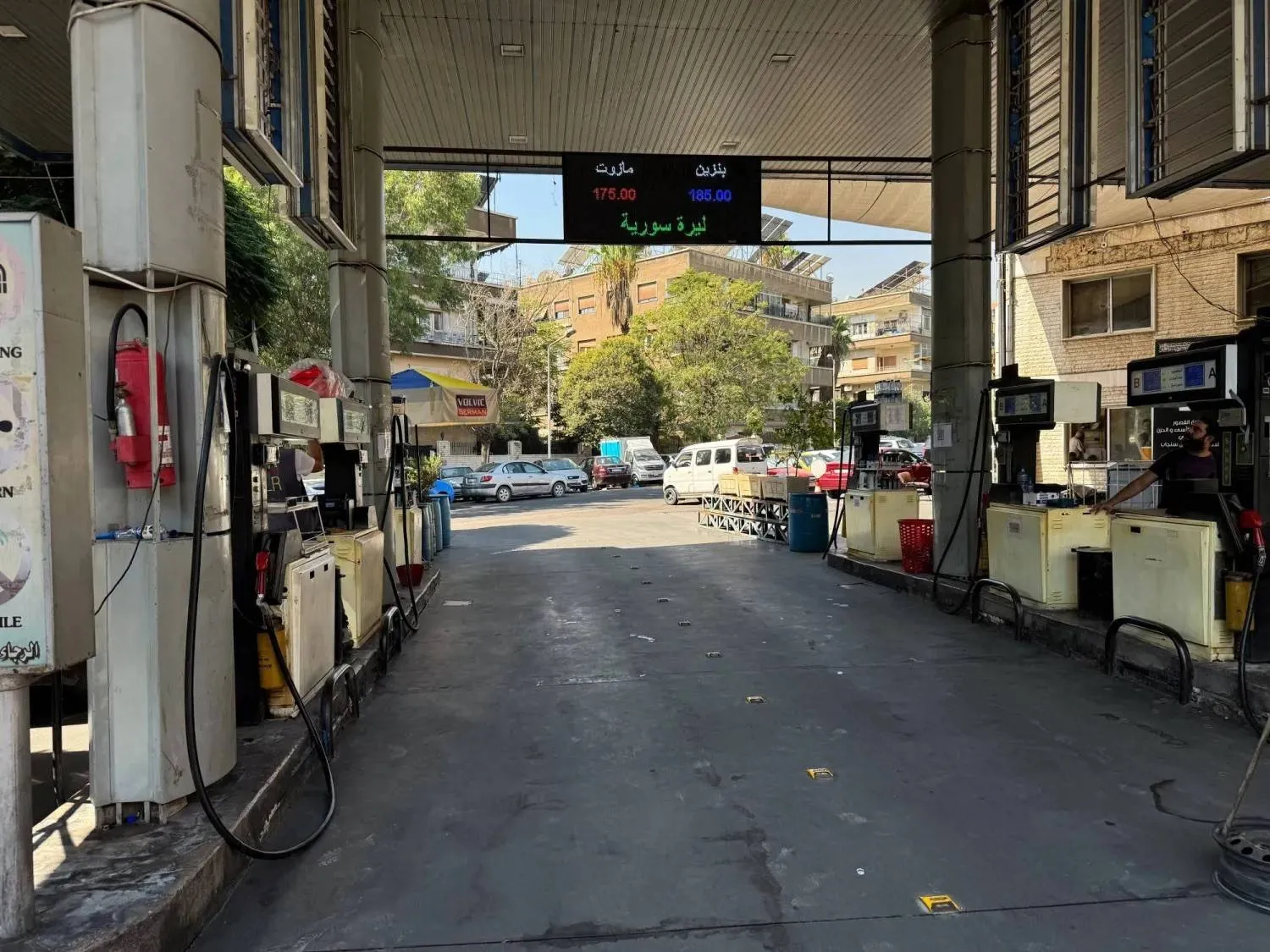
According to the UN agency, fuel prices in government-controlled areas rose, pushing overall costs back to their three-year average—with diesel climbing slightly above it—renewing pressure on domestic fuel affordability.

Concerning food and fuel imports, UN data showed that in April, wheat imports diverged by port, rising through Houthi-controlled ports in the north while collapsing through government-controlled ports.

Also, fuel imports resumed via Ras Isa after none in March, lifting national fuel imports 71% month-on-month.

FAO said that compounded by decades of civil conflict and intensifying climate shocks, macroeconomic and external pressures have affected Yemeni household assets, plunging over 53% of the population into severe food insecurity and forcing millions into deep, systemic destitution and poverty.

In return, it noted that in government-controlled areas, a stronger Yemeni Rial kept staple food prices stable month-on-month and 22% to 30% lower than the previous year.

Still, the UN agency warned that rising domestic fuel prices alongside increasing global food, energy, and shipping costs threaten to renew upward pressure on local food prices.

Concerning casual labor wage rates, FAO revealed that in April 2026, labor markets showed mixed trends: agricultural wages remained constant at 6% higher year-on-year and 18% above the three-year average, whereas casual labor wages fell 11% compared to April 2025 and dropped slightly below their three-year average, highlighting a continuous decline in non-agricultural income opportunities.