
France Requests UN Security Council 'Emergency Meeting' on Lebanon

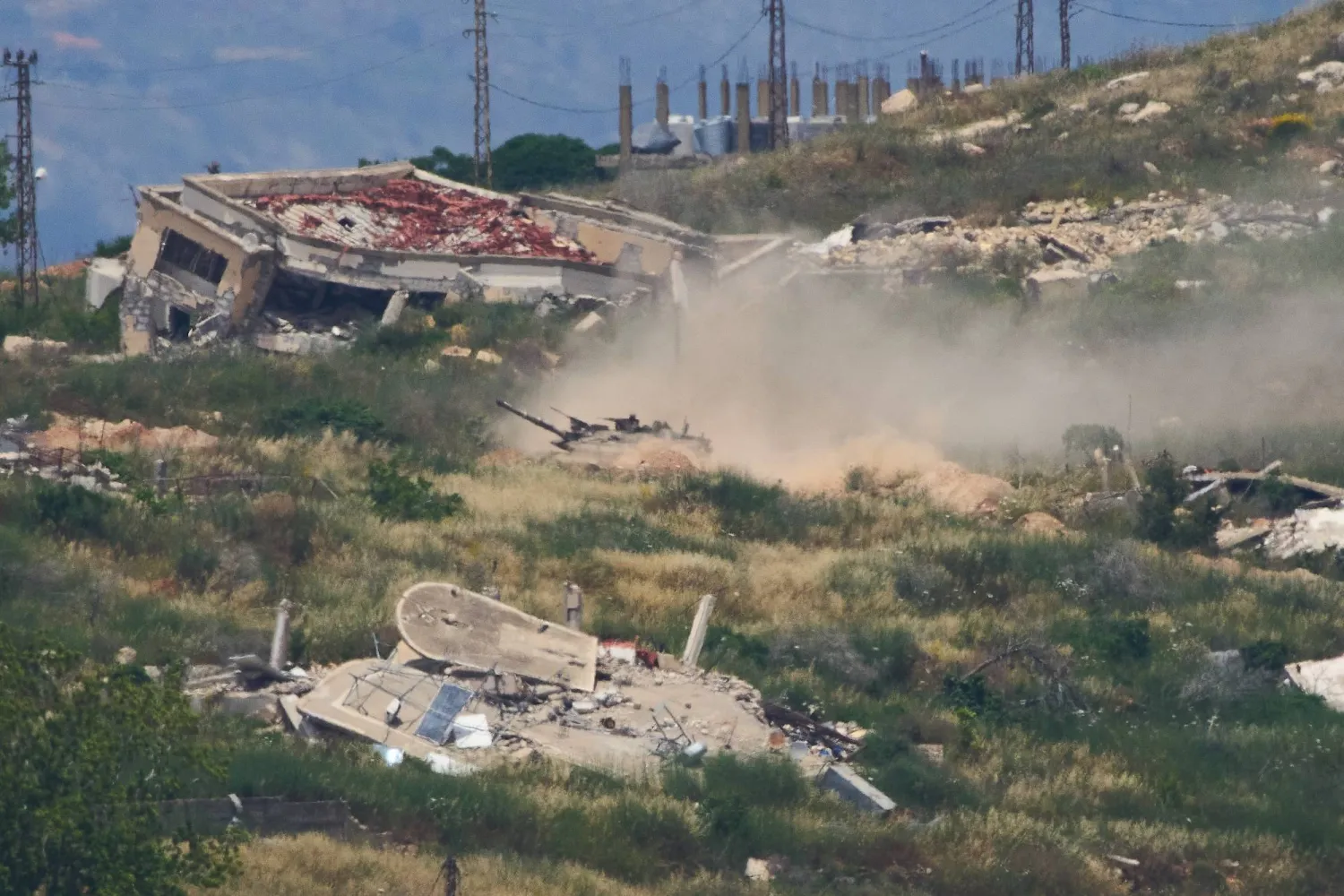
Israeli soldiers drive a tank in southern Lebanon as seen from northern Israel, Sunday, May 31, 2026. (AP Photo/Ariel Schalit)
TT

France Requests UN Security Council 'Emergency Meeting' on Lebanon

Israeli soldiers drive a tank in southern Lebanon as seen from northern Israel, Sunday, May 31, 2026. (AP Photo/Ariel Schalit)

France has requested an emergency meeting of the United Nations Security Council after Israeli forces seized the medieval Beaufort castle in Lebanon, the French foreign minister said Sunday, AFP reported.

"I have requested an emergency meeting of the United Nations Security Council because, while we recognize Israel's right, like that of all countries, to self-defense... nothing can justify the continuation of Israeli military operations in Lebanon and its ever-deeper occupation of Lebanese territory," Jean-Noel Barrot said on the BFMTV channel.

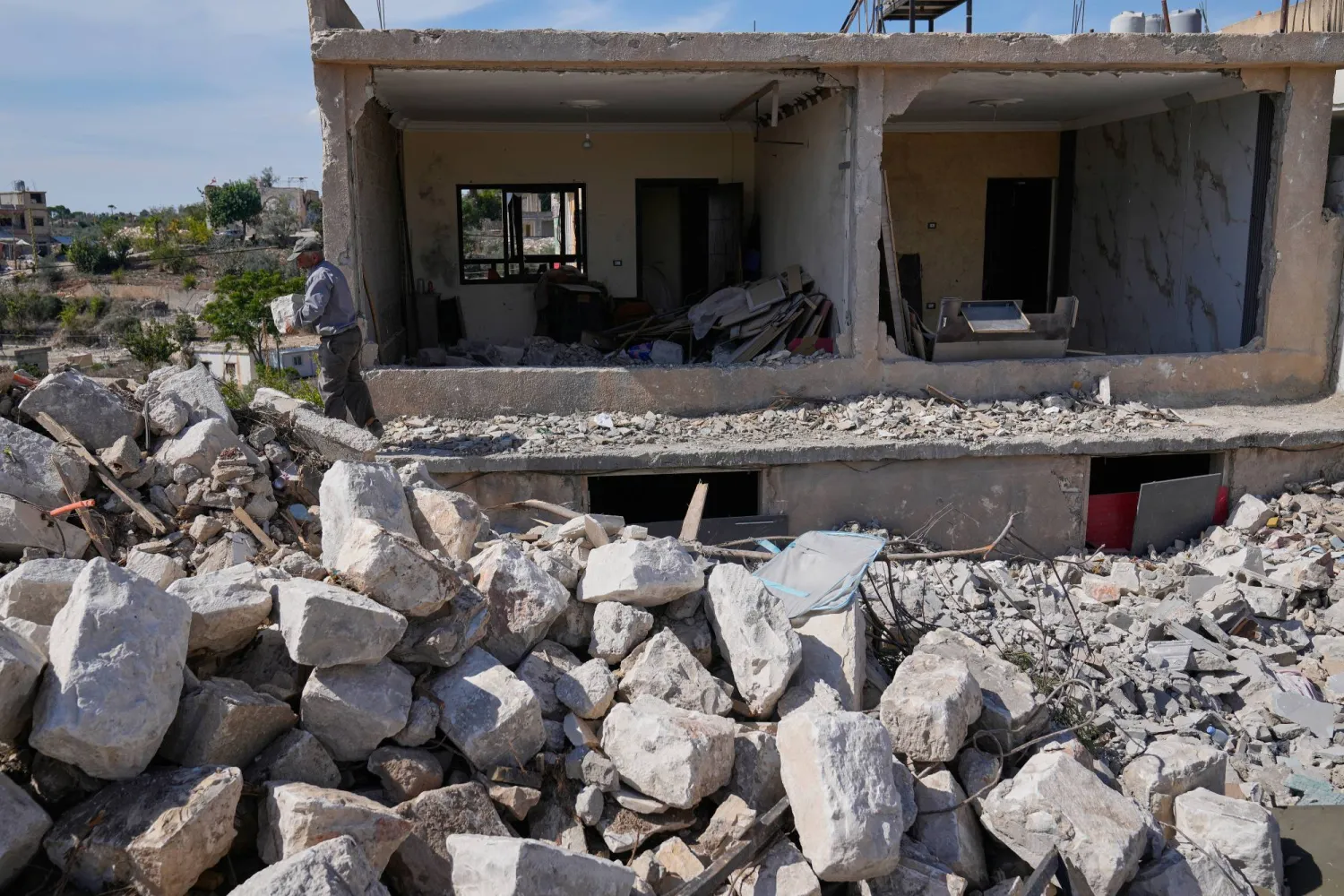
On Sunday, Israeli troops have captured a strategic mountain topped with a Crusader-built castle in southern Lebanon in the deepest incursion into the country in more than a quarter-century.

The capture of Beaufort castle, near the city of Nabatiyeh, came after days of airstrikes and intense fighting in nearby villages where Israeli troops fought Hezbollah members in the rugged area.

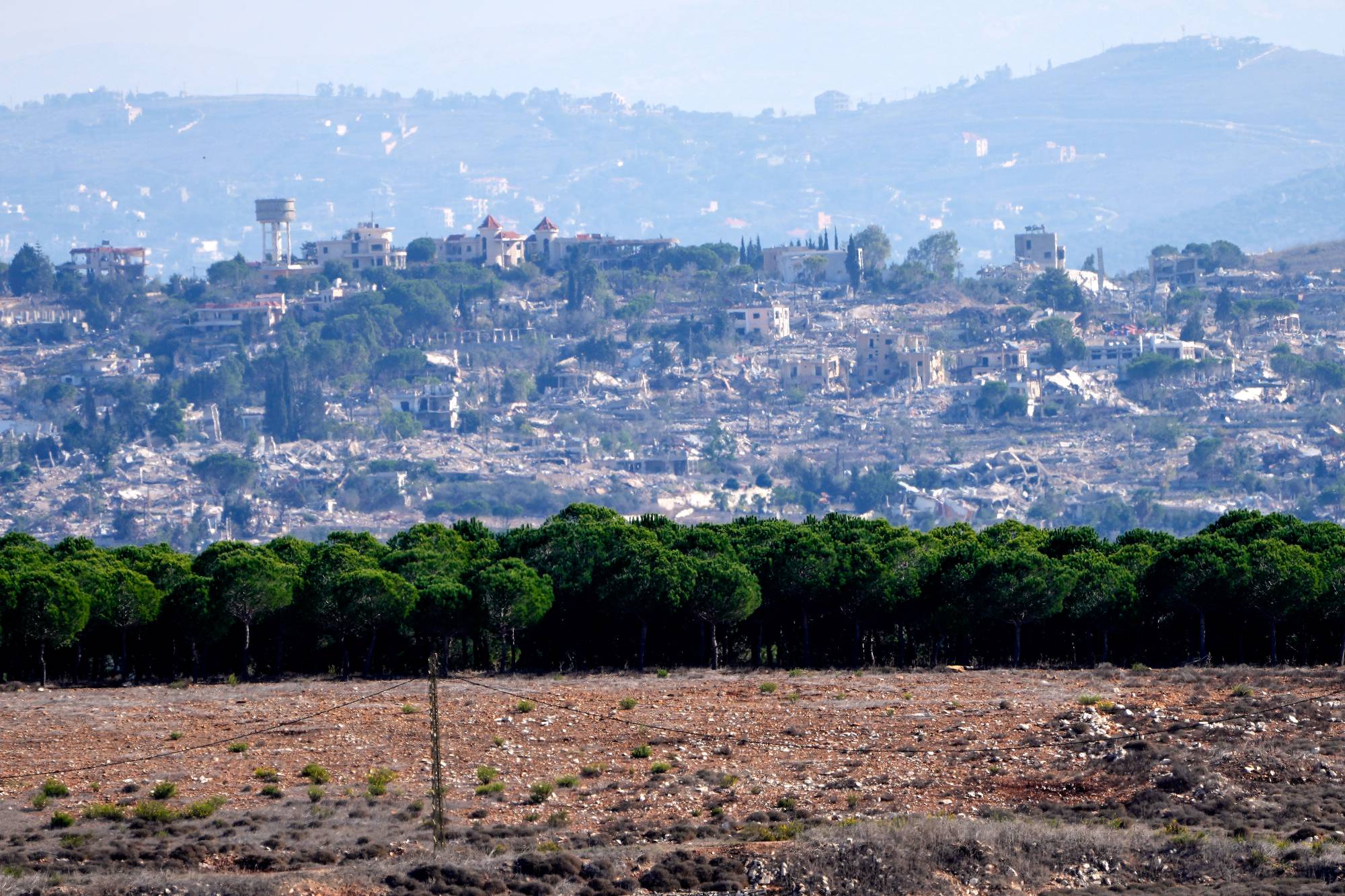
Israel has since launched a ground invasion, capturing dozens of Lebanese villages and towns close to the border. Hezbollah has launched thousands of missiles and drones at Israeli soldiers in southern Lebanon and northern Israel.

The Israeli push came despite a nominal ceasefire that has been in place since April 17 and just days before Lebanon and Israeli hold their next round of direct talks in Washington starting Tuesday.


Palestinian Authorities Say Israeli Forces Kill Man Trying to Climb Barrier

 Palestinians walk along the separation barrier between the West Bank and east Jerusalem neighborhood of Beit Hanina, Sunday Feb. 15, 2026. (AP)
Palestinians walk along the separation barrier between the West Bank and east Jerusalem neighborhood of Beit Hanina, Sunday Feb. 15, 2026. (AP)
TT

Palestinian Authorities Say Israeli Forces Kill Man Trying to Climb Barrier

 Palestinians walk along the separation barrier between the West Bank and east Jerusalem neighborhood of Beit Hanina, Sunday Feb. 15, 2026. (AP)
Palestinians walk along the separation barrier between the West Bank and east Jerusalem neighborhood of Beit Hanina, Sunday Feb. 15, 2026. (AP)

Israeli forces shot dead a Palestinian man Sunday as he attempted to enter Jerusalem by climbing over a barrier separating the city from the occupied West Bank, Palestinian authorities said.

The Palestinian health ministry in Ramallah identified the man as Imad Haroun Ashtiyeh, 26, saying he was killed by Israeli gunfire near the town of Al-Ram, north of Jerusalem.

Ashtiyeh, a construction worker from the village of Salem near Nablus, had attempted to climb the barrier at Al-Ram along with a few other men to make his way to the Israeli city of Tel Aviv for work, said Omer, a relative who gave only his first name.

"But then he was shot while attempting to climb over," Omer told AFP.

An AFP journalist saw Ashtiyeh's corpse shrouded in a Palestinian flag at the Ramallah medical complex, his relatives weeping over his body.

The Palestinian Authority's press office wrote on X that "Israeli occupation forces killed a Palestinian man seeking work while crossing the annexation and apartheid wall".

Al-Ram, located near the Qalandiya checkpoint, is separated from Jerusalem by a section of the barrier reinforced with barbed wire.

The Israeli military and police did not immediately respond to a request for comment.

Israeli security officials say a significant number of Palestinians from the West Bank attempt to enter Israel illegally, often by climbing over the barrier.

They are driven largely by economic hardship and the loss of work permits since the Hamas assault that sparked the Gaza war in October 2023, Palestinian officials say.

Most of them are arrested, while some have died or been injured fleeing from Israeli forces, Palestinian officials say.

Ashtiyeh is the fifth Palestinian killed trying to cross into Israel this year, and the 52nd since October 7, 2023, according to the Palestinian General Federation of Trade Unions.

Israel began building the barrier at the height of the second Palestinian intifada that erupted in 2002, saying it was needed to maintain security amid suicide bombings in Jerusalem and other Israeli cities.

The barrier cuts into many parts of the West Bank, which Israel has occupied since 1967, and Palestinians see it as a land grab and de facto border illegal under international law.

Israel maintains tight restrictions on the movement of the West Bank's roughly three million residents, who require special permits to cross checkpoints into east Jerusalem and Israel.

Violence has sharply escalated in the Palestinian territory since the Gaza war began.

At least 1,075 Palestinians -- both militants and civilians -- have been killed by Israeli forces or settlers in the West Bank since October 2023, according to AFP figures based on Palestinian health ministry data.

In the same period, at least 46 Israelis, including soldiers and civilians, have been killed in attacks or military operations in the West Bank, Israeli official figures show.


Netanyahu Orders Deeper Israeli Incursion into Lebanon to Hit Hezbollah

Israeli soldiers operate at Beaufort Ridge in southern Lebanon, in this handout image released on May 31, 2026. Israeli Military/Handout via REUTERS
TT

Netanyahu Orders Deeper Israeli Incursion into Lebanon to Hit Hezbollah

Israeli soldiers operate at Beaufort Ridge in southern Lebanon, in this handout image released on May 31, 2026. Israeli Military/Handout via REUTERS

Israeli Prime Minister Benjamin Netanyahu said on Sunday he had ordered troops to move further into Lebanon in the battle against the Iran-backed Hezbollah militant group, despite a ceasefire announced more than six weeks ago.

The fighting in Lebanon has been the broadest spillover of the Iran war, displacing more than 1.2 million Lebanese through Israeli strikes and evacuation orders since March 2, when Hezbollah began firing rockets and drones into Israel to back its ally Iran.

The incursion has so far killed more than 3,370 people, according to the Lebanese government. Israel says 24 of its soldiers and four civilians have been killed over the same period. Tens of thousands of Israelis in the country's north have also been displaced by Hezbollah rockets and drones.

In the latest advance, Israeli troops seized the 900-year-old Beaufort Castle and a strategic ridge in southern Lebanon, the military said, a day after one of the heaviest days of Hezbollah fire toward northern Israel since the April ceasefire, prompting school closures and restrictions.

"I instructed the (military) to expand its ground manoeuvre in Lebanon," Netanyahu said in a statement.

Israeli troops and Hezbollah have continued to trade fire since the mid-April ceasefire, with Hezbollah resorting to the use of cheap, easy-to-assemble kamikaze drones that are hard for air defences to thwart and that have killed several Israeli troops in southern Lebanon.

The Israeli military already controlled territory up to the Litani River in Lebanon, but troops are now pushing to the Zaharani River, around 10 km north.

Netanyahu said his aim is to "deepen and expand our grip on the places that were under Hezbollah's control".

Naftali Bennett, a key challenger to Netanyahu in an upcoming election, said he seeks stronger action in Lebanon, including hitting suburbs of Beirut.

Defense Minister Israel Katz said soldiers will retain Beaufort as part of Israel's security zone in southern Lebanon.

"The campaign is not over yet," he said. "We are all determined to crush Hezbollah's power."

Talal Atrissi, a sociology professor at the Lebanese University and an analyst who is close to Hezbollah, said the Israeli army is managing to achieve its goals in Lebanon.

Israeli troops were also operating near Nabatieh, a major Hezbollah stronghold in southern Lebanon, the military said.


Euphrates Flood Pushes Eastern Syria Up Gov’t Agenda

A member of the Syrian Civil Defense, also known as the White Helmets, carries a child after water levels rise due to increased dam releases following heavy rainfall this year, in Deir Ezzor, Syria, May 30, 2026. REUTERS/Khalil Ashawi
TT

Euphrates Flood Pushes Eastern Syria Up Gov’t Agenda

A member of the Syrian Civil Defense, also known as the White Helmets, carries a child after water levels rise due to increased dam releases following heavy rainfall this year, in Deir Ezzor, Syria, May 30, 2026. REUTERS/Khalil Ashawi

The Euphrates River flood has forced Syria’s government into a swift push toward the eastern provinces, not only to contain rising water levels, but also to narrow the gap between residents there and the central administration in Damascus.

Some citizens accuse the government of looking only at the region’s wealth and oil, while its people endure the devastation left by war and decades of neglect.

President Ahmed al-Sharaa answered that charge by saying the people of Deir Ezzor and the eastern regions are Syria’s “treasure.” Meeting Deir Ezzor notables on Friday during a visit to assess the flood damage, he said: “You are people of generosity and noble tribes and clans.”

Sources who attended the meeting told Asharq Al-Awsat that Sharaa’s appearance in Deir Ezzor was meant to reassure residents by presenting him as one of their own. They said the Syrian president removed his formal jacket as he greeted citizens who had gathered to welcome him, a gesture they said reflected his ease among the locals.

But beyond the symbolism, the sources said, the more important signal was the number of ministers who accompanied him, underscoring the government’s intent to address the region’s needs and ease tensions.

The sources said ministers met Deir Ezzor notables before Sharaa held a separate meeting with them, attended by the ministers of energy, local administration, health, agriculture, transport, emergencies and communications.

Also present were Maher al-Sharaa, the president’s brother and former secretary-general of the presidency, and Qutaiba Qadish, director of the Department of International Cooperation at the Ministry of Foreign Affairs and Expatriates.

The discussions went beyond services and flood response. Participants raised issues they see as central to the buildup of anger, foremost among them the fate of detainees once held in prisons run by the Syrian Democratic Forces, or SDF, and later transferred to Iraq. Some attendees demanded that their fate be revealed, that they be returned to Syria and that they stand trial there.

The meeting also addressed the situation of Free Syrian Army fighters and other former opposition members who had served as auxiliaries to the new government forces after the overthrow of Bashar al-Assad’s regime at the end of 2024. They complain they are now being sidelined despite having taken part in difficult security confrontations against the former regime.

US Central Command, or CENTCOM, announced in February 2026 that more than 5,700 detainees accused of belonging to ISIS had been transferred from SDF detention centers to Iraq.

The transfer was described as a preventive security measure to stop terrorists from escaping SDF camps after Syrian forces advanced and extended control over eastern and northeastern Syria late last year.

Separately, Deir Ezzor notables called for a review of administrative appointments in the province, especially appointments they said lacked experience.

They also demanded clear lines of authority, an end to interference in local administration powers and greater transparency, including informing citizens of the reasons behind decisions affecting their areas.

Sharaa said the “current state inherited more than 60 years of problems that involved deliberate harm to the Syrian reality” at the legal, economic and service levels. He criticized excessive reliance on emergency measures, saying “emergency solutions drain the state and push it toward reactive strategies.”

He said problems should be “broken down and solved according to priorities” on sound foundations.

Despite the positive aspect of the visit, some warned against falling again into the “trap of frustration” after the government’s promises.

Journalist Yasser al-Issa, who is from Deir Ezzor, said the visit’s focus on the immediate start of work on al-Siyasiya bridge, the crossing linking Hasakah and Deir Ezzor provinces, was overstated, given that other issues may be more urgent.

“If we want to talk about bridges, the Mayadin bridge, which has been out of service for about 10 years, is more important than the al-Siyasiya bridge economically, commercially and in terms of services. Yet attention was given to the first at the expense of the second,” Issa told Asharq Al-Awsat.

“The visit was positive overall, but we must wait for results on the ground,” he said. “The problem is not only the damaged bridges, despite their importance.

There are more important issues, including more than 62 water stations knocked out of service by the flood. That will soon deprive more than 50% of the province’s population of water unless the problem is addressed, in addition to other major infrastructure problems.”

Issa said most residents displaced from Deir Ezzor city during the war have not returned, despite the city's return to government control.

He cited the destruction of nearly 70% of the city’s neighborhoods, the lack of basic services needed to repair homes and the deterioration of infrastructure.

Hopes had been high for a rapid return after the fall of the former regime, he said, but such a return requires enormous resources that may exceed what the current government can provide.

Syria’s Energy Ministry said on Saturday that the General Establishment of the Euphrates Dam had closed gate No. 4 at the Tabqa Dam in rural Raqqa province as water inflows from Turkey continued to decline.

The gate had been releasing about 300 cubic meters of water per second before it was shut, reducing the flow through the Euphrates Dam to about 1,400 cubic meters per second.

The ministry said the step was part of a plan to gradually and safely restore Euphrates River levels in Raqqa and Deir Ezzor provinces to normal levels.

The Euphrates flooding, unprecedented in decades, has caused heavy damage. Four children have died, many drowning incidents have been reported and more than 2,500 families face the risk of forced displacement, especially in Huweijat Qati and Huweijat Sakr.

The flood also destroyed crops across about 5,000 dunams of farmland along the riverbanks and swept away four dirt bridges linking Deir Ezzor to its surroundings.