


Israeli Soldiers Share Rare Accounts from Gaza: Killings Never Stopped

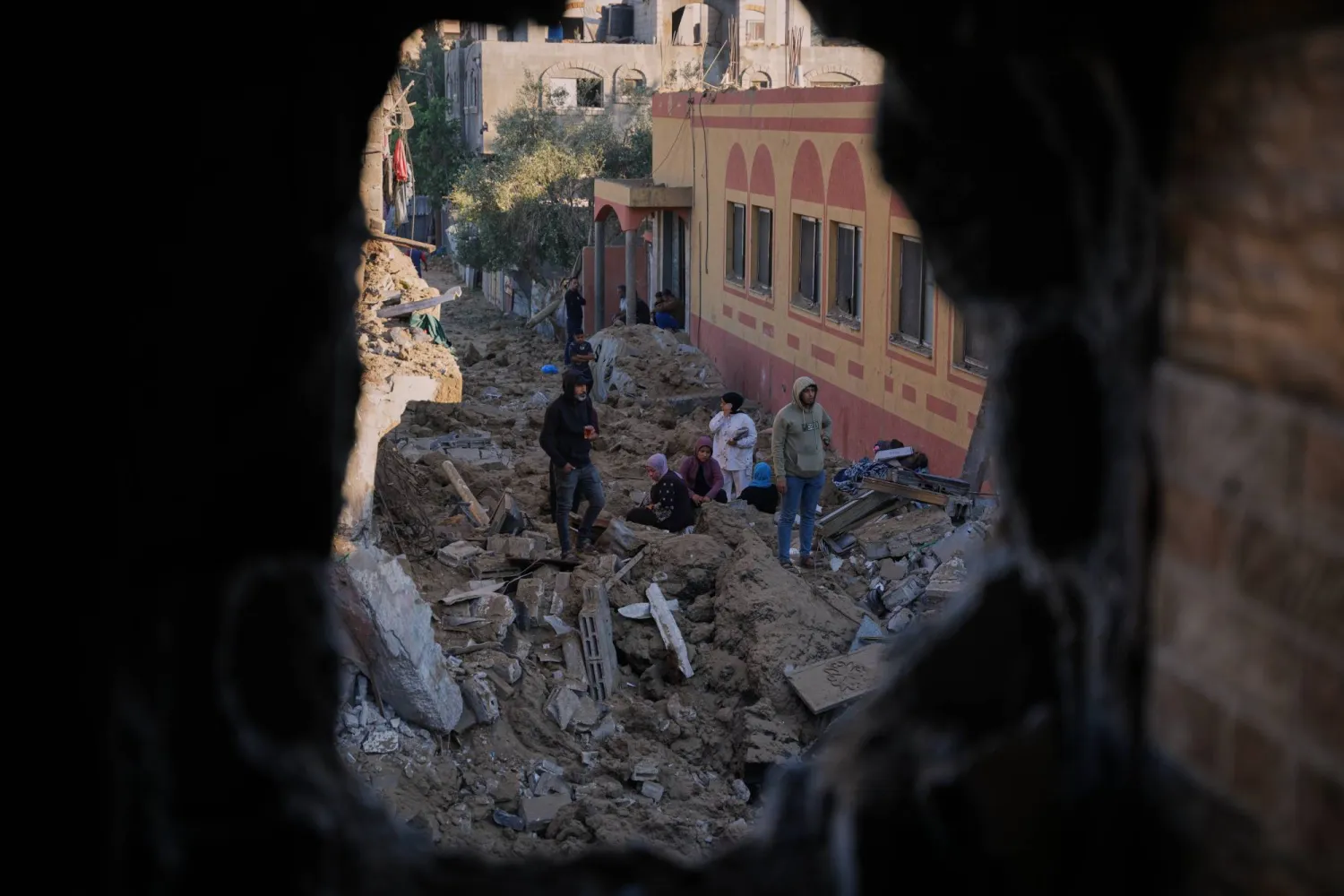
Palestinians inspect the rubble of a building destroyed in an Israeli strike in Deir al-Balah, in the central Gaza Strip, Friday, May 29, 2026. (AP Photo/Abdel Kareem Hana)
TT

Israeli Soldiers Share Rare Accounts from Gaza: Killings Never Stopped

Palestinians inspect the rubble of a building destroyed in an Israeli strike in Deir al-Balah, in the central Gaza Strip, Friday, May 29, 2026. (AP Photo/Abdel Kareem Hana)

The Israeli combat soldier saw his teammates yelling in celebration, congratulating one another. They had just struck a vehicle of Palestinians driving near the Israeli-controlled part of the Gaza Strip, killing everyone inside.

The reservist said scenes like this had become common after a fragile ceasefire took effect in October. In the weeks he was stationed in Gaza, he said, he saw soldiers relishing the chance to go after those who crossed — or came close to crossing — the so-called yellow line that divides the strip into Israeli-controlled and Palestinian areas.

“It was a jungle,” the soldier, in his 20s, told The Associated Press. “After the ceasefire, the order was: If someone crosses the line, you shoot them.”

As diplomatic efforts to strengthen the deal have stalled, three soldiers described to AP a sense of confusion in the embattled territory, with a lack of clarity on rules of engagement around the yellow line. Some commanders paid lip service to the agreement, the soldiers said, while privately voicing desire for the war in Gaza to continue.

Sometimes, troops were too far away or acted too quickly to recognize who they were shooting, one soldier said — a concern echoed in comments from a whistleblower group of veterans.
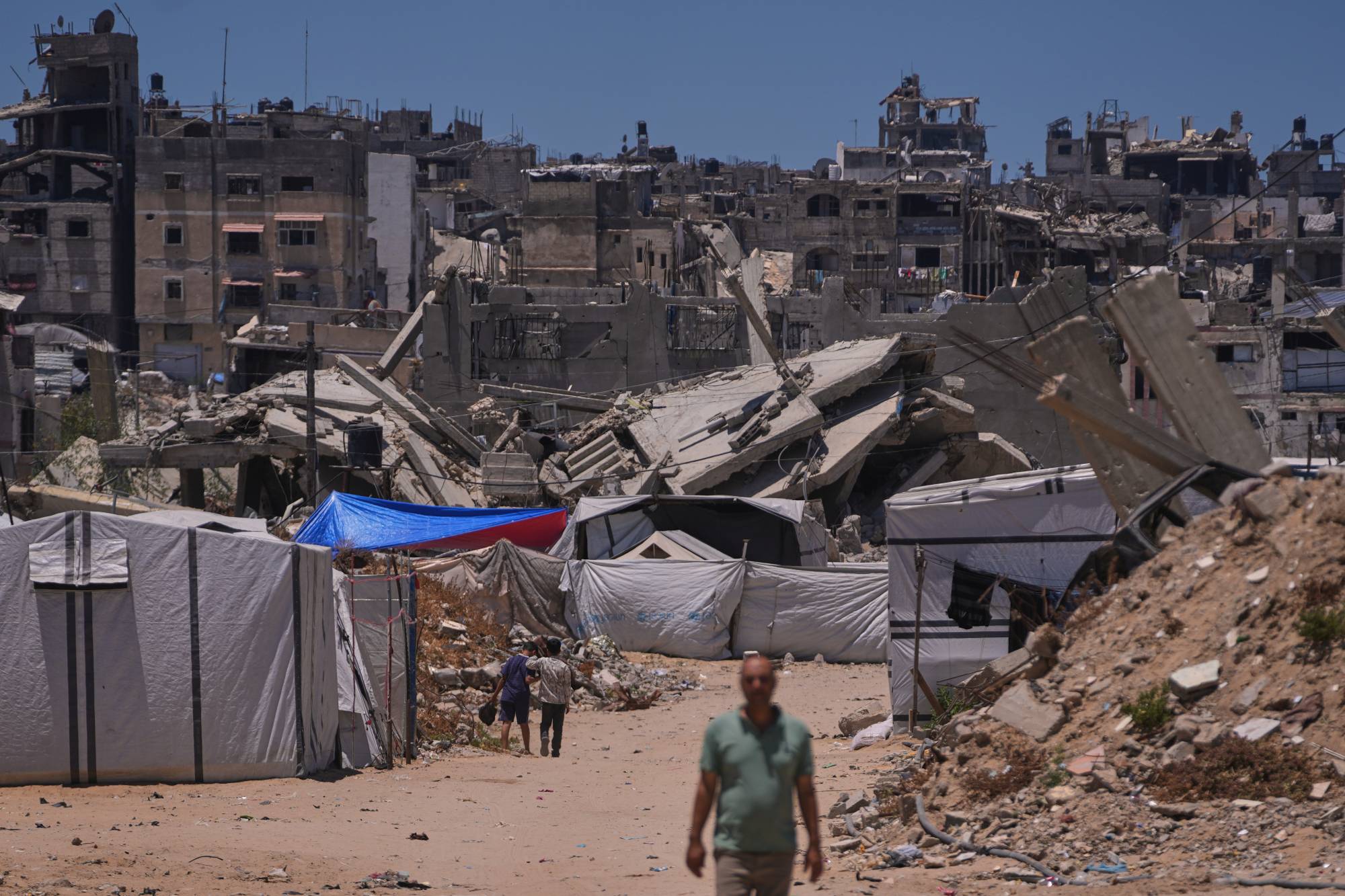
Palestinians walk along a street surrounded by buildings destroyed by Israeli military strikes during the Israel-Hamas war in Khan Younis, southern Gaza Strip, Friday, May 29, 2026. (AP Photo/Abdel Kareem Hana)

The soldiers' accounts are a rare glimpse into what’s happened in the Israeli-controlled part of Gaza since the deal went into effect seven months ago. The soldiers — reservists deployed throughout Gaza between October and January who've since returned — spoke on condition of anonymity because they feared being ostracized over their comments. They said they were speaking out because they were angered and saddened by what they saw.

AP has documented shootings of Palestinian civilians, including children playing, close to the yellow line. And the soldiers said it felt like the killings never stopped amid the tenuous deal.

“To call it a ceasefire is a joke,” one soldier told AP.

Gaza's yellow line has been ambiguous, and Israel has taken control of more land When the ceasefire went into effect, Israel withdrew troops to a buffer zone demarcated by a yellow line, giving it control of just over half the strip.

Under the agreement, Israeli forces are meant to complete a fuller withdrawal, though there's no timeline for that. The US-backed diplomat overseeing the truce says progress is deadlocked over the central sticking point of disarming Hamas, upon which all other issues — including Israeli withdrawals and reconstruction — hinge.

In the meantime, Israel has expanded control over additional territory in Gaza. Both sides have accused the other of violating the ceasefire.

The line’s exact location has been ambiguous and sometimes invisible. In some places, it’s marked with yellow blocks and barrels; in others, it at times hasn't been indicated at all.
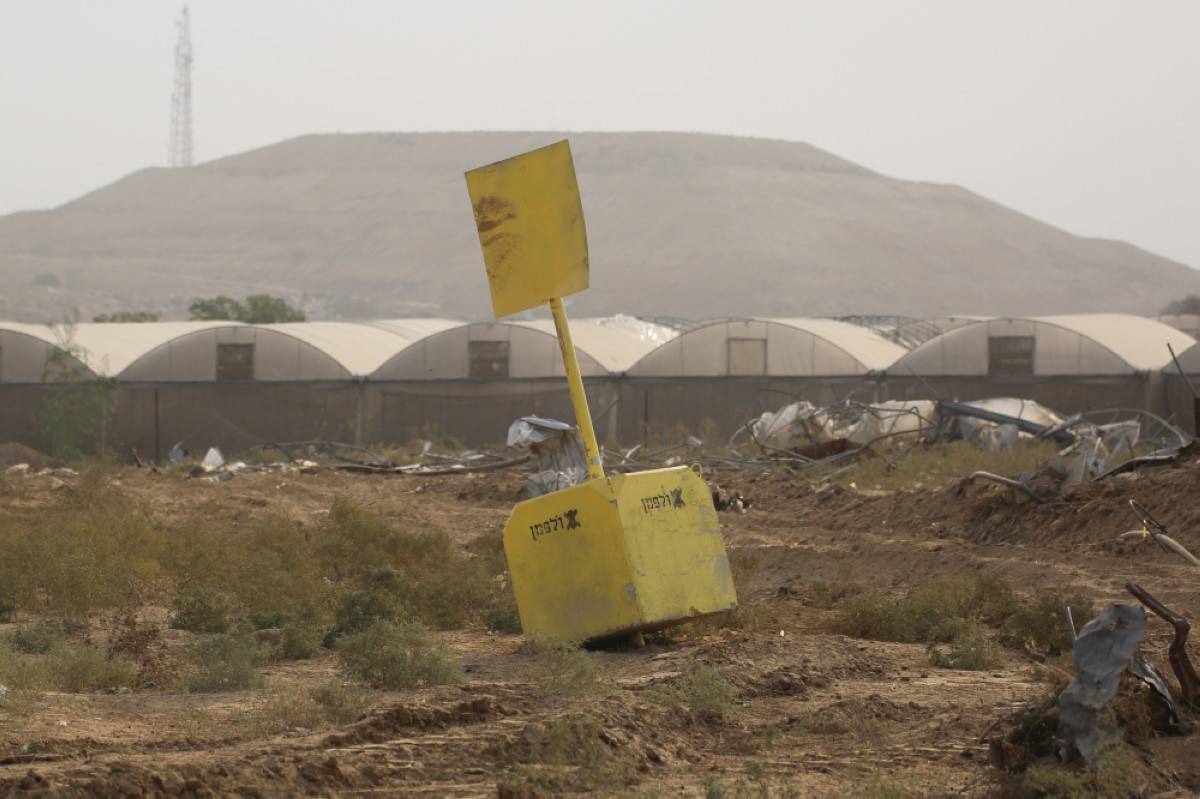
A concrete block marks the "Yellow Line" drawn by the Israeli military in Bureij, in the central Gaza Strip, on Nov. 4., 2025. AFP

The Israeli military invited AP this week to see a section of the yellow line in central Gaza, near the Maghazi refugee camp. The line there was visible, demarcated by a wide dirt path and small yellow markings. To the east was a desolate stretch of open space leading to a heavily fortified Israeli military post about 500 meters away.

An Israeli military commander said Hamas is active on the other side of the line and frequently sends people — militants and civilians — toward the line and even across it to test the army’s readiness and responses.

“There is no reason for anyone to come near the line,” he said, speaking on condition of anonymity under military rules. “There’s nothing here.”

The army says the entire line, which stretches the length of Gaza, is now clearly marked.

Since the ceasefire went into effect, more than 900 people have been killed in Gaza — dozens of those close to or over the yellow line, according to Gaza’s Health Ministry. The ministry doesn't say how many are militants, but unarmed men and children have been among the dead.

Israel's military has said most of the people killed crossing the line posed a threat to troops. But soldiers who spoke to AP and Breaking the Silence — the whistleblower group that has collected troops' testimonies throughout the war — say that at times soldiers were too far away, acting too quickly and under too much pressure to tell.

Israel's army told AP that the area adjacent to the yellow line is a “sensitive operational environment” with signs saying approaching is prohibited. It said the army doesn't target civilians solely for approaching the line and that its rules of engagement require the use of warnings before using force. In situations involving an immediate threat, forces are authorized to act, it said.

One soldier says troops must act fast, with information sometimes based on a hunch It was the combat soldier's second tour in Gaza when the ceasefire began. He said he was posted several hundred meters from the yellow line and saw several people trying to cross it killed by soldiers.

Soldiers shooting or ordering drone strikes don't always know who's crossing the line, he said. Although soldiers must provide coordinates and get approval from superiors before striking, it's hard to give exact information as people are moving, he said. He described soldiers calling in coordinates based on a hunch or the last place they saw someone.

Breaking the Silence says the general rules of engagement are extremely permissive, especially for those crossing the line, with orders in many areas being “shoot to kill.”

Executive director Nadav Weiman, a veteran who served in Gaza but not in this war, said distance from the target and some trigger-happy soldiers can be problematic.

He said orders and policies from the military’s high commanders “have created a reality where countless civilians have and are being killed for crossing invisible lines.”

In one account to Breaking the Silence, in interview notes seen by AP, a soldier describes instructions for troops about anyone crossing the yellow line: “eliminate him no matter what."
Another soldier stationed in Gaza for weeks after the ceasefire said the message from commanders was to hold the line at all costs.

“There was a general feeling that human lives are not valuable,” he said.

When it came to demarcating the yellow line, the soldier said his superiors told him it was “too much work," not their job and that Palestinians should know where it was.

Being in Gaza took an emotional toll, he said.

Sometimes snipers fired warning shots at people close to the line, he said, but commanders told troops to do more to protect themselves. The soldier understood that to mean firing more lethal shots.

He and the other soldiers who spoke to AP said troops generally understood, based on leaders and fellow soldiers' actions, that Israel was in Gaza for the long run, not an eventual withdrawal.

An internal report circulated among aid groups last month and seen by AP said that across Gaza, Israel has become “increasingly proactive” with its strikes.

Separate data from the Armed Conflict Location and Event Data Project, a US-based nonprofit, said April was the deadliest month in Gaza this year and that recorded deaths near the yellow line or of people who crossed it increased by more than 25% from January to April, to 73 from 58.

This week, Israeli Prime Minister Benjamin Netanyahu said Israel controls 60% of Gaza and the next step was to move to 70% control.

The soldiers told AP that on the ground, the ceasefire is elusive.

“We need to stop using this term," one said of the word, ceasefire. "It’s not serving people that want to stop the war.”



Tributes Paid to Lebanon Conservationist Killed in Israeli Strike

Mona Khalil in 2004 with a newborn marine turtle near her home in Lebanon. Photograph: Joseph Barrak/AFP/Getty Images
TT

Tributes Paid to Lebanon Conservationist Killed in Israeli Strike

Mona Khalil in 2004 with a newborn marine turtle near her home in Lebanon. Photograph: Joseph Barrak/AFP/Getty Images

Activists and campaign groups on Saturday paid tribute to Lebanese environmentalist Mona Khalil who died from injuries sustained in an Israeli strike in the country's south, where she dedicated her life to turtle conservation for decades.

A medical source had previously told AFP that Khalil, aged in her late seventies, was badly wounded in an Israeli strike on June 4 that hit her home in the village of Mansouri, around 10 kilometres (six miles) south of the coastal city of Tyre. She died on Friday.

Julien Jreissati, program director at Greenpeace Middle East and North Africa, said Khalil had "dedicated decades of her life to protecting the sea turtles and coastline of Mansouri".

"Her loss is not only a loss for her family and community, but for the environmental movement in Lebanon and the region," he told AFP.

A wide stretch of south Lebanon's coastline near Tyre, which includes some of the country's best-preserved beaches, is a nesting site for turtles, including endangered loggerhead and green sea turtles.

After returning to her native Lebanon from the Netherlands more than two decades ago, Khalil set up the Orange House Project in Mansouri, a conservation project combined with ecotourism, where visitors could see turtle hatchings and take part in conservation activities.

"For decades, Mona stood at the forefront of conservation efforts along the southern coast," said the Society for the Protection of Nature in Lebanon (SPNL), mourning "one of Lebanon's most dedicated environmental defenders and a tireless champion of sea turtle conservation".

Her efforts contributed "significantly to the protection of one of Lebanon's most important sea turtle nesting sites in Hima Qoleileh-Mansouri, a seven-kilometre stretch of sandy and rocky shoreline that hosts more than 58 endangered sea turtle nests annually", it said.

Khalil inspired communities and "helped build a culture of environmental stewardship rooted in local ownership and collective responsibility", it added in a statement on Friday.

Local environmental group Green Southerners on X mourned "a pioneering environmental defender" who for decades "dedicated her life to protecting endangered sea turtles and their nesting habitats".

"Through the Orange House, she inspired generations of Lebanese to value and protect their natural heritage and coastal ecosystems," it added.

Lebanon's state-run National News Agency (NNA) had been reporting heavy strikes in the Tyre district, including raids on Mansouri, earlier this month when Khalil was wounded.

The village is also located near an area where Israeli troops are operating inside south Lebanon.

Khalil was among the few local residents still holding out there despite the Israel-Hezbollah war and sweeping Israeli military evacuation orders for the country's south.


Israel Carries Out Deadly Strikes in South Lebanon Despite Truce Announced with Hezbollah

Smoke billows from southern Lebanon following an Israeli strike, as seen from Nabatieh, Lebanon, June 20, 2026. REUTERS/Stringer       TPX IMAGES OF THE DAY
Smoke billows from southern Lebanon following an Israeli strike, as seen from Nabatieh, Lebanon, June 20, 2026. REUTERS/Stringer TPX IMAGES OF THE DAY
TT

Israel Carries Out Deadly Strikes in South Lebanon Despite Truce Announced with Hezbollah

Smoke billows from southern Lebanon following an Israeli strike, as seen from Nabatieh, Lebanon, June 20, 2026. REUTERS/Stringer       TPX IMAGES OF THE DAY
Smoke billows from southern Lebanon following an Israeli strike, as seen from Nabatieh, Lebanon, June 20, 2026. REUTERS/Stringer TPX IMAGES OF THE DAY

Israel carried out deadly strikes in south Lebanon on Saturday, hours after the US announced a renewed ceasefire in fighting that had strained a fledgling deal with Iran.

US President Donald Trump and his Iranian counterpart Masoud Pezeshkian this week signed a preliminary agreement to halt the Middle East war on all fronts, including Lebanon -- a key demand of Tehran's.

But follow-up talks scheduled for Friday in Switzerland were indefinitely postponed as Israel launched a wave of strikes in Lebanon that left dozens of people dead after four of its soldiers were killed in combat, sparking a furious reaction at home.

On Friday afternoon, a US official announced a new ceasefire between Israel and Hezbollah brokered by US and Qatari mediators, with Israel's ambassador to Washington saying it would respect the truce if Hezbollah did.

But on Saturday an Israeli military official said it was conducting fresh attacks against the Iran-backed movement, which it accused of having "launched more than 50 projectiles at Israeli forces in southern Lebanon" overnight.

Lebanese state media reported Israeli air raids on around 20 locations, with the country's civil defense agency saying 16 people were killed in the Nabatieh area.

The Lebanese army said an Israeli strike killed a soldier on the Kfarrumman-Nabatieh road and accused Israel of undermining efforts to restore stability.

Israel's Arabic-language military spokesperson said calm could be achieved if Hezbollah halted what she described as hostile activity and violations of agreements, adding Israel's presence in a security zone aimed to remove threats and dismantle Hezbollah infrastructure, not harm civilians.

The US-Iran understanding announced this week calls for an immediate, permanent end to military operations by the parties and their allies across multiple fronts, including Lebanon.

Israel, which was not part of those negotiations, has opposed provisions it says could constrain its campaign in Lebanon.


Gaza Health Officials Say Israeli Strikes Kill Five

Palestinians inspect a destroyed vehicle following an Israeli airstrike in Gaza City, Gaza Strip, 18 June 2026. EPA/MOHAMMED SABER
TT

Gaza Health Officials Say Israeli Strikes Kill Five

Palestinians inspect a destroyed vehicle following an Israeli airstrike in Gaza City, Gaza Strip, 18 June 2026. EPA/MOHAMMED SABER

Gaza health officials said Israeli strikes on Saturday killed five people, including four members of the same family, in the latest violence to rock the Palestinian territory despite a ceasefire.

Israel and Hamas trade near-daily accusations of truce violations and the Gaza Strip remains gripped by bloodshed as progress on permanently ending the war remains stalled.

An overnight Israeli airstrike on an apartment building in the Sabra neighborhood of Gaza City killed four members of the al-Safadi family, including the husband, wife and their two daughters, said the civil defense agency, a rescue service that operates under Hamas authority.

AFP quoted it as saying that the strike also injured 12 others.

Gaza City's Al-Shifa hospital confirmed receiving the bodies of four members of the al-Safadi family, including two children.

The hospital also said it had received another body following a separate Israeli drone strike near an intersection in the north of Gaza City.

When asked by AFP about the two incidents, the Israeli military did not offer an immediate response.

At least 1,012 Palestinians have been killed in Gaza since the ceasefire took effect on October 10 last year, according to Gaza's health ministry, which operates under Hamas authority and whose figures are considered reliable by the United Nations.

The Israeli army has reported five deaths in its ranks during the same period.

Restrictions imposed on media outlets and limited access in Gaza prevent AFP from independently verifying tolls or freely covering the violence there.