


Trump Names Tom Barrack as Special Presidential Envoy to Syria, Iraq

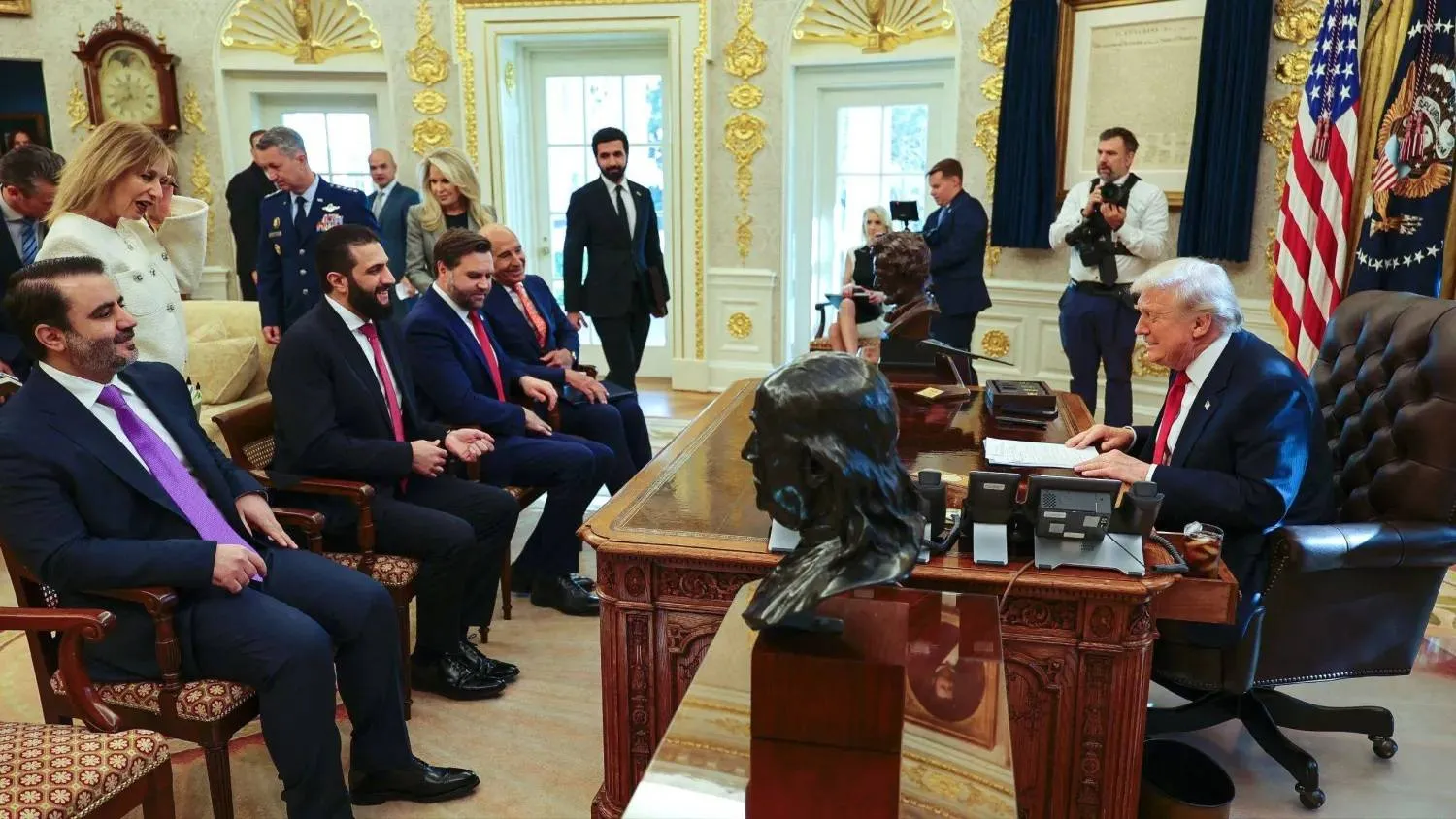
US President Donald Trump meets with Syrian President Ahmed al-Sharaa at the White House in Washington DC, November 10, 2025 (AFP) 
TT

Trump Names Tom Barrack as Special Presidential Envoy to Syria, Iraq

US President Donald Trump meets with Syrian President Ahmed al-Sharaa at the White House in Washington DC, November 10, 2025 (AFP) 

US President Donald Trump announced on Sunday the appointment of Tom Barrack as special presidential envoy to Syria and Iraq.

The new designation, which comes following the expiration of Barrack’s formal mandate, reflects the administration’s push to phase in full diplomatic relations with Damascus.

In a post on Truth Social, Trump wrote, “I am pleased to announce that United States Ambassador to Türkiye, Tom Barrack, who has done an outstanding job, will be named Special Presidential Envoy to Syria and, likewise, Special Presidential Envoy to Iraq.”

He noted that the appointment comes as the US government continues to strengthen its strategic cooperation and as relations with the Syrian and Iraqi governments continue to grow.

Trump also said the envoy will continue his duties as ambassador to Türkiye and operate with the full support of the US State Department.

Trump then expressed appreciation for Barrack’s efforts and his readiness to serve his country, saying: “We greatly appreciate the work that Tom Barrack has done, and his continued willingness to serve our Country. Thank you for your attention to this matter!”

On Saturday, Secretary of State Marco Rubio had announced the end of Thomas Barrack’s term as US special envoy to Syria.

Rubio said in a post on X that “Ambassador Tom Barrak has played an invaluable role as our Special Envoy to Syria.”

He added, “While that title is expiring, he will continue to play a leading role for the Trump Administration in both Syria and Iraq, where his expertise, relationships, and understanding of the America First agenda will continue to deliver wins on behalf of our great country.”

Rubio did not provide details on the nature of Barrack’s new role or the person who will take over his duties, suggesting to followers that the US administration has terminated Barrack's duties as US special envoy to Syria.

Following a meeting in Damascus with Syrian President Ahmed al-Sharaa two weeks ago, Barrack said Syria had achieved “remarkable progress” and become “a laboratory for a new regional alignment” based on diplomacy.

“Just over a year ago, President Donald Trump’s visionary meeting with President Ahmed al-Sharaa in Saudi Arabia opened a new chapter,” Barrack wrote, referring to the first meeting between the two leaders in Riyadh in May 2025.

He added that Trump had announced at the time the lifting of US sanctions “to give Syria a chance at greatness”, describing the move as “a bold and hopeful gesture for Syria and the region.”

“The opportunities ahead promise exponential advancement for the Syrian people and lasting stability,” Barrack said.

He then noted that, “Syria is now a laboratory for a new regional alignment of diplomacy, integration and hope for the entire region.”

Last Thursday, Barrack considered the discovery and securing of undeclared chemical weapons dating back to the Assad regime era a “significant milestone” in the process of building a new Syria and strengthening international security.

In a post on X, he said, “Thanks to the courageous work carried out by the Syrian authorities and the Organization for the Prohibition of Chemical Weapons, with the support of President Donald Trump and international partners, another step has been taken toward permanently ending Syria’s brutal chemical weapons legacy.”

Barrack held a meeting with Sharaa last April in Antalya, Türkiye, on the sidelines of the fifth Antalya Diplomacy Forum.

Syria’s news agency, SANA, said at the time that talks during the meeting dealt with the latest regional developments, means of enhancing cooperation between the two countries in a way that boosts security and peace in the region.



Iraq PM Forms Anti-Corruption Council after Revealing He Was Offered $200 Million Bribe

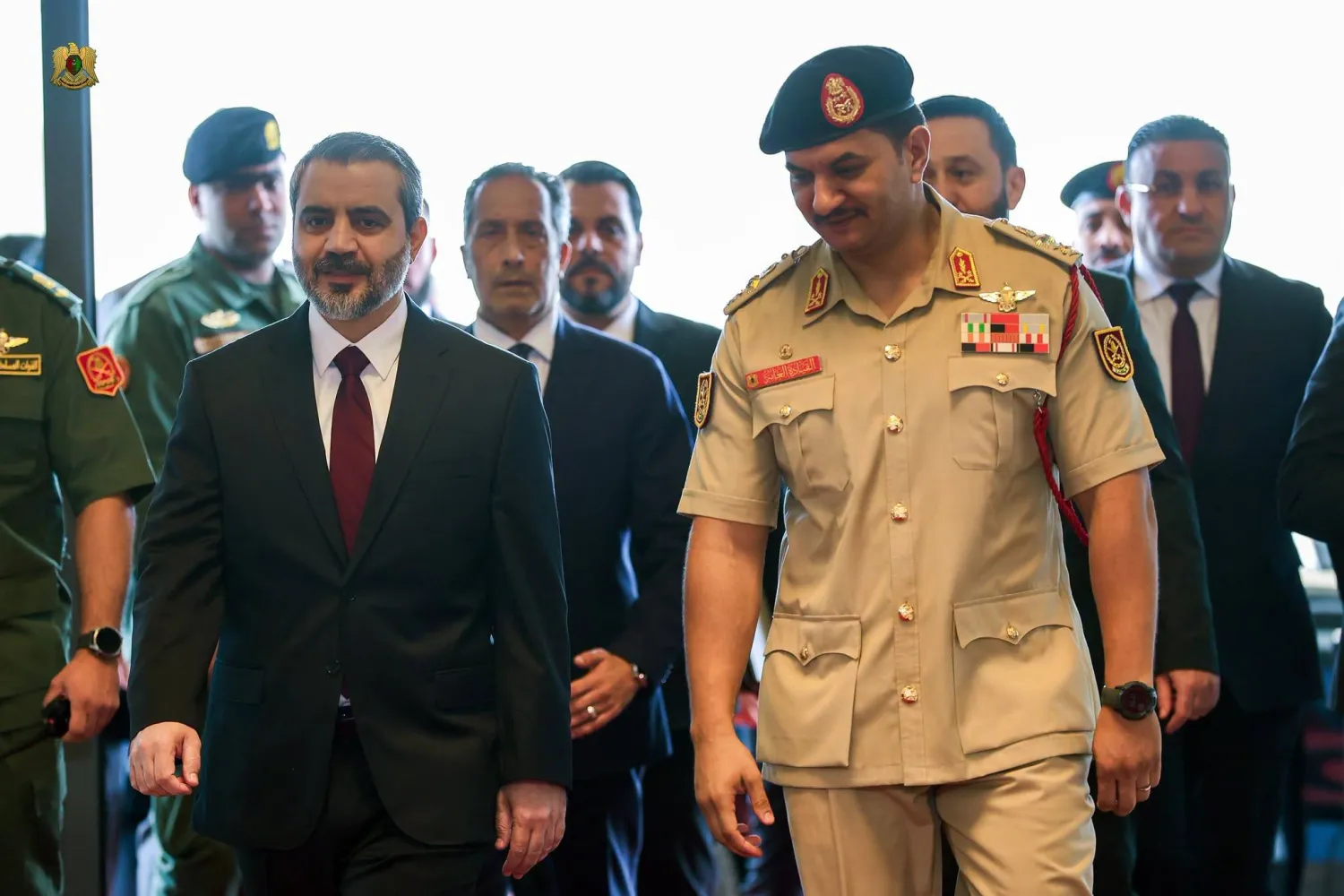
Iraqi Prime Minister Ali al-Zaidi during his meeting with journalists on Saturday. (Iraqi PM's office)
TT

Iraq PM Forms Anti-Corruption Council after Revealing He Was Offered $200 Million Bribe

Iraqi Prime Minister Ali al-Zaidi during his meeting with journalists on Saturday. (Iraqi PM's office)

Iraqi Prime Minister Ali al-Zaidi revealed that he had turned town a $200 million-bribe to cover up corruption in the Oil Ministry, adding that he was forming an anti-corruption council to tackle illicit activity.

The PM made the announcement before journalists and media figures on Saturday, saying the bribe was made by a prominent ministry official.

The journalists speculated that the official was Adnan Hamad Hamoud, Deputy Minister of Oil for Refining Affairs and Director General of the North Refineries Company, who was arrested on Friday.

Hamoud was relieved of his position in early May.

Media sources said on Sunday that authorities also arrested an employee who had worked at former PM Mohammed Shia al-Sudani's office.

Zaidi’s revelations sparked uproar in Iraq over the extent of corruption in the country.

Political activist Hamed al-Sayyed commented that the figure who offered the bribe “didn’t act as though he were taking a risk, but he seemed to be acting out of habit, as if such acts are the norm and he had been successful at them in the past, and therein lies the catastrophe.”

“We shouldn’t be asking how he dared to do such a thing, but rather how many times has this happened before? How many prime ministers have been bribed and how many accepted it?” he wondered in a post on X.

Other users on social media noted that Hamoud had enjoyed cover from powerful parties and figures that concealed his illicit activities in return for reaping gains from shady deals and contracts.

Supreme integrity council

In wake of his unprecedented revelation, Zaidi ordered the formation of the Supreme Sovereign Council for Integrity, Oversight, and Recovery of Public Funds.

The PM’s office said he had chaired a meeting dedicated to inspecting government contracts. The meeting was attended by heads of the Board of Supreme Audit, the Federal Commission of Integrity and chief judge of the Karkh Investigation Court.

Zaidi added that the Supreme Sovereign Council for Integrity, Oversight, and Recovery of Public Funds would be comprised of heads of the Board of Supreme Audit and the Federal Commission of Integrity to stem the waste of public funds and reclaim them.

Results of their work will be referred to the judiciary, he said.

He stressed the need to assess the need for some economic projects and for by-committees to be formed to inspect government contracts to ensure they abide by laws and regulations.

The Supreme Sovereign Council for Integrity, Oversight, and Recovery of Public Funds has already come under criticism.

MP Mohammed Jassem al-Khafagi said on Sunday that the body does not have any legal basis.

He explained that according to the constitution, the Board of Supreme Audit and the Federal Commission of Integrity are bound to parliament and these independent bodies aim to monitor the work of the executive authority and investigate corruption cases and the waste of public funds.

“These bodies target ministries, ministers and the prime minister, so how can he be at their head” he asked.

Iraq has formed numerous anti-corruption bodies over the years, none of which have helped combat the illicit activity.

Former PM Nouri al-Maliki formed one in 2007, then Haidar al-Abadi's government formed one in 2016. Former PM Adel Abdul Mahdi did the same in 2018, followed by Mustafa al-Kadhimi in 2020 and Sudani in 2022. Despite all of these efforts, Iraq continues to be named as one of the world’s most corrupt countries.

Given the poor record, economic expert Ziad al-Hashemi said: “We must be realistic and not get carried away with optimism that the era of corruption in Iraq was nearing its end with this government.”

Nothing will change “as long as governments are being formed by the same system that has caused the economic disasters Iraq has suffered from over the year,” he stressed in a post on X.

“Corruption in Iraq is formed from and backed by sponsors in top decision-making positions, both official and non-official, and through parties or through the force of arms,” he noted.


US Official Says Hezbollah Needs to Cease Attacks First

This picture taken from a position in the Upper Galilee region in northern Israel shows Israeli military vehicles driving along the road in southern Lebanon near the border with Israel, on May 31, 2026. (Photo by Jalaa MAREY / AFP)
TT

US Official Says Hezbollah Needs to Cease Attacks First

This picture taken from a position in the Upper Galilee region in northern Israel shows Israeli military vehicles driving along the road in southern Lebanon near the border with Israel, on May 31, 2026. (Photo by Jalaa MAREY / AFP)

US Secretary of State Marco Rubio spoke with Lebanese President Joseph Aoun and Israeli Prime Minister Benjamin Netanyahu about the ongoing diplomatic negotiations, a senior US official told AFP Sunday, asserting that Hezbollah must be the first to cease its attacks.

"To advance those talks, the United States proposed a clear sequence: Hezbollah must stop all attacks on Israel. In return, Israel would refrain from escalation in Beirut," said the official, who spoke on condition of anonymity, about the conversations between the three leaders.

Netanyahu vowed Sunday to push Israeli forces deeper into Lebanon, with France prompting the United Nations Security Council to hold an emergency meeting Monday over the expanding offensive.

The US official said Aoun attempted to advance the proposal submitted by Washington, but speaker of the Parliament of Lebanon Nabih Berri's "response was evasive and disappointing." Berri is considered an ally of Iran-backed Hezbollah.

Hezbollah for its part says Israel must cease its hostilities first.

"Hezbollah is following Tehran's lead. It clearly has no interest in the welfare of the Lebanese people," the US official said.

"The fastest way to de-escalate and protect civilians on all sides is for Hezbollah to stop firing immediately," the official added.

The US official's remarks come as another meeting between Israel and Lebanon, which do not have diplomatic relations, are scheduled to take place June 2 and 3 in Washington.

Lebanon's health ministry says Israeli attacks have killed more than 3,412 people since early March, with over a million others displaced.


Israeli Soldiers Share Rare Accounts from Gaza: Killings Never Stopped

Palestinians inspect the rubble of a building destroyed in an Israeli strike in Deir al-Balah, in the central Gaza Strip, Friday, May 29, 2026. (AP Photo/Abdel Kareem Hana)
TT

Israeli Soldiers Share Rare Accounts from Gaza: Killings Never Stopped

Palestinians inspect the rubble of a building destroyed in an Israeli strike in Deir al-Balah, in the central Gaza Strip, Friday, May 29, 2026. (AP Photo/Abdel Kareem Hana)

The Israeli combat soldier saw his teammates yelling in celebration, congratulating one another. They had just struck a vehicle of Palestinians driving near the Israeli-controlled part of the Gaza Strip, killing everyone inside.

The reservist said scenes like this had become common after a fragile ceasefire took effect in October. In the weeks he was stationed in Gaza, he said, he saw soldiers relishing the chance to go after those who crossed — or came close to crossing — the so-called yellow line that divides the strip into Israeli-controlled and Palestinian areas.

“It was a jungle,” the soldier, in his 20s, told The Associated Press. “After the ceasefire, the order was: If someone crosses the line, you shoot them.”

As diplomatic efforts to strengthen the deal have stalled, three soldiers described to AP a sense of confusion in the embattled territory, with a lack of clarity on rules of engagement around the yellow line. Some commanders paid lip service to the agreement, the soldiers said, while privately voicing desire for the war in Gaza to continue.

Sometimes, troops were too far away or acted too quickly to recognize who they were shooting, one soldier said — a concern echoed in comments from a whistleblower group of veterans.

Palestinians walk along a street surrounded by buildings destroyed by Israeli military strikes during the Israel-Hamas war in Khan Younis, southern Gaza Strip, Friday, May 29, 2026. (AP Photo/Abdel Kareem Hana)

The soldiers' accounts are a rare glimpse into what’s happened in the Israeli-controlled part of Gaza since the deal went into effect seven months ago. The soldiers — reservists deployed throughout Gaza between October and January who've since returned — spoke on condition of anonymity because they feared being ostracized over their comments. They said they were speaking out because they were angered and saddened by what they saw.

AP has documented shootings of Palestinian civilians, including children playing, close to the yellow line. And the soldiers said it felt like the killings never stopped amid the tenuous deal.

“To call it a ceasefire is a joke,” one soldier told AP.

Gaza's yellow line has been ambiguous, and Israel has taken control of more land When the ceasefire went into effect, Israel withdrew troops to a buffer zone demarcated by a yellow line, giving it control of just over half the strip.

Under the agreement, Israeli forces are meant to complete a fuller withdrawal, though there's no timeline for that. The US-backed diplomat overseeing the truce says progress is deadlocked over the central sticking point of disarming Hamas, upon which all other issues — including Israeli withdrawals and reconstruction — hinge.

In the meantime, Israel has expanded control over additional territory in Gaza. Both sides have accused the other of violating the ceasefire.

The line’s exact location has been ambiguous and sometimes invisible. In some places, it’s marked with yellow blocks and barrels; in others, it at times hasn't been indicated at all.

A concrete block marks the "Yellow Line" drawn by the Israeli military in Bureij, in the central Gaza Strip, on Nov. 4., 2025. AFP

The Israeli military invited AP this week to see a section of the yellow line in central Gaza, near the Maghazi refugee camp. The line there was visible, demarcated by a wide dirt path and small yellow markings. To the east was a desolate stretch of open space leading to a heavily fortified Israeli military post about 500 meters away.

An Israeli military commander said Hamas is active on the other side of the line and frequently sends people — militants and civilians — toward the line and even across it to test the army’s readiness and responses.

“There is no reason for anyone to come near the line,” he said, speaking on condition of anonymity under military rules. “There’s nothing here.”

The army says the entire line, which stretches the length of Gaza, is now clearly marked.

Since the ceasefire went into effect, more than 900 people have been killed in Gaza — dozens of those close to or over the yellow line, according to Gaza’s Health Ministry. The ministry doesn't say how many are militants, but unarmed men and children have been among the dead.

Israel's military has said most of the people killed crossing the line posed a threat to troops. But soldiers who spoke to AP and Breaking the Silence — the whistleblower group that has collected troops' testimonies throughout the war — say that at times soldiers were too far away, acting too quickly and under too much pressure to tell.

Israel's army told AP that the area adjacent to the yellow line is a “sensitive operational environment” with signs saying approaching is prohibited. It said the army doesn't target civilians solely for approaching the line and that its rules of engagement require the use of warnings before using force. In situations involving an immediate threat, forces are authorized to act, it said.

One soldier says troops must act fast, with information sometimes based on a hunch It was the combat soldier's second tour in Gaza when the ceasefire began. He said he was posted several hundred meters from the yellow line and saw several people trying to cross it killed by soldiers.

Soldiers shooting or ordering drone strikes don't always know who's crossing the line, he said. Although soldiers must provide coordinates and get approval from superiors before striking, it's hard to give exact information as people are moving, he said. He described soldiers calling in coordinates based on a hunch or the last place they saw someone.

Breaking the Silence says the general rules of engagement are extremely permissive, especially for those crossing the line, with orders in many areas being “shoot to kill.”

Executive director Nadav Weiman, a veteran who served in Gaza but not in this war, said distance from the target and some trigger-happy soldiers can be problematic.

He said orders and policies from the military’s high commanders “have created a reality where countless civilians have and are being killed for crossing invisible lines.”

In one account to Breaking the Silence, in interview notes seen by AP, a soldier describes instructions for troops about anyone crossing the yellow line: “eliminate him no matter what."
Another soldier stationed in Gaza for weeks after the ceasefire said the message from commanders was to hold the line at all costs.

“There was a general feeling that human lives are not valuable,” he said.

When it came to demarcating the yellow line, the soldier said his superiors told him it was “too much work," not their job and that Palestinians should know where it was.

Being in Gaza took an emotional toll, he said.

Sometimes snipers fired warning shots at people close to the line, he said, but commanders told troops to do more to protect themselves. The soldier understood that to mean firing more lethal shots.

He and the other soldiers who spoke to AP said troops generally understood, based on leaders and fellow soldiers' actions, that Israel was in Gaza for the long run, not an eventual withdrawal.

An internal report circulated among aid groups last month and seen by AP said that across Gaza, Israel has become “increasingly proactive” with its strikes.

Separate data from the Armed Conflict Location and Event Data Project, a US-based nonprofit, said April was the deadliest month in Gaza this year and that recorded deaths near the yellow line or of people who crossed it increased by more than 25% from January to April, to 73 from 58.

This week, Israeli Prime Minister Benjamin Netanyahu said Israel controls 60% of Gaza and the next step was to move to 70% control.

The soldiers told AP that on the ground, the ceasefire is elusive.

“We need to stop using this term," one said of the word, ceasefire. "It’s not serving people that want to stop the war.”
