


Tunnels or Voiceprints: Why Israel Is Killing Qassam Leaders Faster

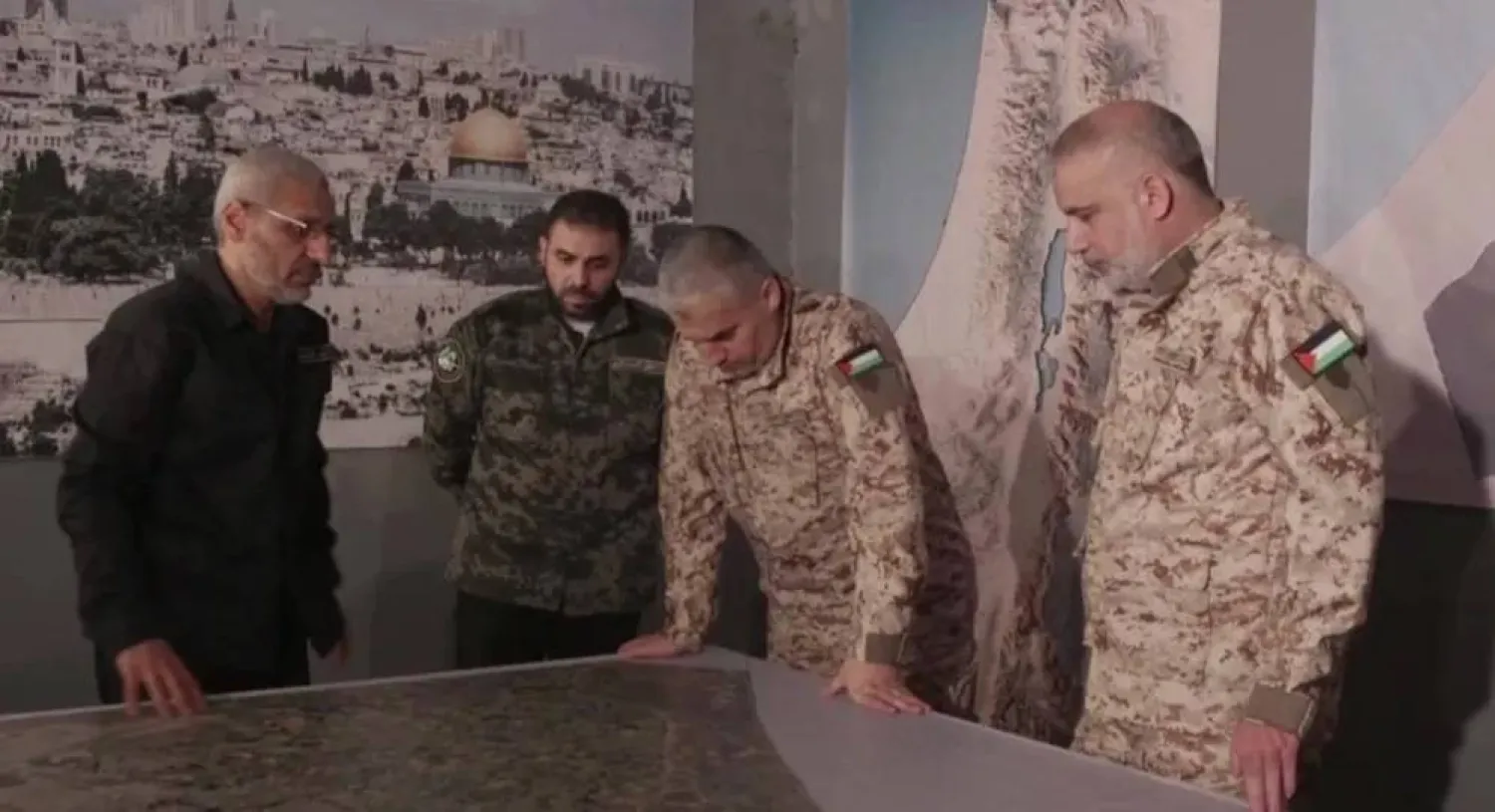
From right, Qassam Brigades leaders assassinated by Israel in separate attacks: Mohammad Odeh, Rafe Salama, Abu Obeida, and Mohammad Deif, in a photo released by the Israeli military. (Israeli military)
TT

Tunnels or Voiceprints: Why Israel Is Killing Qassam Leaders Faster

From right, Qassam Brigades leaders assassinated by Israel in separate attacks: Mohammad Odeh, Rafe Salama, Abu Obeida, and Mohammad Deif, in a photo released by the Israeli military. (Israeli military)

Throughout Israel’s war on Gaza, from October 2023 until a fragile ceasefire was announced two years later in October 2025, Israel’s pursuit of the leaders of Hamas and its military wing, the Qassam Brigades, was neither quick nor easy.

That changed in recent weeks.

A wave of faster, more concentrated assassinations peaked on May 15 with the killing of Qassam commander Izz al-Din al-Haddad after decades on the run. Less than two weeks later, Israel assassinated his successor, Mohammad Odeh.

The killings also reached one of the Qassam’s most prominent commanders, Imad Islim, who was targeted alongside the commander of the northern brigade, though the latter survived.

The campaign did not stop with commanders. It also hit prominent field operatives, most of them involved in the October 7, 2023, attack, as well as officials responsible for military manufacturing.

The pace of the killings has raised questions inside and outside Hamas over why Israel has been able to move so quickly. Some sources pointed to the growth of Israeli intelligence work in Gaza. Others cited Israel’s assault on Hamas tunnels and the security gap left by their destruction.

Hamas field sources told Asharq Al-Awsat that every assassination is investigated by specialists seeking to trace security leads or identify specific breaches.
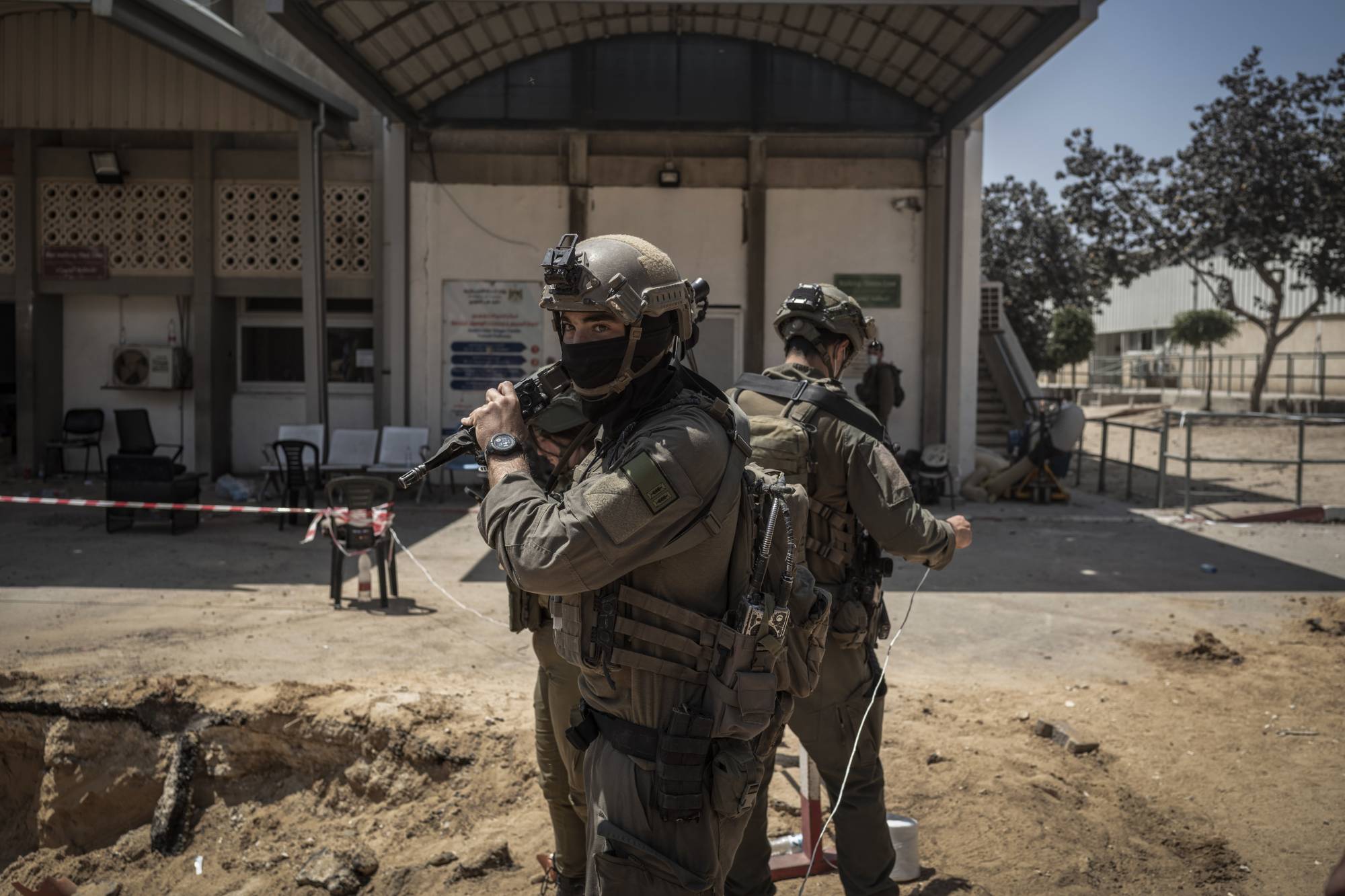
08 June 2025, Palestinian Territories, Khan Younis: Israeli soldiers stand guard at the European Hospital in Khan Younis, where the Israeli military discovered a tunnel believed to be the site of Hamas military chief Mohammad Sinwar's death last month. (dpa)

Tunnels and the decision to leave them

Four field sources said Israel’s intensified campaign against the tunnels was among the reasons behind the faster pace of assassinations. The campaign, they said, destroyed “very large numbers” of tunnels during and after the war.

Over two decades, Hamas dug hundreds, by conservative estimates, if not thousands, of tunnels for defense, attack, command and control. Some served as command sites for leaders directing battles.

The sources said Israel destroyed large numbers of tunnels through ground operations and airstrikes, at times killing operatives, commanders and even Israeli abductees held inside.

One source said that “because of the attacks, the leadership of the resistance decided to stop relying on tunnels and to act in a way that would help preserve the lives of commanders and operatives, as well as the abductees, with the aim of exchanging them for Palestinian prisoners.”

The sources said Israel launched a series of strikes on tunnels at the start of the war in October 2023. But because the network was so vast, Hamas decided only to leave tunnels in dangerous areas.

By late March 2024, as airstrikes intensified, especially against tunnels containing operatives and Israeli hostages, an immediate decision was made to move them above ground. Strikes on the tunnels later grew more severe.

A turning point

The sources said the move out of the tunnels “marked a turning point.” Tunnels were then used mainly for movement between locations or for specific attacks. They were no longer used except cautiously and temporarily by leaders or by prominent field operatives as hiding places.

Despite the growing danger, some Hamas and Qassam leaders continued to use them. Hamas political bureau members Rawhi Mushtaha and Sameh al-Sarraj were killed alongside Qassam field commanders in a tunnel in the industrial area south of Gaza City in July 2024.

The late Qassam commander Mohammad Sinwar and Qassam commander Mohammad Shabana were also killed, along with others, in a network of tunnels near the European Hospital in Khan Younis in May 2025.

One field source said: “Many field circumstances pushed political and military leaders at the time to resort to the tunnels and use them as hiding places, amid intensified Israeli pursuit of the movement’s and the brigades’ leaders.”

“The options were narrowing more and more,” they added.
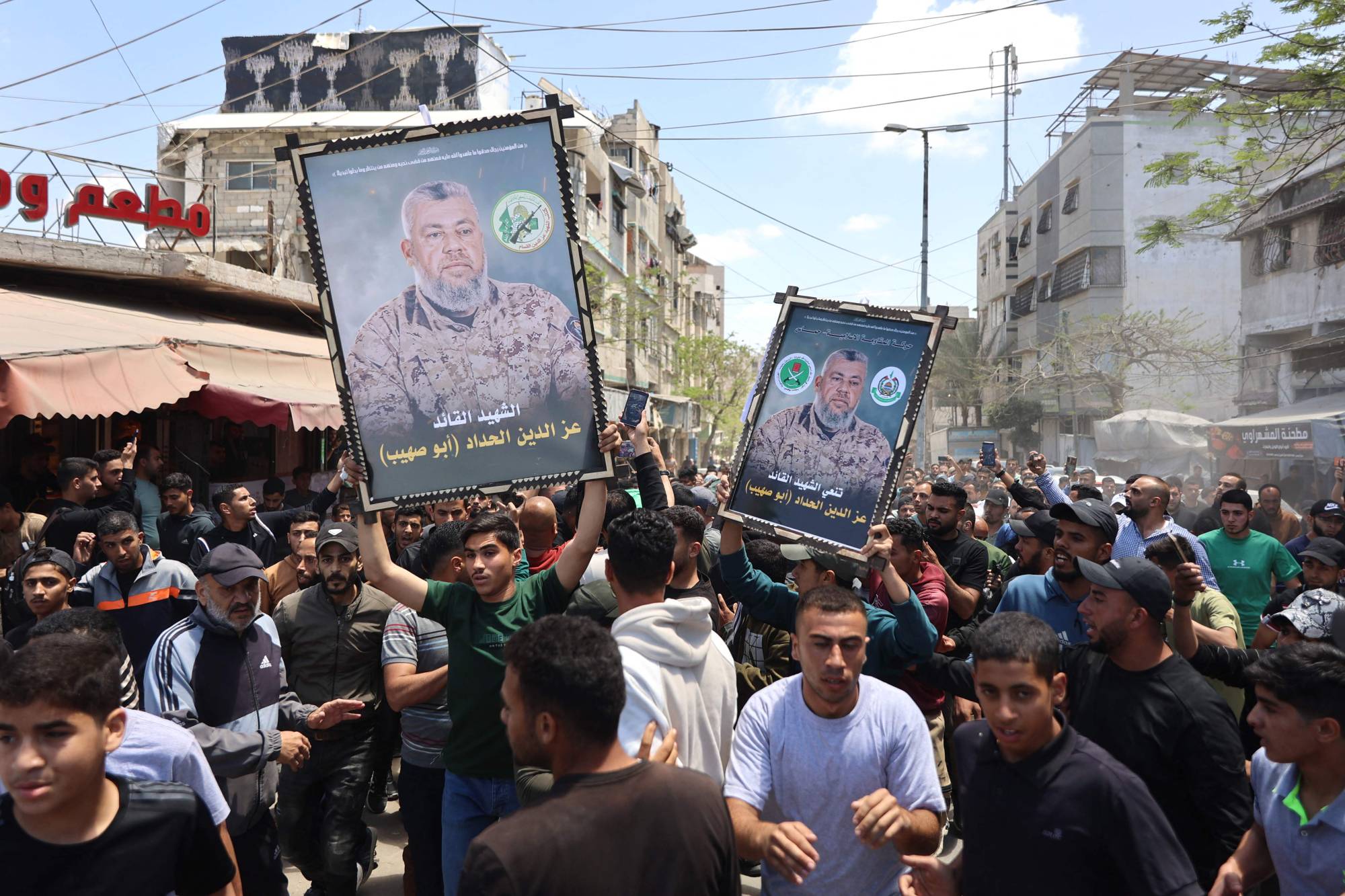
Mourners carry portraits of Izz al-Din al-Haddad, the slain chief of the Qassam Brigades, who was killed in an overnight Israeli strike along with his daughter and wife, during their funeral in Gaza City on May 16, 2026. (AFP)

The same source said Haddad was among those who frequently used tunnels to move from place to place at the height of Israeli operations in northern Gaza.

Haddad, he said, survived more than once by remaining underground while Israel operated above him, using tunnels to move from one area to another.

But Haddad and others did not see tunnels as reliable hiding places, the source said.

For long periods during the war and after the ceasefire, they stayed above ground, moving in hiding by different means, without security escorts, and in ways meant to prevent Israel from tracking them. They also communicated through different channels.

Three Hamas field sources said several leaders repeatedly used tunnels, including Mohammad Sinwar and late Hamas leader Yahya Sinwar, who was killed in a sudden clash with an Israeli force in October 2024.

Shrinking room to hide

Tunnel destruction was not the only factor. The four Hamas sources said Israel’s expanded control east of the “yellow line”, which covers about 60% to 70% of Gaza, has pushed most of the population west of the line. That has narrowed the space for faction leaders and operatives to find safe or unmonitored locations.

The sources said most leaders and operatives of Palestinian factions are now confined to specific areas, like hundreds of thousands of Gaza residents living in the western parts of the strip after losing their homes and other places assigned to them.

Many stayed with their families or nearby, living in tents and other shelters like many others, making them more exposed to Israeli tracking and surveillance.
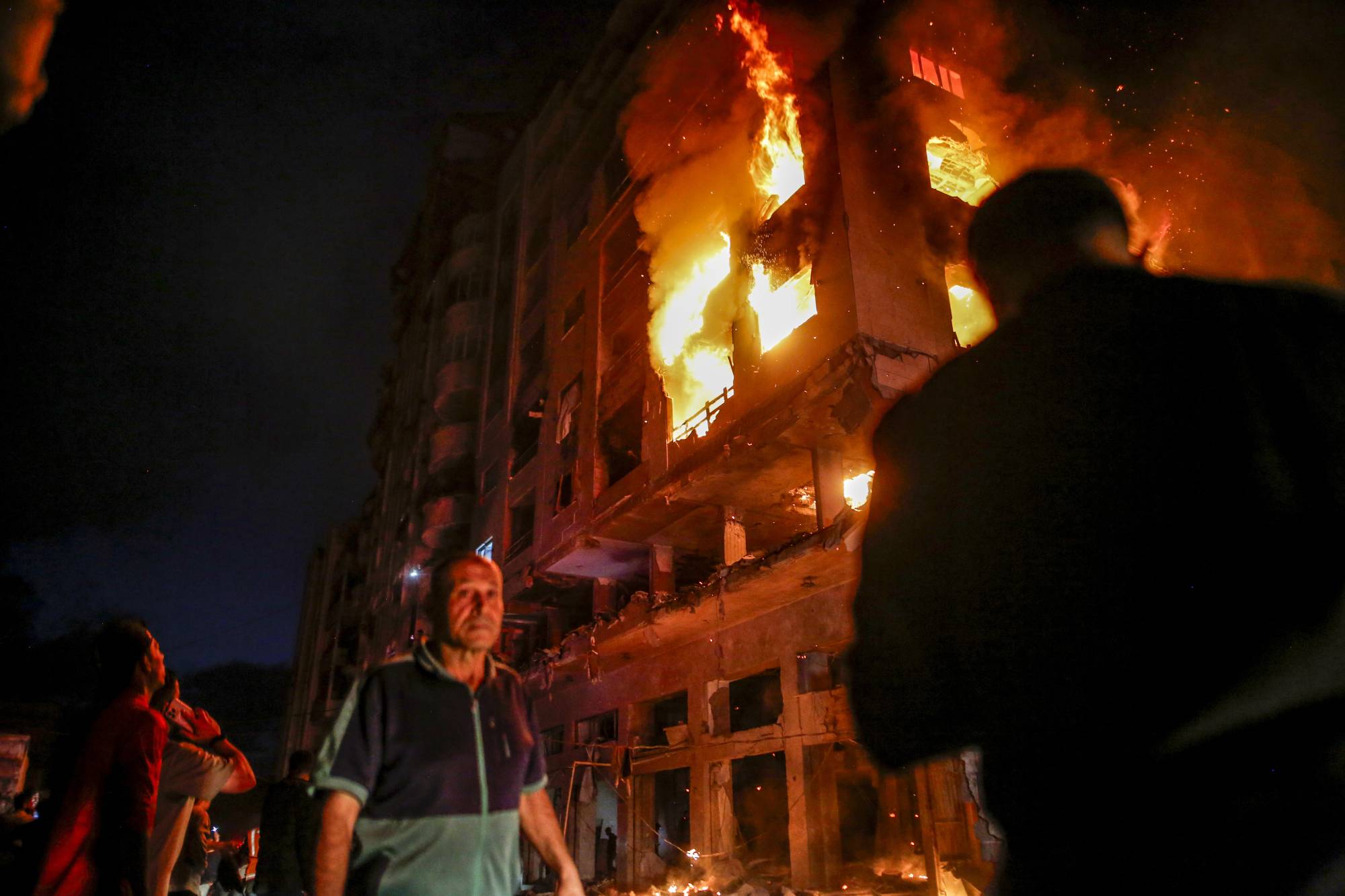
Palestinians inspect the site of a destroyed building as smoke billows following an Israeli airstrike in the Al-Rimal neighborhood of Gaza City, Gaza Strip, 15 May 2026. (EPA)

Spy technology and voiceprints

Field sources in Gaza give significant weight to Israeli spy technology in explaining how Israel has reached Hamas and Qassam leaders so quickly.

They agree on the role of spy drones that heavily patrol Gaza’s skies, along with other tools and human intelligence, including informants working with Israel.

One source said Israel has relied heavily on “the technological factor generated by artificial intelligence,” especially through modern Israeli-made drones using advanced cyber programs to track voiceprints, and possibly vital signs, to locate certain leaders in specific places.

The field source, who had reviewed investigations with suspected collaborators, said the drones eavesdrop on calls within specific, defined ranges after jamming them to isolate the voices coming from them or their surroundings. That, they said, may indicate the presence of a person whose voiceprint Israel has obtained through earlier phone recordings or a previous arrest.

The source said some informants working with Israel had managed to “plant various spying devices, some containing cameras and recording equipment, and others the size of an insect,” dropped by drones or planted by ground forces in areas they raided during the war.

One field source said, “Many informants were arrested and executed. A small number were from inside Hamas and the Qassam themselves, while most were from outside it.”

They said: “A person from outside Hamas was arrested after it became clear that he was linked to Haddad’s assassination, after he was spotted at the assassination site and at another location where Haddad had also been present.”

Two sources confirmed the suspect was being interrogated.

“The detainee confessed that he had been tracking Haddad on instructions from an Israeli intelligence officer, who was giving him specific locations where Haddad’s family was present,” said one of the sources.

At the height of the war in Gaza, Palestinians were executed by members of Palestinian factions after being arrested at Israeli attack sites. The Qassam described the proceedings against them as “revolutionary courts.”

They included one person from inside Hamas and another from outside it. Both were accused of “providing information that led to reaching Qassam commander Mohammad Deif, who was assassinated in July 2024.”

Palestinians Decry Israeli Push for Control over Ancient West Bank Sites

Pillars and archaeological remains in the ancient village of Sebastia, near Nablus in the Israeli-occupied West Bank, June 4, 2026. REUTERS/Ammar Awad
TT

Palestinians Decry Israeli Push for Control over Ancient West Bank Sites

Pillars and archaeological remains in the ancient village of Sebastia, near Nablus in the Israeli-occupied West Bank, June 4, 2026. REUTERS/Ammar Awad

An Israeli bill that would extend civil control over ancient sites in the West Bank has drawn criticism from Palestinians and Israeli rights groups who say it is tantamount to annexation of occupied land and would expand Jewish settlements.

The "Heritage Authority in Judea and Samaria" bill passed one of three votes by Israel's parliament in May, but it is unclear whether the final vote will be held before parliament disperses ahead of an election expected by October 27.

The bill would bring management of Roman, Byzantine and Crusader-era sites under Israeli Ministry of Heritage management and allow related "expropriation and purchase of real estate" in the West Bank, which Israel calls by its Hebrew biblical name, Reuters reported.

That in effect would strip away oversight of some ancient sites from the Western-backed Palestinian Authority, which under the 1990s Oslo peace accords has exercised limited self-rule in parts of ‌the West Bank, ‌territory Israel captured in a 1967 war.

The PA's tourism minister, Hani Al-Hayek, said "control over these ‌antiquities ⁠is intended to ⁠expand control and expand settlements in these areas, deep inside Palestinian territories."

Israel says the bill's purpose is to protect ancient sites.

VILLAGE NEAR ANCIENT SEBASTIA SITE FACES LAND CONFISCATION

Peace Now, an Israeli settlements watchdog, said the bill "constitutes an annexationist measure in every respect" and would lead to broad-scale confiscation of Palestinian land.

Using archaeology to expand settlements is not a new practice, but the scope of the Israeli government's measures has been unprecedented, Peace Now said.

One example is the Palestinian village of Sebastia in the northern West Bank where residents, many of whom trace their roots to the land back centuries, rely heavily on tourism to a nearby archaeological site.

The ancient site in ⁠Sebastia has ruins from the 9th-century B.C. Israelite kingdom as well as Roman, Byzantine, Crusader ‌and Ottoman remnants, archaeologists say. It is on a tentative list for inclusion as ‌a UNESCO World Heritage Site.

In late 2025, Israel announced a plan to seize about 1,800 dunams (445 acres) at the site, which it ‌said was meant to develop the area, affecting around 5,000 olive trees growing in the village groves, village officials said.

"They ‌are incorporating areas containing water resources, roads and antiquities, leaving us as residents without any resources. It is part of settlement expansion," said Sebastia Deputy Mayor Nizar Kayed.

Business had already been suffering since late 2023 with tourism dropping because of war in the region, said Nahed Sakha, whose Sebastia restaurant is on land slated for confiscation.

"It seems that the Israeli plan (is) to isolate the archaeological site from the people," Sakha said.

ISRAEL CITES ‌ANCIENT TIES TO THE LAND

Israeli parliament member Zvi Sukkot, who has been key in advancing the new bill, says extending Israeli control over the sites is meant to safeguard ⁠ancient remnants dating back to biblical ⁠times.

"There's nothing here that changes the legal status of Judea and Samaria," he told Reuters.

"There are many people who are bothered by our desire to prove the ties between the people of Israel and this land," he said. "All the stories of the Bible, all our history, the people (of Israel) were born in Judea and Samaria."

Sukkot is a member of the pro-settler Religious Zionism party. Like many in Prime Minister Benjamin Netanyahu's coalition, he opposes the creation of a Palestinian state and advocates annexation of the West Bank.

UN bodies and most countries view Israel's settlements as illegal under international law, violating the Fourth Geneva Convention provision barring the transfer of civilian population into occupied territory.

Israel rejects this view, saying the West Bank, which it captured in the 1967 war, is disputed territory. It cites security needs and biblical and historical ties to the land.

But the new bill has also caused concern among legal officials in Israel's defense establishment and Israeli scientists.

In an open letter to Netanyahu and Sukkot, the Israel Academy of Sciences and Humanities called for it to be scrapped.

"This will undoubtedly lead to an immediate deterioration in Israel's international relations in the field of archaeology, and it will also have an impact on other areas of science and research," the academy said.


Israel Says One Soldier Killed in Lebanon after Vehicle Overturned

Israeli soldiers carrying the coffin of a soldier killed in southern Lebanon during his funeral in Kfar Saba, Israel, on Sunday (dpa)
TT

Israel Says One Soldier Killed in Lebanon after Vehicle Overturned

Israeli soldiers carrying the coffin of a soldier killed in southern Lebanon during his funeral in Kfar Saba, Israel, on Sunday (dpa)

An Israeli military official ‌said ‌on Thursday a ‌soldier ⁠was killed in ⁠southern Lebanon after a vehicle ⁠had ‌overturned.

The official ‌described the ‌incident ‌as an accident, Reuters said.

Earlier, the ‌military said a soldier ⁠had ⁠died during "operational activity".

The pace of violence in Lebanon has eased recently, but Israeli Defense Minister Israel Katz stressed that his forces would remain in southern Lebanon.

“We have stated that, in any case, we will not withdraw, and up to this moment — and this is a diplomatic achievement — there has been no US request for Israel to withdraw from Lebanon,” Katz said in an interview during a conference of local leaders in Tel Aviv.

Israel and Lebanon are currently holding US-mediated talks in Washington aimed at reaching a diplomatic solution to the conflict, including the disarmament of Hezbollah and the withdrawal of Israeli forces.

Since April, Lebanon has engaged in direct talks with Israel under US pressure, with the aim of ending the latest war between Hezbollah and Israel.

Lebanese authorities have stressed their determination to keep Lebanon’s file separate from negotiations involving Iran, Hezbollah’s main backer.

On Wednesday, Lebanese President Joseph Aoun stressed that “the negotiations in Washington are separate from the meetings held in Switzerland last week between the United States and Iran, which were followed by Qatar and Pakistan.”


Iraqi Judiciary Applies ‘Terrorism Provisions’ to Drones

People watch as smoke billows from an oil warehouse in the Kani Qirzhala area on the outskirts of Erbil, the capital of Iraq's autonomous Kurdistan region, following a suspected drone strike, on April 1, 2026. (Photo by AFP)
TT

Iraqi Judiciary Applies ‘Terrorism Provisions’ to Drones

People watch as smoke billows from an oil warehouse in the Kani Qirzhala area on the outskirts of Erbil, the capital of Iraq's autonomous Kurdistan region, following a suspected drone strike, on April 1, 2026. (Photo by AFP)

Iraq’s Supreme Judicial Council has instructed the country’s courts to apply the provisions of the Anti-Terrorism Law to anyone who manufactures, uses, or possesses drones for unlawful purposes, while a security official said the directive is aimed specifically at curbing the activities of armed factions.

In a brief statement on Wednesday, the Council said it had directed the competent courts to enforce Anti-Terrorism Law No. 13 of 2005 against “anyone who manufactures, uses, or possesses drones employed for purposes contrary to the law.”

The law is Iraq’s principal legal framework for prosecuting terrorist crimes that threaten national unity and public safety, carrying penalties of up to the death sentence for perpetrators, instigators, planners, and financiers.

The directive comes amid months of government efforts to bring all weapons under state control and dismantle armed groups operating outside official security institutions.

An Interior Ministry security official told Asharq Al-Awsat that the judicial directive is “exclusively linked to armed factions” and is intended to increase pressure on them. He said the measure places drone-related offenses under terrorism statutes even though Iraqi law permits the use of officially licensed drones, indicating that it is directed at attacks carried out - or potentially to be carried out - by armed factions.

Speaking on condition of anonymity, the official described drones as one of Iraq’s most serious security challenges because they are easy to transport and operate, while the country lacks effective counter-drone capabilities, a weakness exposed during recent attacks.

Since the outbreak of the US-Israeli war against Iran on February 28, armed factions have carried out hundreds of attacks, many involving drones, against civilian and military targets.

Kurdish sources say cities in the Kurdistan Region alone have come under more than 800 attacks by Iran-aligned factions, ostensibly because of the presence of US forces and Iranian Kurdish opposition groups.

The factions have also launched dozens of drone attacks against vital assets in several Gulf states and Jordan, prompting those countries to issue a joint statement on March 25 condemning the attacks and urging Baghdad to take immediate action to halt operations by Iran-backed armed groups.

Iraq has long permitted drones for civilian, commercial, and official security purposes, provided operators obtain prior approval from the Iraqi Civil Aviation Authority and the relevant security agencies.

In early February, the authority introduced new regulations governing licensing, operating requirements, legal obligations, and approved uses, including media production, filmmaking, advertising, tourism, protection of oil and energy pipelines and public utilities, agriculture, environmental monitoring, border security, and official Interior Ministry thermal-drone operations against smugglers.

Drone manufacturing is also “common in Iraq,” according to Ahmed al-Janabi, a software and telecommunications engineer, though primarily for civilian and service-related uses. He said drone components are widely available on Iraqi markets and enter the country through multiple routes, including smuggling networks from Iran via Sulaymaniyah.

Specialized import offices also supply drones, often disguising component shipments. While authorities routinely confiscate unauthorized drones and impose relatively light prison sentences on violators, al-Janabi said the key change is that such offenses are now prosecuted under the Anti-Terrorism Law.